Royal, civic and national ceremonyNorth AmericaSecular and civic
Banned Books Week
An annual autumn campaign celebrating the freedom to read and access challenged books
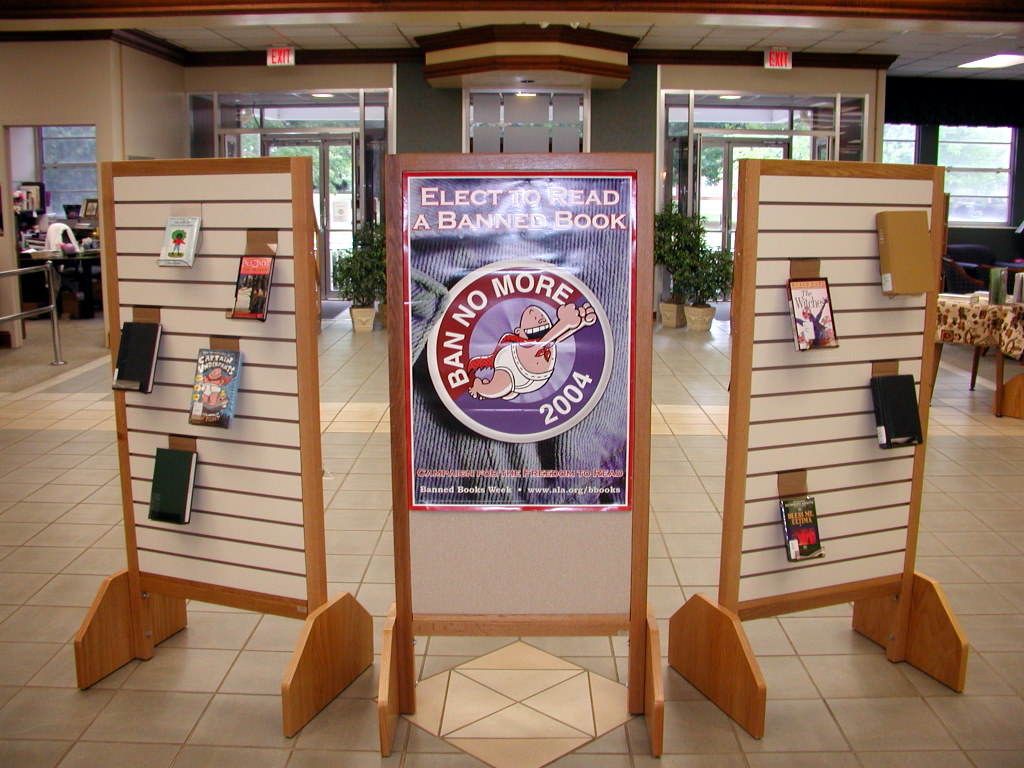
Banned Books Week is an annual awareness campaign founded in the United States in 1982. Promoted by library groups and human rights advocates each autumn, it brings attention to challenged books, opposes censorship, and celebrates the right to read through displays and public readings.
When is Banned Books Week kept?
Banned Books Week is kept on annually during the last full week of September or early October.
Banned Books Week is an annual event held each autumn to celebrate the freedom to read and to highlight the perils of censorship. Established in the United States in 1982, the campaign encourages readers to explore challenged literature and defends open access to varied viewpoints. Through library displays, public readings, and educational programs, participants support free expression and draw attention to writers persecuted around the world.
Origins and history
The observance began in 1982 through the efforts of activist Judith Krug and the American Library Association after a surge of book challenges nationwide. The Association of American Publishers proposed a joint effort to alert the public to censorship pressures. Six weeks after discussions started, the first week was launched. In 2011, school librarians introduced Banned Websites Awareness Day to address broad internet filtering in schools. Starting in 2021, the campaign named honorary chairs, including authors, actors, and student advocates who challenged book restrictions in their communities.
How it is kept
Libraries, schools, and independent bookstores host activities to mark the week. Staff set up special window displays, distribute commemorative bookmarks and posters, and host discussions with authors of challenged works. A popular custom is the public read-out, where people gather in person or online to recite passages from restricted titles. On the Wednesday of the week, educators examine internet filtering policies in schools. Film festivals and student essay competitions on free expression are also held alongside promotional events.
Global reach and human rights
Beyond domestic library programs, the campaign addresses international censorship and the safety of writers. Amnesty International uses the week to draw focus to authors, publishers, and readers who face harassment, imprisonment, or violence under authoritarian governments. The organisation shares specific cases from nations such as Myanmar, Cuba, Egypt, and Iran, encouraging members to send urgent appeals to authorities. International libraries have also joined the observance, hosting their own events to support radical thought and open inquiry.
Debates and perspectives
The observance sparks ongoing discussions about the definition and scale of censorship. Supporters and librarians maintain that attempts to remove books from shelves undermine First Amendment rights and restrict access to unpopular ideas. Critics argue that most listed titles face parental objections over age appropriateness rather than complete legal prohibitions, or note that challenged volumes remain available in retail shops. The debate reflects differing views on collection curation, parental oversight in school curricula, and the public duty to protect controversial ideas.
How Banned Books Week is kept
During the last full week of September, libraries, classrooms, and bookstores arrange displays of challenged literature and distribute promotional materials. Readers and community members attend public read-outs to recite excerpts from banned books, while booksellers host author talks and essay contests on free expression. The American Association of School Librarians marks Wednesday as Banned Websites Awareness Day to review online access filters. Globally, human rights groups share case files of persecuted authors and organise public letter-writing efforts.
When and where
The observance takes place annually during the last full week of September, occasionally extending into early October. It has followed this autumn schedule since its creation in 1982, with the Wednesday of the week dedicated to digital access awareness.
The campaign is held widely across the United States in public libraries, school libraries, universities, and commercial bookstores. International human rights groups and select overseas public libraries also take part to highlight global censorship.
What Banned Books Week means
The observance represents the principle of intellectual freedom and the right of individuals to form their own opinions without institutional interference. Defending access to unorthodox or challenged writing is viewed by participants as essential for protecting constitutional free speech, fostering critical thought, and standing in solidarity with creators facing suppression.

Questions people ask about Banned Books Week
When is Banned Books Week kept?
Banned Books Week is kept on annually during the last full week of September or early October.
What is Banned Books Week?
Banned Books Week is an annual awareness campaign that celebrates the freedom to read. It draws public attention to books and digital materials that face censorship, challenges, or bans in libraries and schools.
How is the week observed in libraries and communities?
Participants create book displays, host author lectures, hold essay contests, and gather for public read-outs of challenged literature. School librarians also examine internet filtering, while human rights groups highlight persecuted writers worldwide.
Who started Banned Books Week?
Judith Krug founded the campaign in 1982 alongside the American Library Association and the Association of American Publishers to respond to an increasing number of book bans across the United States.
See also
 Independence DayThe United States' national day of parades, barbecues and fireworks, kept each July 4
 Talking stickA carved staff that shows who may speak at a Northwest Coast gathering
 State of the Union addressThe US president's yearly report to Congress and the nation, given in the House chamber
 Flag DayAn annual American observance marking the 1777 adoption of the national flag
Good reading and sources
- Banned Books Week launches with call to read books theThe Guardian, Article
- Banned Books Week launches with call to read books theThe Guardian, Article
- Banned Books Week on WikipediaEncyclopedia
- More photos on Wikimedia CommonsPhotos and video
- Wikidata recordOpen data
The facts on this page come from the Wikipedia article "Banned Books Week", written by its contributors and used under the CC BY-SA 4.0 licence, and from its Wikidata record (CC0). EveryParampara rewrote the text in its own words, with AI assistance, and compares every page with the article to make sure no passage is copied. It may be reused under the same CC BY-SA 4.0 licence with a link back.
It may contain mistakes. Traditions differ from one family, village and community to the next, and the people who keep them know them best. If something is wrong, tell us. Last refreshed 2026-10-06.
More from the United States
All the traditions of the United States
🇺🇸 Philadelphia, United States and 1 moreIndependence Day
The United States' national day of parades, barbecues and fireworks, kept each July 4Ceremony
🇺🇸 New York, United StatesFlag Day
An annual American observance marking the 1777 adoption of the national flagCeremony
🇺🇸 Washington, United StatesState of the Union address
The US president's yearly report to Congress and the nation, given in the House chamberCeremony
🇺🇸 United StatesTalking stick
A carved staff that shows who may speak at a Northwest Coast gatheringCeremony
The same idea elsewhere
All of this kind 🇬🇷 Olympia, Greece and 1 moreOlympic torch relay
The ceremonial journey of the flame from Olympia to each host city of the Olympic GamesCeremony
🇬🇷 Olympia, Greece and 1 moreOlympic torch relay
The ceremonial journey of the flame from Olympia to each host city of the Olympic GamesCeremony
 🇮🇳 Kolkata, IndiaJana Gana Mana
India's national anthem, from a Bengali hymn of 1911, sung at civic occasionsCeremony
🇮🇳 Kolkata, IndiaJana Gana Mana
India's national anthem, from a Bengali hymn of 1911, sung at civic occasionsCeremony
 🇵🇱 Auschwitz-Birkenau, Poland and 1 moreMarch of the LivingMarsz Żywych (Polish) · מצעד החיים (Hebrew)
An annual two-week journey to Poland ending in a silent walk from Auschwitz to BirkenauCeremony
🇵🇱 Auschwitz-Birkenau, Poland and 1 moreMarch of the LivingMarsz Żywych (Polish) · מצעד החיים (Hebrew)
An annual two-week journey to Poland ending in a silent walk from Auschwitz to BirkenauCeremony
 🇳🇴 Bergen, NorwayBuekorps
Youth marching groups of Bergen's neighbourhoods, with drums, banners and a May paradeCeremony
🇳🇴 Bergen, NorwayBuekorps
Youth marching groups of Bergen's neighbourhoods, with drums, banners and a May paradeCeremony