Spiritual and religiousMiddle EastChristian
Via Dolorosa
In its own language: طريق الآلام (Arabic) / ויה דולורוזה (Hebrew)
A pilgrim walk through Jerusalem's Old City, marking the last journey of Jesus
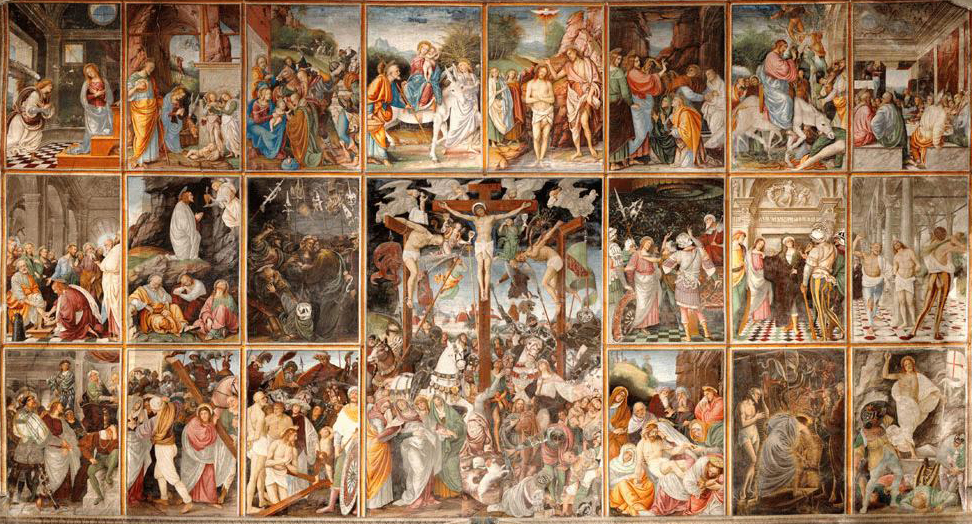
The Via Dolorosa is a walking route through Jerusalem's Old City, which Christians hold to be the path Jesus took to his crucifixion. Pilgrims and Franciscan friars follow its fourteen stops, nine in the streets and five inside the Church of the Holy Sepulchre, on a course set in the eighteenth century.
When is Via Dolorosa kept?
Via Dolorosa is kept on walked throughout the year, especially by groups of Christian pilgrims.
Via Dolorosa means the Sorrowful Way. It is a route through the Old City of Jerusalem that Christians walk in memory of the path they believe Jesus took to his crucifixion. Pilgrims follow it in stages, pausing at fourteen stops. Franciscan friars have guided these walks since the fourteenth century, and the line the route follows today was fixed in the eighteenth century.
What it is
The Via Dolorosa is not a single street. It is a chain of stretches that belong to several streets in the Old City of Jerusalem. Together they run roughly 600 metres. Walkers set out in the Muslim Quarter, close to where the Antonia Fortress once stood, and head west to the Church of the Holy Sepulchre. Fourteen stops line the way. Nine stand outdoors in the lanes, and the other five are inside the church. The name is Latin and means Sorrowful Way. Arabic speakers call the road Ṭarīq al-Ālām, the way of pain, while Hebrew signs keep the Latin words in transliteration.
How the route formed
Reports of a pilgrimage path that matched the gospel events go back to Byzantine times. Then a Holy Thursday procession left the Mount of Olives, paused at Gethsemane, came in through Lions' Gate and reached the Church of the Holy Sepulchre, though it made no stops along the way. By the eighth century pilgrims were using the western hill instead, walking to the supposed house of Caiaphas and on to the church. After the Catholic Church split, rival groups each backed the line that passed their own churches. Pope Clement VI set up the Franciscan Custody of the Holy Land in the fourteenth century and gave the friars charge of guiding Latin pilgrims. Their tours ran from about 1350, at first in the opposite direction.
Stations along the way
The fourteen stops remember scenes from the last hours of Jesus, in order. The first marks the sentence passed on him; the second, where he is handed the cross, has the Church of the Flagellation and the Church of Ecce Homo nearby. Then come his first fall, the meeting with his mother, and the place where Simon of Cyrene is made to carry the cross. A woman named Veronica wipes his face. A second fall follows, then the women of Jerusalem weeping, then a third fall, then the taking of his clothes, the nailing, his death, the lowering of the body, and its placing in the tomb.
Evidence and debate
The case for the route resting on a real path turns on an assumption: that the Roman governor's headquarters stood beside the Antonia Fortress. First-century writers thought otherwise. Josephus reports that governors ruled from Caesarea and stayed at Herod's Palace when in Jerusalem, judging people on the pavement outside it, which puts the palace on the western hill. Its remains were found in 2001 under a corner of the citadel by Jaffa Gate. Others answer that at the great festivals Pilate had to be near the Temple with his troops, and that the Gospel of Luke has him send Jesus to Herod, which suggests he was not in Herod's castle.
Walking it today
Today the Via Dolorosa is walked by Christian pilgrims, and the fourteen stops are its fixed markers. Groups set off from the Muslim Quarter and cross the Old City on foot, moving from lane to chapel to church. Franciscan friars, whose official tours began in the fourteenth century, remain the guides most closely tied to the path. Because it is made of pieces of ordinary streets, shops and doorways sit beside the stops, so the route feels public and busy rather than set apart. The line walkers use now replaced older versions in the eighteenth century and has held ever since.
How Via Dolorosa is kept
Pilgrims walk the route in groups, stopping at each of the fourteen stations to pray and recall an episode from the Passion. They set out in the Muslim Quarter near the Umariya school and move west through the lanes. Nine stops stand outdoors, at churches, chapels and street corners; the last five are inside the Church of the Holy Sepulchre, ending at the tomb. Since the fourteenth century Franciscan friars have led official tours of the way, and from about 1517 they followed the events in the order the gospels tell them.
When and where
The route can be walked at any time of year. The course now in use was settled in the eighteenth century. Pilgrims followed a similar line far earlier: in Byzantine times a Holy Thursday procession came from the Mount of Olives through Gethsemane and into the city, and the Franciscans reversed the direction of their tours around 1517.
The route lies inside the Old City of Jerusalem, in Israel. It crosses from the Muslim Quarter in the east to the Christian Quarter in the west, running between Lions' Gate and the Church of the Holy Sepulchre. It is a place of Christian pilgrimage, and the streets it uses are ordinary lanes of the Old City, busy with daily life.
What Via Dolorosa means
Those who walk the way are not reading about the Passion but joining it with their feet. Each stop opens one scene: the sentence, the cross laid on Jesus, the falls, the meeting with his mother, the help of Simon of Cyrene, the wiped face, the weeping women, the stripped clothes, the nails, the death, the body taken down and laid in the tomb. The friars who guided pilgrims held that meditation on these moments was a way to understand them. Walking a real street with real stops makes that meditation physical.


Questions people ask about Via Dolorosa
When is Via Dolorosa kept?
Via Dolorosa is kept on walked throughout the year, especially by groups of Christian pilgrims.
What is the Via Dolorosa?
It is a route through the Old City of Jerusalem that Christians hold to be the path Jesus walked to his crucifixion. Pilgrims follow it in stages, pausing at fourteen stops. Nine of the stops lie in the streets; five are inside the Church of the Holy Sepulchre.
Where does it begin and end?
It begins in the Muslim Quarter, near the Umariya school, beside the place where the Antonia Fortress once stood. From there it runs west through the lanes. It finishes in the Christian Quarter, at the Church of the Holy Sepulchre, where the final five stops are found.
Is it one street?
No. It is made up of sections of several streets. One long stretch follows a Roman road laid out under Hadrian when the city was called Aelia Capitolina. Because the Temple Mount blocked the eastern side, that road bends in the middle instead of running straight.
Have the stops always been in the same places?
No. The list changed a great deal over the centuries, and agreement on some stops came only in the nineteenth century. Modern archaeology suggests the early route over the western hill may have been closer to the real path, though the traditional line still has its defenders.
See also
 PassoverA Jewish spring festival celebrating freedom from slavery with ritual meals
 SukkotA seven-day autumn Jewish festival of temporary booths, harvest prayers and hospitality
 Holy FireA fire ceremony in Jerusalem each year, kept by Orthodox Christians before Easter
 ShavuotA late-spring Jewish festival of the wheat harvest and the giving of the Torah
Good reading and sources
- Via Dolorosa on WikipediaEncyclopedia
- More photos on Wikimedia CommonsPhotos and video
- Wikidata recordOpen data
The facts on this page come from the Wikipedia article "Via Dolorosa", written by its contributors and used under the CC BY-SA 4.0 licence, and from its Wikidata record (CC0). EveryParampara rewrote the text in its own words, with AI assistance, and compares every page with the article to make sure no passage is copied. It may be reused under the same CC BY-SA 4.0 licence with a link back.
It may contain mistakes. Traditions differ from one family, village and community to the next, and the people who keep them know them best. If something is wrong, tell us. Last refreshed 2026-10-05.
More from Israel
All the traditions of Israel
🇮🇱 Jerusalem, IsraelPassoverפסח
A Jewish spring festival celebrating freedom from slavery with ritual mealsSpiritual · Dinner
🇮🇱 Jerusalem, IsraelSukkotסוכות
A seven-day autumn Jewish festival of temporary booths, harvest prayers and hospitalitySpiritual
🇮🇱 Jerusalem, Israel and 5 moreHoly FireἋγιον Φῶς
A fire ceremony in Jerusalem each year, kept by Orthodox Christians before EasterSpiritual
🇮🇱 Jerusalem, IsraelShavuotשבועות
A late-spring Jewish festival of the wheat harvest and the giving of the TorahSpiritual · Feasts and festival meals
The same idea elsewhere
Pilgrimage compared 🇺🇸 United States and 5 moreMother's Day
A worldwide annual celebration dedicated to mothers, maternal bonds and family careHome
🇺🇸 United States and 5 moreMother's Day
A worldwide annual celebration dedicated to mothers, maternal bonds and family careHome
 🇵🇱 Poland and 5 moreChristmas Eve
The evening before Christmas, marked by church services, family meals, and gift preparations across Christian cultures.Festival · Dinner
🇵🇱 Poland and 5 moreChristmas Eve
The evening before Christmas, marked by church services, family meals, and gift preparations across Christian cultures.Festival · Dinner
 🇮🇳 India and 1 moreKailash Mansarovar Yatraकैलाश मानसरोवर यात्रा (Hindi); ཀཱའི་ལ་ཤ་མན་ས་རོ་ཝར་ཡ་ཏྲ། (Tibetan)
A high-altitude pilgrimage to Mount Kailash and Lake Manasarovar in TibetSpiritual
🇮🇳 India and 1 moreKailash Mansarovar Yatraकैलाश मानसरोवर यात्रा (Hindi); ཀཱའི་ལ་ཤ་མན་ས་རོ་ཝར་ཡ་ཏྲ། (Tibetan)
A high-altitude pilgrimage to Mount Kailash and Lake Manasarovar in TibetSpiritual
 🇵🇭 Marinduque, PhilippinesMoriones Festival
A Holy Week reenactment in Marinduque where masked participants search for the Roman centurion Longinus.Festival
🇵🇭 Marinduque, PhilippinesMoriones Festival
A Holy Week reenactment in Marinduque where masked participants search for the Roman centurion Longinus.Festival