Spiritual and religiousMiddle EastJewish
Passover
In its own language: פסח
A Jewish spring festival celebrating freedom from slavery with ritual meals

Passover is a major Jewish festival commemorating the release of the Israelites from bondage in ancient Egypt. Kept in spring starting on the fifteenth of Nisan, Jewish families gather for a ritual Seder meal, read the Haggadah, and abstain entirely from leavened food throughout the week.
When is Passover in 2027?
Passover 2027 runs from 22 to 29 April 2027. Other years: 2026, 2 to 9 April 2026; 2028, 11 to 18 April 2028.
Passover, also known as Pesach, is one of the most central holidays in Judaism. Lasting seven days in Israel and eight days in diaspora communities, it commemorates the liberation of the ancient Israelites from slavery in Egypt. Through ceremonial family meals, the reading of sacred narratives, and the strict avoidance of leavened grain, observers remember their ancestors' deliverance and celebrate the enduring theme of freedom.
The biblical story
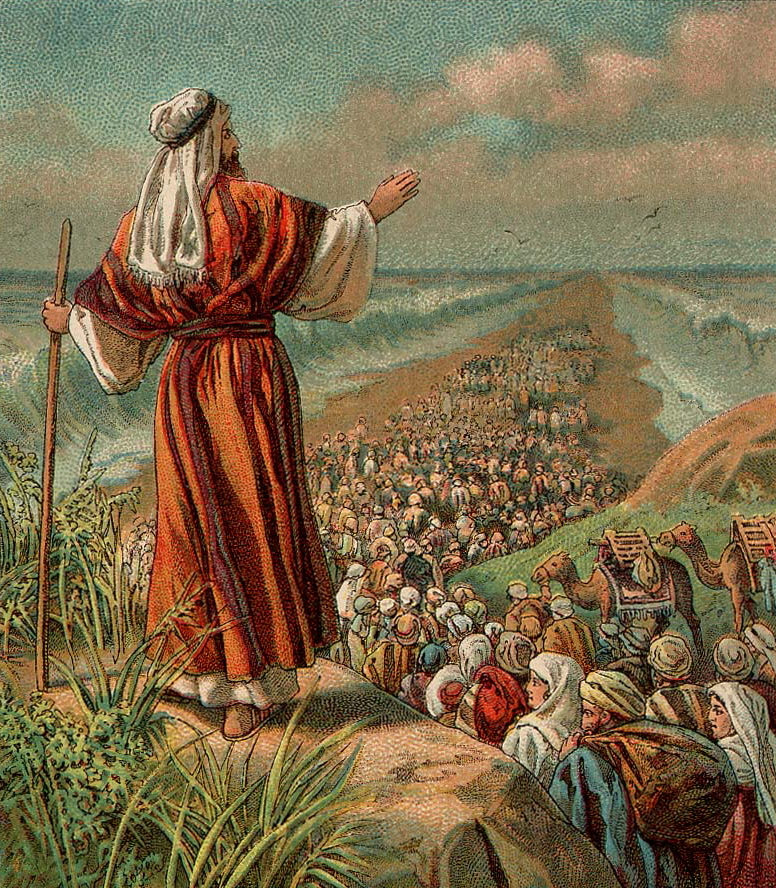
According to the Book of Exodus, God sent ten plagues upon Egypt after the Pharaoh refused to free the enslaved Israelites. Before the final plague, which took the lives of all firstborn sons, Moses instructed Hebrew households to sacrifice a lamb and brush its blood across their doorframes. Seeing the blood, God passed over those dwellings, keeping the families safe. Pharaoh subsequently allowed the Israelites to leave. The holiday serves as an enduring memorial to this divine redemption. The commandment urges every generation to remember that their ancestors were once slaves in Egypt and were brought out by divine power.
The Seder table
The central ritual occurs during the opening evening at a festive gathering called the Seder. Family and guests gather around a table to read from the Haggadah, a liturgical text outlining the Exodus story in response to the scriptural command to teach one's children. Participants recount the departure from Egypt during the Magid section, recite blessings, sing traditional hymns, and share specific symbolic foods. In historical times, the feast featured roasted lamb alongside unleavened bread and bitter herbs. Today, the Seder continues to bring generations together over shared liturgy, storytelling, and ceremonial dining.
Unleavened bread and dietary rules
Throughout Passover, Jewish law strictly prohibits owning, eating, or benefiting from leavened grain foods, known as chametz. Before the festival begins, homes are thoroughly cleaned to ensure all traces of leaven are removed or disposed of. In place of leavened bread, observers eat matzah, a flat, crisp bread made purely of flour and water baked without rising. The biblical text links this practice to the rapid departure from Egypt, where the departing multitude lacked time to let their dough ferment. The holiday also marks the start of the ancient barley harvest and the counting of forty-nine days toward the festival of Shavuot.
Calendar and duration
Passover starts on the fifteenth day of Nisan, the first month of the Hebrew calendar, coinciding with a spring full moon between late March and late April. In Israel, the festival lasts seven days, while traditional communities elsewhere observe eight days. The opening and closing days are full holy days featuring special liturgical services, festive banquets, and a rest from ordinary labor. The intermediate days, known as Chol HaMoed, retain festive elements while allowing routine weekday activities. Historically, Passover was one of three major pilgrimage occasions when worshipers traveled to Jerusalem.
How Passover is kept
Before the holiday begins, households clear away all leavened items. On the opening night, families gather for the Seder meal. They follow the Haggadah, retelling the Exodus account through readings, questions, and songs. Observant households eat matzah and bitter herbs while abstaining entirely from leaven for the entire festival. In Israel, the observance spans seven days, while diaspora communities observe eight. The first and final days include dedicated synagogue services, holiday meals, and rest from work, while the middle days allow everyday tasks under a festive atmosphere.
When and where
The festival begins at sundown on the fourteenth of Nisan, marking the start of 15 Nisan in the Hebrew spring. Because the Hebrew calendar adjusts to match the solar cycle, the date falls on a full moon between late March and late April.
Passover is observed by Jewish communities around the world. In Israel, the holiday spans seven days, whereas traditional diaspora communities abroad celebrate for eight days. Historically, it was a pilgrimage festival centered on Jerusalem.
What Passover means
Passover represents divine deliverance, national rebirth, and the transition from bondage to freedom. Marking the doorposts with blood originally signified household protection, while consuming flat matzah and bitter herbs recalls both the suffering of enslavement and the haste of the miraculous departure from Egypt. The festival commands each generation to personally identify with the experience of liberation.
On the table
- Matzah
- Maror
- Roasted lamb


Days Passover is marked
Passover dates: 2026, 2027, 2028
| Year | Passover date |
|---|---|
| 2026 | 2 to 9 April 2026 |
| 2027 | 22 to 29 April 2027 |
| 2028 | 11 to 18 April 2028 |
Questions people ask about Passover
When is Passover in 2027?
Passover 2027 runs from 22 to 29 April 2027. Other years: 2026, 2 to 9 April 2026; 2028, 11 to 18 April 2028.
What is Passover?
Passover, or Pesach, is a major Jewish spring holiday commemorating the release of the ancient Israelites from bondage in Egypt. It is celebrated with special ritual meals, storytelling, and unleavened bread.
What happens during the Seder meal?
On the first night, families gather to read the Haggadah, retell the story of the Exodus, recite prayers, sing hymns, and eat ritual foods including matzah and bitter herbs.
Why is leavened bread forbidden during Passover?
Biblical law prohibits leavened food, called chametz, recalling how the Israelites fled Egypt in such haste that their bread dough had no time to rise before they left.
See also
 HarissaA spicy chili pepper paste from Tunisia, used as a condiment and ingredient across North Africa.
 Isra and Mi'rajAn Islamic observance marking the prophet Muhammad’s night journey and ascent through the heavens.
 Krishna JanmashtamiA Hindu festival celebrating the birth of Krishna with fasting, singing and night vigils
 Ghost FestivalA full-moon night in the seventh lunar month for feeding ghosts and guiding souls home
Good reading and sources
- Encyclopaedia BritannicaArticle
- The very ancient Passover of the tiny Samaritan religionNational Geographic, Article
- The very ancient Passover of the tiny Samaritan religionNational Geographic, Article
- Passover on WikipediaEncyclopedia
- More photos on Wikimedia CommonsPhotos and video
- Wikidata recordOpen data
The facts on this page come from the Wikipedia article "Passover", written by its contributors and used under the CC BY-SA 4.0 licence, and from its Wikidata record (CC0). EveryParampara rewrote the text in its own words, with AI assistance, and compares every page with the article to make sure no passage is copied. It may be reused under the same CC BY-SA 4.0 licence with a link back.
It may contain mistakes. Traditions differ from one family, village and community to the next, and the people who keep them know them best. If something is wrong, tell us. Last refreshed 2026-10-04.
More from Israel
All the traditions of Israel 🇮🇱 Jerusalem, IsraelSukkotסוכות
A seven-day autumn Jewish festival of temporary booths, harvest prayers and hospitalitySpiritual
🇮🇱 Jerusalem, IsraelSukkotסוכות
A seven-day autumn Jewish festival of temporary booths, harvest prayers and hospitalitySpiritual
 🇮🇱 Jerusalem, Israel and 5 moreHoly FireἋγιον Φῶς
A fire ceremony in Jerusalem each year, kept by Orthodox Christians before EasterSpiritual
🇮🇱 Jerusalem, Israel and 5 moreHoly FireἋγιον Φῶς
A fire ceremony in Jerusalem each year, kept by Orthodox Christians before EasterSpiritual
 🇮🇱 Jerusalem, IsraelShavuotשבועות
A late-spring Jewish festival of the wheat harvest and the giving of the TorahSpiritual · Feasts and festival meals
🇮🇱 Jerusalem, IsraelShavuotשבועות
A late-spring Jewish festival of the wheat harvest and the giving of the TorahSpiritual · Feasts and festival meals
 🇮🇱 Jerusalem, IsraelPassover Sederסדר פסח
A ritual meal opening Passover, told over wine, matzah and symbolic foodsSpiritual · Feasts and festival meals
🇮🇱 Jerusalem, IsraelPassover Sederסדר פסח
A ritual meal opening Passover, told over wine, matzah and symbolic foodsSpiritual · Feasts and festival meals
The same idea elsewhere
Spring and renewal compared 🇺🇸 United States and 5 moreMother's Day
A worldwide annual celebration dedicated to mothers, maternal bonds and family careHome
🇺🇸 United States and 5 moreMother's Day
A worldwide annual celebration dedicated to mothers, maternal bonds and family careHome
 🇮🇳 Jammu, IndiaBhangra
A Punjabi harvest dance, first kept by farmers and now performed worldwidePerformance
🇮🇳 Jammu, IndiaBhangra
A Punjabi harvest dance, first kept by farmers and now performed worldwidePerformance
 🇮🇳 Prayagraj, India and 6 moreMakar Sankrantiमकरसङ्क्रान्ति (Makarasaṅkrānti)
A mid-winter harvest festival marking the sun's northward journey, celebrated across South and Southeast Asia with fairsFestival · Feasts and festival meals
🇮🇳 Prayagraj, India and 6 moreMakar Sankrantiमकरसङ्क्रान्ति (Makarasaṅkrānti)
A mid-winter harvest festival marking the sun's northward journey, celebrated across South and Southeast Asia with fairsFestival · Feasts and festival meals
 🇧🇹 Bhutan and 4 moreLosarལོ་གསར་
The Tibetan Buddhist New Year festival of renewal, offerings, and family feastsSeasonal · Feasts and festival meals
🇧🇹 Bhutan and 4 moreLosarལོ་གསར་
The Tibetan Buddhist New Year festival of renewal, offerings, and family feastsSeasonal · Feasts and festival meals