Traditions with mint
Mint, a fresh and cooling herb, flavours tea, salads, sauces and drinks across the world: Moroccan mint tea, Indian chutney, British mint sauce, Vietnamese rolls and Cuban mojitos.
Mint, a fresh and cooling herb, flavours tea, salads, sauces and drinks across the world: Moroccan mint tea, Indian chutney, British mint sauce, Vietnamese rolls and Cuban mojitos. It grows easily and spreads quickly, and has long been a plant of hospitality, offered to guests and strewn on floors. Different mints are used in different countries. These pages describe the traditions where mint features, and what it signifies.
Where it is used
In Morocco, mint tea is the symbol of welcome, poured from a height into glasses. In India and Pakistan, mint chutney goes with samosas and kebabs, and in Iran, fresh herbs including mint are served at every meal. In Britain, mint sauce comes with lamb, in Greece, it is in tzatziki and in Vietnam, it is wrapped in rice paper rolls. In Cuba, it flavours the mojito.
What it means
Mint stands for hospitality. In ancient Greece, rooms were rubbed with it before a feast, and in the Middle East, a sprig is placed in a guest's glass. In the Moroccan tea ceremony, three glasses are served, each one stronger, in a saying that the first is as gentle as life, the second as strong as love and the third as bitter as death. It is also the herb of the Jewish Passover bitter dish in some communities.
Written by the EveryParampara desk with AI assistance. Background on Mint (spice). Customs differ from place to place and family to family. If this is your tradition and we have it wrong, tell us.
 🇲🇦 Morocco and 4 moreMimounaמִימוּנָה
A Maghrebi Jewish celebration marking the end of Passover with sweets and open doorsFestival · Dinner
🇲🇦 Morocco and 4 moreMimounaמִימוּנָה
A Maghrebi Jewish celebration marking the end of Passover with sweets and open doorsFestival · Dinner
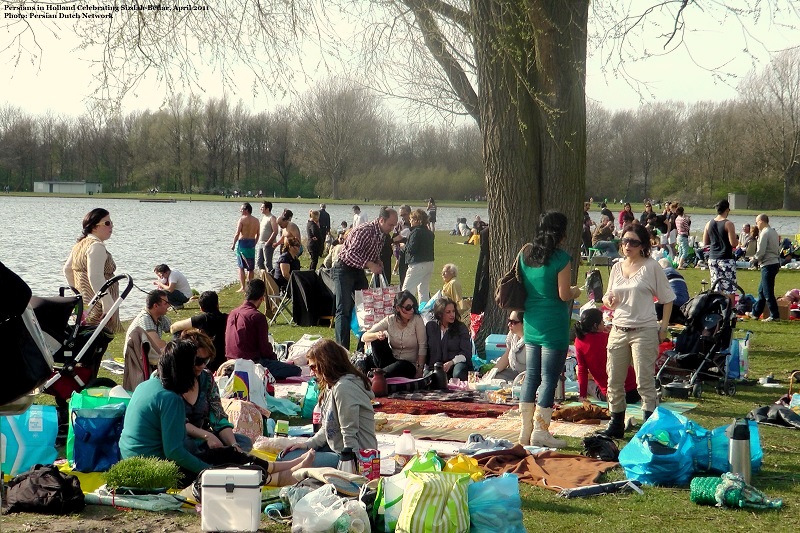 🇮🇷 Iran and 4 moreSizdah Bedarسیزدهبدر
An open-air picnic holiday concluding the Iranian New Year celebrationsFestival
🇮🇷 Iran and 4 moreSizdah Bedarسیزدهبدر
An open-air picnic holiday concluding the Iranian New Year celebrationsFestival
 🇷🇺 Russia and 1 moreRussian tea culture
The everyday cup of Russia, brewed strong and diluted to taste, with jam and sweetsTable custom · Tea, coffee and drinking ceremonies
🇷🇺 Russia and 1 moreRussian tea culture
The everyday cup of Russia, brewed strong and diluted to taste, with jam and sweetsTable custom · Tea, coffee and drinking ceremonies
Photo credits on this page
The small pictures above come from Wikimedia Commons under free licences. Some are cropped to fit.
- Sizdah Bedar: PersianDutchNetwork, CC BY-SA 3.0, source
- Russian tea culture: Boris Kustodiev, Public domain, source
- Mimouna: U.S. Embassy Tel Aviv, CC BY-SA 2.0, source