Customs of food and drinkEurope
Russian tea culture
The everyday cup of Russia, brewed strong and diluted to taste, with jam and sweets

Russian tea culture is the daily habit of tea drinking in Russia. Tea is brewed strong as a concentrate, diluted to taste with hot or cold water, sweetened, and often taken with jam, pastries or lemon. It came overland from China and Mongolia in the seventeenth century and is still drunk at home, at work and on trains.
When is Russian tea culture kept?
Russian tea culture is kept every day, especially in the afternoon and at the end of a meal.
Tea is the drink people in Russia reach for most often, hot and sweet, at the close of a meal or in the middle of a working day. It travelled from China and Mongolia by camel, grew cheap enough for ordinary households, and settled into kitchens, offices and railway carriages. A samovar once boiled the water; now a kettle does.
What it is
For most people in Russia, tea is the ordinary drink of the day rather than a ceremony. Black tea is the usual choice, though green tea has grown more popular. It is drunk sweet, and either hot or cold. Afternoon tea is traditional, but cups are poured from morning until night, and a meal generally finishes with tea rather than starts with it. In the countryside, leaves are often stretched with herbs and berries: mint, lemon balm, blackcurrant leaf, raspberry, St John's wort or rose hips. Sometimes fireweed stands in for tea altogether.
How it arrived
A popular story says Russians met tea in 1567, when two Cossack leaders visited Ming China. That tale comes from Ivan Sakharov's Tales of the Russian People, and historians today treat the manuscript as a forgery and the embassy as invented. A better recorded moment came in 1638, when a Mongol ruler sent Tsar Michael four poods of tea, roughly 65 to 70 kilograms. Jeremiah Curtin describes a possible earlier attempt in 1636, when Vassili Starkov carried 250 pounds back from the Altan Khan of the Khalkha. He had refused such a useless gift of dried leaves until the Khan insisted.
Cheaper tea, faster trains
Caravans brought more leaf from China, but only through state dealers. Peter the Great banned the Beijing trade in 1706; Catherine the Great restored regular imports in 1786. By her death in 1796 camel trains carried over three million pounds of loose tea and tea bricks, and prices had fallen enough for middle and poorer households. The Kiakhta trade peaked in 1824, the caravans in 1860. The first stretch of the Trans-Siberian Railway, opened in 1880, cut the journey from sixteen months to seven weeks. Wissotzky became the empire's leading tea firm. Growing began in 1814 with a plant at the Nikitsky Botanical Garden; the first plantation followed in 1885. Sochi is the main area today.
Brewing and serving
Russian tea is made in two steps. A small pot of zavarka, a strong concentrate, is brewed first, enough for everyone at the table. Each person then pours a little into a cup and adds hot water, or cold, until the strength and heat suit them. Sugar, lemon, honey, jam or milk go in freely. Sweeteners sit in a bowl; dipping your own spoon into it instead of using the spoon provided is thought impolite. The same leaves are sometimes brewed three times, which most people think spoils the taste unless the tea is green. A samovar boiled the water until the mid-twentieth century; gas stoves in new flats brought kettles, and electric kettles have been usual since the 1990s.
Tea with company
No formal ceremony surrounds the cup. Tea ends a Russian meal and arrives with dessert; pastries, sweets and varenye are rarely eaten on their own, and households group them as things to go with tea. A festive dinner serves savoury dishes first and tea second, usually with a large cake. Offices offer tea at meetings and in waiting rooms, and visitors get a cup, especially in cold weather. Formal tables use small porcelain cups from a single set, while everyday mugs can hold half a litre. On a train the conductor brings a glass in its holder, filled from the urn at the carriage end. Kalmyk tea is different: loose leaves boiled with more milk than water, salt and spices, eaten with flatbread.
How Russian tea culture is kept
Anyone at the table takes part, from family to a passing guest. Someone brews a small pot of zavarka, a strong concentrate. Each person pours a little into their cup, then tops it up with hot water, or cold if they prefer, until the strength suits them. Sugar, lemon, honey, jam or milk are added to taste. Sweeteners sit in a bowl, and dipping your own spoon in rather than using the spoon kept there is thought impolite. Tea comes with the last course, often with cake or preserves, and empty cups tell the host the meal is over.
When and where
Tea has no fixed date. It is drunk through the day, and the afternoon is the traditional hour. In most homes the strongest moment is the end of a meal, when tea arrives with dessert, and a festive dinner finishes the same way. The sweet spiced drink called Russian Tea in the United States belongs to Advent and Christmastide.
Russia is its home and the habit is strongest there, in city flats, village houses, offices and railway carriages. Tea is still grown in the south, around Sochi. A different drink named Russian Tea, made with black tea, orange, cinnamon and cloves, is traditional at social events in the southeastern United States.
What Russian tea culture means
For those who keep it, tea is less a ceremony than a sign of welcome and of time shared. Offering a cup says a visitor is wanted, even one who has come only for a moment. Because a meal finishes with tea, the drink marks the end of eating and the start of unhurried talk, which is treated as the best part of the occasion. In the nineteenth century sugar was held between the teeth, and preserves were set beside the cup; an old phrase pairs tea with sugar. Tea is rarely taken by itself.
On the table
Flavours: Cinnamon Clove Nutmeg and mace Mint


Questions people ask about Russian tea culture
When is Russian tea culture kept?
Russian tea culture is kept every day, especially in the afternoon and at the end of a meal.
What is Russian tea culture?
It is the everyday habit of drinking tea in Russia. Tea is brewed strong as a concentrate, diluted to taste with hot or cold water, and taken sweet, often with jam, pastries or lemon. Cups come all day, and a meal usually ends with one.
What is a samovar?
A vessel for boiling water, once the centre of the Russian tea table. It stayed in use until the middle of the twentieth century, when gas stoves spread through new apartment blocks and ordinary kettles took over. Electric kettles became common from the 1990s.
Is there a set way to brew it?
There is a two-step method rather than a rule. A small pot of strong zavarka is made first. Each person pours some into their cup and adds hot or cold water until it tastes right, then sweetens it. Leaves are sometimes reused, though that weakens the flavour.
See also
SamovarA heated urn that brews tea for a slow, sociable pour, from Russia to Iran and Kashmir LangarThe free kitchen at a gurdwara, where all sit and eat together as equals
 Barn raisingA communal tradition where neighbours assemble to erect a farm barn in a few days
 HandshakeA brief clasp of hands to greet, part or seal a deal, with local rules on how it is done
Good reading and sources
- Russian tea culture on WikipediaEncyclopedia
- More photos on Wikimedia CommonsPhotos and video
- Wikidata recordOpen data
The facts on this page come from the Wikipedia article "Russian tea culture", written by its contributors and used under the CC BY-SA 4.0 licence, and from its Wikidata record (CC0). EveryParampara rewrote the text in its own words, with AI assistance, and compares every page with the article to make sure no passage is copied. It may be reused under the same CC BY-SA 4.0 licence with a link back.
It may contain mistakes. Traditions differ from one family, village and community to the next, and the people who keep them know them best. If something is wrong, tell us. Last refreshed 2026-10-05.
More from Russia
All the traditions of Russia
🇷🇺 Tula, Russia and 3 moreSamovarсамовар
A heated urn that brews tea for a slow, sociable pour, from Russia to Iran and KashmirTable custom · Tea, coffee and drinking ceremonies
 🇷🇺 Russia and 1 moreZakuskiзакуски
A laid-out table of cold small dishes that opens a Russian festive mealTable custom · Tea-time and snacking customs
🇷🇺 Russia and 1 moreZakuskiзакуски
A laid-out table of cold small dishes that opens a Russian festive mealTable custom · Tea-time and snacking customs
 🇺🇦 Ukraine and 4 moreKorovaiкоровай (Ukrainian), каравай (Russian)
A round wedding bread of Eastern Europe, baked with songs and shared by all the guestsTable custom · Feasts and festival meals
🇺🇦 Ukraine and 4 moreKorovaiкоровай (Ukrainian), каравай (Russian)
A round wedding bread of Eastern Europe, baked with songs and shared by all the guestsTable custom · Feasts and festival meals
 🇰🇬 Kyrgyzstan and 4 moreBeshbarmakбешбармак
Boiled meat and noodles, eaten by hand from one platter, with a set cut for each guestTable custom · Feasts and festival meals
🇰🇬 Kyrgyzstan and 4 moreBeshbarmakбешбармак
Boiled meat and noodles, eaten by hand from one platter, with a set cut for each guestTable custom · Feasts and festival meals
The same idea elsewhere
Tea, coffee and the drinking ceremony compared 🇨🇳 Chaozhou, China and 1 moreGongfu tea工夫茶
A skilled Chinese method of brewing tea in small teaware with precise heat and timingTable custom · Tea, coffee and drinking ceremonies
🇨🇳 ChinaGuanxi关系
A Chinese tradition of cultivating trusted networks and reciprocal obligationsEtiquette
🇰🇼 KuwaitDewaniya
An evening gathering and reception central to Kuwaiti social, business, and civic lifeEtiquette · Tea, coffee and drinking ceremonies
🇨🇳 Chaozhou, China and 1 moreGongfu tea工夫茶
A skilled Chinese method of brewing tea in small teaware with precise heat and timingTable custom · Tea, coffee and drinking ceremonies
🇨🇳 ChinaGuanxi关系
A Chinese tradition of cultivating trusted networks and reciprocal obligationsEtiquette
🇰🇼 KuwaitDewaniya
An evening gathering and reception central to Kuwaiti social, business, and civic lifeEtiquette · Tea, coffee and drinking ceremonies
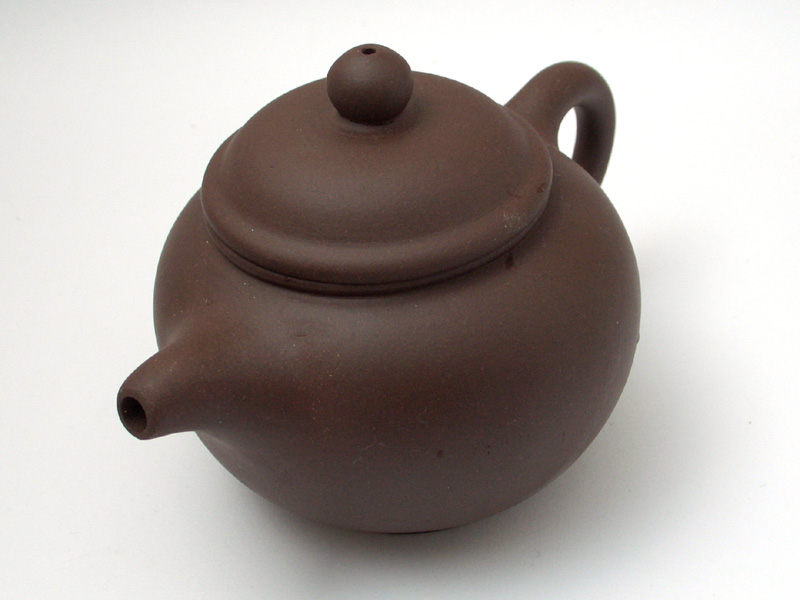 🇨🇳 Yixing, ChinaYixing clay teapot紫砂
Handcrafted Chinese purple clay teapots that season with every brewCraft · Tea, coffee and drinking ceremonies
🇨🇳 Yixing, ChinaYixing clay teapot紫砂
Handcrafted Chinese purple clay teapots that season with every brewCraft · Tea, coffee and drinking ceremonies