Festivals and celebrationsEurope
Aberri Eguna
An annual Basque nationalist gathering held on Easter Sunday to celebrate national identity and culture.
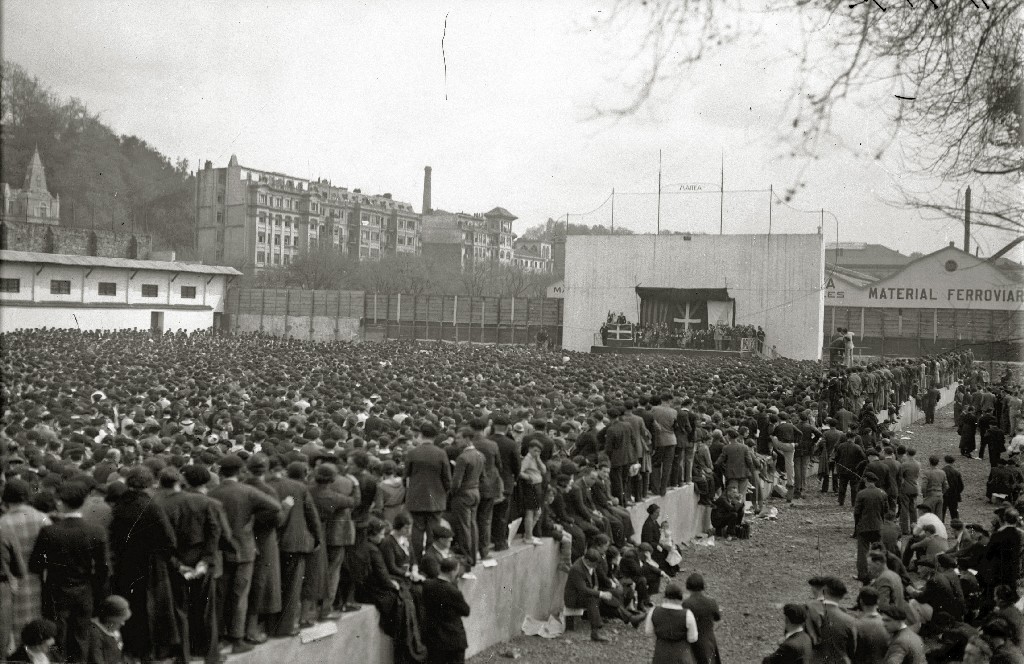
Aberri Eguna is an unofficial Basque national holiday observed on Easter Sunday. It brings together the Basque community for political rallies and cultural festivities, honoring their shared heritage and language.
When is Aberri Eguna kept?
Aberri Eguna is kept every year on Easter Sunday.
Aberri Eguna marks a day of unity for the Basque people. Held annually on Easter Sunday, it serves as an unofficial national holiday. The event blends political expression with cultural celebration. Participants gather to honor their history, language, and distinct identity through speeches and traditional activities.
Origins and history
The first Aberri Eguna took place in Bilbao on March 27, 1932. Organized by the Basque Nationalist Party, it drew approximately 65,000 people to a demonstration ending at the Sabino Arana House. The date was chosen to align with Easter Sunday, reflecting the party's motto regarding God and old laws. After its inception, the event spread to other cities like San Sebastián and Vitoria-Gasteiz. During the Spanish Civil War and subsequent Francoist rule, public celebrations were banned from 1937 to 1975. Communities kept the tradition alive in smaller, clandestine gatherings or in the Northern Basque Country under French jurisdiction.
Etymology and meaning
The name derives from 'aberri,' a term coined by Sabino Arana. He constructed it by combining a root meaning father with words for land or people. This neologism helped establish a sense of kinship and belonging within the movement. Other related terms like 'abertzale' for patriot also emerged from this linguistic innovation. For those who observe it, the day symbolizes resilience and the preservation of Basque customs despite historical suppression. It remains a powerful marker of collective memory and political aspiration.
How it is kept today
Modern Aberri Eguna events vary widely depending on the organizers. They range from formal political rallies to informal cultural picnics. In many communities, especially among emigrants, the focus shifts toward celebrating Basque culture rather than strict politics. Activities often include traditional music performances and displays of local sports. Food and drink play a central role, with Basque cider being a common feature. These gatherings allow participants to connect with their roots while sharing food and stories in a festive atmosphere.
How Aberri Eguna is kept
Participants gather on Easter Sunday for speeches, cultural performances, and communal meals. Events may include traditional Basque sports competitions and musical acts. Many groups share cider and local dishes during outdoor picnics. Political parties often hold rallies to discuss regional issues. The tone varies from solemn remembrance to lively celebration, depending on the specific group hosting the event.
When and where
It falls on Easter Sunday each year. The date changes annually based on the lunar calendar used to determine Easter. This timing was deliberately chosen to link the celebration with Christian symbolism of resurrection, aligning with the ideological foundations of the organizing parties.
The tradition is strongest in the Basque regions of Spain and France. Major historical gatherings occurred in Bilbao, San Sebastián, and Vitoria-Gasteiz. Today, celebrations take place across these areas and in Basque diaspora communities worldwide. The Northern Basque Country in France has historically been a key site for free assembly during periods of restriction elsewhere.
What Aberri Eguna means
The day represents the endurance of Basque identity against political pressure. It honors the founders of modern Basque nationalism and their vision of self-determination. The choice of Easter Sunday links spiritual renewal with national rebirth. For many, it is a moment to reaffirm loyalty to their homeland and its unique language and traditions.


Questions people ask about Aberri Eguna
When is Aberri Eguna kept?
Aberri Eguna is kept every year on Easter Sunday.
What is Aberri Eguna?
It is an annual Basque nationalist celebration held on Easter Sunday. It functions as an unofficial national holiday for the Basque people, featuring political rallies and cultural events that honor their heritage and language.
Where does it take place?
It is primarily observed in the Basque Country, spanning parts of northern Spain and southwestern France. Historical centers include Bilbao and San Sebastián, though it is now celebrated globally by Basque communities.
See also
 HalloweenAn annual observance on 31 October marking the eve of All Saints' Day, rooted in Christian tradition and Celtic heritage
 Father's DayA day to honour fathers and fatherhood, kept on many different dates worldwide
 AnnunciationA Christian feast marking the angel Gabriel's message to Mary about bearing Jesus, kept on 25 March.
 Running of the bullsRunners sprint ahead of loose bulls through barricaded town streets in summer
Good reading and sources
- Aberri Eguna on WikipediaEncyclopedia
- More photos on Wikimedia CommonsPhotos and video
- Wikidata recordOpen data
The facts on this page come from the Wikipedia article "Aberri Eguna", written by its contributors and used under the CC BY-SA 4.0 licence, and from its Wikidata record (CC0). EveryParampara rewrote the text in its own words, with AI assistance, and compares every page with the article to make sure no passage is copied. It may be reused under the same CC BY-SA 4.0 licence with a link back.
It may contain mistakes. Traditions differ from one family, village and community to the next, and the people who keep them know them best. If something is wrong, tell us. Last refreshed 2026-10-06.
More from Spain
All the traditions of Spain
🇮🇪 Ireland and 5 moreHalloween
An annual observance on 31 October marking the eve of All Saints' Day, rooted in Christian tradition and Celtic heritageFestival · Sweets given and shared
 🇺🇸 Boise, United States and 3 moreBasque festivalEuskal jaiak
Gatherings of dance, sport and food that keep Basque culture alive far from homeFestival
🇪🇸 Pamplona, Spain and 3 moreRunning of the bullsencierro
Runners sprint ahead of loose bulls through barricaded town streets in summerFestival
🇺🇸 Boise, United States and 3 moreBasque festivalEuskal jaiak
Gatherings of dance, sport and food that keep Basque culture alive far from homeFestival
🇪🇸 Pamplona, Spain and 3 moreRunning of the bullsencierro
Runners sprint ahead of loose bulls through barricaded town streets in summerFestival
 🇪🇸 Pamplona, SpainFestival of San FermínSanfermines
An annual nine-day festival in Pamplona featuring bull runs, parades, and street music.Festival
🇪🇸 Pamplona, SpainFestival of San FermínSanfermines
An annual nine-day festival in Pamplona featuring bull runs, parades, and street music.Festival
The same idea elsewhere
All of this kind 🇹🇷 Turkey and 5 moreEid al-Fitrعيد الفطر
The feast that ends Ramadan, opened with morning prayers, sweets and visits homeFestival · Feasts and festival meals
🇹🇷 Turkey and 5 moreEid al-Fitrعيد الفطر
The feast that ends Ramadan, opened with morning prayers, sweets and visits homeFestival · Feasts and festival meals
 🇮🇳 Ayodhya, India and 7 moreDiwaliदीपावली (Dīpāvalī)
A five-day festival of lights celebrated across India and its diaspora to mark the victory of light over darkness.Festival · Feasts and festival meals
🇮🇳 Ayodhya, India and 7 moreDiwaliदीपावली (Dīpāvalī)
A five-day festival of lights celebrated across India and its diaspora to mark the victory of light over darkness.Festival · Feasts and festival meals
 🇮🇱 Jerusalem, Israel and 1 moreHanukkahחֲנֻכָּה
An eight-day Jewish festival marking the rededication of the Second Temple in Jerusalem and the miracle of a single day'Festival
🇮🇱 Jerusalem, Israel and 1 moreHanukkahחֲנֻכָּה
An eight-day Jewish festival marking the rededication of the Second Temple in Jerusalem and the miracle of a single day'Festival
 🇪🇬 Egypt and 5 moreMawlidمولد (Mawlid)
An annual festival marking the birth of the Prophet Muhammad, marked by poetry, processions and feasts.Festival · Feasts and festival meals
🇪🇬 Egypt and 5 moreMawlidمولد (Mawlid)
An annual festival marking the birth of the Prophet Muhammad, marked by poetry, processions and feasts.Festival · Feasts and festival meals