Festivals and celebrationsEuropeChristian
Carnival of French Guiana
A weeks-long carnival of masked balls and parades, from Epiphany to Mardi Gras
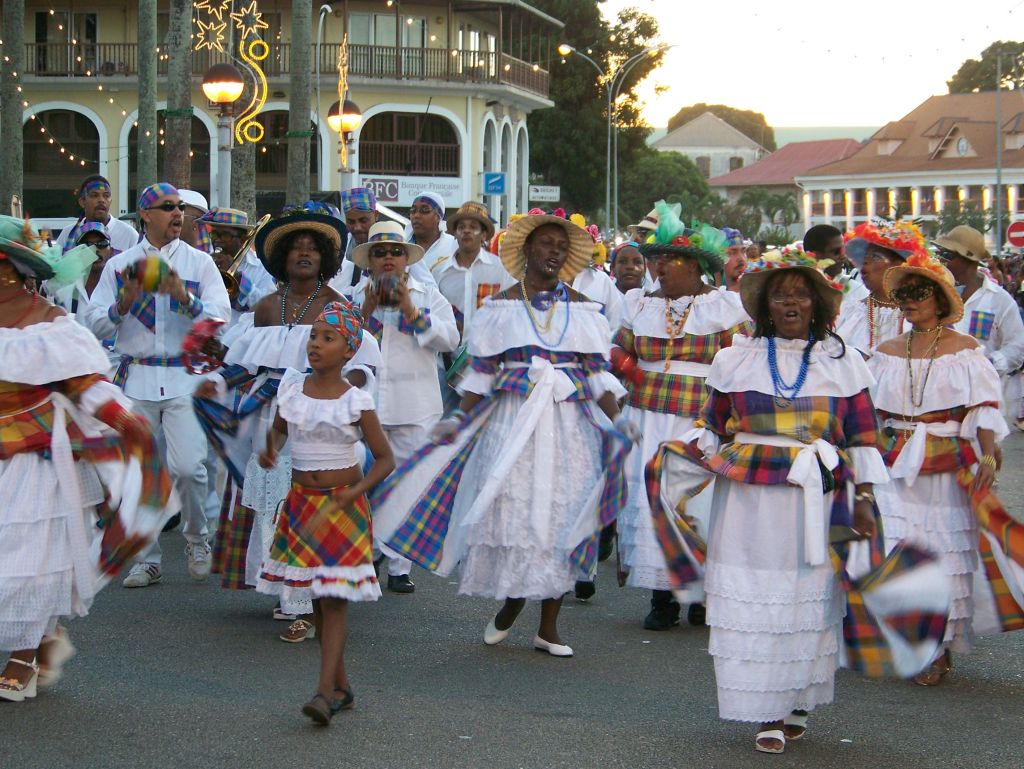
A movable festival kept in French Guiana, Afro-Caribbean in style, that runs from Epiphany in January to Ash Wednesday and closes on Mardi Gras; its best known figures are the Touloulou, a woman hidden behind her costume, and King Vaval, whose effigy is burned on the last night. Creole, French, Brazilian and Chinese communities take part.
When is Carnival of French Guiana marked?
Carnival of French Guiana is kept as part of Epiphany and Three Kings, which is on Wednesday, 6 January 2027.
Carnival of French Guiana is a long season of masked balls and street parades, kept by Creole, French, Brazilian and Chinese communities. Its best known figures are King Vaval, the carnival king, and the Touloulou, a woman covered so completely that no one can tell who she is. It runs from Epiphany to Ash Wednesday.
What it is
Carnival in French Guiana is a movable season rather than a single day. It starts at Epiphany, in early January, and closes on Mardi Gras, the day before Ash Wednesday opens Lent. Its style is Afro-Caribbean. Creole people, people from mainland France, and Brazilian and Chinese communities all join in. Costumes are bright. The two figures most people know are the Touloulou, a woman whose identity stays hidden, and King Vaval, the king of the carnival. Its masked balls are known well beyond the territory.
Origins and history
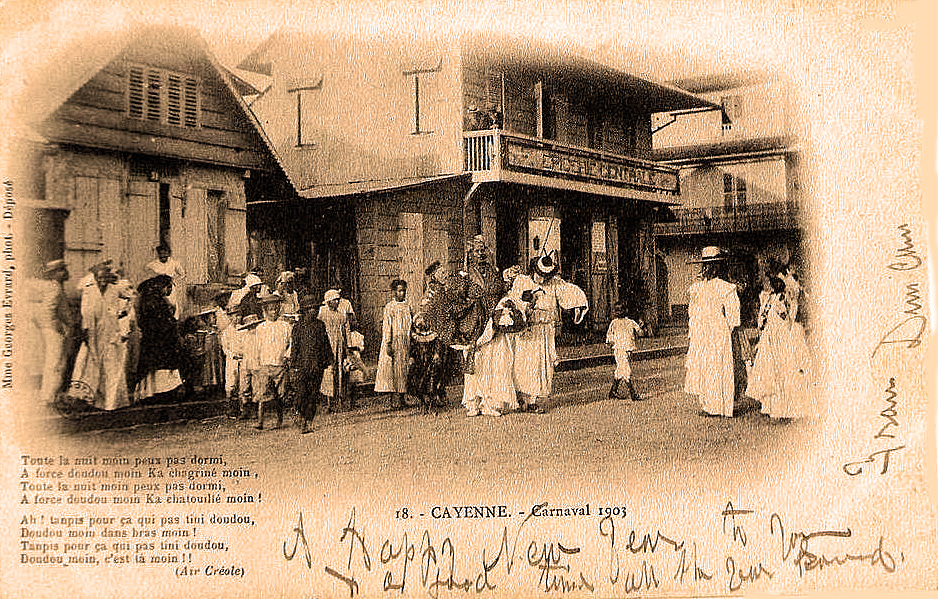
The carnival grew out of European carnival customs, brought to the colony when settlement began, in the 1600s and 1700s. Settlers took part and barred enslaved Africans from joining them. Enslaved people held carnival anyway, out of sight. For them it was a way to hold on to a little freedom, to honour African fertility and to mock the settlers. Their descendants and later arrivals, including people from mainland France, Brazil and China, keep the festival now.
Characters and costumes
King Vaval is the carnival king, a mythical figure. He appears at the start of the season and dies on Ash Wednesday, and the next year he comes back, as the phoenix does. The Touloulou is the best known character: a woman dressed with such care that nobody can tell who she is, in the manner of middle-class women of the 1700s and 1800s. Neg'Marrons are men in red loincloths called kalimbé, their bodies rubbed with molasses; they stand for escaped slaves and keep order. Among many others are a baker, a bear on a leash, a bat, and figures of death and of a red devil.
How it is kept
The Paré-masqué balls come first, on the Friday and Saturday nights before Lent. Crowds fill the dance halls, where women in disguise invite men to dance, and a man who is asked has to join and pay at the door. Sunday brings parades through Cayenne, Kourou and Saint-Laurent-du-Maroni, with floats, drummers and brass players, and months of work behind them. On Monday there is a burlesque wedding, brides in men's gowns and grooms in women's dress. On Tuesday King Vaval arrives by canoe as a straw effigy, dancers in horned and tailed costumes meet him on the beach, and the effigy burns at night. On Ash Wednesday people wear black and white to mourn him.
Food and drink
Fridays in the season often bring a cake called galette des rois, the cake of kings, which in mainland France belongs to Epiphany alone. In French Guiana the Creole version is the more popular one, and it stands for the Three Kings. Blaff, a broth of fish or chicken, is eaten often too, and punch is drunk. These are the table customs that go with the weeks of dancing and parading.
How Carnival of French Guiana is kept
Women in disguise open the season at the Paré-masqué balls, inviting men to dance on Friday and Saturday nights; the men must accept and pay to enter. Sunday is for street parades with floats, drums and brass, prepared over months. Monday brings a mock wedding, the brides in men's clothes and the grooms in women's. On Tuesday an effigy of King Vaval arrives on a canoe; dancers in black or red, with horns and tails and pitchforks, greet him on the beach, and the effigy is burned that night. Ash Wednesday is a day of black and white dress.
When and where
Carnival follows the church calendar, so its dates move each year. It opens at Epiphany, in early January, and ends on Mardi Gras, the day before Ash Wednesday. Ash Wednesday starts Lent. That gives a season of several weeks, closed by the last night of feasting and costume.
It is kept across French Guiana, with parades in Cayenne, Kourou and Saint-Laurent-du-Maroni. The masked balls draw crowds into the dance halls of the towns. Guianan Creole people hold the tradition, and communities from mainland France, Brazil and China join them. The Paré-masqué balls are known internationally.
What Carnival of French Guiana means
For the people who keep it, the carnival is a time when who you are can be put aside. The Touloulou hides her face so that she is not recognized, and the dance floor becomes a place where that hiding is the point. King Vaval stands for the season itself: he dies on Ash Wednesday and returns the next year. Underneath the play there is an older meaning, a memory of enslaved people who took a few weeks of freedom and held on to them.



Days Carnival of French Guiana is marked
Questions people ask about Carnival of French Guiana
When is Carnival of French Guiana marked?
Carnival of French Guiana is kept as part of Epiphany and Three Kings, which is on Wednesday, 6 January 2027.
What is the Carnival of French Guiana?
It is a weeks-long carnival kept in French Guiana, Afro-Caribbean in style, with masked balls, street parades and costumed characters. The best known are the Touloulou, a woman nobody can identify, and King Vaval, the carnival king whose effigy is burned on the last night.
Where is it kept?
It belongs to French Guiana. The parades go through Cayenne, Kourou and Saint-Laurent-du-Maroni, and the masked balls are held in the towns. Guianan Creole people hold the tradition, joined by communities with roots in mainland France, Brazil and China.
Who is the Touloulou?
She is the carnival's best known character. A domino mask, a hood, gloves and a petticoat keep her face and skin out of sight, so nobody knows who she is. She walks the streets and goes to the masked balls, and it is she who invites a man to dance. She stands for middle-class women of the 1700s and 1800s.
Who is King Vaval?
He is the mythical king of the carnival. He is presented when the season opens and dies on Ash Wednesday, then comes back the next year like the phoenix. On the final Tuesday his straw effigy arrives by canoe, and after the dancers greet him on the beach it is burned at night.
See also
 AnnunciationA Christian feast marking the angel Gabriel's message to Mary about bearing Jesus, kept on 25 March.
 Basque festivalGatherings of dance, sport and food that keep Basque culture alive far from home
 PicnicA meal taken outdoors in a park or scenic spot, often shared with friends and family.
 Running of the bullsRunners sprint ahead of loose bulls through barricaded town streets in summer
Good reading and sources
- Carnival in French Guiana on WikipediaEncyclopedia
- More photos on Wikimedia CommonsPhotos and video
- Wikidata recordOpen data
The facts on this page come from the Wikipedia article "Carnival in French Guiana", written by its contributors and used under the CC BY-SA 4.0 licence, and from its Wikidata record (CC0). EveryParampara rewrote the text in its own words, with AI assistance, and compares every page with the article to make sure no passage is copied. It may be reused under the same CC BY-SA 4.0 licence with a link back.
It may contain mistakes. Traditions differ from one family, village and community to the next, and the people who keep them know them best. If something is wrong, tell us. Last refreshed 2026-10-10.
More from France
All the traditions of France 🇸🇪 Sweden and 3 moreAdventadventus
A four-week Christian season of waiting and preparation for Christmas and the Second Coming.Festival
🇸🇪 Sweden and 3 moreAdventadventus
A four-week Christian season of waiting and preparation for Christmas and the Second Coming.Festival
 🇫🇷 Paris, France and 3 moreFête de la Musique
An annual celebration where people play music in public spaces on the summer solstice.Festival
🇫🇷 Paris, France and 3 moreFête de la Musique
An annual celebration where people play music in public spaces on the summer solstice.Festival
 🇬🇧 United Kingdom and 5 moreApril Fools' Day
An annual day of lighthearted pranks, hoaxes and teasing kept on the first of AprilFestival
🇫🇷 France and 4 morePicnic
A meal taken outdoors in a park or scenic spot, often shared with friends and family.Festival · Lunch
🇬🇧 United Kingdom and 5 moreApril Fools' Day
An annual day of lighthearted pranks, hoaxes and teasing kept on the first of AprilFestival
🇫🇷 France and 4 morePicnic
A meal taken outdoors in a park or scenic spot, often shared with friends and family.Festival · Lunch
The same idea elsewhere
All of this kind 🇹🇷 Turkey and 5 moreEid al-Fitrعيد الفطر
The feast that ends Ramadan, opened with morning prayers, sweets and visits homeFestival · Feasts and festival meals
🇹🇷 Turkey and 5 moreEid al-Fitrعيد الفطر
The feast that ends Ramadan, opened with morning prayers, sweets and visits homeFestival · Feasts and festival meals
 🇮🇳 Ayodhya, India and 7 moreDiwaliदीपावली (Dīpāvalī)
A five-day festival of lights celebrated across India and its diaspora to mark the victory of light over darkness.Festival · Feasts and festival meals
🇮🇳 Ayodhya, India and 7 moreDiwaliदीपावली (Dīpāvalī)
A five-day festival of lights celebrated across India and its diaspora to mark the victory of light over darkness.Festival · Feasts and festival meals
 🇮🇱 Jerusalem, Israel and 1 moreHanukkahחֲנֻכָּה
An eight-day Jewish festival marking the rededication of the Second Temple in Jerusalem and the miracle of a single day'Festival
🇮🇱 Jerusalem, Israel and 1 moreHanukkahחֲנֻכָּה
An eight-day Jewish festival marking the rededication of the Second Temple in Jerusalem and the miracle of a single day'Festival
 🇪🇬 Egypt and 5 moreMawlidمولد (Mawlid)
An annual festival marking the birth of the Prophet Muhammad, marked by poetry, processions and feasts.Festival · Feasts and festival meals
🇪🇬 Egypt and 5 moreMawlidمولد (Mawlid)
An annual festival marking the birth of the Prophet Muhammad, marked by poetry, processions and feasts.Festival · Feasts and festival meals