Festivals and celebrationsEurope
Carnival of Venice
In its own language: Carnevale di Venezia
A historic festival in Italy famous for elaborate masks and anonymous social gatherings.
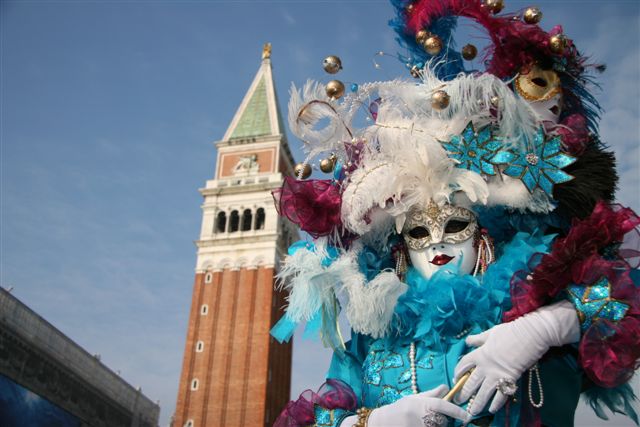
The Carnival of Venice is an annual celebration held in the Italian city of Venice. It features distinctive costumes and masks that allow participants to move anonymously through society. The event concludes on Shrove Tuesday before the start of Lent.
When is Carnival of Venice in 2027?
Carnival of Venice 2027 runs from 23 January to 9 February 2027. The date follows the moon or a local calendar, so it can move by a day. Other years: 2026, 31 January to 17 February 2026; 2028, 12 to 29 February 2028.
The Carnival of Venice is a major annual festival celebrated in Italy. It is renowned worldwide for its intricate masks and period costumes. Participants use these disguises to conceal their identities while enjoying public festivities. The tradition has deep historical roots in the region's culture.
Origins and history
Legend states the festival began in 1162 following a military victory over the patriarch of Aquileia. Citizens gathered in St Mark's Square to dance and celebrate. The event became official during the Renaissance and reached its peak in the 18th century. It served as a time for pleasure and protection from anguish. Emperor Francis II outlawed the carnival in 1797. Mask wearing was strictly forbidden under his rule. The tradition reappeared briefly in the 19th century for private feasts. The modern event was revived in 1979 by the city government.
Masks and disguise
Masks have always been central to the celebration. People wore them between Saint Stephen's Day and Shrove Tuesday. They were also permitted on Ascension and from October to Christmas. Maskmakers formed a guild with specific laws dating back to 1436. Traditional masks were simple but carried symbolic meaning. Modern versions often feature gesso, gold leaf, feathers, and gems. Distinct styles exist for different occupations and genders. The bauta allowed men to eat and drink without removing it. The Colombina covered only the eyes and nose. The moretta was a strapless black velvet mask worn by women.
Social rules and anonymity
Covering the face responded to rigid class hierarchies in European history. Sumptuary laws were suspended during the festival. People could dress freely regardless of their profession or social rank. The Great Council regulated behavior even in disguise. Throwing scented eggs at others was prohibited. Public gambling remained illegal despite the festive atmosphere. Wearing vulgar disguises or visiting convents while masked was forbidden. The bauta enabled citizens to act as peers during political events. This anonymizing process guaranteed equal participation. Bearing weapons alongside the mask was specifically banned by law.
Modern revival and events
The Italian government restored the carnival in 1979 to highlight local history and culture. Student initiatives initially drove the redevelopment of mask crafts for tourism. Approximately three million visitors now attend annually. A key event is the contest for the most beautiful mask. International designers judge the competition for artistic merit. Winners are selected each year for their creativity and design. The governor cancelled celebrations in February 2020 due to the coronavirus pandemic. The event resumed in subsequent years with new winning designs.
How Carnival of Venice is kept
Participants wear elaborate costumes and masks throughout the city streets. The festival runs from late December until Shrove Tuesday. People gather in squares like St Mark's Square for public celebrations. A contest selects the most beautiful mask each year. Judges evaluate entries based on design and craftsmanship. Visitors travel from around the world to witness the spectacle. The event highlights traditional mask-making techniques and historical attire.
When and where
The festival occurs annually in February or early March. It ends on Shrove Tuesday, the day before Ash Wednesday. The date shifts each year based on the religious calendar.
The celebration takes place in Venice, Italy. It is strongest in the city's historic centers and squares. The event draws millions of international visitors to the location.
What Carnival of Venice means
Masks provided anonymity within a strict social hierarchy. They allowed people to transcend their daily roles and classes. The bauta enabled political equality by hiding identities. Disguise offered protection from present and future worries. The tradition reflects a desire for freedom and social leveling.


Days Carnival of Venice is marked
Carnival of Venice dates: 2026, 2027, 2028
| Year | Carnival of Venice date |
|---|---|
| 2026 | 31 January to 17 February 2026 |
| 2027 | 23 January to 9 February 2027 |
| 2028 | 12 to 29 February 2028 |
This date follows the moon or a local calendar and can move by a day, so check with a local source nearer the time.
Questions people ask about Carnival of Venice
When is Carnival of Venice in 2027?
Carnival of Venice 2027 runs from 23 January to 9 February 2027. The date follows the moon or a local calendar, so it can move by a day. Other years: 2026, 31 January to 17 February 2026; 2028, 12 to 29 February 2028.
What is the Carnival of Venice?
It is an annual festival held in Venice, Italy. The event is famous for its elaborate costumes and distinctive masks. Participants use disguises to conceal their identities during public gatherings.
Why do people wear masks?
Historically, masks allowed individuals to bypass rigid social class rules. They provided anonymity so people could act freely without judgment. The bauta mask let men eat and speak without removing it.
How did the modern carnival start?
The tradition was revived in 1979 by the City of Venice. The government wanted to restore local history and culture. Student efforts initially helped develop the mask craft for tourism.
See also
 ChristmasA festival of Jesus's birth, kept on 25 December with gifts, lights and shared meals
 Christmas treeA decorated evergreen or artificial tree placed indoors to mark the Christmas season.
 Mardi GrasA festive day of parades and rich foods marking the final celebration before the Christian fasting season of Lent begins
 LipizzanerA gray riding horse breed and centuries-old tradition of classical dressage kept by the Spanish Riding School.
Good reading and sources
- Carnival of Venice on WikipediaEncyclopedia
- More photos on Wikimedia CommonsPhotos and video
- Wikidata recordOpen data
The facts on this page come from the Wikipedia article "Carnival of Venice", written by its contributors and used under the CC BY-SA 4.0 licence, and from its Wikidata record (CC0). EveryParampara rewrote the text in its own words, with AI assistance, and compares every page with the article to make sure no passage is copied. It may be reused under the same CC BY-SA 4.0 licence with a link back.
It may contain mistakes. Traditions differ from one family, village and community to the next, and the people who keep them know them best. If something is wrong, tell us. Last refreshed 2026-10-08.
More from Italy
All the traditions of Italy
🇮🇹 Rome, Italy and 4 moreChristmas
A festival of Jesus's birth, kept on 25 December with gifts, lights and shared mealsFestival
 🇮🇹 Rome, Italy and 4 moreValentine's Day
A Christian feast day and cultural celebration of love kept on February 14 in many countries.Festival
🇩🇪 Germany and 5 moreChristmas tree
A decorated evergreen or artificial tree placed indoors to mark the Christmas season.Festival
🇮🇹 Rome, Italy and 4 moreValentine's Day
A Christian feast day and cultural celebration of love kept on February 14 in many countries.Festival
🇩🇪 Germany and 5 moreChristmas tree
A decorated evergreen or artificial tree placed indoors to mark the Christmas season.Festival
 🇬🇧 United Kingdom and 5 moreApril Fools' Day
An annual day of lighthearted pranks, hoaxes and teasing kept on the first of AprilFestival
🇬🇧 United Kingdom and 5 moreApril Fools' Day
An annual day of lighthearted pranks, hoaxes and teasing kept on the first of AprilFestival
The same idea elsewhere
All of this kind 🇹🇷 Turkey and 5 moreEid al-Fitrعيد الفطر
The feast that ends Ramadan, opened with morning prayers, sweets and visits homeFestival · Feasts and festival meals
🇹🇷 Turkey and 5 moreEid al-Fitrعيد الفطر
The feast that ends Ramadan, opened with morning prayers, sweets and visits homeFestival · Feasts and festival meals
 🇮🇳 Ayodhya, India and 7 moreDiwaliदीपावली (Dīpāvalī)
A five-day festival of lights celebrated across India and its diaspora to mark the victory of light over darkness.Festival · Feasts and festival meals
🇮🇳 Ayodhya, India and 7 moreDiwaliदीपावली (Dīpāvalī)
A five-day festival of lights celebrated across India and its diaspora to mark the victory of light over darkness.Festival · Feasts and festival meals
 🇮🇱 Jerusalem, Israel and 1 moreHanukkahחֲנֻכָּה
An eight-day Jewish festival marking the rededication of the Second Temple in Jerusalem and the miracle of a single day'Festival
🇮🇱 Jerusalem, Israel and 1 moreHanukkahחֲנֻכָּה
An eight-day Jewish festival marking the rededication of the Second Temple in Jerusalem and the miracle of a single day'Festival
 🇪🇬 Egypt and 5 moreMawlidمولد (Mawlid)
An annual festival marking the birth of the Prophet Muhammad, marked by poetry, processions and feasts.Festival · Feasts and festival meals
🇪🇬 Egypt and 5 moreMawlidمولد (Mawlid)
An annual festival marking the birth of the Prophet Muhammad, marked by poetry, processions and feasts.Festival · Feasts and festival meals