Festivals and celebrationsEuropeChristian
Christmas
A festival of Jesus's birth, kept on 25 December with gifts, lights and shared meals

Christmas is the yearly Christian festival of Jesus's birth, held on 25 December by most churches and in January by several Eastern ones. It is both a religious feast and a public holiday in many lands, marked with church services, gift-giving, decorated trees and family meals.
When is Christmas in 2026?
Christmas 2026 is on Friday, 25 December 2026. Other years: 2027, Saturday, 25 December 2027; 2028, Monday, 25 December 2028.
Christmas marks the birth of Jesus of Nazareth, and Christians have kept it as their central winter feast for well over a thousand years. It falls on 25 December for most of them. Others, following older calendars, keep it in January. Around that religious core grew a season of gifts, evergreen branches, shared meals and songs, which many people now observe without any church connection at all.
What it is
Christmas is a yearly Christian feast that remembers the birth of Jesus. The gospel of Luke tells of a census journey that took Mary and Joseph to Bethlehem, where the child was laid in a manger and shepherds were told the news by angels. Matthew's account instead has magi following a star and bringing gifts. Churches read these passages in services. Around the feast sits a season: Advent, the weeks of preparation that open on the First Sunday of Advent, then Christmastide, which in western practice ran for twelve days and closed at Twelfth Night.
How the date was set
In the second century believers already kept the memory of the Lord's birth, though they had no single agreed date. Christians in Rome settled on 25 December, the day the empire treated as the winter solstice. The Chronograph of 354 is the earliest document to give that date, and historians hold that this entry was written in Rome in 336. Pope Julius I is credited with fixing it formally. Other churches kept the birth with Epiphany on 6 January, a day centred on baptism. The feast reached Constantinople in 379, Antioch about 388, and Alexandria in the next century.
How it is kept
Christians gather for church services, and in many countries the day is a public holiday. Homes are decorated with trees and lights, nativity scenes, wreaths, garlands, holly, ivy and mistletoe, and poinsettias. Families and friends meet for a meal, cards are sent, carols are sung, and gifts are exchanged. Children hear of a gift bringer: Santa Claus, Father Christmas, Saint Nicholas or the Christkind, depending on the place. Many also watch nativity plays and Christmas films, or follow an Advent calendar or wreath through the days of preparation. People who belong to no church often join in the festive and family side.
Food and drink
Christmas eating has always leaned towards plenty. Medieval halls served a boar at the winter feast, and a special brew called Christmas ale was part of the English season. A chronicler noted that in 1377 Richard II of England fed his guests 28 oxen and 300 sheep. By the seventeenth century English households were laying out lavish dinners, masques and pageants. Today a shared meal remains the centre of the day for many families, whether or not anyone at the table goes to church.
Contested and changing
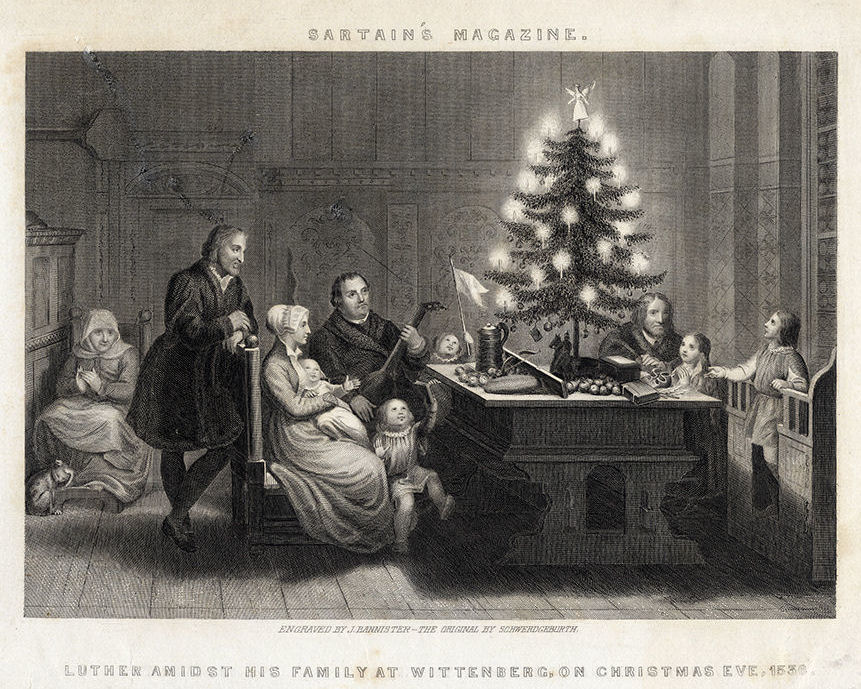
Christmas has been argued over for centuries. In seventeenth-century England the Puritans called it a Catholic invention and their rulers banned it, while Anglican and Lutheran congregations carried on. Later, German-speaking lands developed a style of Christmas that spread widely in North America. Observance today reaches well beyond the churches: the weeks before 25 December are the busiest selling season of the year for many shops, and gift-giving drives much of that trade. Customs draw on pre-Christian, Christian and modern commercial sources in different mixes. For Christians, the day rests on the belief that God came into the world as a man to set right human wrongdoing, not on knowing the exact date of the birth.
How Christmas is kept
Advent opens the season, marked by a wreath or calendar. On Christmas Eve, and again on the day itself, Christians go to church, where the nativity accounts are read and carols sung. Families then gather for a meal and exchange presents, and children are told that a gift bringer has come. Homes show trees, lights, nativity scenes, wreaths and greenery. Some places keep a nativity play, a Christmas film, or cards sent to friends. In countries where the day is a public holiday, shops and offices close.
When and where
Most Christians keep it on 25 December. Churches that follow the older Julian calendar hold it on 7 January, which is 25 December on that calendar. Armenian churches keep 6 January, and the Armenian Patriarchate of Jerusalem keeps 19 January, with 18 January as Christmas Eve. A few regions put the main observance on 24 December.
Christmas is kept wherever Christian churches are found, and it is a public holiday in many countries. Rome is where the date was fixed and where the earliest record of it was written. In England, Germany and North America it grew into a long domestic season. Armenian congregations keep their own January dates.
What Christmas means
For Christians the feast carries a claim about God entering human history in the person of Jesus, born in humble surroundings. The date itself is secondary to that belief. The greenery and lights that decorate the darkest weeks speak of warmth and life in the middle of winter, a meaning older than the feast and folded into it. Gift-giving echoes the gifts brought to the child, and the shared table stands for welcome and belonging.


Days Christmas is marked
Christmas dates: 2026, 2027, 2028
| Year | Christmas date |
|---|---|
| 2026 | Friday, 25 December 2026 |
| 2027 | Saturday, 25 December 2027 |
| 2028 | Monday, 25 December 2028 |
Questions people ask about Christmas
When is Christmas in 2026?
Christmas 2026 is on Friday, 25 December 2026. Other years: 2027, Saturday, 25 December 2027; 2028, Monday, 25 December 2028.
What is Christmas?
It is the yearly Christian festival of the birth of Jesus, kept on 25 December by most churches. It is also a public holiday and a cultural season in many countries, marked by church services, decorated homes, gift-giving and shared meals.
Where did the date come from?
Christians in Rome chose 25 December, the day the Roman Empire counted as the winter solstice. The earliest document naming it is the Chronograph of 354, whose entry seems to have been written in Rome in 336.
Is it only a religious day?
No. It began as a Christian feast and still is one, but customs also carry pre-Christian and secular strands, and many people who follow no religion keep the family and festive parts: trees, lights, cards, songs and gifts.
Who brings the gifts?
Different places name different figures: Santa Claus, Father Christmas, Saint Nicholas or the Christkind. After the Reformation many Protestants moved the giving to the Christ Child, and shifted the day of gifts from 6 December to Christmas Eve.
See also
 Christmas treeA decorated evergreen or artificial tree placed indoors to mark the Christmas season.
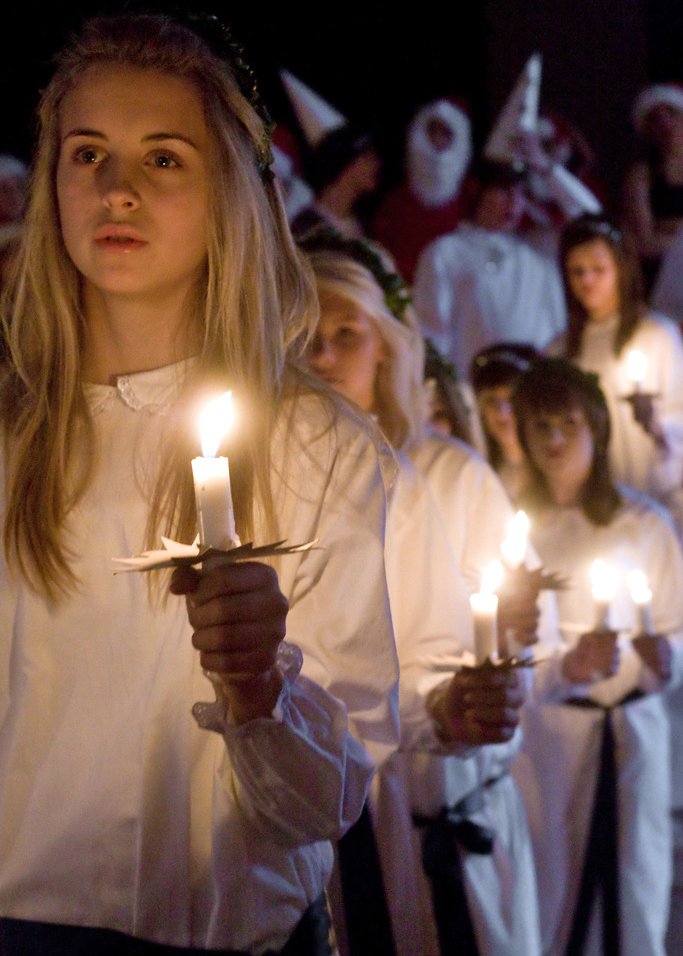 Saint Lucy's DayA December festival of light and song held across Scandinavia and Italy to honour a Christian martyr.
 ChristkindThe traditional Christmas Eve gift-bringer across Central Europe and Latin America
 Christmas crackerA decorative paper tube pulled apart with a bang during Christmas dinner
Good reading and sources
- Encyclopaedia BritannicaArticle
- BBC NEWS | UK | MagazineBBC, Article
- Who was Charlemagne? The unlikely king who became an emperorNational Geographic, Article
- History of Christmas Trees: Symbolism & TraditionsHistory.com, Article
- BBC NEWS | UK | MagazineBBC, Article
- Who was Charlemagne? The unlikely king who became an emperorNational Geographic, Article
- History of Christmas Trees: Symbolism & TraditionsHistory.com, Article
- Christmas on WikipediaEncyclopedia
- More photos on Wikimedia CommonsPhotos and video
- Wikidata recordOpen data
The facts on this page come from the Wikipedia article "Christmas", written by its contributors and used under the CC BY-SA 4.0 licence, and from its Wikidata record (CC0). EveryParampara rewrote the text in its own words, with AI assistance, and compares every page with the article to make sure no passage is copied. It may be reused under the same CC BY-SA 4.0 licence with a link back.
It may contain mistakes. Traditions differ from one family, village and community to the next, and the people who keep them know them best. If something is wrong, tell us. Last refreshed 2026-10-05.
More from Italy
All the traditions of Italy
🇩🇪 Germany and 5 moreChristmas tree
A decorated evergreen or artificial tree placed indoors to mark the Christmas season.Festival
🇸🇪 Stockholm, Sweden and 4 moreSaint Lucy's Day
A December festival of light and song held across Scandinavia and Italy to honour a Christian martyr.Festival · Breakfast
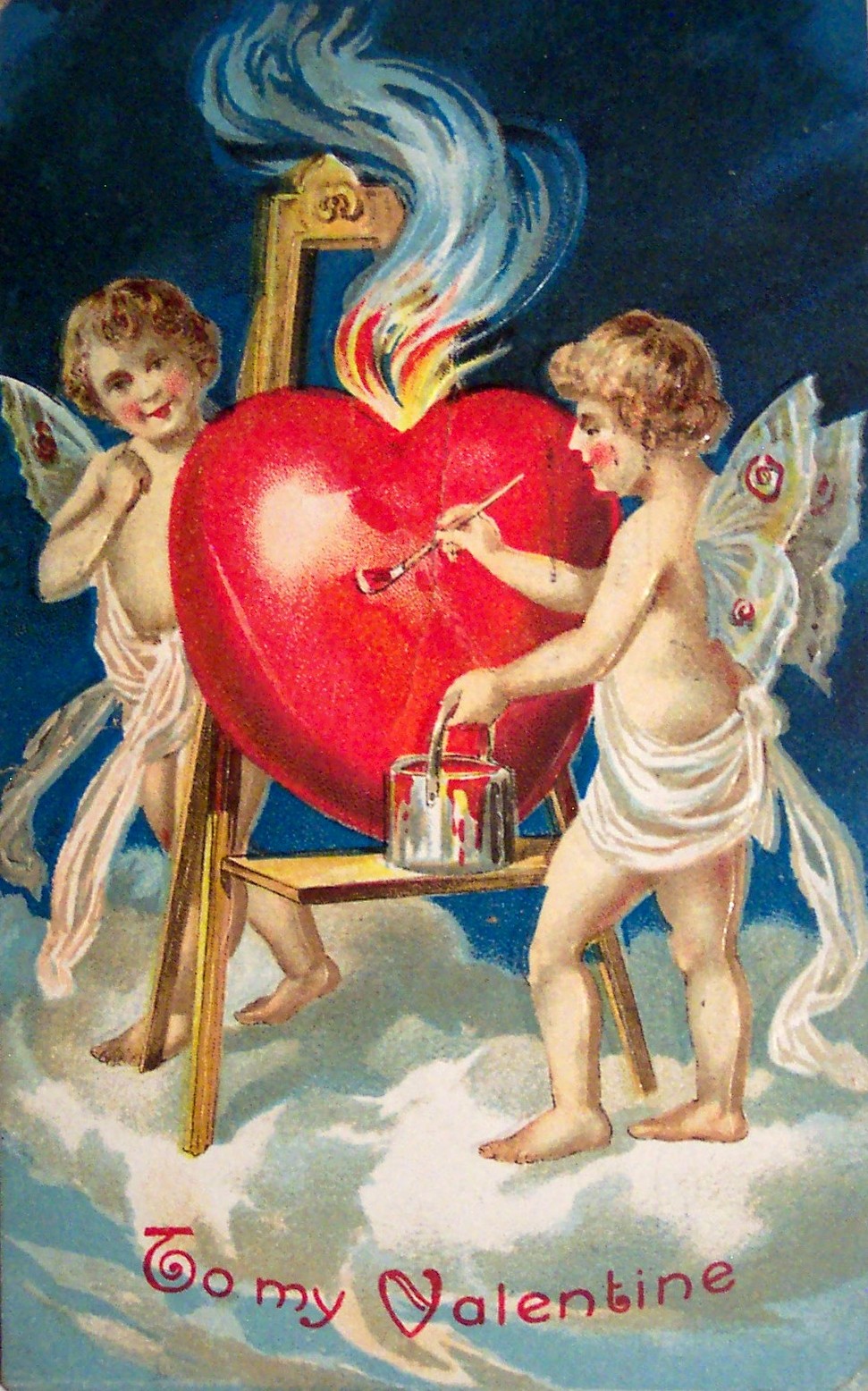 🇬🇧 United Kingdom and 4 moreValentine's Day
A Christian feast day and cultural celebration of love kept on February 14 in many countries.Festival
🇬🇧 United Kingdom and 4 moreValentine's Day
A Christian feast day and cultural celebration of love kept on February 14 in many countries.Festival
 🇬🇧 United Kingdom and 5 moreApril Fools' Day
An annual day of lighthearted pranks, hoaxes and teasing kept on the first of AprilFestival
🇬🇧 United Kingdom and 5 moreApril Fools' Day
An annual day of lighthearted pranks, hoaxes and teasing kept on the first of AprilFestival
The same idea elsewhere
Midwinter and the longest night compared 🇵🇪 Cusco, Peru and 4 moreIntiinti (Quechua)
The Inca sun deity, honoured with temples, offerings and the June festival Inti RaymiSpiritual
🇵🇪 Cusco, Peru and 4 moreIntiinti (Quechua)
The Inca sun deity, honoured with temples, offerings and the June festival Inti RaymiSpiritual
 🇮🇷 Iran and 5 moreYaldā Nightشب یلدا
A solstice night of poetry, fruit and family, kept from Iran through Central AsiaFestival · Dinner
🇮🇷 Iran and 5 moreYaldā Nightشب یلدا
A solstice night of poetry, fruit and family, kept from Iran through Central AsiaFestival · Dinner
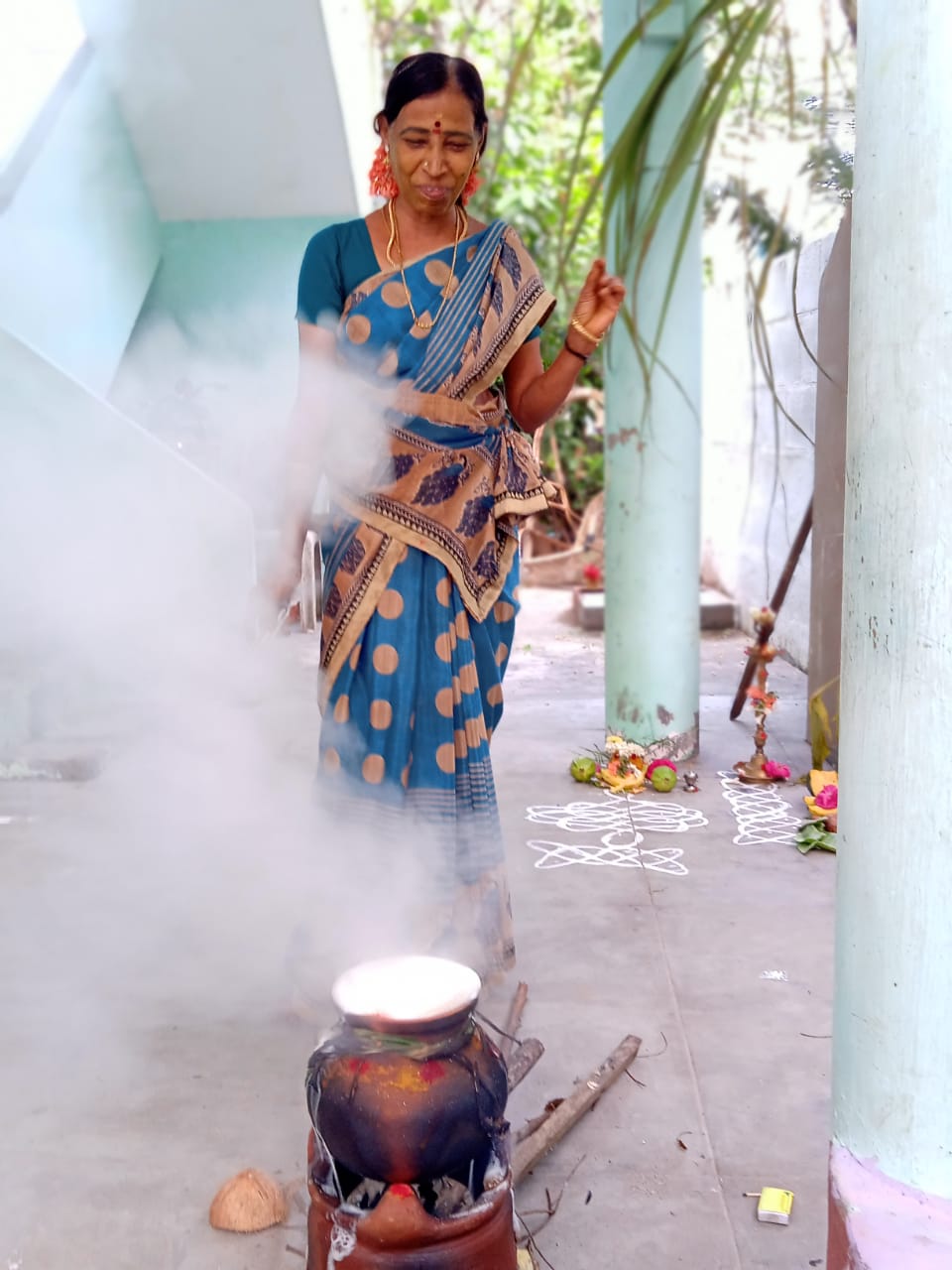 🇮🇳 India and 5 morePongal
Three or four days of boiling rice, garlanded cattle and thanks to the sunSeasonal · Sweets given and shared
🇮🇳 India and 5 morePongal
Three or four days of boiling rice, garlanded cattle and thanks to the sunSeasonal · Sweets given and shared
 🇨🇳 Shanghai, China and 1 moreJiaozi餃子
Crescent Chinese dumplings filled with meat or vegetables, eaten for fortune and feastsTable custom · Breakfast
🇨🇳 Shanghai, China and 1 moreJiaozi餃子
Crescent Chinese dumplings filled with meat or vegetables, eaten for fortune and feastsTable custom · Breakfast