Festivals and celebrationsEuropeChristian
Fallas
In its own language: Falles de València
Valencia's five-day March fiesta of giant paper figures and bonfires
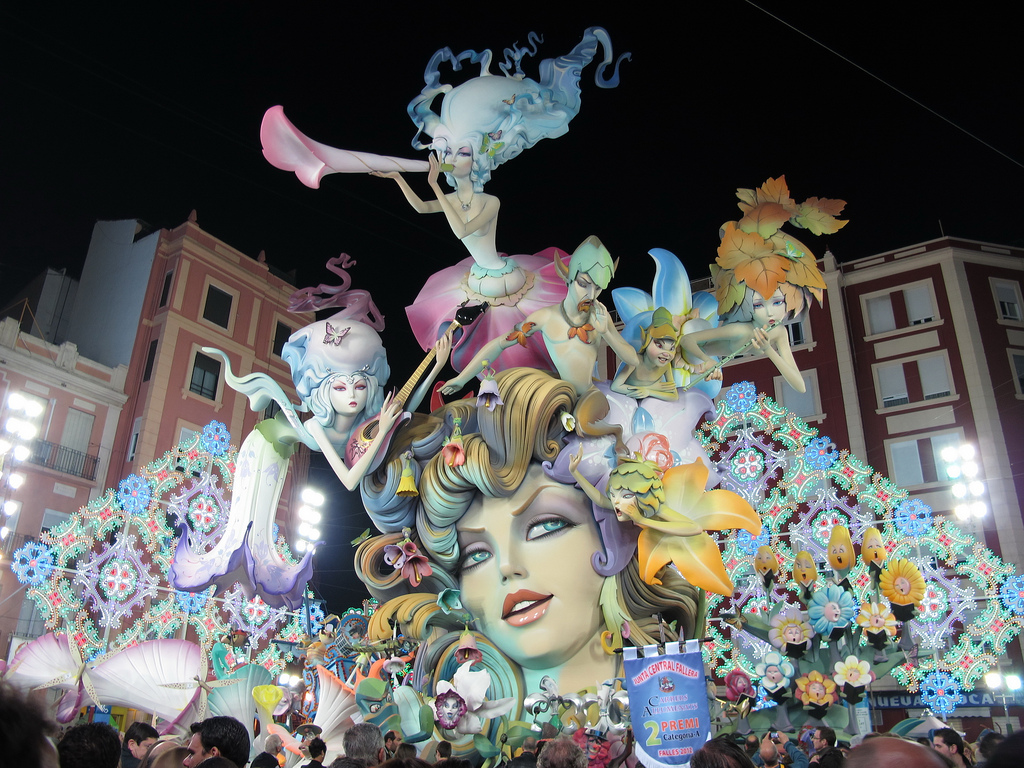
The Fallas is the patronal festival of Valencia, in Spain, kept every year from 15 to 19 March. Its neighbourhood commissions spend the year building huge satirical figures, parade them through the streets, and burn them on the final night.
When is Fallas kept?
Fallas is kept every year from 15 to 19 March, with the Mascletà sounding each day from 1 March.
Fallas is the patronal festival of Valencia, in eastern Spain, kept every year from 15 to 19 March. Neighbourhood groups spend the whole year building towering satirical figures called falles, parade them through the streets, and burn them on the last night. The days around it are filled with fireworks, bands, flowers and food, and the festival is inscribed on UNESCO's intangible cultural heritage list.
What a falla is
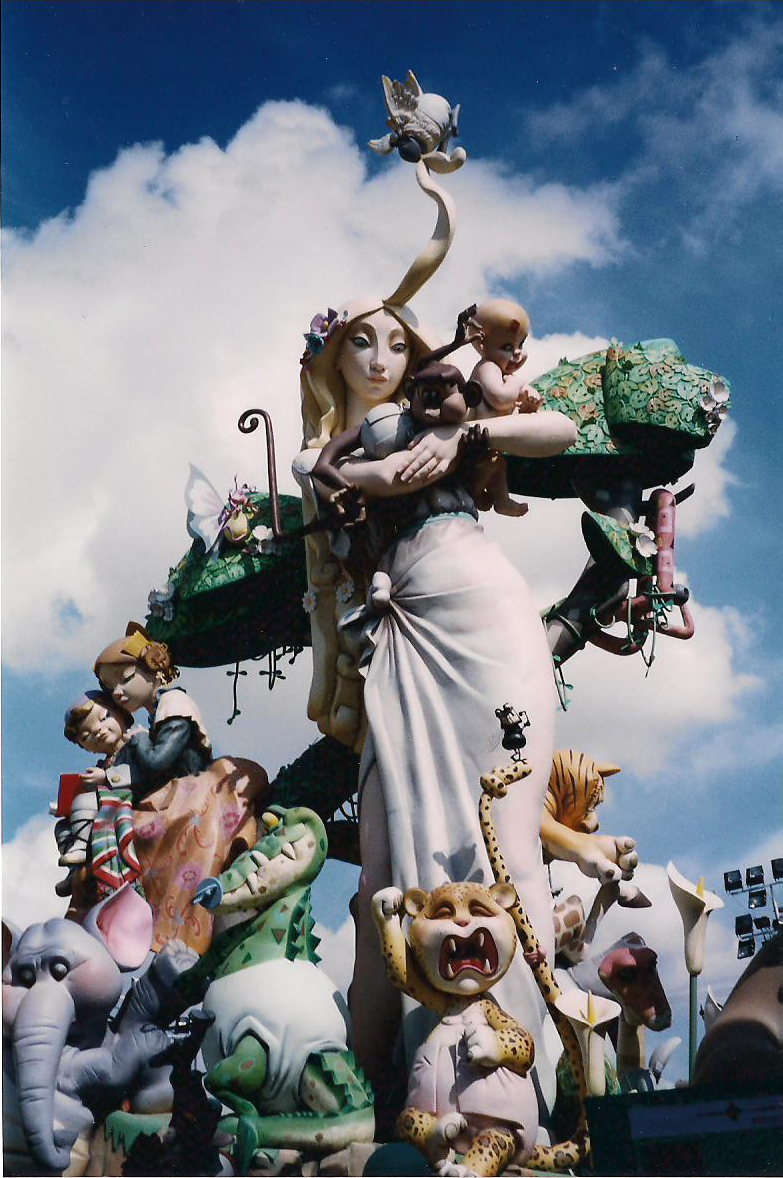
Every neighbourhood in Valencia has a commission, a group that meets at its casal faller and works through the year to raise money for the festival. Each commission builds a falla, a construction of figures mounted together in the street. The individual figures are called ninots, a Valencian word for puppets or dolls. Themes are agreed in advance and are usually satirical, poking fun at whatever has caught the public eye. Since 1934 each falla has sent one figure to a public exhibition, the Exposició del Ninot, where a popular vote decides which ninot will be spared from the fire and kept in the Museo Fallero.
Origins and history
The Valencian word falla comes from Latin, through facula, a small torch: the burning is at the heart of the name. The festival has grown over the past century and more. A literary contest for satirical verses in Valencian has run since 1903, organised by the Lo Rat Penat association, and the figures are still collected in booklets called llibrets. Spain listed the Fallas as a Fiesta of International Tourist Interest in 1980, and UNESCO added the festival to its intangible cultural heritage list on 30 November 2016.
How the days unfold
The season opens on the last Sunday of February with La Crida at the Torres de Serranos, where the mayor hands the keys of the city to the Fallera Major. Each day begins at eight in the morning with La Despertà, bands marching and fallers throwing firecrackers. At two in the afternoon the Mascletà fills the Plaça de l'Ajuntament with coordinated explosions. On 15 March the figures must be finished and standing, the Plantà. On 17 and 18 March the commissions carry flowers to a statue of Our Lady of the Forsaken. On the night of 19 March, La Cremà burns them all.
Fire and faith
The Fallas is the city's patronal festival, held around the feast of Saint Joseph on 19 March, and the Catholic side of it is public and serious. Two days are given to the flower offering, when the casals process through the old city to the Plaza of the Mother of God and heap flowers on a statue of the Virgin Mary, honoured there as Our Lady of the Forsaken, the city's principal patroness. Children's and adult Fallera Majors lead the two days in turn. The last nights bring fireworks in the old riverbed; the final one is La Nit del Foc, the night of fire.
Food, music and dress
Commissions hold dinners and parties through the year to fund their work, and paella, the region's own rice dish, is usually on the table. During the festival the streets are full of stalls selling churros, bunyols and fried porres, along with roasted chestnuts. Nearly every casal has its own band, and the sound of the dolçaina, a reed instrument rather like an oboe, and the tabalet, a Valencian drum, follows the processions. Many participants wear the regional and historical costume of the casal faller.
How Fallas is kept
Commissions build their figures through the year, then bring them out and mount them in the streets in mid-March. Each day starts with marching bands and firecrackers and reaches its peak with the afternoon Mascletà. On 17 and 18 March the casals carry flowers in procession to the statue of Our Lady of the Forsaken. On the night of 19 March the figures are burned: the children's ones first, the neighbourhood ones around ten, and the last falla outside the city hall brought down after the Fallera Major gives the signal.
When and where
The five main days are 15 to 19 March, ending on Saint Joseph's Day. The Mascletà sounds every day from 1 March, and the season opens on the last Sunday of February with La Crida. The dates are fixed and fall on the same days each year.
The Fallas belongs to Valencia, in eastern Spain, and is the city's patronal festival. Its centre is the Plaza of the City Hall, where the municipal Mascletà and the final burning take place. The season extends across the Valencian Community, and other towns there hold comparable celebrations of their own.
What Fallas means
For the people of Valencia the falla is a torch, and fire is at the centre of the festival. The figures are admired, judged and then destroyed on the last night, so the making and the burning belong together. Because each neighbourhood prepares for a whole year as a group, the festival is also about belonging to a street and a city. The flower offering to Our Lady of the Forsaken places the whole celebration under the city's patroness, and the last bonfire closes it.



Questions people ask about Fallas
When is Fallas kept?
Fallas is kept every year from 15 to 19 March, with the Mascletà sounding each day from 1 March.
What is the Fallas?
It is the patronal festival of Valencia, in Spain, held each year from 15 to 19 March. Neighbourhood commissions build large satirical figures called falles, bring them out into the streets, and burn them on the final night.
Why are the figures burned?
The name falla comes from a Latin word for torch, and the burning, La Cremà, is the climax of the festival. The figures are made to be destroyed, and the city's last falla, outside the city hall, is burned after the Fallera Major gives the signal.
Who takes part?
Each neighbourhood has a commission that meets at its casal faller and works all year to raise funds. Participants are called fallers. The sources give differing counts, with about 400 registered commissions in one place and around 750 neighbourhood associations in another.
Is it recognised internationally?
UNESCO added the Fallas to its list of intangible cultural heritage of humanity on 30 November 2016. Spain had already named it a Fiesta of International Tourist Interest in 1980.
See also
 HalloweenAn annual observance on 31 October marking the eve of All Saints' Day, rooted in Christian tradition and Celtic heritage
 Basque festivalGatherings of dance, sport and food that keep Basque culture alive far from home
 Running of the bullsRunners sprint ahead of loose bulls through barricaded town streets in summer
 Festival of San FermínAn annual nine-day festival in Pamplona featuring bull runs, parades, and street music.
Good reading and sources
- Fallas on WikipediaEncyclopedia
- More photos on Wikimedia CommonsPhotos and video
- Wikidata recordOpen data
The facts on this page come from the Wikipedia article "Fallas", written by its contributors and used under the CC BY-SA 4.0 licence, and from its Wikidata record (CC0). EveryParampara rewrote the text in its own words, with AI assistance, and compares every page with the article to make sure no passage is copied. It may be reused under the same CC BY-SA 4.0 licence with a link back.
It may contain mistakes. Traditions differ from one family, village and community to the next, and the people who keep them know them best. If something is wrong, tell us. Last refreshed 2026-10-05.
More from Spain
All the traditions of Spain
🇮🇪 Ireland and 5 moreHalloween
An annual observance on 31 October marking the eve of All Saints' Day, rooted in Christian tradition and Celtic heritageFestival · Sweets given and shared
🇺🇸 Boise, United States and 3 moreBasque festivalEuskal jaiak
Gatherings of dance, sport and food that keep Basque culture alive far from homeFestival
🇪🇸 Pamplona, Spain and 3 moreRunning of the bullsencierro
Runners sprint ahead of loose bulls through barricaded town streets in summerFestival
🇪🇸 Pamplona, SpainFestival of San FermínSanfermines
An annual nine-day festival in Pamplona featuring bull runs, parades, and street music.Festival
The same idea elsewhere
All of this kind 🇹🇷 Turkey and 5 moreEid al-Fitrعيد الفطر
The feast that ends Ramadan, opened with morning prayers, sweets and visits homeFestival · Feasts and festival meals
🇹🇷 Turkey and 5 moreEid al-Fitrعيد الفطر
The feast that ends Ramadan, opened with morning prayers, sweets and visits homeFestival · Feasts and festival meals
 🇮🇳 Ayodhya, India and 7 moreDiwaliदीपावली (Dīpāvalī)
A five-day festival of lights celebrated across India and its diaspora to mark the victory of light over darkness.Festival · Feasts and festival meals
🇮🇳 Ayodhya, India and 7 moreDiwaliदीपावली (Dīpāvalī)
A five-day festival of lights celebrated across India and its diaspora to mark the victory of light over darkness.Festival · Feasts and festival meals
 🇮🇱 Jerusalem, Israel and 1 moreHanukkahחֲנֻכָּה
An eight-day Jewish festival marking the rededication of the Second Temple in Jerusalem and the miracle of a single day'Festival
🇮🇱 Jerusalem, Israel and 1 moreHanukkahחֲנֻכָּה
An eight-day Jewish festival marking the rededication of the Second Temple in Jerusalem and the miracle of a single day'Festival
 🇪🇬 Egypt and 5 moreMawlidمولد (Mawlid)
An annual festival marking the birth of the Prophet Muhammad, marked by poetry, processions and feasts.Festival · Feasts and festival meals
🇪🇬 Egypt and 5 moreMawlidمولد (Mawlid)
An annual festival marking the birth of the Prophet Muhammad, marked by poetry, processions and feasts.Festival · Feasts and festival meals