Music, dance and storytellingNorth America
Gombey
A Bermudian masquerade of dance and drumming with African and British roots

Gombey is a vibrant folk tradition from Bermuda featuring colorful costumes, masks, and rhythmic drumming. It blends African, Caribbean, and British influences into a unique performance art kept by local troupes.
When is Gombey marked?
Gombey is kept as part of Easter, which runs from 28 to 29 March 2027.
Gombey is a living cultural expression from Bermuda that combines intricate masquerade, dance, and drumming. This tradition reflects the island's history through a blend of African, Caribbean, and British influences. Dancers perform in groups wearing elaborate costumes and masks to celebrate community heritage.
Origins and history
The tradition emerged in the seventeenth century among enslaved people who were primarily from southern Africa. Initially viewed as disrespectful by the ruling class, the practice was banned. Enslaved individuals used masks to protest injustices without fear of immediate retribution. The word Gombey relates to the Bahamian Goombay but focuses more on dance than music. Genetic studies confirm that Black Bermudians share ancestry with populations from Angola to Mozambique, linking the tradition to Latin American styles rather than the English-speaking West Indies.
How it is kept
Troupes consist of ten to thirty dancers, traditionally men though women now participate. Each group has a captain who sets the style and direction. Differences in beats, dances, and costumes allow each troupe to be recognized. Performances are passed down orally within families. The dance includes steps recognized by Wampanoag dancers, reflecting historical connections. Leaders use whistles to issue commands while drummers play complex riffs over a steady pulse.
Attire and instruments
Costumes cover the body from head to toe and feature tassels, mirrors, bells, and peacock feather headdresses. Painted masks and capes are distinguishing features. Modern materials like Asian feathers are common today. Historically, performers wore red and yellow paints with scarlet cloth. Instruments include a homemade bass drum called the Mother drum, paired snare drums derived from British military use, a kettle drum, and a fife. Snare patterns drive the movement while rimshots communicate with the dancers' feet.
When and where
Gombey is most lively during the Christmas season, especially on Boxing Day when troupes march around the island all day. Performances also occur on Easter, New Year's Day, and Bermuda Day. In modern times, they appear at football and cricket matches. The tradition is strongest in Hamilton and Hearne Bay. Old laws still require permits for street performances in Hamilton, though the art form has gained significant social status and recognition.
How Gombey is kept
Groups of ten to thirty dancers perform in streets and festivals. Captains determine the specific style of each troupe. Drummers provide a complex rhythm using mother drums and snares. Dancers wear full-body costumes with masks and headdresses. Leaders use whistles to coordinate movements. The dance includes war-like steps and roles such as the Bowman or Warriors carrying props.
When and where
Primarily during the Christmas season on Boxing Day. Also performed on Easter, New Year's Day, and Bermuda Day. Modern appearances include sports matches and various festivals throughout the year.
Originated in Bermuda with strong ties to Hamilton and Hearne Bay. The tradition reflects the island's unique demographic history. While rooted locally, it has appeared overseas and on postage stamps, showing its national importance.
What Gombey means
Originally a form of protest and resistance against enslavement. Masks allowed dancers to express grievances safely. Today it symbolizes cultural continuity and community pride. The blend of African, Caribbean, and British elements represents the diverse heritage of Bermuda. It serves as a vital link to ancestral roots and historical survival.
Days Gombey is marked
Questions people ask about Gombey
When is Gombey marked?
Gombey is kept as part of Easter, which runs from 28 to 29 March 2027.
Where is Gombey kept?
Gombey belongs to the traditions of Bermuda, and is tied most closely to Hamilton.
Who keeps Gombey?
As our sources describe it, Gombey is kept by Bermudians. Many other communities and families now share it too.
See also
 Bermuda kiteFlying bright geometric kites on Good Friday across Bermuda to mark Easter
 PowwowA communal gathering of dancing, singing and fellowship across Native North America
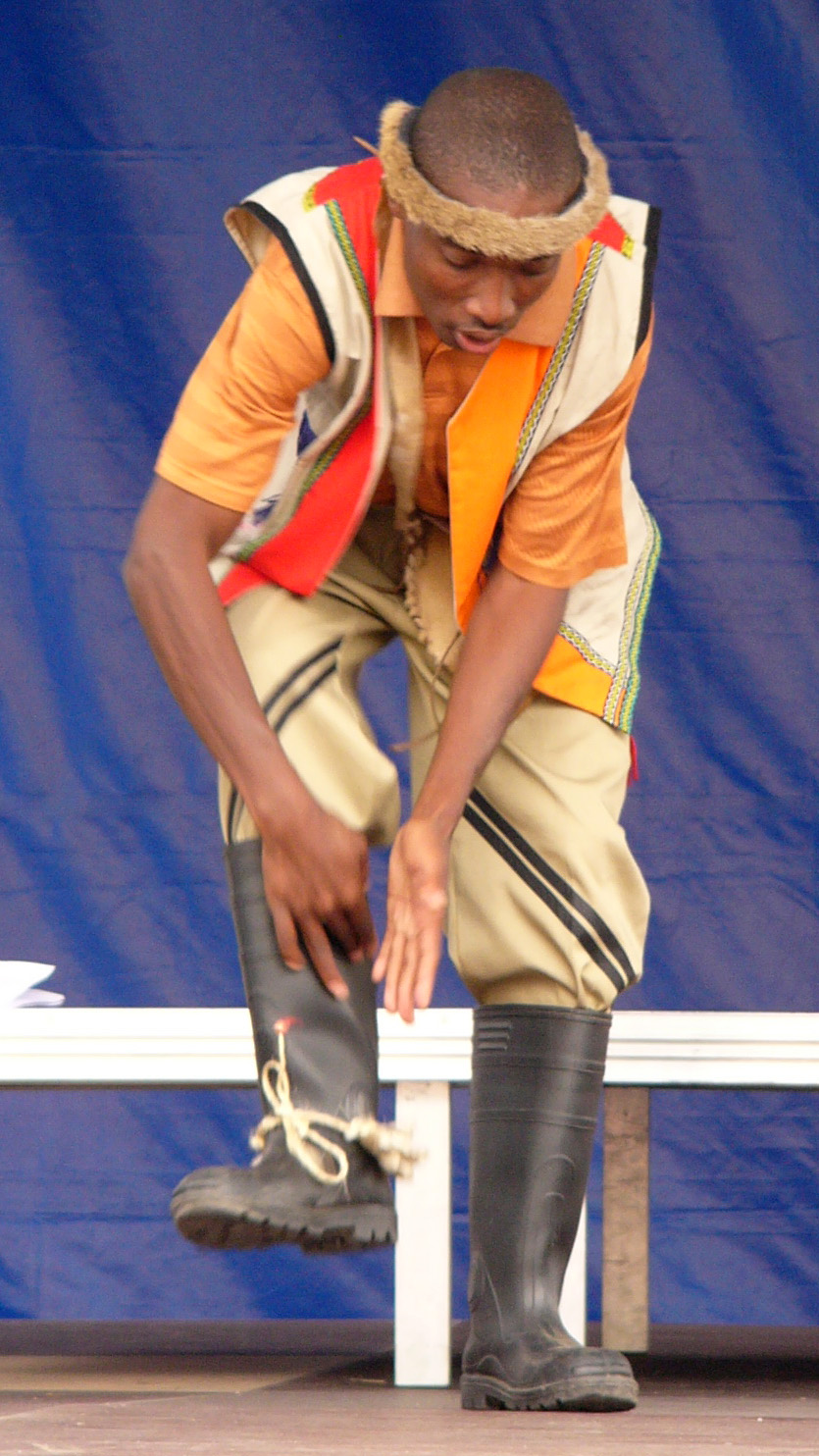 Gumboot danceA percussive South African dance born in the mines, performed in Wellington boots to communicate and celebrate.
 Morris danceA rhythmic English folk dance performed in costume with bells, sticks and handkerchiefs
Good reading and sources
The facts on this page come from the Wikipedia article "Gombey", written by its contributors and used under the CC BY-SA 4.0 licence, and from its Wikidata record (CC0). EveryParampara rewrote the text in its own words, with AI assistance, and compares every page with the article to make sure no passage is copied. It may be reused under the same CC BY-SA 4.0 licence with a link back.
It may contain mistakes. Traditions differ from one family, village and community to the next, and the people who keep them know them best. If something is wrong, tell us. Last refreshed 2026-10-05.
More from Bermuda
All the traditions of Bermuda 🇹🇹 Trinidad and Tobago and 5 moreMoko Jumbie
A stilt-walking tradition from the Caribbean that blends African heritage with local carnival celebrations.Performance
🇧🇲 BermudaBermuda kite
Flying bright geometric kites on Good Friday across Bermuda to mark EasterCraft
🇧🇲 Hamilton, BermudaBermuda Day
A public holiday in Bermuda marking the start of summer activities with a parade and road race.Festival
🇺🇸 United States and 2 morePowwow
A communal gathering of dancing, singing and fellowship across Native North AmericaFestival
🇹🇹 Trinidad and Tobago and 5 moreMoko Jumbie
A stilt-walking tradition from the Caribbean that blends African heritage with local carnival celebrations.Performance
🇧🇲 BermudaBermuda kite
Flying bright geometric kites on Good Friday across Bermuda to mark EasterCraft
🇧🇲 Hamilton, BermudaBermuda Day
A public holiday in Bermuda marking the start of summer activities with a parade and road race.Festival
🇺🇸 United States and 2 morePowwow
A communal gathering of dancing, singing and fellowship across Native North AmericaFestival
The same idea elsewhere
All of this kind 🇹🇷 Kayseri, Turkey and 4 moreHalay
A traditional line and circle folk dance kept across Turkey, Azerbaijan, Armenia, Iran, and Syria.Performance
🇧🇷 BrazilBaião
A syncopated folk rhythm and partnered dance from northeastern BrazilPerformance
🇹🇷 Kayseri, Turkey and 4 moreHalay
A traditional line and circle folk dance kept across Turkey, Azerbaijan, Armenia, Iran, and Syria.Performance
🇧🇷 BrazilBaião
A syncopated folk rhythm and partnered dance from northeastern BrazilPerformance
 🇺🇦 Kyiv, UkraineBanduraБандура
A Ukrainian plucked string instrument played to accompany epic songs and folk balladsPerformance
🇺🇦 Kyiv, UkraineBanduraБандура
A Ukrainian plucked string instrument played to accompany epic songs and folk balladsPerformance
 🇳🇿 Auckland, New ZealandPoi
A Māori performing art of swinging tethered weights in rhythmical patterns.Performance
🇳🇿 Auckland, New ZealandPoi
A Māori performing art of swinging tethered weights in rhythmical patterns.Performance