Music, dance and storytellingEurope
Morris dance
A rhythmic English folk dance performed in costume with bells, sticks and handkerchiefs

Morris dancing is an English folk dance tradition where costumed teams perform choreographed steps accompanied by musicians. First documented in the fifteenth century, it features bell pads, sticks, and handkerchiefs, and is now danced across Britain and worldwide.
When is Morris dance marked?
Morris dance is kept as part of May Day and Labour Day, which is on Saturday, 1 May 2027.
Morris dancing is a traditional English folk dance based on rhythmic footwork, synchronised group formations, and musical accompaniment. Dancers typically perform in matched costumes fitted with jingling bell pads on their legs or shoes. They often carry accessories such as handkerchiefs, wooden sticks, or swords to accentuate their movements. Practised since the fifteenth century, it remains a popular seasonal display across England and around the world.
origins and naming
Earliest records date back to 1448 in London courtly accounts. The name comes from old terms meaning Moorish dance, reflecting a broader fifteenth-century European fashion for lively spectacle. Early royal courts, including that of Henry VIII, featured the dance in festive entertainment accompanied by small tabor drums. Over subsequent centuries, it spread from royal courts into rural village celebrations, where local working people adopted and preserved the practice for seasonal holidays such as Whitsun.
revival and modern teams
During the late nineteenth century, rural Morris dancing began to decline before folklorists such as Cecil Sharp and Mary Neal collected tunes and steps to revive the art. Early twentieth-century groups established organisations like the Morris Ring, later joined by the Morris Federation and Open Morris. While early revival clubs were often all-male, modern teams include men, women, and mixed sides. These groups, often known as sides, gather for joint festivals, local community events, and seasonal gatherings.
regional dance styles
Several regional variations define Morris dancing. Cotswold Morris features intricate stepping with handkerchiefs or wooden sticks, typically performed by small teams or soloists. North West Morris developed around industrial mill towns, using a more structured, processional style. Border Morris, originating along the English and Welsh boundary, is looser and more energetic. Sword traditions from northern counties include rigid long swords and flexible rapper swords, creating interlocking geometric patterns woven between moving dancers.
around the world
English emigrants and folk enthusiasts carried Morris dancing across the globe. The United States maintains around 150 active teams, with strong concentrations along the East Coast and in the Midwest, where dancers traditionally welcome the sunrise on May Day. Established teams also perform in Australia, Canada, New Zealand, and Hong Kong. Further independent groups dance in European cities, from the Netherlands and the Franco-Swiss border to Scandinavia and Cyprus.
How Morris dance is kept
Dancers form teams known as sides, rehearsing together and performing outdoors at festivals, village fetes, or seasonal holidays. A side performs set choreographed routines, accompanied by one or more musicians playing traditional instruments such as pipes, accordions, or drums. Performers wear coordinated outfits featuring bells fastened around the shins or footwear. Depending on the specific regional style, dancers step in rhythmic patterns while waving white handkerchiefs, clashing wooden sticks together, or weaving intricate figures with swords.
When and where
Morris sides perform throughout the year at folk gatherings, public festivities, and seasonal holidays. Traditional peak times include May Day, when dancers often greet the dawn, as well as Whitsun in early summer and Boxing Day in winter.
Although rooted in English villages and towns across regions like Oxfordshire, Gloucestershire, and Yorkshire, Morris dancing takes place globally. Active communities exist across the United States, particularly along the East Coast and in Minnesota, as well as across Canada, Australia, New Zealand, and parts of mainland Europe.
What Morris dance means
Morris dancing connects modern performers with centuries of communal celebration and seasonal change. Props such as bells and sticks emphasise rhythmic unity and audible energy during public displays. The use of disguise, such as face colourings in Border Morris, stems from historical customs of rural disguise, though modern sides have adapted these traditions to use colourful face paints like blue, green, and striped patterns.


Days Morris dance is marked
Questions people ask about Morris dance
When is Morris dance marked?
Morris dance is kept as part of May Day and Labour Day, which is on Saturday, 1 May 2027.
What is Morris dancing?
Morris dancing is an English folk dance tradition dating from the fifteenth century. Costumed teams execute choreographed steps and figures to live acoustic music, often wearing bells and holding sticks, handkerchiefs, or swords.
Where is Morris dancing practised today?
Morris dancing is widespread across England and Wales, with hundreds of teams in the United States, Australia, Canada, and New Zealand, alongside active groups in parts of Europe and Asia.
What do dancers wear and carry?
Performers wear distinctive team costumes with bells strapped to their shins or shoes. Depending on the dance style, they carry white handkerchiefs, wooden sticks, or steel swords to accentuate their movements.
See also
 Mummers' playA comic folk drama of staged combat, death, and revival by an eccentric doctor
 Mother's DayA worldwide annual celebration dedicated to mothers, maternal bonds and family care
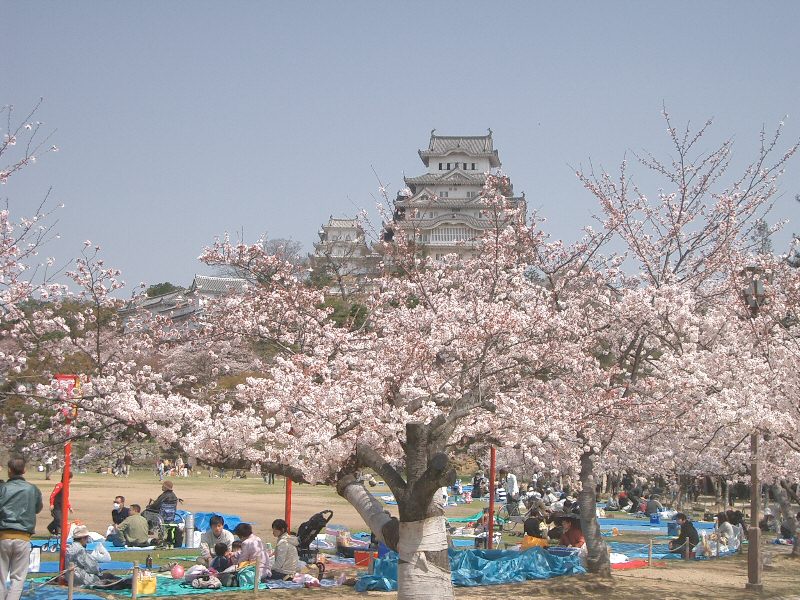 HanamiA Japanese spring custom of gathering under blooming cherry trees to eat, drink, and celebrate the fleeting beauty of th
 ImbolcA Gaelic festival heralding spring and honoring Saint Brigid with woven rush crosses
Good reading and sources
- Encyclopaedia BritannicaArticle
- Cameron and the morris dancers: a sign of our nationalistic moodThe Guardian, Article
- May Day Morris dancers wear blue makeup over racism concernsBBC, Article
- Remembering the Life and Work of Tony Barrand: The 2003 Interview [Part 1]Library of Congress, Article
- Cameron and the morris dancers: a sign of our nationalistic moodThe Guardian, Article
- May Day Morris dancers wear blue makeup over racism concernsBBC, Article
- Remembering the Life and Work of Tony Barrand: The 2003 Interview [Part 1]Library of Congress, Article
- Morris dance on WikipediaEncyclopedia
- More photos on Wikimedia CommonsPhotos and video
- Wikidata recordOpen data
The facts on this page come from the Wikipedia article "Morris dance", written by its contributors and used under the CC BY-SA 4.0 licence, and from its Wikidata record (CC0). EveryParampara rewrote the text in its own words, with AI assistance, and compares every page with the article to make sure no passage is copied. It may be reused under the same CC BY-SA 4.0 licence with a link back.
It may contain mistakes. Traditions differ from one family, village and community to the next, and the people who keep them know them best. If something is wrong, tell us. Last refreshed 2026-10-04.
More from the United Kingdom
All the traditions of the United Kingdom
🇬🇧 United Kingdom and 4 moreMummers' play
A comic folk drama of staged combat, death, and revival by an eccentric doctorPerformance
 🇬🇧 United Kingdom and 5 moreChristmas carol
Festive songs and hymns sung during the Christmas season and door to doorPerformance
🇬🇧 United Kingdom and 5 moreChristmas carol
Festive songs and hymns sung during the Christmas season and door to doorPerformance
 🇹🇹 Trinidad and Tobago and 3 moreSteelpan
A tuned percussion tradition forged from industrial steel containers in TrinidadPerformance
🇬🇧 Newcastle upon Tyne, United Kingdom and 5 moreRapper sword
A fast-paced five-person sword dance from the coalfields of North East England, kept alive by teams worldwide.Performance
🇹🇹 Trinidad and Tobago and 3 moreSteelpan
A tuned percussion tradition forged from industrial steel containers in TrinidadPerformance
🇬🇧 Newcastle upon Tyne, United Kingdom and 5 moreRapper sword
A fast-paced five-person sword dance from the coalfields of North East England, kept alive by teams worldwide.Performance
The same idea elsewhere
Spring and renewal compared
🇺🇸 United States and 5 moreMother's Day
A worldwide annual celebration dedicated to mothers, maternal bonds and family careHome
 🇮🇷 Iran and 7 moreNowruzنوروز
The Iranian new year at the March equinox, kept with fire, greenery and picnicsSeasonal
🇮🇷 Iran and 7 moreNowruzنوروز
The Iranian new year at the March equinox, kept with fire, greenery and picnicsSeasonal
 🇮🇱 Jerusalem, IsraelPassoverפסח
A Jewish spring festival celebrating freedom from slavery with ritual mealsSpiritual · Dinner
🇮🇱 Jerusalem, IsraelPassoverפסח
A Jewish spring festival celebrating freedom from slavery with ritual mealsSpiritual · Dinner
 🇮🇳 Mathura, India and 5 moreHoliहोली (Hindi)
A spring festival of colours and bonfires that marks the end of winter and the triumph of good over evil.Festival
🇮🇳 Mathura, India and 5 moreHoliहोली (Hindi)
A spring festival of colours and bonfires that marks the end of winter and the triumph of good over evil.Festival