Music, dance and storytellingOceania
Ka Mate
A Māori haka of life and survival, composed by Te Rauparaha and performed by New Zealand teams.

Ka Mate is a traditional Māori haka created in the early nineteenth century to celebrate survival after a narrow escape from enemies. It remains a living performance kept by the iwi of Ngāti Toa and widely recognised across New Zealand as a symbol of national identity.
When is Ka Mate kept?
Ka Mate is kept on before rugby matches in Wellington or when selected by team leaders.
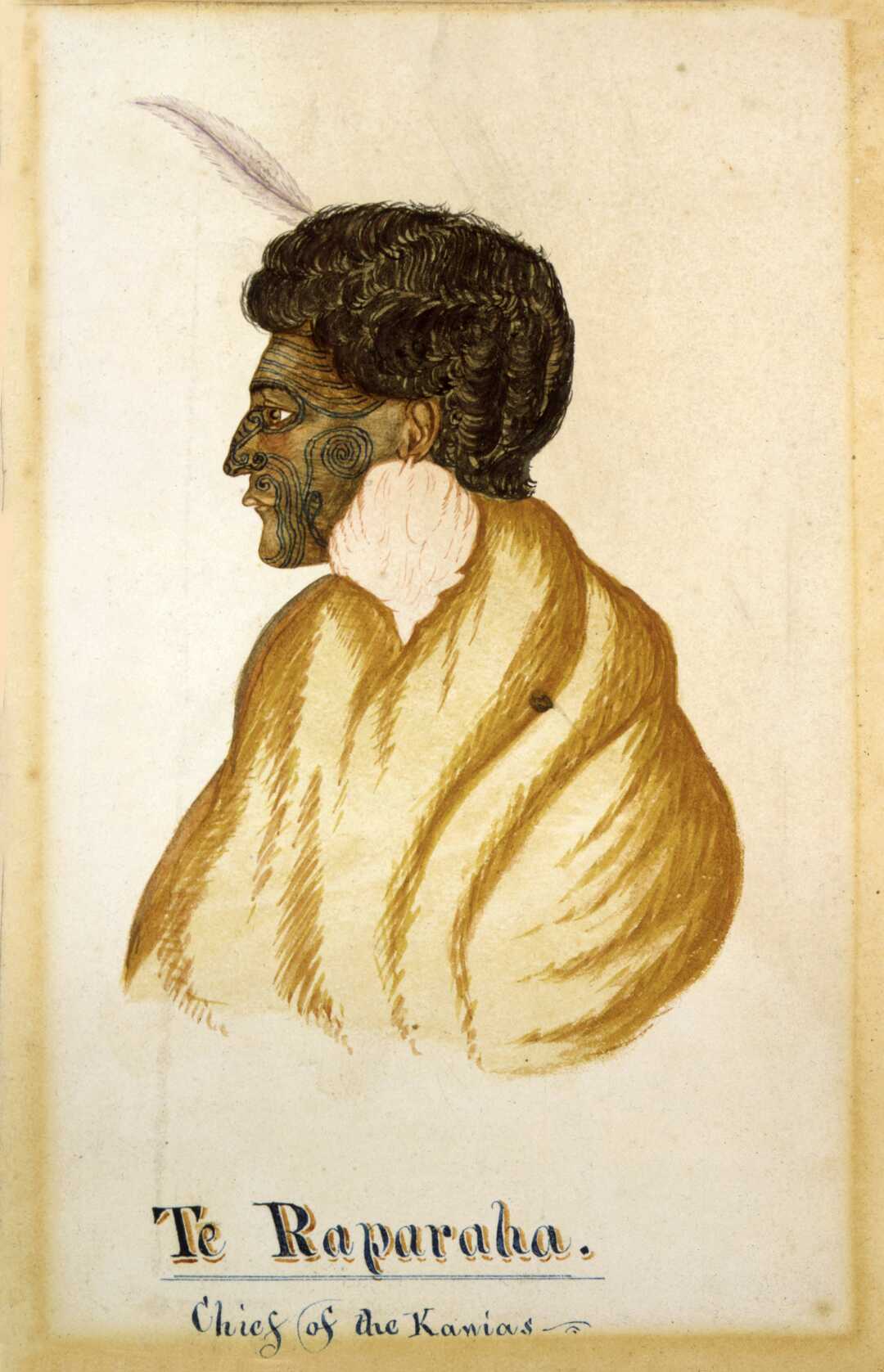
Ka Mate is a celebrated Māori haka that marks survival and triumph over death. Composed by the leader Te Rauparaha following a dangerous hiding period, it serves as both a cultural tribute and a powerful pre-match ritual for New Zealand sports teams.
Origins and history
Te Rauparaha, the historic chief of the Ngāti Toa iwi on New Zealand's North Island, wrote this piece around 1820. He crafted it as a thank-you song after narrowly escaping pursuit by rival groups during the Musket Wars. While hiding in a kūmara storage pit on Motuopihi Island in Lake Rotoaira, he was protected by a woman named Rangikoaea. Upon emerging into the sunlight, he expressed his gratitude through this composition, framing the event as a victory of life over death.
Performance style
The work belongs to the ngeri type of haka, which focuses on energy rather than strict choreography. Performers are free to improvise their chanting and movements according to their own feelings, without needing to synchronise with others. The piece begins with a specific chant before moving into its main body. This flexibility allows each group to adapt the performance to their specific context while maintaining its core spirit.
Rugby tradition
The All Blacks rugby union team made this haka famous worldwide by performing it before international matches until 2013. Players learned the ceremony properly starting in 1985, thanks to Māori players Buck Shelford and Hika Reid. Today, teams may choose between Ka Mate and Kapa o Pango based on mood or location. In Wellington, they traditionally perform Ka Mate to honour Te Rauparaha and the land he walked upon.
Ownership and politics
Ngāti Toa attempted to trademark the name between 1998 and 2006 but were denied because it had become a national symbol. An agreement in 2011 ensured the iwi's mana would not be disrespected. In November 2024, MP Hana-Rawhiti Maipi-Clarke led the haka in Parliament to protest a bill regarding the Treaty of Waitangi, resulting in her suspension. The government acknowledged its significance to Ngāti Toa while noting no royalties would apply.
How Ka Mate is kept
Performers gather to deliver the chant and movements with personal interpretation. Leaders guide the energy, often selecting the piece for significant gatherings or sporting events. In Wellington, rugby teams perform it to pay respects to the composer. Political figures also use it to voice strong opinions, demonstrating its enduring role as a vehicle for collective expression and identity within New Zealand society.
When and where
It is kept whenever the community chooses to honour Te Rauparaha or assert cultural identity. It appears most frequently before rugby tests in Wellington and occasionally in political protests or cultural celebrations across the country.
The tradition originates from the North Island of New Zealand, specifically linked to the lands of Ngāti Toa. It is strongest in Wellington, where rugby teams perform it to respect local history, and remains a central part of Māori cultural practice throughout the nation.
What Ka Mate means
The haka represents a profound gratitude for survival and the triumph of life over death. It honours the protection offered by Rangikoaea and celebrates the resilience of the human spirit. For performers, it serves as a connection to ancestral strength and a way to channel intense emotion into a unified, powerful display of identity.

Questions people ask about Ka Mate
When is Ka Mate kept?
Ka Mate is kept on before rugby matches in Wellington or when selected by team leaders.
Where is Ka Mate kept?
Ka Mate belongs to the traditions of New Zealand, and is tied most closely to Wellington.
Who keeps Ka Mate?
As our sources describe it, Ka Mate is kept by Māori. Many other communities and families now share it too.
See also
 Morris danceA rhythmic English folk dance performed in costume with bells, sticks and handkerchiefs
 Siva SamoaA graceful Samoan dance marked by subtle, expressive arm and hand movements
 Fleadh CheoilAn annual gathering of Irish traditional music and dance, featuring competitions, public sessions, and concerts across I
Good reading and sources
- Encyclopaedia BritannicaArticle
- MP rips up bill, leads haka as NZ parliament erupts over Waitangi treaty billThe Guardian, Article
- BBC News | ASIA-PACIFICBBC, Article
- MP rips up bill, leads haka as NZ parliament erupts over Waitangi treaty billThe Guardian, Article
- BBC News | ASIA-PACIFICBBC, Article
- Ka Mate on WikipediaEncyclopedia
- More photos on Wikimedia CommonsPhotos and video
- Wikidata recordOpen data
The facts on this page come from the Wikipedia article "Ka Mate", written by its contributors and used under the CC BY-SA 4.0 licence, and from its Wikidata record (CC0). EveryParampara rewrote the text in its own words, with AI assistance, and compares every page with the article to make sure no passage is copied. It may be reused under the same CC BY-SA 4.0 licence with a link back.
It may contain mistakes. Traditions differ from one family, village and community to the next, and the people who keep them know them best. If something is wrong, tell us. Last refreshed 2026-10-05.
More from New Zealand
All the traditions of New Zealand
🇼🇸 Samoa and 3 moreSiva Samoa
A graceful Samoan dance marked by subtle, expressive arm and hand movementsPerformance
🇬🇧 United Kingdom and 5 moreMorris dance
A rhythmic English folk dance performed in costume with bells, sticks and handkerchiefsPerformance
🇮🇪 Ireland and 5 moreFleadh CheoilFleadh Cheoil na hÉireann
An annual gathering of Irish traditional music and dance, featuring competitions, public sessions, and concerts across IPerformance
The same idea elsewhere
All of this kind 🇹🇷 Kayseri, Turkey and 4 moreHalay
A traditional line and circle folk dance kept across Turkey, Azerbaijan, Armenia, Iran, and Syria.Performance
🇧🇷 BrazilBaião
A syncopated folk rhythm and partnered dance from northeastern BrazilPerformance
🇹🇷 Kayseri, Turkey and 4 moreHalay
A traditional line and circle folk dance kept across Turkey, Azerbaijan, Armenia, Iran, and Syria.Performance
🇧🇷 BrazilBaião
A syncopated folk rhythm and partnered dance from northeastern BrazilPerformance
 🇺🇦 Kyiv, UkraineBanduraБандура
A Ukrainian plucked string instrument played to accompany epic songs and folk balladsPerformance
🇺🇦 Kyiv, UkraineBanduraБандура
A Ukrainian plucked string instrument played to accompany epic songs and folk balladsPerformance
 🇵🇭 Philippines and 1 morePangalay
A traditional fingernail dance of the Tausūg and Bajau peoples in the Sulu Archipelago and Sabah.Performance
🇵🇭 Philippines and 1 morePangalay
A traditional fingernail dance of the Tausūg and Bajau peoples in the Sulu Archipelago and Sabah.Performance