Nuckelavee
In its own language: knoggelvi
A horse-like sea demon of Orkney folklore, blamed for drought, plague and sick livestock.
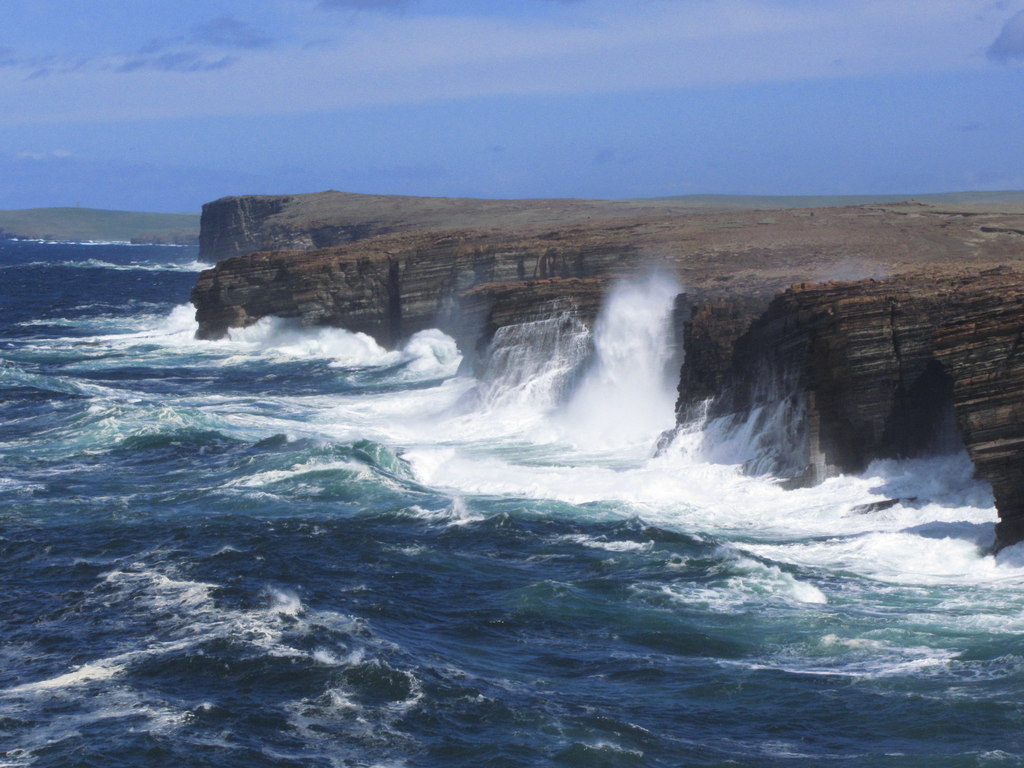
A horse-like sea demon from the folklore of Orkney, said to be the most malevolent of the northern island spirits. People blamed it for droughts, epidemics and dead cattle, and believed it could be escaped by crossing running fresh water.
When is Nuckelavee kept?
Nuckelavee is kept on outside the summer months, when it is not confined.
The nuckelavee is a demon of Orcadian folklore, a sea creature that takes the shape of a horse with a human upper body when it comes onto land. Islanders feared it as the worst of the northern demons, blaming it for drought, disease, failed crops and sick animals. Tales say it is kept in check by the Mither o' the Sea for the summer months.
What it is
The nuckelavee belongs to the folklore of Orkney, the island group north of mainland Scotland. It is a demon, a being of ill will, and it lives mainly in the sea. On land it shows itself as a horse with a human torso growing from its back, as though a rider had fused with the animal. The folklorist Katharine Briggs judged it the worst of the demons of Scotland's Northern Isles. It is a solitary creature, without companions, and old accounts give it no good side at all. People spoke of it as an explanation for misfortune they could not otherwise account for.
Appearance and reports
Descriptions differ from telling to telling. From a distance, or in the dark, the nuckelavee could pass for an ordinary horseman. Close up it was said to have no skin: black blood ran through yellow veins, and muscle and sinew showed as a moving mass. A single giant eye burned red in the horse's head, whose wide mouth breathed out a choking vapour. One islander, Tammas, told the folklorist Walter Traill Dennison that he had met the creature and got away. He described a human torso with no legs, arms long enough to reach the ground, and a huge head that rolled back and forth. Dennison said the name means Devil of the Sea.
Harm blamed on it
Islanders held the nuckelavee responsible for a long list of disasters. Its breath was said to wither crops and make livestock ill. It was blamed for droughts, for epidemics, and for poor harvests. From 1722, seaweed was burned on Stronsay to make soda ash, a substance used to treat acid soil and later in soap and glass. The smoke was thought to enrage the creature. People said it struck the horses of Stronsay with a deadly disease called mortasheen to punish the islanders for the burning, and that the sickness then spread to the other islands working in the same trade.
Confinement and escape
An ancient Orcadian spirit, the Mither o' the Sea, was the only power able to hold the nuckelavee back. She kept it shut away through the summer months. Like many sea monsters, it could not bear fresh running water, so a person it chased had only to cross a stream to be safe. Tammas said he escaped by splashing water from a loch on the creature, which distracted it, and then running to a channel and jumping to the far bank. The monster was often seen near a beach, but it never came ashore in rain.
Origins and names
Orcadian folklore drew heavily on Scandinavian tradition and also carried older Celtic stories, so the nuckelavee may be a joining of the two. Folklorists have connected it with the Norwegian nøkk, the Shetland nuggle and the kelpie. In Shetland the same demon was called a mukkelevi. The word nuckelavee comes from the Orcadian knoggelvi. Spellings in old records vary, because the collectors who wrote the tales down in the 19th century often anglicised names and set them inconsistently. The antiquarian Samuel Hibbert linked the first part of the name to Old Nick, a name for the Devil, and to the Latin necare, which means to kill.
How Nuckelavee is kept
This is a belief rather than a festival, so there is nothing to attend. What people did was avoid the creature and speak carefully of it. Islanders would not say its name without a prayer straight afterwards. They kept away from the shore when the light failed, since the nuckelavee was often near a beach. Anyone followed by it was told to get across running fresh water, which it could not cross. In rain it stayed off the land altogether, and for the whole summer the Mither o' the Sea held it confined.
When and where
The nuckelavee was said to be free for most of the year and confined through the summer by the Mither o' the Sea. It never came ashore in rain, and it kept to the ground near beaches. Old tellings treat it as a threat of the darker, wetter months rather than of any fixed festival day.
The belief belongs to Orkney, the Northern Isles of Scotland, and it is strongest there. Stronsay features in the accounts: the seaweed burning that began there in 1722, and the death of its horses, were both blamed on the creature. Shetland knew a comparable demon under the name mukkelevi.
What Nuckelavee means
For the islanders, the nuckelavee gave a shape to bad luck they could not explain: failed crops, dry seasons, outbreaks of disease, animals dying. Naming a cause, even a monstrous one, made a run of misfortune easier to bear and to talk about. The stories also carried practical sense in a place ringed by sea and cut by streams. Running water and a prayer were small protections people could hold on to, and the Mither o' the Sea stood for the sea's own power to hold harm in check.

Questions people ask about Nuckelavee
When is Nuckelavee kept?
Nuckelavee is kept on outside the summer months, when it is not confined.
What is the nuckelavee?
It is a demon in the folklore of Orkney. It lives in the sea and, on land, takes the form of a horse with a human torso growing from its back. People described it as the most malevolent of the demons of Scotland's Northern Isles.
Where does the nuckelavee belong?
To Orkney, the island group in the Northern Isles of Scotland. Stronsay appears in the accounts, and Shetland had a similar sea demon called the mukkelevi. The whole tradition sits within Orcadian folklore, which was shaped by both Scandinavian and Celtic sources.
How could someone escape it?
Accounts say it could not cross fresh running water, so anyone it chased had only to reach a stream or channel and get to the other side. Tammas, the islander who claimed to have met it, escaped that way after splashing it with water from a loch.
Why did islanders blame it for disasters?
Malevolent creatures in old tales often served to explain events people could not otherwise understand. The nuckelavee was blamed for drought, epidemics, withered crops and sick livestock, and its anger was said to have followed the seaweed burning that began on Stronsay in 1722.
See also
 The BurrymanA man clad in burdock burrs walks a Scottish town for a day, bringing luck as he goes
 Shoe throwingThe act of hurling footwear for sport, wedding luck, protest or overhead display.
 Need-fireA ritual fire kindled by friction to ward off cattle plague, disease and harmUnspoken WaterA Scottish healing custom in which water was fetched in silence and given to the sick
Good reading and sources
- Nuckelavee on WikipediaEncyclopedia
- More photos on Wikimedia CommonsPhotos and video
- Wikidata recordOpen data
The facts on this page come from the Wikipedia article "Nuckelavee", written by its contributors and used under the CC BY-SA 4.0 licence, and from its Wikidata record (CC0). EveryParampara rewrote the text in its own words, with AI assistance, and compares every page with the article to make sure no passage is copied. It may be reused under the same CC BY-SA 4.0 licence with a link back.
It may contain mistakes. Traditions differ from one family, village and community to the next, and the people who keep them know them best. If something is wrong, tell us. Last refreshed 2026-10-09.
More from the United Kingdom
All the traditions of the United Kingdom
🇬🇧 South Queensferry, United KingdomThe Burryman
A man clad in burdock burrs walks a Scottish town for a day, bringing luck as he goesFolklore
🇬🇧 United Kingdom and 2 moreShoe throwing
The act of hurling footwear for sport, wedding luck, protest or overhead display.Folklore
🇩🇪 Germany and 5 moreNeed-fire
A ritual fire kindled by friction to ward off cattle plague, disease and harmFolklore
🇬🇧 Torry, United KingdomUnspoken Water
A Scottish healing custom in which water was fetched in silence and given to the sickFolklore
The same idea elsewhere
Healing, luck and protection compared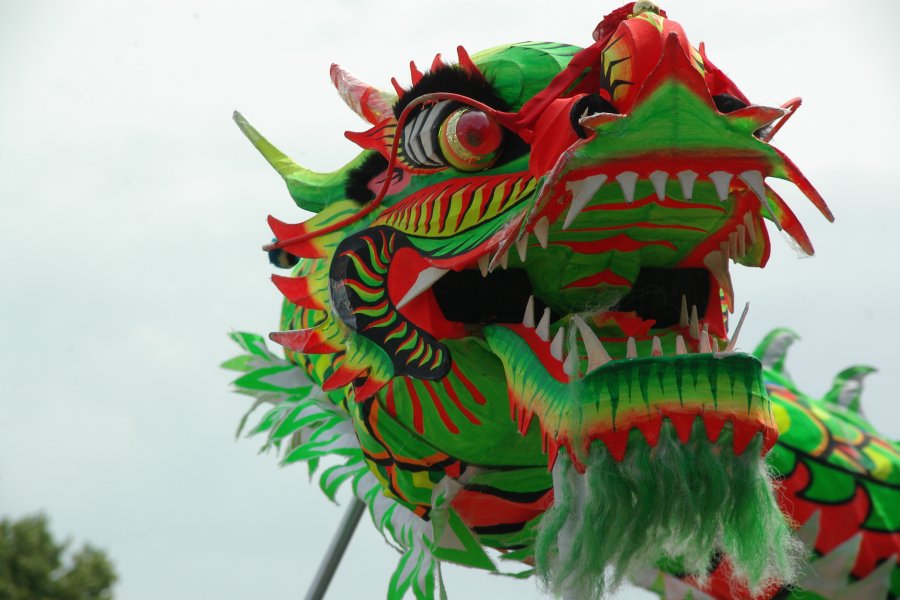 🇨🇳 China and 3 moreDragon dance舞龍 / 舞龙
A long dragon puppet on poles, danced by a team at Chinese New Year and other festivalsPerformance
🇨🇳 China and 3 moreDragon dance舞龍 / 舞龙
A long dragon puppet on poles, danced by a team at Chinese New Year and other festivalsPerformance
 🇺🇸 United States and 4 moreFriday the 13th
A Western folk superstition regarding the unluckiness of a Friday falling on the 13th.Folklore
🇺🇸 United States and 4 moreFriday the 13th
A Western folk superstition regarding the unluckiness of a Friday falling on the 13th.Folklore
 🇮🇳 India and 4 moreWater lantern
Small lamps floated on water to honour the dead and ask for good fortuneFestival
🇵🇬 Trobriand Islands, Papua New GuineaTrobriand cricket
Cricket as played in the Trobriand Islands, with chants, dances and a feastGame
🇮🇳 India and 4 moreWater lantern
Small lamps floated on water to honour the dead and ask for good fortuneFestival
🇵🇬 Trobriand Islands, Papua New GuineaTrobriand cricket
Cricket as played in the Trobriand Islands, with chants, dances and a feastGame