Need-fire
A ritual fire kindled by friction to ward off cattle plague, disease and harm

Need-fire is an old European ritual of rubbing wood to create a fresh flame during plagues or seasonal milestones. Communities extinguished every hearth fire, kindled pure embers through friction, and used the smoke, ash, and torches to cleanse livestock and protect homes.
When is Need-fire marked?
Need-fire is kept as part of Beltane and May Day, which is on Saturday, 1 May 2027.
Need-fire is a traditional European rite in which wood is rubbed together to produce a living flame. Communities turned to this ritual during outbreaks of cattle plague, pestilence, or on special seasonal days. Believing the fresh spark held purifying power, villagers put out all household hearths, sparked the new fire without flint or steel, and shared the embers to shield their herds and homes.
Kindling the flame
Creating a need-fire required pure friction, usually achieved with a large wooden drill made of oak. An upright timber was turned against a flat plank inside a sturdy frame, pulled back and forth using a newly twisted rope. To ensure the ritual worked, villagers had to quench every existing fire across the settlement beforehand. In some places, rules dictated who could operate the drill, ranging from pairs of brothers or naked youths to groups of nine men who had removed every trace of metal from their bodies.
Cleansing and protection
Once the initial spark caught, it was used to light a communal bonfire. People led cattle around the perimeter or drove them through the warm ashes and smoke to guard against deadly ailments. Glowing coals and lit torches were carried back to reignite empty household hearths. Farmers scattered cooled ash over their cultivated fields to defend crops against blight, while youth rubbed black charcoal marks on one another. In some regions, healing water infused with ash was sprinkled over unwell folk and beasts.
Regional variations
Variations of the rite existed across Europe. In the Scottish Highlands, need-fires were sparked annually at Beltane on the first of May, and in Poland they were kindled on Saint Roch's Day. Bulgarian villagers lit two separate blazes at crossroads feared to attract wolves, driving livestock between the flames. Serbian folklore called for a boy and a girl to work in darkness to produce the spark. Although most regions abandoned the custom by the nineteenth century, it persisted in Albania into the twentieth century.
How Need-fire is kept
Villagers first extinguish every fire in the locality. Designated individuals then spin a wooden peg against a board using a rope until heat creates an ember. This spark fuels a large bonfire. Livestock are herded through the drifting smoke or over cooling embers, while participants scatter ashes across fields and carry burning brands home to restart their domestic hearths.
When and where
Need-fires were sparked during emergency outbreaks of cattle disease or plague. Some regions held the ceremony annually on fixed days, such as the Scottish Highlands at Beltane on 1 May or Polish communities on Saint Roch's Day.
Practiced widely across Europe among Germanic, Gaelic, and Slavic groups until the nineteenth century, need-fires were documented in Scotland, Germany, Poland, Serbia, Bulgaria, and Russia, continuing in Albania into the twentieth century.
What Need-fire means
The friction flame represented uncorrupted life with the power to dispel livestock sickness, plague, and harmful magic. Extinguishing old hearths cleared away lingering contamination, while breathing the rising smoke and receiving new embers restored health and protected households against future misfortune.

Days Need-fire is marked
Questions people ask about Need-fire
When is Need-fire marked?
Need-fire is kept as part of Beltane and May Day, which is on Saturday, 1 May 2027.
What is a need-fire?
It is a protective ritual fire produced entirely through wood friction, historically kindled by European communities to shield livestock and people from disease, plague, and witchcraft.
Why were household fires extinguished beforehand?
Custom required dousing all existing domestic hearths so that the newly sparked friction flame could cleanly renew the community and banish lingering contamination or disease.
How was the fire made?
Makers spun a wooden spindle, often oak, against a flat plank by pulling a rope in a wooden frame until the friction created a glowing ember.
See also
 NazarA blue glass eye amulet worn and displayed to deflect the evil eye.
 The BurrymanA man clad in burdock burrs walks a Scottish town for a day, bringing luck as he goes
 Shoe throwingThe act of hurling footwear for sport, wedding luck, protest or overhead display.
 MolybdomancyPouring molten lead or tin into water, then reading the shape as an omen
Good reading and sources
- Need-fire on WikipediaEncyclopedia
- More photos on Wikimedia CommonsPhotos and video
- Wikidata recordOpen data
The facts on this page come from the Wikipedia article "Need-fire", written by its contributors and used under the CC BY-SA 4.0 licence, and from its Wikidata record (CC0). EveryParampara rewrote the text in its own words, with AI assistance, and compares every page with the article to make sure no passage is copied. It may be reused under the same CC BY-SA 4.0 licence with a link back.
It may contain mistakes. Traditions differ from one family, village and community to the next, and the people who keep them know them best. If something is wrong, tell us. Last refreshed 2026-10-06.
More from Germany
All the traditions of Germany
🇫🇮 Finland and 5 moreMolybdomancy
Pouring molten lead or tin into water, then reading the shape as an omenFolklore
 🇦🇹 Salzburg, Austria and 5 morePerchta
A midwinter Alpine figure who checks spinning and tests good behaviourFolklore
🇦🇹 Salzburg, Austria and 5 morePerchta
A midwinter Alpine figure who checks spinning and tests good behaviourFolklore
 🇨🇭 Bern, Switzerland and 4 moreTatzelwurm
A cat-faced dragon of Alpine lore, said to hiss, poison the air and guard old tunnelsFolklore
🇨🇭 Bern, Switzerland and 4 moreTatzelwurm
A cat-faced dragon of Alpine lore, said to hiss, poison the air and guard old tunnelsFolklore
 🇦🇹 Austria and 5 moreKrampus
Saint Nicholas's horned companion, who comes for misbehaving children on 5 DecemberFolklore
🇦🇹 Austria and 5 moreKrampus
Saint Nicholas's horned companion, who comes for misbehaving children on 5 DecemberFolklore
The same idea elsewhere
Healing, luck and protection compared 🇰🇷 Jeju, South KoreaGut굿
Sacred rites of song, dance, and spirit communion performed by Korean shamansSpiritual
🇰🇷 Jeju, South KoreaGut굿
Sacred rites of song, dance, and spirit communion performed by Korean shamansSpiritual
 🇯🇵 JapanChildren's Dayこどもの日
A Japanese holiday on May fifth celebrating the happiness and growth of childrenFestival
🇯🇵 JapanChildren's Dayこどもの日
A Japanese holiday on May fifth celebrating the happiness and growth of childrenFestival
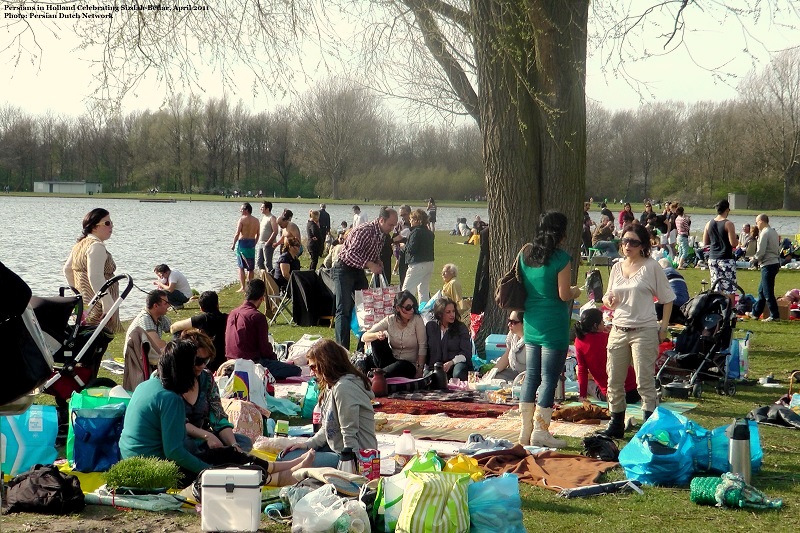 🇮🇷 Iran and 4 moreSizdah Bedarسیزدهبدر
An open-air picnic holiday concluding the Iranian New Year celebrationsFestival
🇮🇷 Iran and 4 moreSizdah Bedarسیزدهبدر
An open-air picnic holiday concluding the Iranian New Year celebrationsFestival
 🇯🇵 Kyoto, JapanAoi Matsuri葵祭
A classical Kyoto festival with an imperial procession and ancient shrine ritualsFestival
🇯🇵 Kyoto, JapanAoi Matsuri葵祭
A classical Kyoto festival with an imperial procession and ancient shrine ritualsFestival