Music, dance and storytellingSouth AsiaHindu
Odissi
In its own language: ଓଡ଼ିଶୀ
A classical dance of Odisha, told through bends, gestures and sung poetry

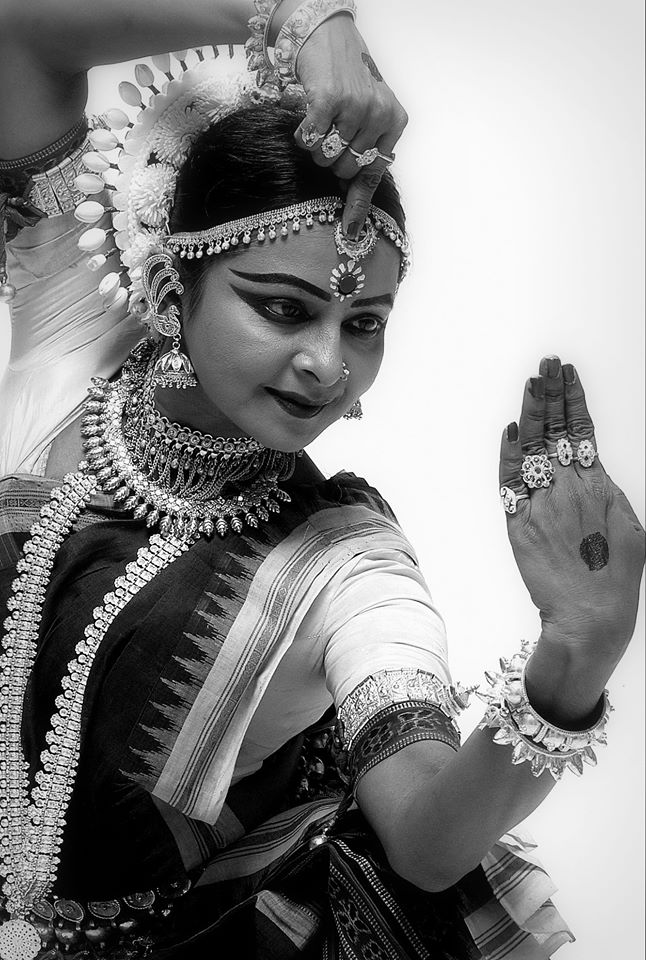
Odissi is a classical dance from the state of Odisha in India, and the oldest Indian classical dance still practised. Once danced mainly by women in Hindu temples, it sets devotional poems to Odissi music through a grammar of bends, gestures and expressions, and today men and women dance it on stages in India and abroad.
When is Odissi kept?
Odissi is kept on danced at temple festivals and village fairs, and today on stages through the year.
Odissi is a classical dance of India, and the oldest such dance that people still perform. It grew in Odisha, where dancers in Hindu temples told religious stories with the body: bends, hand gestures and the moving face, set to Odissi music and sung poetry. Suppressed under colonial rule, it was rebuilt after independence and is now danced by men and women on stages around the world.
Origins and history
Odissi's theory is traced to the Natya Shastra, an old Sanskrit work on performance attributed to Bharata Muni. Scholars date its first full compilation to somewhere between about 200 BCE and 200 CE, though estimates differ. That text sets out 108 basic dance units, and the same 108 are used in Odissi. It also names four methods of expressive delivery, one of them Odra, a word for Odisha. Older evidence comes from cave carvings: at Udayagiri the Manchapuri cave shows dancers and musicians, and the Hathigumpha inscriptions from the same period mention music and dance. A polished basalt lithophone found at Sankarjang, dated to about 1000 BCE, points to an old music tradition in the region.
The old styles
Two ways of dancing Odissi grew up, and both are remembered today. The Maharis were women who danced inside temples; they were held in respect and were thought to bring a blessing to religious services. They acted out devotional poems, among them Jayadeva's Gita Govinda, written in the twelfth century, and works by the eighth-century teacher Shankaracharya. Later came the Gotipuas, boys dressed as girls, who danced at temple festivals and at open fairs for ordinary entertainment, adding athletic and acrobatic movement; some became teachers when they grew up. Kings supported the art at different times, and King Ramachandradeva is said to have brought martial training into it.
How it is danced
A dancer does not simply move to music. The face carries abhinaya, the acting that shows feeling, and the hands make mudras, gestures that work a little like sign language. Old Sanskrit writing on performance describes both. A programme usually opens with an invocation, then goes through pure dance, expressive dance and dance drama, and closes with moksha, a final piece that stands for release of the soul. Training works on bhangas, symmetrical bends and stances. Dancers speak of three parts of the body working together: the feet, the middle of the body, and the hands and head.
Suppression and revival
From the twelfth century on, temple life in Odisha suffered raids. An invasion by Sultan Firuz Shah Tughlaq in 1360 and 1361 is recorded as destroying the Jagannath temple and defacing statues of dancers, and dance halls fell into ruin. Under Sultanate and Mughal courts, temple dancers were made to entertain rulers and their households. The hardest blow came with British rule. Officials mocked the temple dances, missionaries campaigned against them from 1892, and in 1910 the colonial government banned temple dancing, leaving many dancers without income. After independence a revival began, and around 1950 the poet and researcher Kalicharan Pattanayak helped win the dance recognition. He is credited with the name Odissi.
Today and change
Odissi is now taught in dance schools and performed on concert stages, and men dance it alongside women. The rebuilding that began in the 1950s borrowed ideas from other Indian dances and added new pieces. Some artists make experimental work, and some productions mix in themes and ideas from other cultures. The dance's reach is wide: it was the only Indian dance form to appear in Michael Jackson's 1991 single Black or White. Odissi troupes also perform at festivals abroad, among them the Nishagandi Dance Festival in 2024.
How Odissi is kept
Odissi is learnt from a guru, usually starting young, and takes years of practice. A performance brings dancers and musicians together: the musicians play Odissi music and sing, while the dancers act out a story, a devotional poem or a spiritual idea. The programme follows a set order, opening with an invocation and moving through pure dance, expressive dance and dance drama before closing with moksha. In Odisha the temple setting still matters. The Maharis who danced there, and the Gotipuas who danced at fairs, are remembered as the dancers who shaped the form.
When and where
Odissi has no single date in the year. It is danced at temple festivals and public fairs as well as on stage, and since its revival in the twentieth century it belongs to the concert calendar, performed through the year in India and at festivals abroad.
Odissi belongs to the state of Odisha and is strongest in its temple towns: Puri, where the Jagannatha temple stands, Bhubaneswar, and Konark, whose stone carvings show dancers and musicians. Training schools and performances are found across India, and Odissi troupes also dance abroad.
What Odissi means
For those who keep it, Odissi is more than entertainment. The old texts say that dance and performance express spiritual ideas, virtue and the meaning of scripture, and the dancers of the temples were seen as an auspicious presence. Love is a central theme in Indian religious writing, and Odissi has long carried poems of longing and union, in which the lover and the saint are pictured as one. Dancers speak of moksha, the final item, as release of the soul.



Questions people ask about Odissi
When is Odissi kept?
Odissi is kept on danced at temple festivals and village fairs, and today on stages through the year.
What is Odissi?
It is a classical dance of India that comes from the state of Odisha. Dancers use bends, hand gestures and facial expression to act out religious stories and poems, with musicians playing Odissi music and singing beside them. It is the oldest Indian classical dance still practised.
Where is Odissi danced?
Its home is Odisha, especially the temple towns of Puri, Bhubaneswar and Konark, where old carvings show the dance. Today it is taught in dance schools across India and performed on stages around the world.
Who dances Odissi?
In the past, women called Maharis danced it in temples, and boys dressed as girls, the Gotipuas, danced it at fairs. Since the revival of the 1950s men have joined women on stage, and both train under a guru for years.
Why was Odissi once banned?
British officials and Christian missionaries objected to temple dancing, calling it immoral. A campaign against such dances began in 1892, and in 1910 the colonial government banned temple dancing, which left many dancers without support. After independence the dance was revived.
See also
 PulikaliPainted tigers and leopards dance through Thrissur on the fourth day of Onam
 BhangraA Punjabi harvest dance, first kept by farmers and now performed worldwide
 GhazalA short rhyming poem of love and parting, recited and sung from Arabia to South Asia
 QawwaliDevotional Sufi singing from South Asia, led by hereditary parties at shrines
Good reading and sources
- Encyclopaedia BritannicaArticle
- IIT-Bhubaneswar to train students in Odissi tooThe Hindu, Article
- IIT-Bhubaneswar to train students in Odissi tooThe Hindu, Article
- Odissi on WikipediaEncyclopedia
- More photos on Wikimedia CommonsPhotos and video
- Wikidata recordOpen data
The facts on this page come from the Wikipedia article "Odissi", written by its contributors and used under the CC BY-SA 4.0 licence, and from its Wikidata record (CC0). EveryParampara rewrote the text in its own words, with AI assistance, and compares every page with the article to make sure no passage is copied. It may be reused under the same CC BY-SA 4.0 licence with a link back.
It may contain mistakes. Traditions differ from one family, village and community to the next, and the people who keep them know them best. If something is wrong, tell us. Last refreshed 2026-10-05.
More from India
All the traditions of India
🇮🇳 Thrissur, IndiaPulikaliപുലിക്കളി
Painted tigers and leopards dance through Thrissur on the fourth day of OnamPerformance
🇮🇳 Jammu, IndiaBhangra
A Punjabi harvest dance, first kept by farmers and now performed worldwidePerformance
🇮🇳 India and 5 moreGhazalغَزَل
A short rhyming poem of love and parting, recited and sung from Arabia to South AsiaPerformance
🇵🇰 Islamabad, Pakistan and 2 moreQawwaliقَوّالی
Devotional Sufi singing from South Asia, led by hereditary parties at shrinesPerformance
The same idea elsewhere
All of this kind 🇹🇷 Kayseri, Turkey and 4 moreHalay
A traditional line and circle folk dance kept across Turkey, Azerbaijan, Armenia, Iran, and Syria.Performance
🇧🇷 BrazilBaião
A syncopated folk rhythm and partnered dance from northeastern BrazilPerformance
🇹🇷 Kayseri, Turkey and 4 moreHalay
A traditional line and circle folk dance kept across Turkey, Azerbaijan, Armenia, Iran, and Syria.Performance
🇧🇷 BrazilBaião
A syncopated folk rhythm and partnered dance from northeastern BrazilPerformance
 🇺🇦 Kyiv, UkraineBanduraБандура
A Ukrainian plucked string instrument played to accompany epic songs and folk balladsPerformance
🇺🇦 Kyiv, UkraineBanduraБандура
A Ukrainian plucked string instrument played to accompany epic songs and folk balladsPerformance
 🇳🇿 Auckland, New ZealandPoi
A Māori performing art of swinging tethered weights in rhythmical patterns.Performance
🇳🇿 Auckland, New ZealandPoi
A Māori performing art of swinging tethered weights in rhythmical patterns.Performance