Festivals and celebrationsEuropeChristian
Quinquagesima
The last Sunday before Lent in Western Christianity, marking the start of Carnival and Shrovetide.

Quinquagesima is the final Sunday before Ash Wednesday in the Western Christian calendar. It serves as a transition point between ordinary time and the solemn season of Lent. Communities observe it with specific liturgical readings and festive meals to prepare for the upcoming fast.
When is Quinquagesima marked?
Quinquagesima is kept as part of Ash Wednesday, which is on Wednesday, 10 February 2027.
Quinquagesima marks the final Sunday before the start of Lent in Western Christian traditions. The name derives from Latin for 'fiftieth', referring to the fifty days leading up to Easter. This day initiates Shrovetide, a period of feasting and celebration before the forty-day fasting season begins on Ash Wednesday.
Etymology and timing
The title Quinquagesima comes from the Latin word for fiftieth. This counts the Sundays inclusively from Easter back to this day. Since Lent excludes Sundays from its forty-day count, Ash Wednesday follows just three days later. The date shifts each year based on Easter, falling between early February and early March. Another traditional name is Estomihi, taken from the opening words of the Introit prayer for the service.
Liturgical observance
Different denominations approach this Sunday with distinct focuses. In Lutheran churches, the reading combines passages about Jesus journeying to Jerusalem with Paul’s letter on love. Composers like Bach wrote cantatas for this day. The Roman Catholic Church now places it within Ordinary Time, though some communities retain the older names. Anglican and Methodist groups often call it Transfiguration Sunday, highlighting the Gospel account of Jesus’ transformation.
Feasting and customs
Christians traditionally feast on meat and rich foods on this day before abstaining during Lent. In Denmark, the day peaks the Fastelavn carnival. Families attend church services and then eat sweet buns filled with cream or jam. Children dress in costumes and sing while collecting money. They also carry decorated rods or hit barrels filled with treats, symbolizing the fight against evil spirits.
How Quinquagesima is kept
Communities attend church services featuring specific gospel readings about Jesus’ passion or transfiguration. After the service, families gather for festive meals featuring meat and sweets. In Denmark, children participate in carnival activities, wearing costumes and carrying decorated rods while singing for donations.
When and where
It falls on the Sunday immediately before Ash Wednesday, which varies annually between late February and early March depending on the date of Easter.
It is observed across Western Christian denominations, including Lutheran, Catholic, Anglican, and Methodist churches, with notable cultural celebrations in Denmark.
What Quinquagesima means
The day represents a threshold between joyous celebration and solemn reflection. It allows believers to enjoy final indulgences before the discipline of Lent. The burning of previous year’s palms into ashes for Ash Wednesday connects the end of one cycle to the beginning of another.
Days Quinquagesima is marked
Questions people ask about Quinquagesima
When is Quinquagesima marked?
Quinquagesima is kept as part of Ash Wednesday, which is on Wednesday, 10 February 2027.
What is Quinquagesima?
It is the last Sunday before Lent in Western Christian calendars. The name means fiftieth, counting the Sundays back to Easter. It marks the start of Shrovetide and Carnival.
Why do people feast on this day?
Christians eat meat and rich foods to celebrate before the forty-day Lenten fast begins. This tradition helps prepare the community spiritually for the upcoming season of abstinence.
See also
 April Fools' DayAn annual day of lighthearted pranks, hoaxes and teasing kept on the first of April
 JulebukkingA Scandinavian Christmas custom where masked visitors go door to door for songs and treats.
 MummingA medieval European custom of masked house-to-house visits, performances and seasonal revelry.
Good reading and sources
The facts on this page come from the Wikipedia article "Quinquagesima", written by its contributors and used under the CC BY-SA 4.0 licence, and from its Wikidata record (CC0). EveryParampara rewrote the text in its own words, with AI assistance, and compares every page with the article to make sure no passage is copied. It may be reused under the same CC BY-SA 4.0 licence with a link back.
It may contain mistakes. Traditions differ from one family, village and community to the next, and the people who keep them know them best. If something is wrong, tell us. Last refreshed 2026-10-06.
More from Denmark
All the traditions of Denmark
🇳🇴 Norway and 3 moreJulebukkingGå julebukk
A Scandinavian Christmas custom where masked visitors go door to door for songs and treats.Festival
 🇩🇪 Germany and 5 moreAdvent calendarAdventskalender
A daily countdown to Christmas using doors, images, or small gifts.Festival
🇩🇪 Germany and 5 moreAdvent calendarAdventskalender
A daily countdown to Christmas using doors, images, or small gifts.Festival
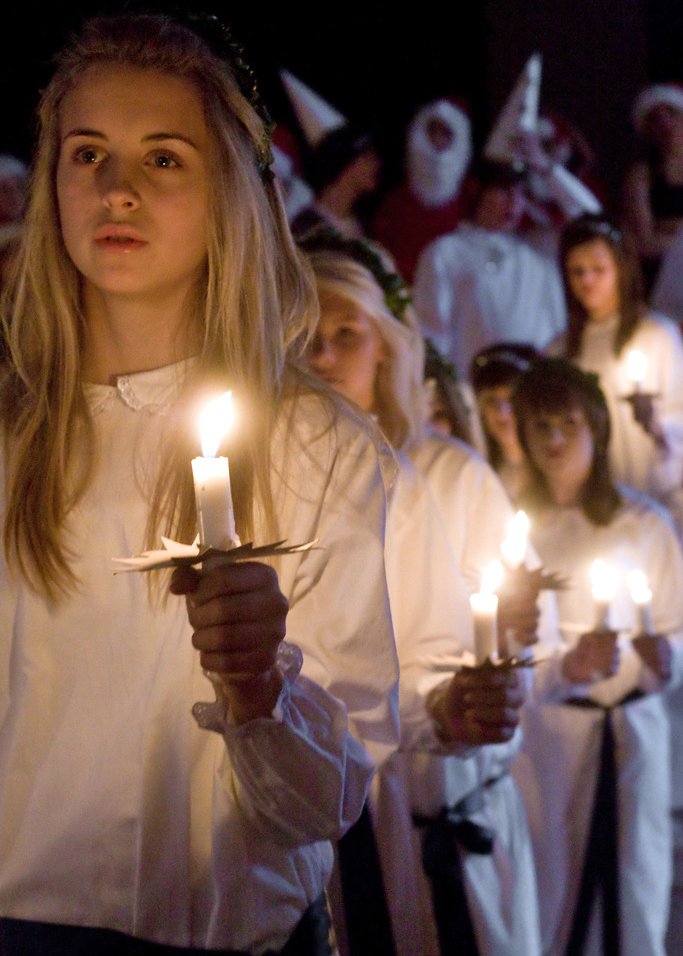 🇸🇪 Stockholm, Sweden and 4 moreSaint Lucy's Day
A December festival of light and song held across Scandinavia and Italy to honour a Christian martyr.Festival · Breakfast
🇸🇪 Stockholm, Sweden and 4 moreSaint Lucy's Day
A December festival of light and song held across Scandinavia and Italy to honour a Christian martyr.Festival · Breakfast
 🇩🇰 Copenhagen, Denmark and 5 moreFastelavn
A pre-Lenten carnival in Northern Europe where children dress up, sing for treats, and break candy-filled barrels.Festival · Sweets given and shared
🇩🇰 Copenhagen, Denmark and 5 moreFastelavn
A pre-Lenten carnival in Northern Europe where children dress up, sing for treats, and break candy-filled barrels.Festival · Sweets given and shared
The same idea elsewhere
Fasting and feasting compared 🇮🇳 Ayodhya, India and 7 moreDiwaliदीपावली (Dīpāvalī)
A five-day festival of lights celebrated across India and its diaspora to mark the victory of light over darkness.Festival · Feasts and festival meals
🇮🇳 Ayodhya, India and 7 moreDiwaliदीपावली (Dīpāvalī)
A five-day festival of lights celebrated across India and its diaspora to mark the victory of light over darkness.Festival · Feasts and festival meals
 🇮🇱 Jerusalem, IsraelYom Kippurיוֹם כִּפּוּר
The holiest day in Judaism, dedicated to fasting, prayer and atonementSpiritual · Fasting and breaking the fast
🇮🇱 Jerusalem, IsraelYom Kippurיוֹם כִּפּוּר
The holiest day in Judaism, dedicated to fasting, prayer and atonementSpiritual · Fasting and breaking the fast
 🇺🇸 New Orleans, United States and 5 moreMardi Gras
A festive day of parades and rich foods marking the final celebration before the Christian fasting season of Lent beginsFestival
🇺🇸 New Orleans, United States and 5 moreMardi Gras
A festive day of parades and rich foods marking the final celebration before the Christian fasting season of Lent beginsFestival
 🇮🇩 Bali, IndonesiaNyepiᬜᬾᬧᬶ
A Balinese Hindu day of silence, fasting and stillness marking the Saka new yearSpiritual · Fasting and breaking the fast
🇮🇩 Bali, IndonesiaNyepiᬜᬾᬧᬶ
A Balinese Hindu day of silence, fasting and stillness marking the Saka new yearSpiritual · Fasting and breaking the fast