Festivals and celebrationsEuropeSecular and civic
Mumming
A medieval European custom of masked house-to-house visits, performances and seasonal revelry.

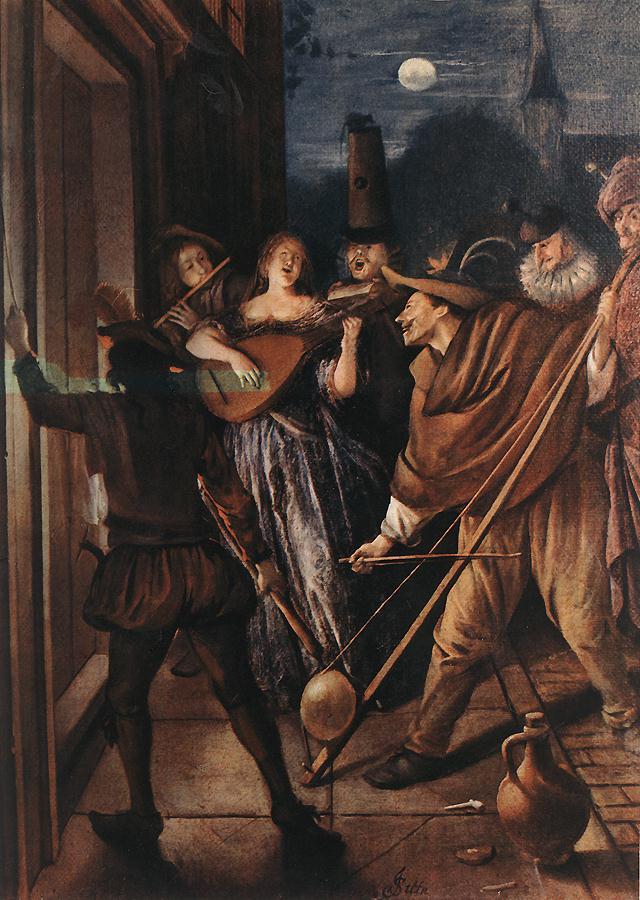
Mumming was a widespread practice across Europe where performers in disguise visited homes during festivals to entertain hosts. The tradition dates back to Roman Saturnalia and evolved into structured plays and parades. It involved costumes, music and games like dice, blending sacred ritual with festive mischief.
When is Mumming marked?
Mumming is kept as part of Christmas, which is on Friday, 25 December 2026.
Mumming was a lively European tradition where masked groups visited neighbors to perform, play games and share festive cheer. Rooted in ancient Roman holidays, it evolved into a distinct form of seasonal entertainment involving elaborate costumes and dramatic acts. Communities kept this practice alive through the Middle Ages and into the early modern period.
Origins and history
The roots of mumming stretch back to the Roman holiday Saturnalia, where participants wore masks and exchanged gifts. By the late thirteenth century, records show court mummers performing at royal weddings. In England, the practice became associated with rowdy behavior, leading King Henry VIII to ban mask-wearing as a misdemeanor. Meanwhile, German sources from the sixteenth century describe masked visitors playing dice games called mummenschanz. This term eventually shifted meaning to simply denote masquerade, losing its gambling connection by the eighteenth century.
Costumes and performance
Performers dressed in fantastic attire representing animals like bears, unicorns and rams. They might wear deer hides or ram horns to complete their look. Groups serenaded households outside before joining indoor celebrations. In Scotland, these figures were known as guisers and performed rude dramas such as Galatian. Records from Elgin show women dancing to trumpets while men performed sword dances in masks. The act of mumming itself derives from words meaning silence or dumb show, highlighting the silent or mimed nature of some early performances.
Regional variations
In Scotland, guising was a common New Year activity. Historical fines reveal residents punished for wearing pillowcases as disguises or singing traditional songs. When Anne of Denmark visited Edinburgh in fifteen ninety, local men performed sword dances in floral hats. James VI himself joined in, wearing a Venetian mask at a wedding. Austrian records note Duke Albert V playing dice with the Archbishop of Salzburg on Shrove Tuesday. These regional customs shared core elements of disguise and house-to-house visiting but adapted to local social structures and calendar events.
Modern legacy
Though the medieval practice faded, its spirit survived in specific forms. Mummers' plays continue to be performed in parts of England and Ireland. The tradition also influenced the modern Mummers' Parade, which keeps the spirit of costumed street performance alive. Nineteenth-century writers viewed mumming as a return to simpler times, framing it as controlled seasonal misrule. Today, the word survives in phrases like mum's the word, preserving the etymological link to silence and mystery that defined the original masked revelers.
How Mumming is kept
Groups of performers dressed in animal skins or masks visit homes during winter festivals. They sing, dance and sometimes play dice games with the hosts. In Scotland, they perform sword dances and short dramas. The practice involves both outdoor serenading and indoor participation in the host's festivities. Modern versions appear in organized parades and traditional theatrical plays.
When and where
It occurs during winter months, particularly around Christmas, New Year and Shrove Tuesday. Dates are tied to the liturgical calendar and seasonal festivals rather than fixed solar dates.
The tradition was strongest in England, Ireland and Scotland. German and Austrian regions also practiced similar masked house-visiting customs. It spread across Europe with local variations in costume and performance style.
What Mumming means
Mumming represented a temporary inversion of social order through disguise and mischief. It allowed communities to express seasonal joy and release tension through controlled chaos. The masks symbolized anonymity and the suspension of daily rules. Animal costumes connected performers to wilder, natural forces during the darkest time of year.

Days Mumming is marked
Questions people ask about Mumming
When is Mumming marked?
Mumming is kept as part of Christmas, which is on Friday, 25 December 2026.
What is mumming?
Mumming is a historical European tradition where masked performers visit homes during festivals to entertain hosts with songs, dances and games. It originated from Roman Saturnalia and evolved into distinct regional practices across Britain and continental Europe.
Where is mumming still kept today?
Elements survive in Mummers' plays in England and Ireland, and in the modern Mummers' Parade. Scottish guising traditions persist in folk memory and historical reenactments, though the full medieval practice has largely faded.
See also
 ChristmasA festival of Jesus's birth, kept on 25 December with gifts, lights and shared meals
 HalloweenAn annual observance on 31 October marking the eve of All Saints' Day, rooted in Christian tradition and Celtic heritage
 Christmas treeA decorated evergreen or artificial tree placed indoors to mark the Christmas season.
 Christmas EveThe evening before Christmas, marked by church services, family meals, and gift preparations across Christian cultures.
Good reading and sources
The facts on this page come from the Wikipedia article "Mummers", written by its contributors and used under the CC BY-SA 4.0 licence, and from its Wikidata record (CC0). EveryParampara rewrote the text in its own words, with AI assistance, and compares every page with the article to make sure no passage is copied. It may be reused under the same CC BY-SA 4.0 licence with a link back.
It may contain mistakes. Traditions differ from one family, village and community to the next, and the people who keep them know them best. If something is wrong, tell us. Last refreshed 2026-10-05.
More from the United Kingdom
All the traditions of the United Kingdom 🇬🇧 United Kingdom and 5 moreApril Fools' Day
An annual day of lighthearted pranks, hoaxes and teasing kept on the first of AprilFestival
🇬🇧 United Kingdom and 5 moreApril Fools' Day
An annual day of lighthearted pranks, hoaxes and teasing kept on the first of AprilFestival
 🇮🇳 Kolkata, India and 5 moreNavaratriनवरात्रि (Navarātri)
A nine-night Hindu festival honoring the goddess Durga and her nine forms through prayer, fasting, and dance.Festival · Fasting and breaking the fast
🇮🇳 Kolkata, India and 5 moreNavaratriनवरात्रि (Navarātri)
A nine-night Hindu festival honoring the goddess Durga and her nine forms through prayer, fasting, and dance.Festival · Fasting and breaking the fast
 🇩🇪 Nuremberg, Germany and 5 moreChristmas marketWeihnachtsmarkt
A seasonal street market held during Advent in German-speaking regions and beyond, featuring stalls, food, and crafts.Festival · Tea, coffee and drinking ceremonies
🇩🇪 Nuremberg, Germany and 5 moreChristmas marketWeihnachtsmarkt
A seasonal street market held during Advent in German-speaking regions and beyond, featuring stalls, food, and crafts.Festival · Tea, coffee and drinking ceremonies
The same idea elsewhere
New Year compared 🇮🇳 Ayodhya, India and 7 moreDiwaliदीपावली (Dīpāvalī)
A five-day festival of lights celebrated across India and its diaspora to mark the victory of light over darkness.Festival · Feasts and festival meals
🇮🇳 Ayodhya, India and 7 moreDiwaliदीपावली (Dīpāvalī)
A five-day festival of lights celebrated across India and its diaspora to mark the victory of light over darkness.Festival · Feasts and festival meals
 🇮🇷 Iran and 7 moreNowruzنوروز
The Iranian new year at the March equinox, kept with fire, greenery and picnicsSeasonal
🇮🇷 Iran and 7 moreNowruzنوروز
The Iranian new year at the March equinox, kept with fire, greenery and picnicsSeasonal
 🇮🇱 Jerusalem, Israel and 1 moreHanukkahחֲנֻכָּה
An eight-day Jewish festival marking the rededication of the Second Temple in Jerusalem and the miracle of a single day'Festival
🇮🇱 Jerusalem, Israel and 1 moreHanukkahחֲנֻכָּה
An eight-day Jewish festival marking the rededication of the Second Temple in Jerusalem and the miracle of a single day'Festival
 🇮🇳 Mathura, India and 5 moreHoliहोली (Hindi)
A spring festival of colours and bonfires that marks the end of winter and the triumph of good over evil.Festival
🇮🇳 Mathura, India and 5 moreHoliहोली (Hindi)
A spring festival of colours and bonfires that marks the end of winter and the triumph of good over evil.Festival