Spiritual and religiousMiddle EastJewish
Shemini Atzeret
In its own language: שְׁמִינִי עֲצֶרֶת
The eighth day of assembly, kept right after Sukkot with a prayer for rain

Shemini Atzeret is a Jewish holy day kept on Tishrei 22, straight after the seven days of Sukkot. Jewish communities in Israel and elsewhere, along with Samaritans and Karaites, mark it with prayer, and in Israel with Simchat Torah as well.
When is Shemini Atzeret marked?
Shemini Atzeret is kept as part of Sukkot, which runs from 16 to 22 October 2027.
Shemini Atzeret is the eighth day of assembly, a Jewish holy day that comes at the close of Sukkot. Communities in Israel and around the world gather for prayer, and in Israel they also celebrate Simchat Torah on the same day. Outside Israel a second day is added. The day is often called the festival that rounds off the season of rejoicing.
Separate from Sukkot
Jewish teaching treats this day as a festival in its own right, not only the tail end of the booth festival. The Torah links the two, and Leviticus names the day briefly inside the long passage about Sukkot. Because the sukkah and the Four Species belong to seven days and not eight, the eighth day has a character of its own. The Talmud, in tractate Sukkah 48a, counts up the ways the two differ. Most of them concern the Temple service, but two still shape practice today: the Shehecheyanu blessing is said on the night, and the prayers call the day Shemini Atzeret rather than Sukkot.
Names and meaning
The Hebrew word atzeret means assembly, and it shares a root with atzar, to hold back or keep in. Jewish sources give the word to this day in four places in the Hebrew Bible, all of them inside the Priestly Code; Deuteronomy 16 does not carry it. The same term describes the seventh day of Passover, and from that overlap readers took it to mean the closing festival. Rashi, commenting on Leviticus, tells a parable: a king who has feasted his children for several days asks them to stay one more, since parting is hard for him. Another reading sets the seventy bulls of Sukkot beside the single bull of this day.
Two days outside Israel
Inside the Land of Israel the day lasts one day. Communities elsewhere follow yom tov sheni shel galuyot, the extra festival day that the sages of the Talmud set for Jewish life outside the Land of Israel. It applies to Passover, Shavuot and Sukkot as well. The first of the two days keeps some Sukkot practices, which raises the question of which customs belong where. Simchat Torah, which grew up later, is now what makes the second day stand out. Reform and Reconstructionist congregations generally keep one day. Karaite Jews and Samaritans keep the day too, but by their own calendar, so it can fall on another date.
The rain prayer
From this day the prayer for rain, Geshem, is added to the liturgy. The day before it, Hoshana Rabbah, closes Sukkot on its seventh day; it lies among the intermediate days yet is set apart by its own prayers and rites. In the morning service worshippers carry the hoshanot and walk seven circuits, hakafot, around the bimah, recalling the Temple practice of circling the altar seven times. The Mishnah ties Sukkot to judgment about rainfall, and later teaching, among it the Abudarham, holds that the sealing sought on Yom Kippur is confirmed on Hoshana Rabbah, so that day takes on features of the High Holy Days.
Simchat Torah customs
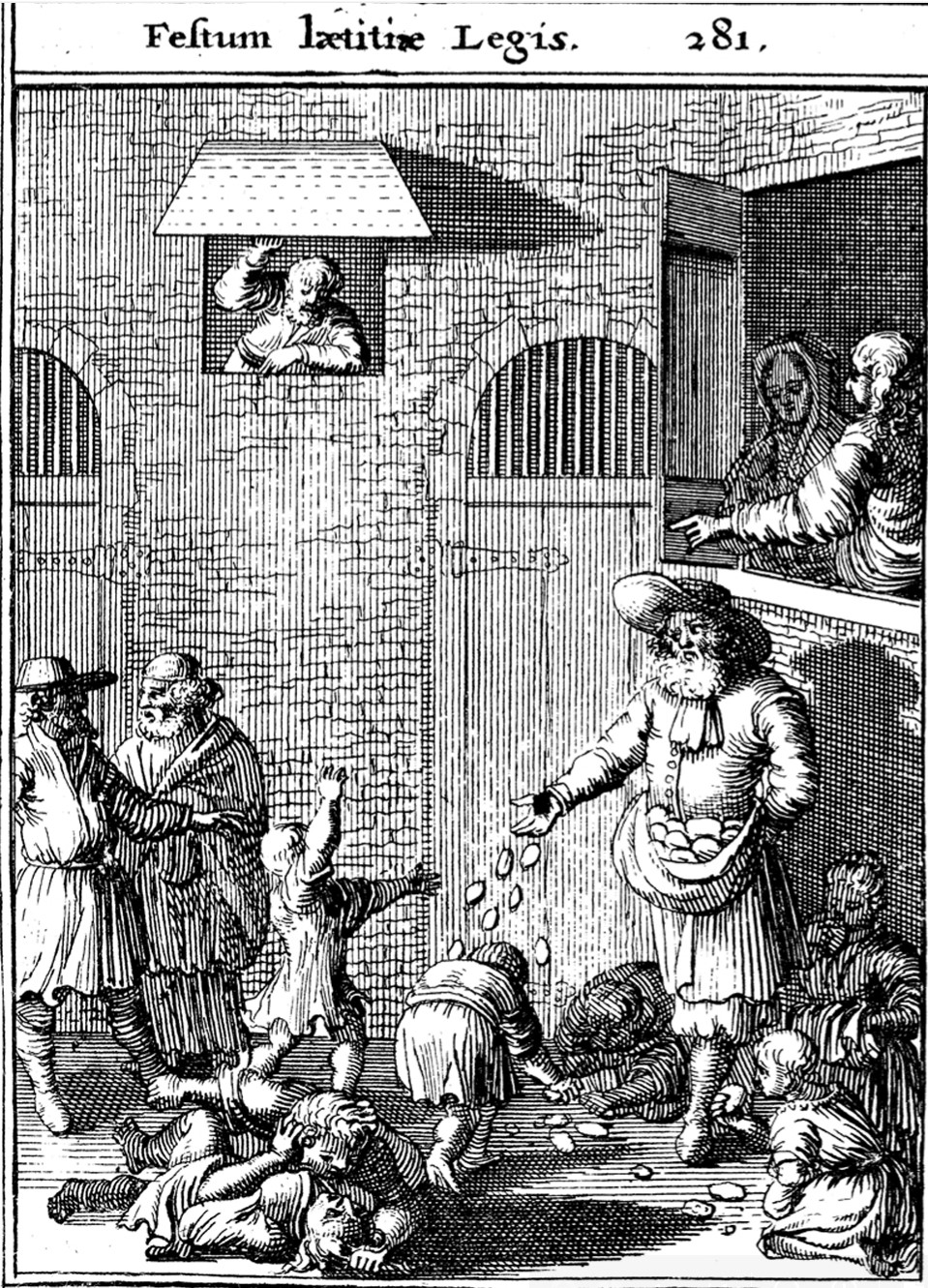
Reading the last Torah portion, Ve-zot ha-berakhah, on this day appears in the Talmud, which does not use the name Simchat Torah. The siddur of Rav Amram Gaon, from the ninth century, mentions the day and the haftarah taken from the opening of Joshua. The name Simchat Torah, and the practice of beginning Genesis as Deuteronomy ends, can be found in the Arba'ah Turim in the fourteenth century. Most features of the celebration as it is known now were in place by the sixteenth century. Ashkenazic congregations carry the scrolls from the ark in the evening and morning and walk them around the bimah.
How Shemini Atzeret is kept
The day opens in the evening with the Shehecheyanu blessing. Morning prayer follows the festival order; Hallel is recited, and on this day the prayer for rain is added. In Israel the same day carries the Simchat Torah celebration, when the scrolls leave the ark and are carried around the bimah, the final portion of Deuteronomy is read and the first chapter of Genesis is begun at once. Outside Israel the first day keeps some Sukkot practices, and the second day, Simchat Torah, holds the dancing with the scrolls and the completion of the reading cycle.
When and where
Shemini Atzeret falls on the twenty-second of Tishrei, the seventh month of the Hebrew calendar, which normally lands in late September or early October. It comes straight after the seven days of Sukkot. In the Land of Israel the festival is one day; communities outside add a second, Simchat Torah. Karaite and Samaritan calendars may place it on a different date.
It belongs first to the Land of Israel, where the day is kept as one festival and the name Simchat Torah is used just as often. Outside Israel, Jewish communities keep it as two days, the first Shemini Atzeret and the second Simchat Torah. Karaite Jews and Samaritans observe the day as well, on their own reckoning. It is also kept in the United States and other communities abroad.
What Shemini Atzeret means
Those who keep the day describe it as a time of lingering, an extra day of closeness with God after the week of Sukkot. The name joins assembly with holding back. In one reading the seventy bulls of Sukkot stand for the nations of the world and the single bull for the Jewish people, so Sukkot is broad and this day is intimate. Another reading asks people to carry the feeling of the holy days into the year ahead. The liturgy keeps Sukkot's title, the season of our rejoicing.


Days Shemini Atzeret is marked
Questions people ask about Shemini Atzeret
When is Shemini Atzeret marked?
Shemini Atzeret is kept as part of Sukkot, which runs from 16 to 22 October 2027.
What is Shemini Atzeret?
It is a Jewish holy day, the eighth day of assembly, kept at the close of Sukkot. Jewish sources treat it as a festival in its own right rather than the last day of Sukkot. Jews and Samaritans observe it, and in Israel it is celebrated together with Simchat Torah.
Why do some communities keep two days?
A ruling known as yom tov sheni shel galuyot, set by the Talmudic sages for Jewish life outside the Land of Israel, adds a second festival day. It applies to Passover, Shavuot and Sukkot too. Reform and Reconstructionist congregations generally keep one day.
How is the day marked in Israel?
In Israel the day lasts a single day and doubles as Simchat Torah. The Torah scrolls are carried in procession around the bimah, the last portion of Deuteronomy is read, and the first chapter of Genesis follows immediately. The two names are used interchangeably.
Do Samaritans and Karaites keep it?
Yes. Both observe Shemini Atzeret as they do the other biblical holidays. Because their calendar calculations differ, the date can fall on another day. They do not include Simchat Torah, which is a later rabbinic addition, and they keep no second day outside their homeland.
See also
 PassoverA Jewish spring festival celebrating freedom from slavery with ritual meals
 SukkotA seven-day autumn Jewish festival of temporary booths, harvest prayers and hospitality
 Holy FireA fire ceremony in Jerusalem each year, kept by Orthodox Christians before Easter
 NovenaA nine-day Christian prayer tradition for petitions, feasts, or mourning.
Good reading and sources
The facts on this page come from the Wikipedia article "Shemini Atzeret", written by its contributors and used under the CC BY-SA 4.0 licence, and from its Wikidata record (CC0). EveryParampara rewrote the text in its own words, with AI assistance, and compares every page with the article to make sure no passage is copied. It may be reused under the same CC BY-SA 4.0 licence with a link back.
It may contain mistakes. Traditions differ from one family, village and community to the next, and the people who keep them know them best. If something is wrong, tell us. Last refreshed 2026-10-05.
More from Israel
All the traditions of Israel
🇮🇱 Jerusalem, IsraelPassoverפסח
A Jewish spring festival celebrating freedom from slavery with ritual mealsSpiritual · Dinner
🇮🇱 Jerusalem, IsraelSukkotסוכות
A seven-day autumn Jewish festival of temporary booths, harvest prayers and hospitalitySpiritual
🇮🇱 Jerusalem, Israel and 5 moreHoly FireἋγιον Φῶς
A fire ceremony in Jerusalem each year, kept by Orthodox Christians before EasterSpiritual
 🇮🇱 Jerusalem, IsraelShavuotשבועות
A late-spring Jewish festival of the wheat harvest and the giving of the TorahSpiritual · Feasts and festival meals
🇮🇱 Jerusalem, IsraelShavuotשבועות
A late-spring Jewish festival of the wheat harvest and the giving of the TorahSpiritual · Feasts and festival meals
The same idea elsewhere
Pilgrimage compared 🇺🇸 United States and 5 moreMother's Day
A worldwide annual celebration dedicated to mothers, maternal bonds and family careHome
🇺🇸 United States and 5 moreMother's Day
A worldwide annual celebration dedicated to mothers, maternal bonds and family careHome
 🇵🇱 Poland and 5 moreChristmas Eve
The evening before Christmas, marked by church services, family meals, and gift preparations across Christian cultures.Festival · Dinner
🇵🇱 Poland and 5 moreChristmas Eve
The evening before Christmas, marked by church services, family meals, and gift preparations across Christian cultures.Festival · Dinner
 🇮🇳 India and 1 moreKailash Mansarovar Yatraकैलाश मानसरोवर यात्रा (Hindi); ཀཱའི་ལ་ཤ་མན་ས་རོ་ཝར་ཡ་ཏྲ། (Tibetan)
A high-altitude pilgrimage to Mount Kailash and Lake Manasarovar in TibetSpiritual
🇮🇳 India and 1 moreKailash Mansarovar Yatraकैलाश मानसरोवर यात्रा (Hindi); ཀཱའི་ལ་ཤ་མན་ས་རོ་ཝར་ཡ་ཏྲ། (Tibetan)
A high-altitude pilgrimage to Mount Kailash and Lake Manasarovar in TibetSpiritual
 🇵🇭 Marinduque, PhilippinesMoriones Festival
A Holy Week reenactment in Marinduque where masked participants search for the Roman centurion Longinus.Festival
🇵🇭 Marinduque, PhilippinesMoriones Festival
A Holy Week reenactment in Marinduque where masked participants search for the Roman centurion Longinus.Festival