Traditions with turmeric
Turmeric, the golden root of a plant related to ginger, colours curries and rituals alike.
Turmeric, the golden root of a plant related to ginger, colours curries and rituals alike. In South and Southeast Asia, it is a spice of the kitchen and a sacred substance: it is used in cooking, in wedding rites, in prayers at the temple and in the decoration of the home. Its yellow is the colour of auspiciousness. These pages gather the traditions that use it, from the haldi ceremony to the festive rice of Indonesia.
Where it is used
In India, turmeric is in nearly every curry and dal, and in turmeric milk at home. In Indonesia, it colours the nasi kuning served at celebrations and the tumpeng cone. In Thailand, it is in yellow curries, in Morocco in tagines and in Persian stews. In Okinawa, it is brewed as a tea, and in the Caribbean, it flavours curried goat brought by Indian indentured workers.
What it means
At a haldi ceremony before an Indian wedding, family smear a paste of turmeric on the bride and groom to bless and brighten them. A thread dyed with turmeric is tied at Tamil weddings, and the rhizome is offered at temples and used to mark thresholds. The yellow colour is linked to the sun, prosperity and protection, and gifts of turmeric are part of festivals such as Pongal.
Written by the EveryParampara desk with AI assistance. Background on Turmeric (spice). Customs differ from place to place and family to family. If this is your tradition and we have it wrong, tell us.
 🇹🇱 Dili, Timor-Leste and 1 moreTais
Traditional hand-woven cloth of East Timor, worn as dress or used in ceremonies and exchange.Dress
🇹🇱 Dili, Timor-Leste and 1 moreTais
Traditional hand-woven cloth of East Timor, worn as dress or used in ceremonies and exchange.Dress
 🇮🇳 Varanasi, India and 1 moreNaga Panchamiनागपञ्चमी (Nāgapañcamī)
A day of worship for serpent deities and cobras, observed by Hindus, Jains, and Buddhists across South Asia.Spiritual
🇮🇳 Varanasi, India and 1 moreNaga Panchamiनागपञ्चमी (Nāgapañcamī)
A day of worship for serpent deities and cobras, observed by Hindus, Jains, and Buddhists across South Asia.Spiritual
 🇮🇳 India and 1 moreLakshmi Pujaलक्ष्मीपूजा
A Hindu festival of lamps, prayers and offerings welcoming the goddess of prosperitySpiritual · Sweets given and shared
🇮🇳 India and 1 moreLakshmi Pujaलक्ष्मीपूजा
A Hindu festival of lamps, prayers and offerings welcoming the goddess of prosperitySpiritual · Sweets given and shared
 🇮🇳 IndiaBathukammaబతుకమ్మ
A nine-day floral festival celebrated by women across Telangana and Andhra PradeshFestival
🇮🇳 IndiaBathukammaబతుకమ్మ
A nine-day floral festival celebrated by women across Telangana and Andhra PradeshFestival
 🇮🇳 Guwahati, IndiaBohag Bihu
A multi-day Assamese New Year festival of cattle rites, music, gifts and feastsSeasonal · Feasts and festival meals
🇮🇳 Guwahati, IndiaBohag Bihu
A multi-day Assamese New Year festival of cattle rites, music, gifts and feastsSeasonal · Feasts and festival meals
 🇮🇳 Puri, IndiaRajaRaja Parba (Odia: ରଜ ପର୍ବ)
A three-day festival of womanhood and earth in Odisha, celebrating the monsoon and fertility.Festival
🇮🇳 Puri, IndiaRajaRaja Parba (Odia: ରଜ ପର୍ବ)
A three-day festival of womanhood and earth in Odisha, celebrating the monsoon and fertility.Festival
 🇮🇳 IndiaGaye holudগায়ে হলুদ
A Bengali pre-wedding ceremony where turmeric paste is applied to the bride and groomRite of passage
🇮🇳 IndiaGaye holudগায়ে হলুদ
A Bengali pre-wedding ceremony where turmeric paste is applied to the bride and groomRite of passage
 🇮🇳 India and 2 morePehlwani
A traditional discipline of clay-pit wrestling across the Indian subcontinent.Game
🇮🇳 India and 2 morePehlwani
A traditional discipline of clay-pit wrestling across the Indian subcontinent.Game
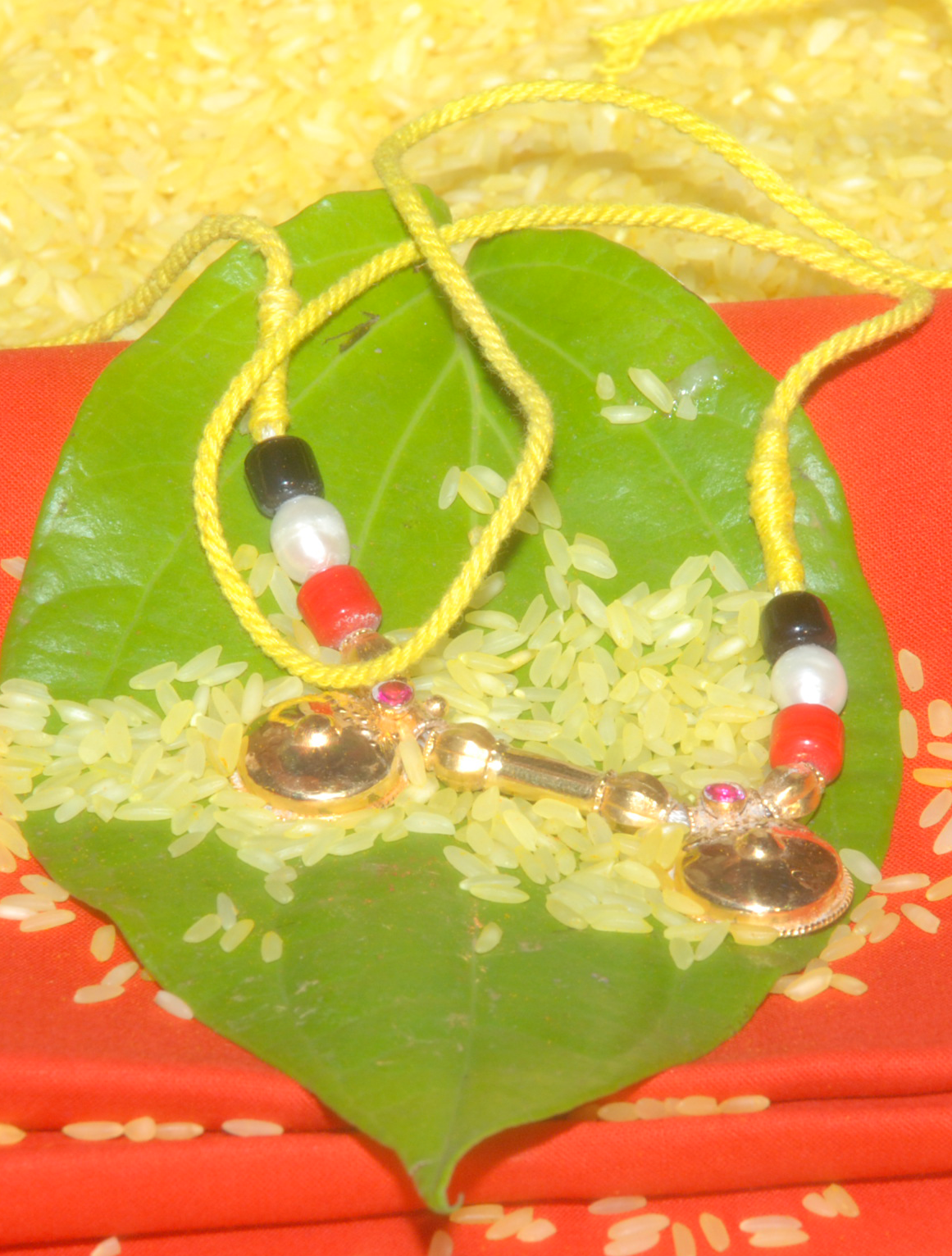 🇮🇳 India and 2 moreMangalasutraमङ्गलसूत्रम् (maṅgalasūtram)
A necklace tied by the groom at a wedding, worn through married lifeDress
🇮🇳 India and 2 moreMangalasutraमङ्गलसूत्रम् (maṅgalasūtram)
A necklace tied by the groom at a wedding, worn through married lifeDress
 🇮🇩 Bali, IndonesiaTumpengꦠꦸꦩ꧀ꦥꦼꦁ (Javanese); ᬢᬸᬫ᭄ᬧᭂᬂ (Balinese)
A tall cone of rice ringed with side dishes, central to Javanese ceremonies and partiesTable custom · Feasts and festival meals
🇮🇩 Bali, IndonesiaTumpengꦠꦸꦩ꧀ꦥꦼꦁ (Javanese); ᬢᬸᬫ᭄ᬧᭂᬂ (Balinese)
A tall cone of rice ringed with side dishes, central to Javanese ceremonies and partiesTable custom · Feasts and festival meals
 🇮🇳 India and 1 moreRangoliरंगोली
Floor patterns of rice flour, sand or petals, drawn at the doorstep for festivalsCraft
🇮🇳 India and 1 moreRangoliरंगोली
Floor patterns of rice flour, sand or petals, drawn at the doorstep for festivalsCraft
 🇮🇳 India and 1 moreMayian
A pre-wedding cleansing ritual in Punjabi traditions, using turmeric paste to prepare the couple for marriage.Rite of passage
🇮🇳 India and 1 moreMayian
A pre-wedding cleansing ritual in Punjabi traditions, using turmeric paste to prepare the couple for marriage.Rite of passage
 🇮🇳 India and 1 morePunjabi wedding traditions
The multi-day marriage customs and rituals of Hindu and Sikh Punjabi familiesRite of passage · Sweets given and shared
🇮🇳 India and 1 morePunjabi wedding traditions
The multi-day marriage customs and rituals of Hindu and Sikh Punjabi familiesRite of passage · Sweets given and shared
 🇮🇳 Mumbai, IndiaWeddings in India
Marriage rites and festive gatherings celebrated across the diverse communities of India.Rite of passage
🇮🇳 Mumbai, IndiaWeddings in India
Marriage rites and festive gatherings celebrated across the diverse communities of India.Rite of passage
 🇮🇳 IndiaPrathamastami
An Odia ritual blessing the firstborn child for long life and good fortuneRite of passage
🇮🇳 IndiaPrathamastami
An Odia ritual blessing the firstborn child for long life and good fortuneRite of passage
Photo credits on this page
The small pictures above come from Wikimedia Commons under free licences. Some are cropped to fit.
- Pehlwani: Prasanna Revan aka. Prasannare at en.wikipedia, CC BY-SA 3.0, source
- Naga Panchami: No machine-readable author provided. Krish Dulal assumed (based on cop, CC BY-SA 3.0, source
- Mangalasutra: Ackroydman, CC BY-SA 3.0, source
- Lakshmi Puja: Subharnab Majumdar, CC BY 2.0, source
- Bathukamma: Randhirreddy at English Wikipedia, CC BY-SA 3.0, source
- Bohag Bihu: Diganta Talukdar, CC BY-SA 4.0, source
- Raja: Saroj Bal, CC BY-SA 3.0, source
- Gaye holud: Arr4, CC BY-SA 4.0, source
- Tais: Daderot, CC0, source
- Rangoli: SreeramKalyan, CC0, source
- Tumpeng: brother-harahap, CC BY 2.0, source
- Mayian: Rakzika, CC BY-SA 4.0, source
- Weddings in India: Jaisingh Rathore, CC BY 2.5, source
- Prathamastami: Swetabiswal, CC BY-SA 4.0, source
- Punjabi wedding traditions: Unknown author, Public domain, source