Dress and adornmentSoutheast AsiaChristian
Tais
Traditional hand-woven cloth of East Timor, worn as dress or used in ceremonies and exchange.

Tais is a traditional woven fabric created by women in East Timor. It serves as ceremonial dress, a symbol of respect, and a form of currency. The craft uses natural dyes and back-strap looms to produce distinct regional patterns.
When is Tais kept?
Tais is kept on year-round for daily wear and ceremonies.
Tais is the traditional woven cloth of East Timor, made entirely by women. It functions as clothing, a gift of respect, and a medium for cultural memory. The craft preserves identity through intricate patterns and natural dyeing techniques passed down through generations.
What tais means
Tais cloth holds deep social value in East Timor. Women weave it to create garments for special occasions and to honor guests. Historically, it acted as a unit of exchange for livestock and other valuables before modern currency became common. The Catholic Church also incorporates tais into its rituals. Weaving provides a rare space for self-expression and community gathering for women, especially during periods of political restriction.
How it is made
Weavers use back-strap looms to create tension while manipulating threads. The process relies on cotton, introduced during the Portuguese colonial period, though synthetic fibers are now common. Dyes come from plants like turmeric, mango skin, and cactus flowers. Skilled dyers mix these ingredients to achieve specific colors, with red symbolizing courage and long life. A single piece can take days or months to complete depending on design complexity.
Styles and regions
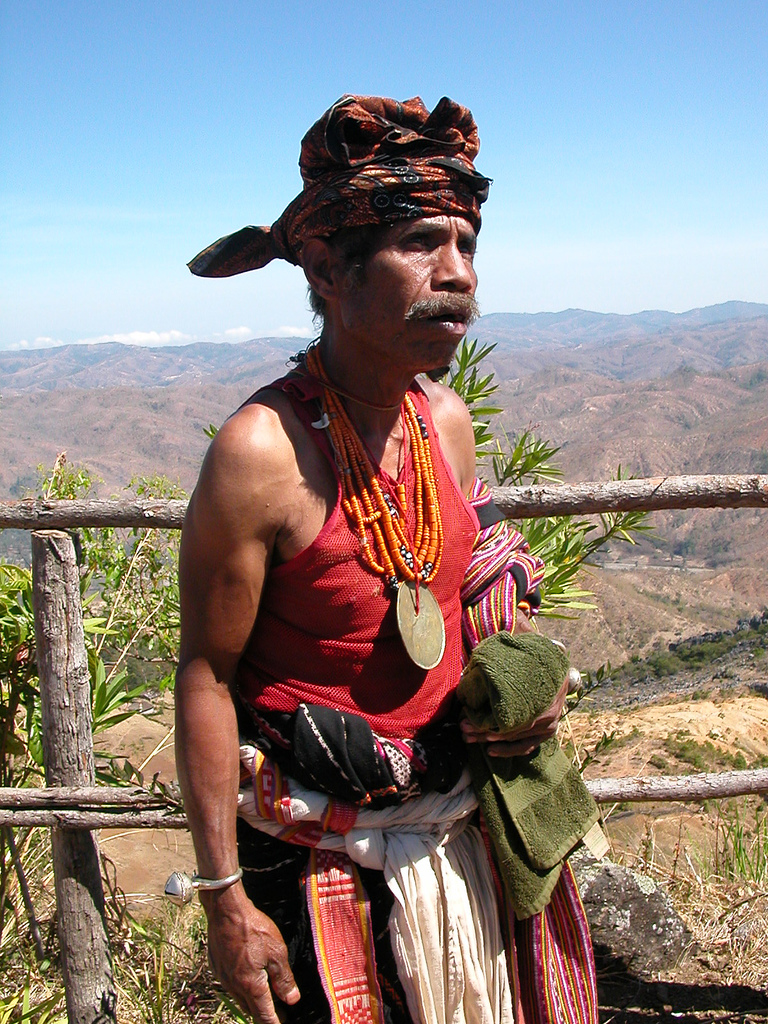
Regional variations define different types of tais. Men wear tais mane, a large waist wrap often finished with tassels. Women wear tais feto, a strapless tube dress. A slender neck cloth called selendang has gained popularity recently. Designs vary by district: Oecussi-Ambeno features floral motifs, Ermera uses black-and-white patterns linked to royalty, and Manufahi focuses on animal themes like lizards and pigs.
History and change
Detailed study of tais history began only after 2000 due to prior occupation. During the Indonesian occupation, tais served as a market commodity for soldiers and a tool for resistance. Post-independence, international organizations bought tais as gifts, introducing new languages into the designs. Today, sales often involve foreign buyers, raising debates about commodification while providing income for rural weavers who lack formal education.
How Tais is kept
Women gather to weave tais using back-strap looms and natural dyes. They pass techniques orally from mother to daughter. The activity serves as both production and social bonding. Weavers create garments for weddings, funerals, and religious ceremonies. They also produce items for sale to support household income. The craft adapts to include new materials and messages while maintaining core weaving methods.
When and where
It is kept year-round. Production occurs mainly during the dry season. Specific pieces are made for seasonal festivals or life-cycle events like births and burials.
It is strongest in East Timor (Timor-Leste). Major markets exist in Dili. Communities in districts like Ermera and Oecussi-Ambeno maintain distinct styles. Some production and sales have moved to Australia through friendship groups.
What Tais means
Tais represents identity, respect, and continuity. Red signifies courage and life. Patterns record local history and creation legends, such as the crocodile myth. Wrapping loved ones in tais honors them in death. The cloth strengthens family ties and preserves cultural memory against external pressures.
On the table
Flavours: Turmeric



Questions people ask about Tais
When is Tais kept?
Tais is kept on year-round for daily wear and ceremonies.
Where is Tais kept?
Tais belongs to the traditions of Timor-Leste and Indonesia, and is tied most closely to Dili.
Who keeps Tais?
As our sources describe it, Tais is kept by Women of East Timor. Many other communities and families now share it too.
See also
 MawlidAn annual festival marking the birth of the Prophet Muhammad, marked by poetry, processions and feasts.
 Ogoh-ogohGiant handcrafted statues paraded and burned on the eve of the Balinese Saka New Year
 Glove puppetryA traditional theatre of cloth-bodied puppets with carved wooden heads and live music
 ShehnaiA traditional reed instrument played at weddings and temple festivals across India
Good reading and sources
- Tais on WikipediaEncyclopedia
- More photos on Wikimedia CommonsPhotos and video
- Wikidata recordOpen data
The facts on this page come from the Wikipedia article "Tais", written by its contributors and used under the CC BY-SA 4.0 licence, and from its Wikidata record (CC0). EveryParampara rewrote the text in its own words, with AI assistance, and compares every page with the article to make sure no passage is copied. It may be reused under the same CC BY-SA 4.0 licence with a link back.
It may contain mistakes. Traditions differ from one family, village and community to the next, and the people who keep them know them best. If something is wrong, tell us. Last refreshed 2026-10-05.

The same idea elsewhere
All of this kind 🇮🇳 Paithan, IndiaPaithani
A handwoven silk sari from Maharashtra, with a squared border and a peacock palluDress
🇮🇳 Paithan, IndiaPaithani
A handwoven silk sari from Maharashtra, with a squared border and a peacock palluDress
 🇳🇴 Norway and 3 moreGákti
A traditional coat worn by the Sámi people across northern Scandinavia and Russia, signaling origin and status through cDress
🇳🇴 Norway and 3 moreGákti
A traditional coat worn by the Sámi people across northern Scandinavia and Russia, signaling origin and status through cDress
 🇼🇸 Samoa and 1 moreʻIe tōga
Precious woven mats exchanged in Samoan ceremonies to honor family ties and chiefly status.Dress
🇼🇸 Samoa and 1 moreʻIe tōga
Precious woven mats exchanged in Samoan ceremonies to honor family ties and chiefly status.Dress
 🇮🇱 Israel and 1 moreTzitzitצִיצִית
Knotted ritual fringes worn on a four-cornered garment, a reminder of the commandmentsDress
🇮🇱 Israel and 1 moreTzitzitצִיצִית
Knotted ritual fringes worn on a four-cornered garment, a reminder of the commandmentsDress