Royal, civic and national ceremonySouth Asia
Wagah Border Ceremony
A daily flag-lowering ritual at the India-Pakistan border featuring high kicks and synchronized drills.

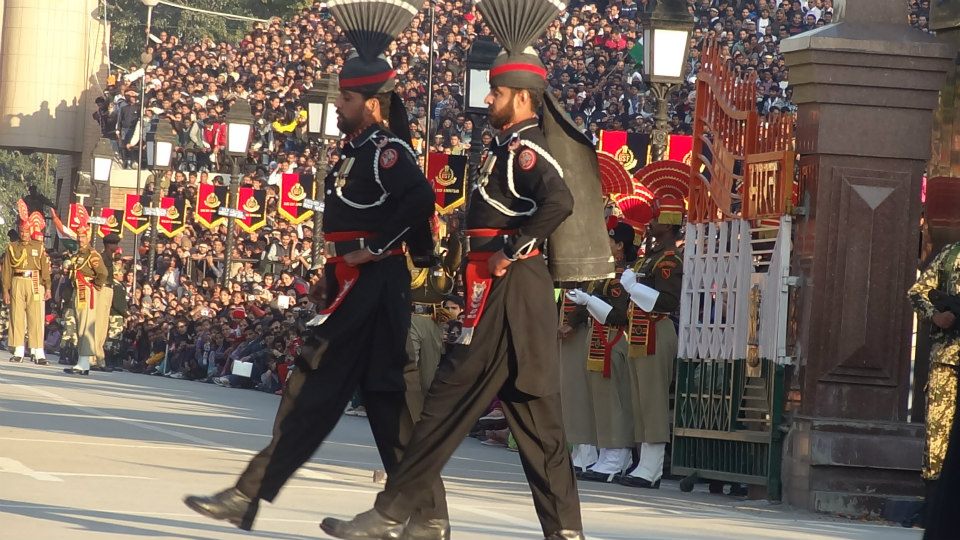
The Wagah Border Ceremony is a daily military display held at the Attari-Wagah crossing between India and Pakistan. Since 1959, soldiers from both nations perform elaborate drills that blend rivalry with formal respect, ending with a simultaneous flag lowering and handshake.
When is Wagah Border Ceremony kept?
Wagah Border Ceremony is kept every evening immediately before sunset.
At the Attari-Wagah border, two nations meet in a daily display of disciplined theatre. Soldiers from India and Pakistan perform high kicks and stomps that echo their shared history and current tensions. The event ends with flags lowered together and a handshake, marking a rare moment of connection across a divided line.
Origins and evolution
The tradition began on October 11, 1947, when Brigadier Mohinder Singh Chopra and Brigadier Nazir Ahmed established a simple checkpoint. Three drums, chalk lines, and tents marked the new boundary for refugees. By 1959, the Border Security Force and Pakistan Rangers formalized the daily drill. In 2010, leaders decided to reduce hostility. They added smiles and handshakes to the routine, shifting the focus from aggression to mutual respect while keeping the dramatic physical movements.
The daily ritual
Soldiers gather before sunset for a blustering parade. They scream battle calls and perform rapid, dance-like maneuvers. High kicks and stomps dominate the performance as guards stare each other down. The spectacle draws crowds from both sides and international tourists. The event concludes with iron gates opening. Flags are lowered simultaneously, folded, and exchanged with a brusque handshake before the gates close again.
Festival exchanges
Beyond the daily drill, troops share sweets during major religious holidays. On Eid al-Fitr and Diwali, soldiers exchange gifts across the border. This practice reinforces brotherhood despite political rivalry. However, tensions can interrupt these customs. During periods of heightened conflict, such as in 2016 or 2025, the exchange of sweets and greetings may be suspended until relations stabilize.
Other border posts
Similar ceremonies occur at other crossings like Hussainiwala and Ganda Singh Wala. These events are smaller and attract local Punjabi spectators rather than tourists. The drills differ slightly in style but maintain the core elements of intimidation and flag lowering. Other borders with Bangladesh and China also feature comparable displays, though the Wagah ceremony remains the most prominent.
How Wagah Border Ceremony is kept
Soldiers from the Border Security Force and Pakistan Rangers perform synchronized drills every evening. They execute high kicks, stomps, and aggressive stares before lowering flags together. The routine includes loud vocalizations and a final handshake between head guards.
When and where
Held daily just before sunset, the ceremony follows a strict schedule set by the military. Dates are not tied to lunar cycles but to the daily rotation of the guard units.
The main event takes place at the Attari-Wagah border post on the Grand Trunk Road. Smaller versions occur at Hussainiwala, Fazilka, and other India-Pakistan crossings.
What Wagah Border Ceremony means
The drill represents the complex relationship between India and Pakistan. It balances rivalry with formal respect. The shared lowering of flags and subsequent handshake symbolize a commitment to peace and mutual recognition despite political differences.


Questions people ask about Wagah Border Ceremony
When is Wagah Border Ceremony kept?
Wagah Border Ceremony is kept every evening immediately before sunset.
What is the Wagah Border Ceremony?
It is a daily military display at the India-Pakistan border where soldiers perform high kicks and drills before lowering flags together. The event highlights both rivalry and respect between the two nations.
Where is the main ceremony held?
The primary event is at the Attari-Wagah border post. This location is part of the historic Grand Trunk Road and serves as a key crossing point between Punjab, India, and Punjab, Pakistan.
Do soldiers exchange gifts?
Yes, during major holidays like Eid and Diwali, troops exchange sweets. This tradition fosters goodwill, though it may be suspended during times of heightened tension.
See also
 Pakistan Independence DayA nationwide summer holiday commemorating the birth of Pakistan on 14 August 1947
 DiwaliA five-day festival of lights celebrated across India and its diaspora to mark the victory of light over darkness.
 NowruzThe Iranian new year at the March equinox, kept with fire, greenery and picnics
 MawlidAn annual festival marking the birth of the Prophet Muhammad, marked by poetry, processions and feasts.
Good reading and sources
- Peacocks at SunsetThe New York Times, Article
- Attari-Wagah post echoes with patriotic chants againHindustan Times, Article
- Goodbye to the ceremony of silly walks between India and PakistanThe Guardian, Article
- Pakistan bombing: Wagah suicide attack near India borderBBC, Article
- Peacocks at SunsetThe New York Times, Article
- Attari-Wagah post echoes with patriotic chants againHindustan Times, Article
- Goodbye to the ceremony of silly walks between India and PakistanThe Guardian, Article
- Pakistan bombing: Wagah suicide attack near India borderBBC, Article
- Attari–Wagah border ceremony on WikipediaEncyclopedia
- More photos on Wikimedia CommonsPhotos and video
- Wikidata recordOpen data
The facts on this page come from the Wikipedia article "Attari–Wagah border ceremony", written by its contributors and used under the CC BY-SA 4.0 licence, and from its Wikidata record (CC0). EveryParampara rewrote the text in its own words, with AI assistance, and compares every page with the article to make sure no passage is copied. It may be reused under the same CC BY-SA 4.0 licence with a link back.
It may contain mistakes. Traditions differ from one family, village and community to the next, and the people who keep them know them best. If something is wrong, tell us. Last refreshed 2026-10-04.
More from India
All the traditions of India 🇬🇧 United Kingdom and 5 moreBeating Retreat
A military ceremony of music and drill held at sunset to mark the end of a day or a festival.Ceremony
🇬🇧 United Kingdom and 5 moreBeating Retreat
A military ceremony of music and drill held at sunset to mark the end of a day or a festival.Ceremony
 🇮🇳 Kolkata, IndiaJana Gana Mana
India's national anthem, from a Bengali hymn of 1911, sung at civic occasionsCeremony
🇮🇳 Kolkata, IndiaJana Gana Mana
India's national anthem, from a Bengali hymn of 1911, sung at civic occasionsCeremony
 🇫🇷 Paris, France and 5 moreBastille DayFête nationale française
France's national day marking the storming of the Bastille and the unity of the people on 14 July.Ceremony
🇫🇷 Paris, France and 5 moreBastille DayFête nationale française
France's national day marking the storming of the Bastille and the unity of the people on 14 July.Ceremony
 🇰🇭 Cambodia and 4 moreRoyal Ploughing Ceremonyព្រះរាជពិធីបុណ្យច្រត់ព្រះនង្គ័ល
A royal agricultural rite opening the rice season across mainland Southeast AsiaCeremony
🇰🇭 Cambodia and 4 moreRoyal Ploughing Ceremonyព្រះរាជពិធីបុណ្យច្រត់ព្រះនង្គ័ល
A royal agricultural rite opening the rice season across mainland Southeast AsiaCeremony
The same idea elsewhere
All of this kind 🇺🇸 Philadelphia, United States and 1 moreIndependence Day
The United States' national day of parades, barbecues and fireworks, kept each July 4Ceremony
🇺🇸 Philadelphia, United States and 1 moreIndependence Day
The United States' national day of parades, barbecues and fireworks, kept each July 4Ceremony
 🇺🇸 Washington, United StatesState of the Union address
The US president's yearly report to Congress and the nation, given in the House chamberCeremony
🇺🇸 Washington, United StatesState of the Union address
The US president's yearly report to Congress and the nation, given in the House chamberCeremony
 🇺🇸 United StatesTalking stick
A carved staff that shows who may speak at a Northwest Coast gatheringCeremony
🇺🇸 United StatesTalking stick
A carved staff that shows who may speak at a Northwest Coast gatheringCeremony
 🇵🇱 Auschwitz-Birkenau, Poland and 1 moreMarch of the LivingMarsz Żywych (Polish) · מצעד החיים (Hebrew)
An annual two-week journey to Poland ending in a silent walk from Auschwitz to BirkenauCeremony
🇵🇱 Auschwitz-Birkenau, Poland and 1 moreMarch of the LivingMarsz Żywych (Polish) · מצעד החיים (Hebrew)
An annual two-week journey to Poland ending in a silent walk from Auschwitz to BirkenauCeremony