Royal, civic and national ceremonySoutheast AsiaHinduBuddhist
Royal Ploughing Ceremony
In its own language: ព្រះរាជពិធីបុណ្យច្រត់ព្រះនង្គ័ល
A royal agricultural rite opening the rice season across mainland Southeast Asia

The Royal Ploughing Ceremony is a royal agricultural rite held in Cambodia and Thailand to mark the start of the rice-planting season. Presided over by monarchs or court officials, sacred oxen plough ceremonial ground and eat ritual offerings to foretell the harvest.
When is Royal Ploughing Ceremony kept?
Royal Ploughing Ceremony is kept on annually in May, on dates set by court astrologers.
The Royal Ploughing Ceremony is an ancient state observance marking the beginning of the annual rice-growing cycle across parts of South and Southeast Asia. Observed primarily in Cambodia and Thailand under royal leadership, the ritual combines Buddhist prayers and Brahmin ceremonies. Sacred oxen till a symbolic furrow, after which court astrologers interpret what the beasts eat to predict the coming year's harvest and weather.
Ancient royal origins
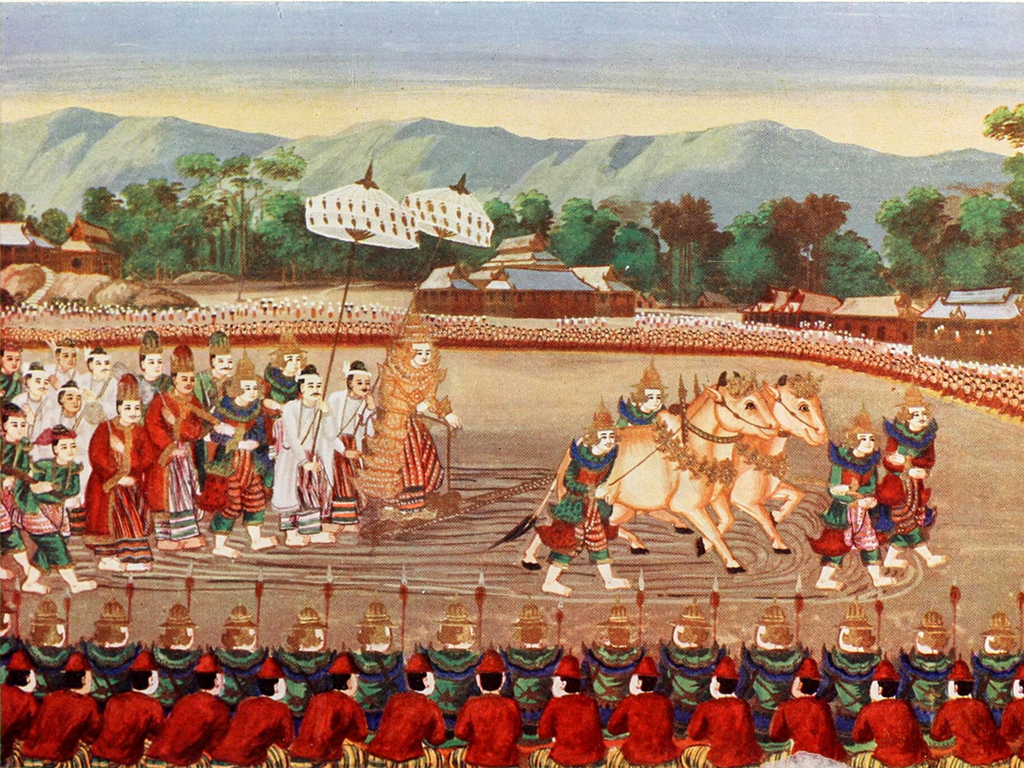
Agricultural ploughing rites date back to antiquity in Greater India. In epic literature such as the Ramayana and its Cambodian counterpart, the Reamker, King Janaka uncovers Sita from the earth while turning soil in a royal furrow. Cambodia traces its state ceremony back to the Funan era between the first and sixth centuries, supported by a sixth-century statue of the plough-bearing deity Balarama found at Angkor Borei. In Myanmar, chronicles record early rulers performing the ritual during the Pagan dynasty to honour the rain deity Moe Khaung Kyawzwa and act as peasant kings for their subjects.
Court traditions in Thailand
In Thailand, the custom blends the Hindu Raek Na Khwan rite with the Buddhist Phuetcha Mongkhon festival. King Rama IV formally united the two traditions into a single state ceremony during the nineteenth century. Buddhist rites take place inside Bangkok's Grand Palace before moving to the open ceremonial grounds of Sanam Luang for the Brahmin rituals. The observance was depicted on national banknotes during the 1920s before a temporary halt, after which King Bhumibol Adulyadej restored the annual public ceremony in 1960. Today, the occasion is an official public holiday known as Phuetcha Mongkhon Day.
Divination and the sacred oxen
At the heart of the ceremony is the ritual feeding of the sacred oxen immediately after they finish ploughing the earth. Handlers present the animals with an assortment of seven foods and drinks: rice, corn, beans, sesame seeds, freshly gathered grass, water, and rice liquor. Depending on which dishes the oxen choose to consume, royal astrologers offer prophecies regarding the abundance of water, crop yields, and general economic fortune for the upcoming season. If dry conditions persist despite the ritual, regional communities historically supplemented the royal rite with local rainmaking customs, such as cat processions.
How Royal Ploughing Ceremony is kept
A royal figure or appointed representative leads the event alongside court Brahmins. Two sacred oxen are harnessed to a wooden plough to cut furrows in a ceremonial field, while attendants scatter rice grain across the tilled soil. Following the furrowing, the animals receive plates laden with rice, green beans, maize, sesame, freshly cut grass, water, and rice whisky. Court astrologers observe which items the oxen consume, using their choices to forecast crop yields, rainfall, and overall agricultural prosperity.
When and where
The ceremony takes place annually, usually in May, although the exact day depends on astrological calculations. In Cambodia, it is set on the fourth day of the waning moon in the sixth lunar month, often falling on a Tuesday or Saturday. In Thailand, Brahmin priests determine the date and hour each year.
The rite is celebrated at designated royal grounds in Cambodia and at Sanam Luang in Bangkok, Thailand, following rites inside the Grand Palace. Similar agricultural customs historically took place outside royal courts in Myanmar and across ancient Indian kingdoms.
What Royal Ploughing Ceremony means
The ritual connects the ruling monarch directly to the soil, portraying royal duty as intertwined with agricultural well-being. By offering symbolic foods to sacred oxen, astrologers seek advance signs of the coming weather and crop yields, giving reassurance to farming communities as they prepare their paddies.
On the table
- Rice
- Corn
- Green beans
- Sesame
- Fresh-cut grass
- Water
- Rice whisky
Flavours: Sesame


Questions people ask about Royal Ploughing Ceremony
When is Royal Ploughing Ceremony kept?
Royal Ploughing Ceremony is kept on annually in May, on dates set by court astrologers.
What is the Royal Ploughing Ceremony?
It is a royal agricultural ritual observed in Cambodia and Thailand to mark the start of the rice planting season. Sacred oxen till symbolic ground and receive offerings so court astrologers can forecast the year's harvest.
What role do the oxen play in the ritual?
Two sacred oxen pull a wooden plough across the ceremonial field. Afterwards, they are offered plates containing grains, grass, water, and alcohol. Astrologers read their choices to predict the season's agricultural productivity.
What happens if rains do not follow the ceremony?
If rain fails to arrive after the ploughing ceremony, communities in Cambodia, Thailand, and Myanmar have historically turned to additional rainmaking traditions, such as the Hae Nang Maew procession carrying a cat to pray for rain.
See also
 HoliA spring festival of colours and bonfires that marks the end of winter and the triumph of good over evil.
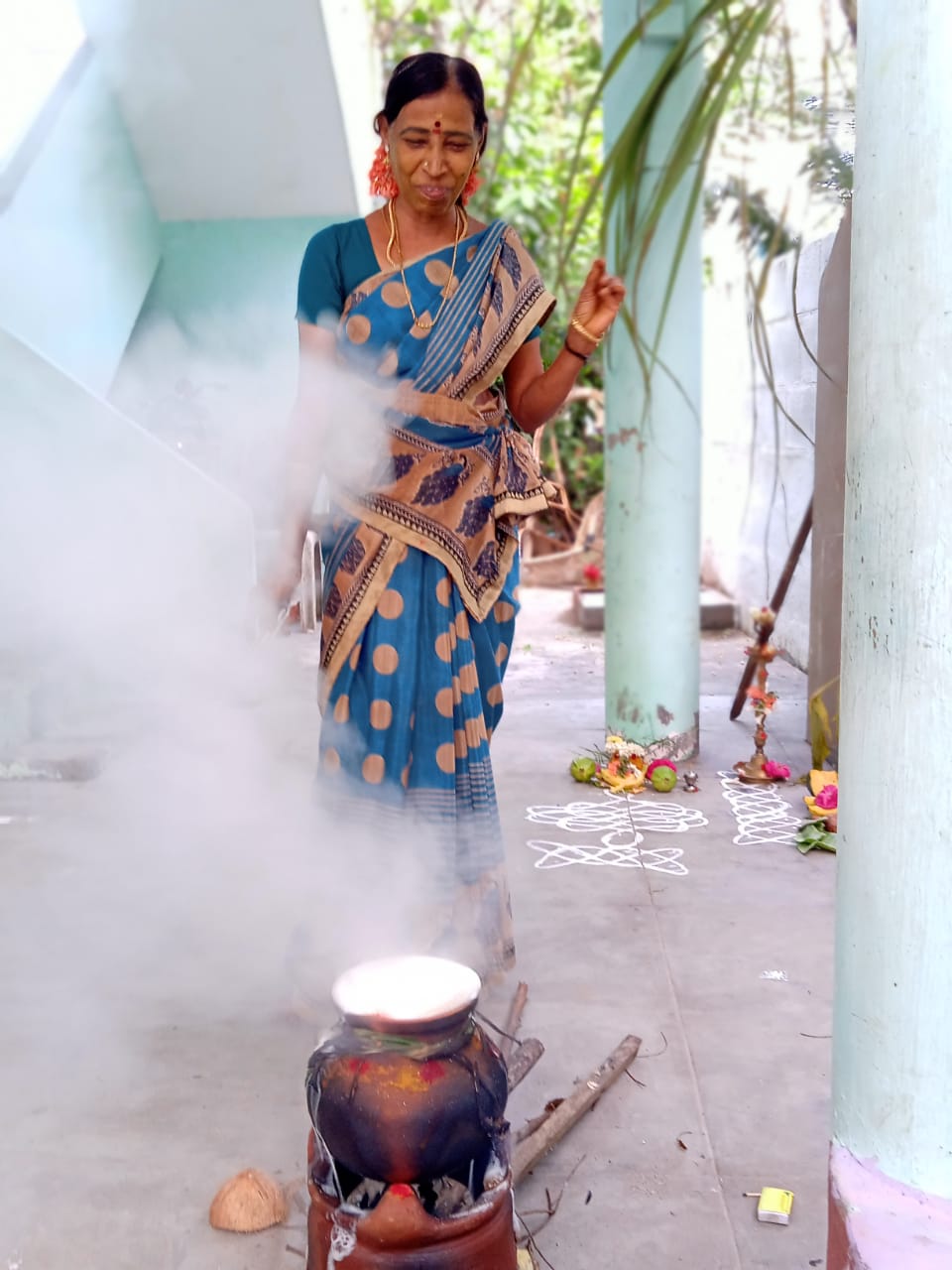 PongalThree or four days of boiling rice, garlanded cattle and thanks to the sun
 OnamA ten-day harvest festival in Kerala celebrating the return of King Mahabali with feasts, flower carpets and boat races.
 Makar SankrantiA mid-winter harvest festival marking the sun's northward journey, celebrated across South and Southeast Asia with fairs
Good reading and sources
- Royal Ploughing Ceremony on WikipediaEncyclopedia
- More photos on Wikimedia CommonsPhotos and video
- Wikidata recordOpen data
The facts on this page come from the Wikipedia article "Royal Ploughing Ceremony", written by its contributors and used under the CC BY-SA 4.0 licence, and from its Wikidata record (CC0). EveryParampara rewrote the text in its own words, with AI assistance, and compares every page with the article to make sure no passage is copied. It may be reused under the same CC BY-SA 4.0 licence with a link back.
It may contain mistakes. Traditions differ from one family, village and community to the next, and the people who keep them know them best. If something is wrong, tell us. Last refreshed 2026-10-04.
More from Cambodia
All the traditions of Cambodia 🇰🇭 CambodiaApsara Danceរបាំទេពអប្សរា
A classical Cambodian court dance inspired by the stone carvings of AngkorPerformance
🇰🇭 CambodiaApsara Danceរបាំទេពអប្សរា
A classical Cambodian court dance inspired by the stone carvings of AngkorPerformance
 🇨🇳 China and 5 moreMid-Autumn Festival中秋節
An annual harvest festival celebrating family reunions, full moons and mooncakesFestival · Sweets given and shared
🇨🇳 China and 5 moreMid-Autumn Festival中秋節
An annual harvest festival celebrating family reunions, full moons and mooncakesFestival · Sweets given and shared
 🇨🇳 China and 5 moreGhost Festival中元節 / 中元节 (Zhōngyuán jié)
A full-moon night in the seventh lunar month for feeding ghosts and guiding souls homeSpiritual
🇨🇳 China and 5 moreGhost Festival中元節 / 中元节 (Zhōngyuán jié)
A full-moon night in the seventh lunar month for feeding ghosts and guiding souls homeSpiritual
 🇹🇭 Thailand and 5 moreKathina
A Buddhist season of offering new robes and gifts to monks after the rains retreatSpiritual
🇹🇭 Thailand and 5 moreKathina
A Buddhist season of offering new robes and gifts to monks after the rains retreatSpiritual
The same idea elsewhere
Royalty and coronation compared 🇵🇪 Cusco, Peru and 4 moreIntiinti (Quechua)
The Inca sun deity, honoured with temples, offerings and the June festival Inti RaymiSpiritual
🇵🇪 Cusco, Peru and 4 moreIntiinti (Quechua)
The Inca sun deity, honoured with temples, offerings and the June festival Inti RaymiSpiritual
 🇮🇷 Isfahan, Iran and 4 moreMehreganمهرگان
An Iranian autumn festival honoring Mithra, friendship, and the harvestSeasonal
🇮🇷 Isfahan, Iran and 4 moreMehreganمهرگان
An Iranian autumn festival honoring Mithra, friendship, and the harvestSeasonal
 🇪🇬 Luxor, EgyptOpet Festivalḥb nfr n jpt
An ancient Egyptian festival in Thebes celebrating divine kingship and the Nile floodSpiritual
🇪🇬 Luxor, EgyptOpet Festivalḥb nfr n jpt
An ancient Egyptian festival in Thebes celebrating divine kingship and the Nile floodSpiritual
 🇸🇿 Ludzidzini, EswatiniIncwala
The national kingship and first-fruits ritual of Eswatini, held at the summer solsticeCeremony · Feasts and festival meals
🇸🇿 Ludzidzini, EswatiniIncwala
The national kingship and first-fruits ritual of Eswatini, held at the summer solsticeCeremony · Feasts and festival meals