Crafts and makingCentral Asia and the Caucasus
Azerbaijani carpet
In its own language: Azərbaycan xalçası
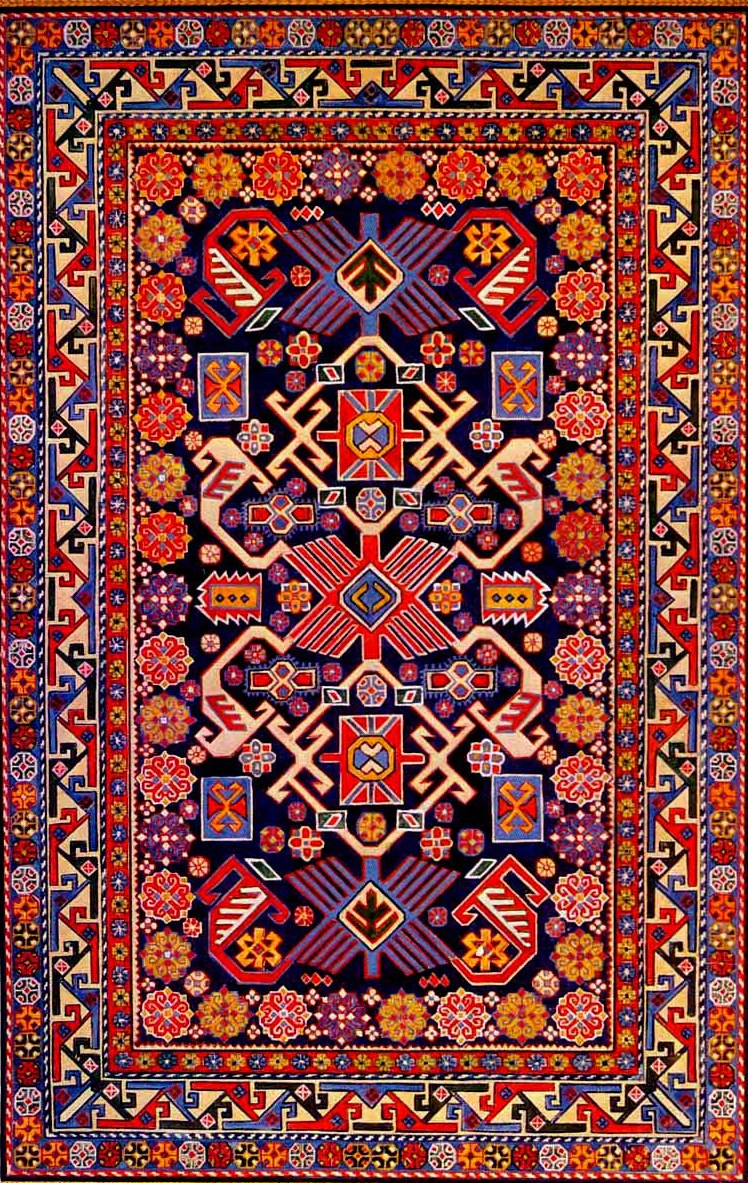
Handwoven floor and wall coverings from Azerbaijan, made by women in regional designs

A long-established handwoven textile from Azerbaijan, made in many sizes with a tight weave and either a piled or a flat surface. Distinct designs belong to different weaving districts. The skill passes down inside families and has traditionally sat with women, and the finished carpets spread across floors, walls and furniture.
When is Azerbaijani carpet kept?
Azerbaijani carpet is kept on weaving runs through the year, with sheep shorn in spring and autumn. Carpet Weaver Day is marked on 5 May under a presidential decree..
Azerbaijani carpets are handwoven textiles made in Azerbaijan, in many sizes, with a tight weave and either a piled or a flat face. Weavers in different districts follow their own designs. For families the work passes down through women, and the finished carpet has long been more than floor covering: people drape walls, chairs, sofas, beds and tables with it.
What a carpet is
An Azerbaijani carpet is a textile worked by hand, made in a range of sizes. Its weave is tight, and its face is either piled or flat. Design shifts from one weaving district to another, so a pattern often points to the place a piece came from. In households the carpet was never only underfoot. Families spread them on floors, hung them on inside walls, and laid them over sofas, chairs, beds and tables. The work is slow, and a finished carpet is expected to serve for a long time.
History and recognition
It is hard to point to a moment when the craft began. A study published in the International Journal of Heritage Studies notes that an Azerbaijani carpet was not easy to separate out as a category of its own before the 1930s. The same article records that Baku had a name as a handy place to buy a steady, plentiful supply of the real article, oriental carpets, as a writer called Coxon put it in 1884. In November 2010, UNESCO named the Azerbaijani carpet a Masterpiece of Intangible Heritage.
Who weaves
Weaving is learned at home. Knowledge moves from one generation to the next by talking and by doing, not from books. Once it was work for women, and a girl was expected to take up the loom. The carpets she made went into her dowry. When a son married, it fell to his mother to weave a large rug for the couple's new household. Men had their own part in the routine: they sheared the sheep twice, in spring and again in autumn. Women gathered the dye materials and spun and dyed the yarn, working through spring, summer and autumn.
Support and museums
The craft has drawn state support. A law on protecting and developing carpet art in Azerbaijan was passed in December 2004. Azerkhalcha OJSC was set up in May 2016. By presidential decree, 5 May became Carpet Weaver Day. President Ilham Aliyev approved a state programme covering 2018 to 2022 in February 2018, aimed at raw materials, weaving infrastructure, new workplaces, training, wool and silk yarns, and dye production. The Azerbaijan Carpet Museum, built between 2007 and 2014, was designed by the Austrian architect Franz Janz and shaped like a carpet rolled up.
How Azerbaijani carpet is kept
Weaving is a household activity rather than a public event. Families hand the skill down, and women do the weaving. The men shear the sheep in spring and in autumn. The women then collect the dye materials, spin wool or silk into yarn, and dye it across spring, summer and autumn. A girl's finished carpets once formed part of her dowry, and a mother wove a large rug when her son set up a home of his own. Each district works to its own designs. Carpet Weaver Day, on 5 May, is when the craft is marked publicly.
When and where
The craft has no single season. Work follows the animals and the plants: sheep are shorn in spring and again in autumn, and spinning and dyeing happen from spring through to autumn. Carpet Weaver Day falls on 5 May, fixed by presidential decree.
Carpets are made in Azerbaijan, and each weaving district has designs of its own, so a pattern often shows where a piece comes from. Baku had a name as a place where buyers could find a good supply of oriental carpets. The country's carpet museum, shaped like a rolled carpet, was built between 2007 and 2014.
What Azerbaijani carpet means
For Azerbaijani families the carpet means more than its practical use. It is a piece of folk art, and it stands for continuity between generations, since the skill travels by word of mouth and by practice rather than through written rules. A rug marks a marriage: it went into a bride's dowry, and a mother wove one for her son's new home. Carpets are part of daily life and custom in Azerbaijan, decorating the rooms where people live.


Questions people ask about Azerbaijani carpet
When is Azerbaijani carpet kept?
Azerbaijani carpet is kept on weaving runs through the year, with sheep shorn in spring and autumn. Carpet Weaver Day is marked on 5 May under a presidential decree..
What is an Azerbaijani carpet?
It is a textile made by hand in Azerbaijan, produced in many sizes with a tight weave and either a piled or a flat surface. Patterns belong to particular weaving districts. People use the carpets on floors, on interior walls, and over furniture such as sofas, chairs, beds and tables.
Where is carpet weaving practised?
In Azerbaijan. Designs differ across the country's weaving districts, and Baku has long been known as a place where such carpets were traded. Carpet Weaver Day, held on 5 May, marks the craft nationally.
Who does the weaving?
Traditionally women. Weaving passed down inside families, learned by watching and doing, and a girl's carpets formed part of her dowry. Men took care of the sheep, shearing them in spring and autumn, while women collected dye materials, spun yarn and dyed it.
How is the craft supported today?
A law protecting and developing carpet art in Azerbaijan dates from December 2004. Azerkhalcha OJSC was founded in May 2016, Carpet Weaver Day began under a presidential decree, and a state programme for 2018 to 2022 was approved by President Ilham Aliyev in February 2018.
See also
 Swahili doorA carved wooden entrance from the East African coast, adorned with metal studs and intricate motifs.
 Barn raisingA communal tradition where neighbours assemble to erect a farm barn in a few days
 Persian miniatureA tradition of small, brightly coloured paintings created for books and albums.
 KhachkarA carved stone cross raised as a memorial, a grave marker and a prayer in stone
Good reading and sources
- Browse the Lists of Intangible Cultural Heritage and the Register of good safeguarding practicesUNESCO, Heritage listing
- Browse the Lists of Intangible Cultural Heritage and the Register of good safeguarding practicesUNESCO, Article
- Azerbaijani carpet on WikipediaEncyclopedia
- More photos on Wikimedia CommonsPhotos and video
- Wikidata recordOpen data
The facts on this page come from the Wikipedia article "Azerbaijani carpet", written by its contributors and used under the CC BY-SA 4.0 licence, and from its Wikidata record (CC0). EveryParampara rewrote the text in its own words, with AI assistance, and compares every page with the article to make sure no passage is copied. It may be reused under the same CC BY-SA 4.0 licence with a link back.
It may contain mistakes. Traditions differ from one family, village and community to the next, and the people who keep them know them best. If something is wrong, tell us. Last refreshed 2026-10-05.
More from Azerbaijan
All the traditions of Azerbaijan
🇮🇷 Tabriz, Iran and 3 morePersian miniatureنگارگری ایرانی
A tradition of small, brightly coloured paintings created for books and albums.Craft
🇦🇲 Yerevan, Armenia and 5 moreKhachkarխաչքար
A carved stone cross raised as a memorial, a grave marker and a prayer in stoneCraft
 🇮🇷 Iran and 7 moreNowruzنوروز
The Iranian new year at the March equinox, kept with fire, greenery and picnicsSeasonal
🇮🇷 Iran and 7 moreNowruzنوروز
The Iranian new year at the March equinox, kept with fire, greenery and picnicsSeasonal
 🇹🇷 Turkey and 5 moreNazarnazar boncuğu
A blue glass eye amulet worn and displayed to deflect the evil eye.Folklore
🇹🇷 Turkey and 5 moreNazarnazar boncuğu
A blue glass eye amulet worn and displayed to deflect the evil eye.Folklore
The same idea elsewhere
New homes and beginnings compared 🇹🇷 Turkey and 5 moreEid al-Fitrعيد الفطر
The feast that ends Ramadan, opened with morning prayers, sweets and visits homeFestival · Feasts and festival meals
🇹🇷 Turkey and 5 moreEid al-Fitrعيد الفطر
The feast that ends Ramadan, opened with morning prayers, sweets and visits homeFestival · Feasts and festival meals
 🇧🇮 Gitega, BurundiKaryenda
A sacred drum of Burundi that symbolized the monarchy and announced royal events.Performance
🇧🇮 Gitega, BurundiKaryenda
A sacred drum of Burundi that symbolized the monarchy and announced royal events.Performance
 🇮🇩 Indonesia and 2 moreKenduri
A communal prayer meal and gathering shared across Indonesia, Malaysia and BruneiSpiritual · Feasts and festival meals
🇺🇸 United States and 1 moreBarn raising
A communal tradition where neighbours assemble to erect a farm barn in a few daysCraft · Lunch
🇮🇩 Indonesia and 2 moreKenduri
A communal prayer meal and gathering shared across Indonesia, Malaysia and BruneiSpiritual · Feasts and festival meals
🇺🇸 United States and 1 moreBarn raising
A communal tradition where neighbours assemble to erect a farm barn in a few daysCraft · Lunch