🇮🇳 India
Griha pravesh is the rite of entering a new home, performed on an auspicious date with a puja, a hawan fire and a pot of milk boiled until it overflows. The family enters right foot first, carrying a kalash and a lamp.
Read: GrihapraveshMoving into a new home is a threshold in life, and cultures all over the world mark it with a ritual.
Presented by ClearTrust Free for the curious, the homesick and the hosts.
Moving into a new home is a threshold in life, and cultures all over the world mark it with a ritual. The house may be blessed by a priest, entered at a lucky moment, cleansed with smoke, seasoned with a pot of boiling milk or marked with a gift of bread and salt. The same care is shown at the beginning of a business, a journey or a school year, with a ribbon cut, a coconut broken or a lamp lit. These customs ask for good luck, drive out harm and welcome the people and ancestors who will share the space.
A new home is a fresh start, and people want it to be safe, prosperous and happy. The rituals are a way of saying that the house is not merely a building, but a place where a family will live and grow. They also introduce the household to the neighbours, who bring gifts and good wishes. In faiths that believe in spirits of place, the ceremony asks permission of the land and its guardians. A blessing also gives the family a moment of calm and gratitude in the middle of the confusion of moving.
Common elements include a blessing by a priest, an elder or the head of the family, the lighting of a lamp, candle or fire, the sprinkling of water, the burning of incense or herbs, and the offer of a first meal. Many families choose an auspicious day or time. Gifts of bread, salt, sugar, rice, oil, a broom or a key are common, each with a meaning. The first things carried in are often symbolic, such as a sacred book, a lamp or a bag of salt. Neighbours visit and a housewarming party follows.
Food is central: milk boiled over until it spills, a sign of abundance, a bowl of rice and sweets, bread and salt, and a communal meal. Dress is neat and often traditional for the ceremony, with new or festive clothes. Music may be a drum, a conch shell or a recited verse, depending on the faith. In Chinese and Indian homes, firecrackers or bells are sometimes used to drive off bad luck, while in the West a housewarming party, with food and drink, is typical, and the guests give practical presents for the home.
Many people now rent or move often, and the blessing has been reduced to a small private rite or a simple gathering of friends. Apartment blocks have replaced village houses, and many families perform the rites on a balcony or in a small room. Some builders still hold a foundation ceremony and a topping-out party. Interest in feng shui, vastu and similar systems has spread widely, with consultants called in before purchases. A new home is also a chance to meet the neighbours, and many communities now arrange welcome gifts for newcomers.
Griha pravesh is the rite of entering a new home, performed on an auspicious date with a puja, a hawan fire and a pot of milk boiled until it overflows. The family enters right foot first, carrying a kalash and a lamp.
Read: GrihapraveshA new house receives a blessing from a priest and a ritual of lamps, tika and a family feast. Newar households hold a purification rite with a sacred fire before moving in.
Newar people, being writtenMoving into a new home is timed by an almanac to a lucky date, and families may light firecrackers, carry rice and a stove first, and consult feng shui. Gifts of fruit, red envelopes and plants come from guests.
Read: Feng shuiA jichinsai ground-purification ceremony is held before building, led by a Shinto priest, and a topping-out, joto-shiki, takes place when the roof frame is up. Hikkoshi soba, buckwheat noodles, are given to neighbours after a move.
Read: JichinsaiLe nhap trach, the housewarming, includes offerings to the household gods and the ancestors, a chosen auspicious day, and a first meal with friends and neighbours. Guests bring gifts such as fruit, rice and a pot of flowers, and the host serves them tea and sweets.
Culture of Vietnam, being writtenJavanese families hold a slametan with a meal of rice cone, tumpeng, to bless the new home, and Balinese hold a house-blessing with offerings at the family temple. The tumpeng is cut at the top, and the first slice is offered to the oldest person present.
Read: Tumpeng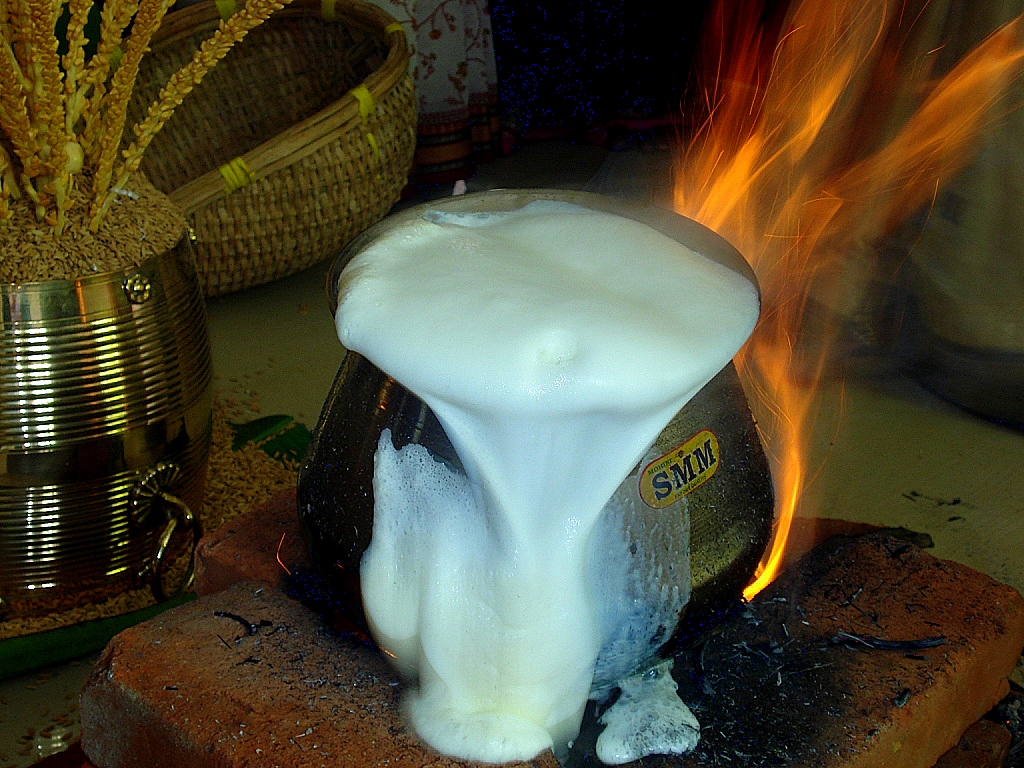 GrihapraveshThe Hindu housewarming.
 Feng shuiThe Chinese art of placement.
 Housewarming partyThe Western gathering.
 JichinsaiThe Japanese ground purification.
 Bread and saltThe Slavic and British gifts.
 Topping outThe builders' roof ceremony.
Also part of it, and being written: Vastu shastra (The Indian system of architecture.), Pachamama (The Andean offering to the earth.).
In India, a pot of milk is boiled until it overflows to signify abundance and prosperity. It is usually done on the first day, with a prayer.
Something for the home: plants, bread and salt, candles, a kitchen item or sweets. Bring a bottle only if you know the host drinks.
Many traditions choose an auspicious date by calendar, almanac or astrologer, and avoid days thought inauspicious. Most people move when it is practical and bless the house afterwards.
The Chinese practice of arranging buildings and objects to harmonise with the flow of energy, called qi. It is applied to the choice of site, the doorway and the layout of rooms.
Yes. A simple prayer, a lit candle, a shared meal and a few words of thanks are the heart of most rites, and many families add what is meaningful to them.
Written by the EveryParampara desk with AI assistance. Customs differ from place to place and family to family. If this is your tradition and we have it wrong, tell us.
The traditions written up so far, best known first.
 🇹🇷 Turkey and 5 moreEid al-Fitrعيد الفطر
The feast that ends Ramadan, opened with morning prayers, sweets and visits homeFestival · Feasts and festival meals
🇹🇷 Turkey and 5 moreEid al-Fitrعيد الفطر
The feast that ends Ramadan, opened with morning prayers, sweets and visits homeFestival · Feasts and festival meals
 🇹🇿 Zanzibar City, Tanzania and 2 moreSwahili doorMlango wa Kiswahili
A carved wooden entrance from the East African coast, adorned with metal studs and intricate motifs.Craft
🇮🇳 India and 1 moreGrihapraveshगृहप्रवेश (Gṛhapravēśa)
A Hindu housewarming ritual to purify a new home and invite blessings.Home
🇷🇺 Russia and 4 moreHousewarming party
A gathering held soon after moving into a new home to celebrate the space and welcome guests.Home
🇹🇿 Zanzibar City, Tanzania and 2 moreSwahili doorMlango wa Kiswahili
A carved wooden entrance from the East African coast, adorned with metal studs and intricate motifs.Craft
🇮🇳 India and 1 moreGrihapraveshगृहप्रवेश (Gṛhapravēśa)
A Hindu housewarming ritual to purify a new home and invite blessings.Home
🇷🇺 Russia and 4 moreHousewarming party
A gathering held soon after moving into a new home to celebrate the space and welcome guests.Home
 🇧🇮 Gitega, BurundiKaryenda
A sacred drum of Burundi that symbolized the monarchy and announced royal events.Performance
🇧🇮 Gitega, BurundiKaryenda
A sacred drum of Burundi that symbolized the monarchy and announced royal events.Performance
 🇺🇸 United States and 1 moreBarn raising
A communal tradition where neighbours assemble to erect a farm barn in a few daysCraft · Lunch
🇨🇳 Puyang, ChinaFeng shui風水
The Chinese spatial practice of aligning homes and graves with natural energyFolklore
🇺🇸 United States and 1 moreBarn raising
A communal tradition where neighbours assemble to erect a farm barn in a few daysCraft · Lunch
🇨🇳 Puyang, ChinaFeng shui風水
The Chinese spatial practice of aligning homes and graves with natural energyFolklore
 🇲🇽 San Salvador Huixcolotla, Mexico and 1 morePapel picado
A Mexican folk art of cutting intricate designs into tissue paper for festive and spiritual displays.Festival
🇲🇽 San Salvador Huixcolotla, Mexico and 1 morePapel picado
A Mexican folk art of cutting intricate designs into tissue paper for festive and spiritual displays.Festival
 🇮🇩 Indonesia and 2 moreKenduri
A communal prayer meal and gathering shared across Indonesia, Malaysia and BruneiSpiritual · Feasts and festival meals
🇮🇩 Indonesia and 2 moreKenduri
A communal prayer meal and gathering shared across Indonesia, Malaysia and BruneiSpiritual · Feasts and festival meals
 🇧🇩 Bangladesh and 1 moreAlpanaআলপনা (Alpona)
A Bengali floor painting tradition using rice flour paste to mark festivals and rituals.Performance
🇧🇩 Bangladesh and 1 moreAlpanaআলপনা (Alpona)
A Bengali floor painting tradition using rice flour paste to mark festivals and rituals.Performance
 🇺🇦 Kyiv, Ukraine and 7 morePysankaписанка
A wax-resist egg decorating tradition kept by Slavic communities for Easter and spring renewal.Festival
🇺🇦 Kyiv, Ukraine and 7 morePysankaписанка
A wax-resist egg decorating tradition kept by Slavic communities for Easter and spring renewal.Festival
 🇨🇦 Canada and 1 morePotlatch
A ceremonial feast of gift-giving and wealth distribution among First Nations on the Northwest Coast.Festival · Feasts and festival meals
🇨🇦 Canada and 1 morePotlatch
A ceremonial feast of gift-giving and wealth distribution among First Nations on the Northwest Coast.Festival · Feasts and festival meals
 🇮🇩 IndonesiaSlametan
A short communal meal on Java where neighbours share food, prayer and a wish for peaceSpiritual · Feasts and festival meals
🇷🇺 Russia and 5 moreBread and saltхлеб-соль
Bread and salt offered to a guest: a welcome kept from Russia to AlbaniaEtiquette
🇮🇩 IndonesiaSlametan
A short communal meal on Java where neighbours share food, prayer and a wish for peaceSpiritual · Feasts and festival meals
🇷🇺 Russia and 5 moreBread and saltхлеб-соль
Bread and salt offered to a guest: a welcome kept from Russia to AlbaniaEtiquette
 🇦🇿 Baku, AzerbaijanAzerbaijani carpetAzərbaycan xalçası
Handwoven floor and wall coverings from Azerbaijan, made by women in regional designsCraft
🇦🇿 Baku, AzerbaijanAzerbaijani carpetAzərbaycan xalçası
Handwoven floor and wall coverings from Azerbaijan, made by women in regional designsCraft
 🇮🇳 India and 2 morePujaपूजा (pūjā)
Hindu worship: light, flowers and food offered to a deity or a guestSpiritual
🇮🇳 India and 2 morePujaपूजा (pūjā)
Hindu worship: light, flowers and food offered to a deity or a guestSpiritual
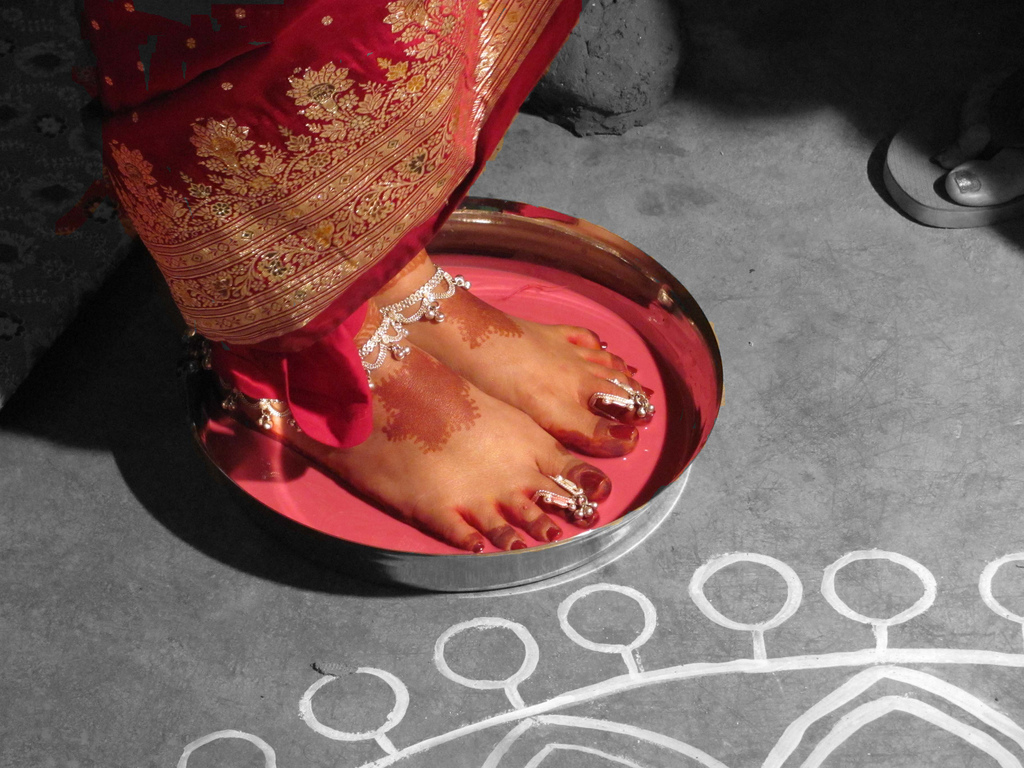 🇮🇳 IndiaVadhu Praveshaवधूप्रवेश
A Hindu ceremony welcoming a bride into her new husband's homeRite of passage
🇮🇳 IndiaVadhu Praveshaवधूप्रवेश
A Hindu ceremony welcoming a bride into her new husband's homeRite of passage
The small pictures above come from Wikimedia Commons under free licences. Some are cropped to fit.
Every week: one tradition from somewhere new, what is being celebrated around the world this week, and one idea explained.