Crafts and makingMiddle EastMuslim
Persian miniature
In its own language: نگارگری ایرانی
A tradition of small, brightly coloured paintings created for books and albums.

Originating in Iran and practiced across parts of Central Asia and the Middle East, Persian miniature is a tradition of detailed painting on polished paper. Master artists craft small, luminous scenes for luxury books and private collector albums using mineral pigments and precise outlines.
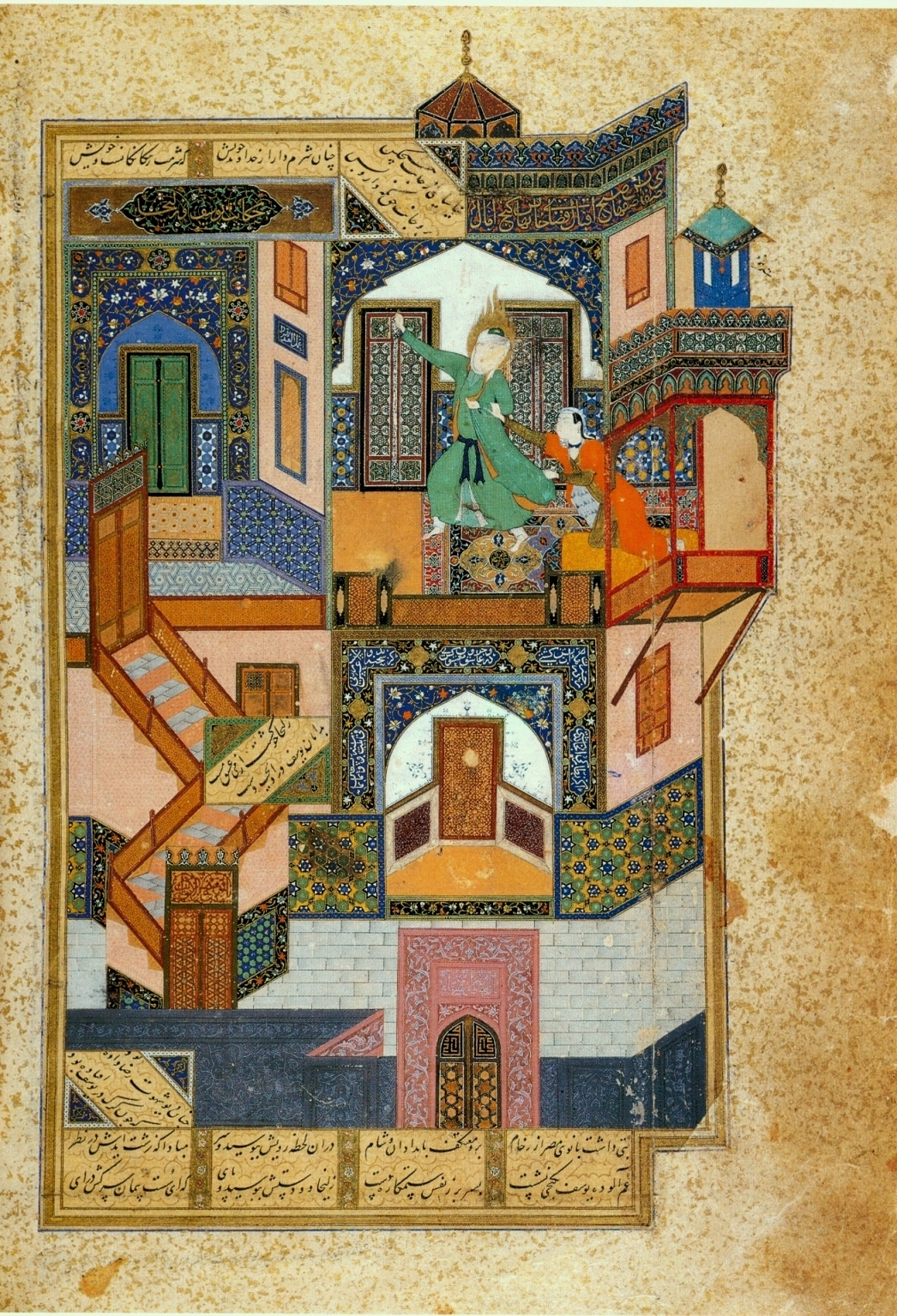
Persian miniature is a historical art of painting small, intricate scenes on polished sheets of paper. Developed primarily for illustrated royal manuscripts and private bound albums, these works feature luminous mineral pigments, flat lighting, and delicate human figures. Because they were created for private viewing rather than public walls, artists enjoyed broad creative freedom to illustrate poetic romances, court life, epic histories, and natural landscapes.
Origins and evolution
Miniature painting became prominent in Persian visual culture during the thirteenth century, absorbing artistic conventions from China following the Mongol conquests. The genre flourished at its peak across the fifteenth and sixteenth centuries. Although Persian painters also executed large wall murals, small book paintings survived in greater numbers and with better preservation. These intricate illustrations deeply shaped neighboring traditions, providing the foundation for Ottoman miniatures in Turkey and Mughal works in South Asia. Religious manuscripts like the Quran avoided figurative art and focused on non-figurative illumination, but historical narratives and literary classics regularly featured populated gatherings, court functions, and depictions of holy figures.
Style and visual elements
A Persian miniature is recognizable by its pure, bright tones produced from mineral pigments. Water was often highlighted with silver, which oxidizes to black as it ages. The scenes do not use shadows, maintaining an even light across the entire composition. Human figures are typically depicted with youthful, rounded faces shown in three-quarters view. Rather than using optical perspective, artists showed depth by placing distant figures higher on the page. Elaborate mountain landscapes feature undulating rock formations and swirling clouds inspired by Chinese designs. Architectural settings combine exterior facades with cross-section cutaways, while horses, fine fabrics, and ornate tilework receive meticulous care.
Workshops and technique
Court painters worked within royal ateliers alongside urban craftsmen recruited from city bazaar guilds. Scribes, who enjoyed higher social prestige than painters, penned the text on polished paper first, leaving blank areas for the illustrations. Specialized teams often divided the visual work: senior artists drew the compositional lines, while assistant painters layered the pigments, and decorative specialists framed pages with border illuminations. Royal libraries directed these complex projects under careful supervision. Many rulers, including Shah Tahmasp the First, acted as passionate patrons or practiced painting themselves, and talented miniaturists frequently moved between major Islamic courts.
Albums and later developments
During the sixteenth century, artists began creating independent paintings for collector albums known as muraqqas. This shift allowed private patrons outside the royal palace to assemble varied selections of contemporary sketches, older book leaves, and refined calligraphy. Album miniatures often presented single figures, pairs of lovers resting in gardens, or idealized portraits of notable personalities. Instead of full, multi-figure battle scenes, these album works relied on lighter coloured washes and spacious gold-patterned margins. Over time, collectors also refurbished older manuscripts by mounting new borders, updating dynastic group portraits, and inserting fresh paintings into earlier volumes.
How Persian miniature is kept
Creation begins with calligraphers penning text onto sheets of polished paper, setting aside specific boxes for illustration. Senior workshop masters sketch outlines of the scene, which assistant artists fill using pure mineral paints. Painters arrange figures vertically to establish distance, painting without shadows under uniform light. Specialized artisans then execute decorative margins, borders, or gold flecks around the image. Finally, the finished folios are bound into royal manuscripts or gathered into private muraqqa albums alongside samples of fine calligraphy.
When and where
Miniature painting is not tied to a calendar date or season. Production took place year-round inside royal libraries and city workshops, where scribes and painters collaborated on major manuscript commissions and individual album pages over weeks, months, or years.
The tradition developed in Iran and extended across Central Asia, Azerbaijan, and Turkey. Royal ateliers in major cultural hubs such as Tabriz and Shiraz produced famous luxury volumes, while the art form profoundly influenced imperial court workshops in Istanbul and the Mughal Empire.
What Persian miniature means
Kept inside closed volumes and shared privately among select guests, miniatures offered a private space for expressive storytelling. The high viewpoints, balanced lighting, and bright mineral colours evoke idealized settings rather than literal reality. By depicting heroes in saddle, garden gatherings, and courtly ceremonies, the art honored Persian poetic heritage, celebrated royal lineage, and harmonized human emotion with intricate natural and architectural beauty.



Questions people ask about Persian miniature
What is a Persian miniature?
A Persian miniature is a small, detailed painting on paper. Created either as an illustration within a manuscript or as a standalone sheet for an album, it is known for its bright mineral colours, lack of shadows, and intricate figures.
Where and when did this painting tradition develop?
The genre rose to prominence in Iran during the thirteenth century following Mongol rule, reaching its artistic heights during the fifteenth and sixteenth centuries across Persian workshop centres such as Tabriz and Shiraz.
What materials did miniature painters use?
Artists painted on smooth, polished paper rather than parchment. They applied luminous mineral-based pigments that retain their colour over centuries, occasionally using silver for water and gold leaf for borders and backgrounds.
What is a muraqqa?
A muraqqa is a bound album compiled by collectors. It contains individual miniature paintings, detached book illustrations, and specimens of fine calligraphy, often bordered by gold designs and delicate wash drawings.
See also
 MehreganAn Iranian autumn festival honoring Mithra, friendship, and the harvest
 ChovganAn equestrian team sport played with mallets and horses across Iran and Azerbaijan
 Pahlevani and zurkhaneh ritualsA traditional Iranian martial art blending calisthenics, wrestling, music and ethics
 Eid al-FitrThe feast that ends Ramadan, opened with morning prayers, sweets and visits home
Good reading and sources
- Persian miniature on WikipediaEncyclopedia
- More photos on Wikimedia CommonsPhotos and video
- Wikidata recordOpen data
The facts on this page come from the Wikipedia article "Persian miniature", written by its contributors and used under the CC BY-SA 4.0 licence, and from its Wikidata record (CC0). EveryParampara rewrote the text in its own words, with AI assistance, and compares every page with the article to make sure no passage is copied. It may be reused under the same CC BY-SA 4.0 licence with a link back.
It may contain mistakes. Traditions differ from one family, village and community to the next, and the people who keep them know them best. If something is wrong, tell us. Last refreshed 2026-10-04.
More from Iran
All the traditions of Iran 🇮🇷 Isfahan, Iran and 3 morePersian gardenباغ ایرانی
An ancient tradition of creating walled, geometric sanctuaries of shade and flowing waterCraft
🇮🇷 Isfahan, Iran and 3 morePersian gardenباغ ایرانی
An ancient tradition of creating walled, geometric sanctuaries of shade and flowing waterCraft
 🇮🇷 Iran and 4 moreZardoziزردوزی (zarduzi)
Heavy gold and silver embroidery on silk or velvet, worked in Iran, India and beyondCraft
🇮🇷 Iran and 4 moreZardoziزردوزی (zarduzi)
Heavy gold and silver embroidery on silk or velvet, worked in Iran, India and beyondCraft
 🇹🇲 Ashgabat, Turkmenistan and 2 moreTurkmen rugTürkmen haly
Handmade textiles woven by Turkmen tribes, featuring geometric patterns and natural dyes.Craft
🇮🇷 IranGabbehگبه
A thick, boldly simple wool rug, hand-woven by women in Iran's Zagros MountainsCraft
🇹🇲 Ashgabat, Turkmenistan and 2 moreTurkmen rugTürkmen haly
Handmade textiles woven by Turkmen tribes, featuring geometric patterns and natural dyes.Craft
🇮🇷 IranGabbehگبه
A thick, boldly simple wool rug, hand-woven by women in Iran's Zagros MountainsCraft
The same idea elsewhere
Royalty and coronation compared 🇵🇪 Cusco, Peru and 4 moreIntiinti (Quechua)
The Inca sun deity, honoured with temples, offerings and the June festival Inti RaymiSpiritual
🇵🇪 Cusco, Peru and 4 moreIntiinti (Quechua)
The Inca sun deity, honoured with temples, offerings and the June festival Inti RaymiSpiritual
 🇸🇪 Mora, SwedenVasaloppet
A 90 km cross-country ski race from Sälen to Mora, run every March since 1922Game
🇸🇪 Mora, SwedenVasaloppet
A 90 km cross-country ski race from Sälen to Mora, run every March since 1922Game
 🇺🇸 United StatesTalking stick
A carved staff that shows who may speak at a Northwest Coast gatheringCeremony
🇺🇸 United StatesTalking stick
A carved staff that shows who may speak at a Northwest Coast gatheringCeremony