Royal, civic and national ceremonyEurope
Cosmonautics Day
In its own language: День космонавтики
Russia's yearly day for Yuri Gagarin's 1961 flight, kept on 12 April with memorial walks

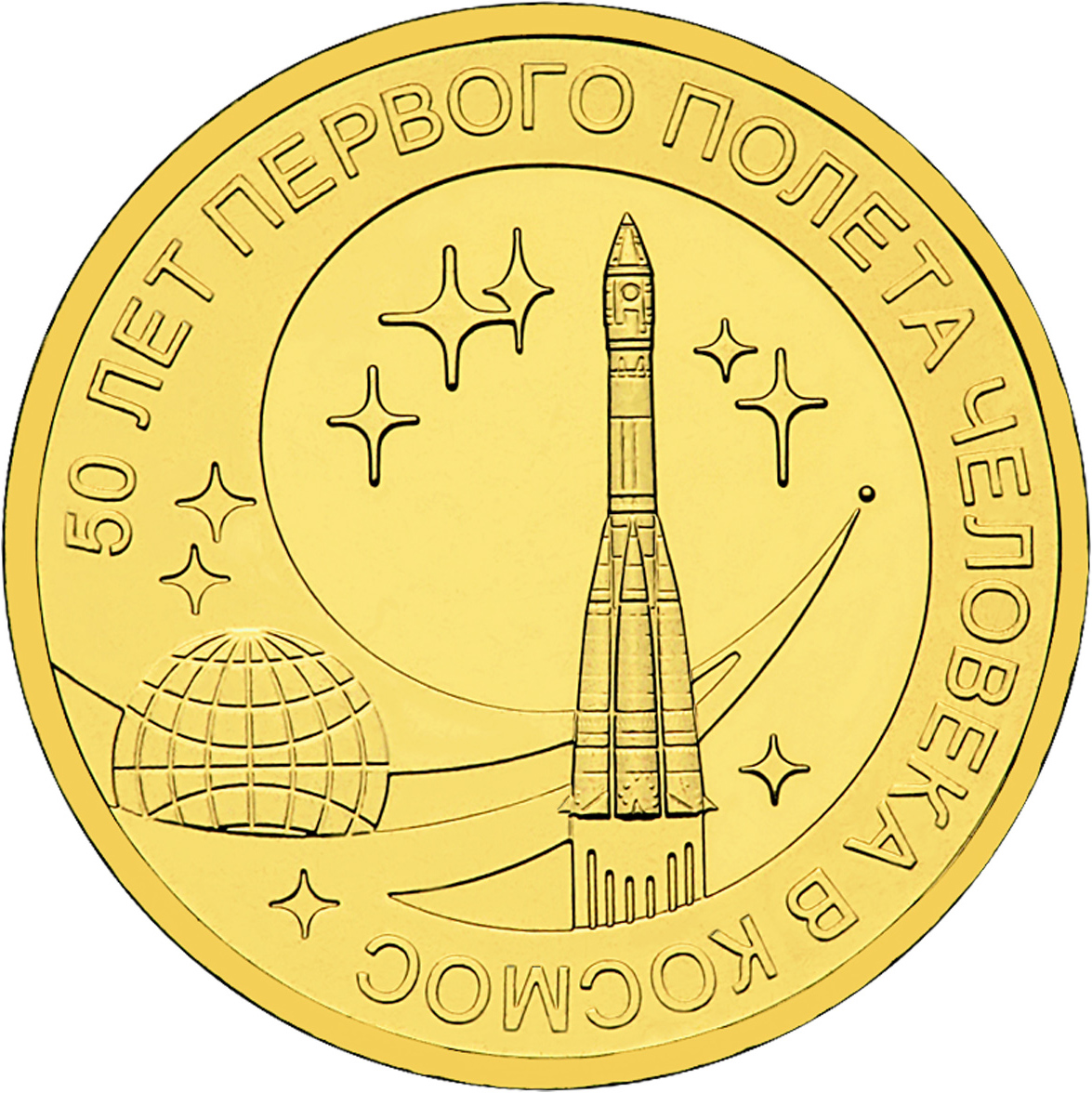
Cosmonautics Day is kept in Russia and other post-Soviet states on 12 April. It remembers Yuri Gagarin, who in 1961 became the first person to fly in space, and the date now also carries the United Nations name International Day of Human Space Flight.
When is Cosmonautics Day kept?
Cosmonautics Day is kept every year on 12 April, one day only.
Cosmonautics Day is a Russian anniversary kept on 12 April. It marks the day in 1961 when Yuri Gagarin became the first person to travel into space, circling the Earth in the Vostok 1 capsule. In Russia the date brings a memorial walk past Gagarin's grave and the space monuments of Moscow, and it also carries the United Nations name International Day of Human Space Flight.
What it is
Cosmonautics Day is an annual observance in Russia and several states that were once part of the Soviet Union. Its date never moves: 12 April. The day remembers Yuri Gagarin, who at 27 flew the Vostok 1 mission and became the first human being in space. His capsule went around the Earth once, a trip lasting 1 hour and 48 minutes. Gagarin returned a national hero, and the flight is treated as the moment the space age began, for the Soviet Union and for the world.
Origins and history
The Soviet Union created the commemoration a year after the flight, on 9 April 1962. In Russia today it is observed under a law that names days of military glory alongside other commemorative dates. The reaction to Gagarin's return in 1961 was enormous. Crowds filled the streets of Moscow and other Soviet cities in demonstrations whose size was matched only by the parades held after the Second World War. Officials drove him through the capital to the Kremlin, where Nikita Khrushchev, the Soviet leader, awarded him the country's highest honour, the title Hero of the Soviet Union.
Songs of the day
Two songs belong to this date. In the 1960s Soviet radio played '14 Minutes Until Start' every 12 April, and listeners came to treat it as an unofficial anthem of space travel. Oscar Feltsman and Vladimir Voynovich wrote it. Rearranged as a march, it is still heard at military parades when space force troops march by. A later hit took its place: 'Grass by the Home', sung by the band Zemlyane, or The Earthlings, which became the official cosmonauts' anthem in 2009. Cosmonauts often take the song with them when they are posted to orbit.
A world date
Other bodies have adopted the date too. The Fédération Aéronautique Internationale, at its 61st conference in 1968, agreed to mark it as World Aviation and Astronautics Day. In 1981, twenty years to the day after Vostok 1, the American shuttle Columbia made its first orbital flight, though the timing was chance: the launch had been put back by two days. A resolution passed by the United Nations General Assembly in 2011 gave 12 April the name International Day of Human Space Flight. Six years later the UN marked 56 years since Gagarin's journey and the start of the space era.
How Cosmonautics Day is kept
In Korolyov, people gather at Gagarin's statue and the official ceremony opens there. A police escort then accompanies the group into Moscow, to Red Square, where they pay their respects at the grave in the Kremlin Wall Necropolis. The party moves on to Cosmonauts Alley, beside the Monument to the Conquerors of Space, and the last visit is to Novodevichy Cemetery. The same date is kept worldwide as Yuri's Night, a space-themed party for milestones in exploration.
When and where
Cosmonautics Day falls every year on 12 April, the date of Gagarin's flight in 1961. The date is fixed, so the weekday changes from one year to the next. The observance lasts a single day. Since 2011 the same date has also held a United Nations name, International Day of Human Space Flight.
The day belongs to Russia, where it is a state commemoration, and to other countries that were once part of the Soviet Union. Its strongest observance is in Moscow and in Korolyov, the town by Gagarin's statue where the ceremony starts. Since 2001 it has also been kept internationally as Yuri's Night.
What Cosmonautics Day means
For those who keep it, 12 April stands for a beginning. Gagarin's single orbit is remembered as the moment people first left the Earth, and the day honours not only him but everyone who has flown since. It also carries the pride of the Soviet space programme, whose success made Gagarin a hero at home and a familiar name abroad. Visiting his grave and the memorials is a way of saying that the work goes on.


Questions people ask about Cosmonautics Day
When is Cosmonautics Day kept?
Cosmonautics Day is kept every year on 12 April, one day only.
What is Cosmonautics Day?
It is an annual day kept in Russia and other post-Soviet countries on 12 April. It remembers Yuri Gagarin's flight in 1961, when he became the first person to go into space, and it honours the space programme that followed.
Where is it celebrated?
In Russia, where it is a national commemoration, and in other states that were once part of the Soviet Union. The main ceremony runs from Korolyov to Moscow and ends at Novodevichy Cemetery. Worldwide, the date is also marked as Yuri's Night.
Why does the date matter in Russia?
Gagarin's flight was seen as a triumph for the Soviet space programme. Moscow held huge demonstrations and he was given the title Hero of the Soviet Union. The day has been kept since 1962, and a law lists it among Russia's commemorative dates.
Is there a song for the day?
Yes, two. '14 Minutes Until Start' was the unofficial anthem in the 1960s. 'Grass by the Home', sung by the band Zemlyane, or The Earthlings, replaced it in the 1980s and was given official standing in 2009.
See also
 Victory in Europe DayThe day Nazi Germany's surrender was accepted, marking the end of the war in EuropeProgrammer's DayA professional day for programmers, fixed to the 256th day of the year
 National day of mourningA day a government sets aside for national grief, often marked by flags at half-mast
 OvooA stone cairn on a peak or pass, circled by travellers and honoured in sky worship
Good reading and sources
- Darwin’s Day to Yuri’s Night: some science dates to rememberThe Guardian, Article
- Darwin’s Day to Yuri’s Night: some science dates to rememberThe Guardian, Article
- Cosmonautics Day on WikipediaEncyclopedia
- More photos on Wikimedia CommonsPhotos and video
- Wikidata recordOpen data
The facts on this page come from the Wikipedia article "Cosmonautics Day", written by its contributors and used under the CC BY-SA 4.0 licence, and from its Wikidata record (CC0). EveryParampara rewrote the text in its own words, with AI assistance, and compares every page with the article to make sure no passage is copied. It may be reused under the same CC BY-SA 4.0 licence with a link back.
It may contain mistakes. Traditions differ from one family, village and community to the next, and the people who keep them know them best. If something is wrong, tell us. Last refreshed 2026-10-05.
More from Russia
All the traditions of Russia
🇺🇸 United States and 5 moreNational day of mourning
A day a government sets aside for national grief, often marked by flags at half-mastCeremony
🇫🇷 France and 5 moreVictory in Europe Day8 mai 1945
The day Nazi Germany's surrender was accepted, marking the end of the war in EuropeCeremony
🇺🇦 Ukraine and 2 moreProgrammer's Day
A professional day for programmers, fixed to the 256th day of the yearCeremony
 🇷🇺 Russia and 1 moreBride-showсмотр невест
A court custom in which emperors and tsars chose a wife from young women brought before themCeremony
🇷🇺 Russia and 1 moreBride-showсмотр невест
A court custom in which emperors and tsars chose a wife from young women brought before themCeremony
The same idea elsewhere
All of this kind 🇺🇸 Philadelphia, United States and 1 moreIndependence Day
The United States' national day of parades, barbecues and fireworks, kept each July 4Ceremony
🇺🇸 Philadelphia, United States and 1 moreIndependence Day
The United States' national day of parades, barbecues and fireworks, kept each July 4Ceremony
 🇺🇸 Washington, United StatesState of the Union address
The US president's yearly report to Congress and the nation, given in the House chamberCeremony
🇺🇸 Washington, United StatesState of the Union address
The US president's yearly report to Congress and the nation, given in the House chamberCeremony
 🇮🇳 Kolkata, IndiaJana Gana Mana
India's national anthem, from a Bengali hymn of 1911, sung at civic occasionsCeremony
🇮🇳 Kolkata, IndiaJana Gana Mana
India's national anthem, from a Bengali hymn of 1911, sung at civic occasionsCeremony
 🇺🇸 United StatesTalking stick
A carved staff that shows who may speak at a Northwest Coast gatheringCeremony
🇺🇸 United StatesTalking stick
A carved staff that shows who may speak at a Northwest Coast gatheringCeremony