Royal, civic and national ceremonyEurope
Victory in Europe Day
In its own language: 8 mai 1945
The day Nazi Germany's surrender was accepted, marking the end of the war in Europe

On 8 May 1945 the Allies accepted Nazi Germany's unconditional surrender, ending German military operations in Europe. Several countries keep the date as a public holiday or day of remembrance, while Russia and some former Soviet states mark it on 9 May.
When is Victory in Europe Day marked?
Victory in Europe Day is kept as part of Victory Day, which is on Sunday, 9 May 2027.
Victory in Europe Day marks the day the Allies of World War II accepted Nazi Germany's unconditional surrender. The surrender took effect on 8 May 1945, so that date is kept as a public holiday or observance in many European countries. Russia and some former Soviet states keep it a day later, on 9 May.
What the day marks
Victory in Europe Day remembers the moment the Allied powers formally accepted Nazi Germany's surrender of its armed forces. The document took effect on 8 May 1945, a Tuesday, and from then German military operations stopped. The day is often shortened to VE Day in Britain. Different countries give it different names: Victory Day, Liberation Day, or Victory Over Fascism Day. What they share is a single purpose, to mark the close of the war in Europe. Fighting against Japan continued, and both Winston Churchill and Harry Truman told their publics in broadcasts that only half the victory had been won.
How the surrender came
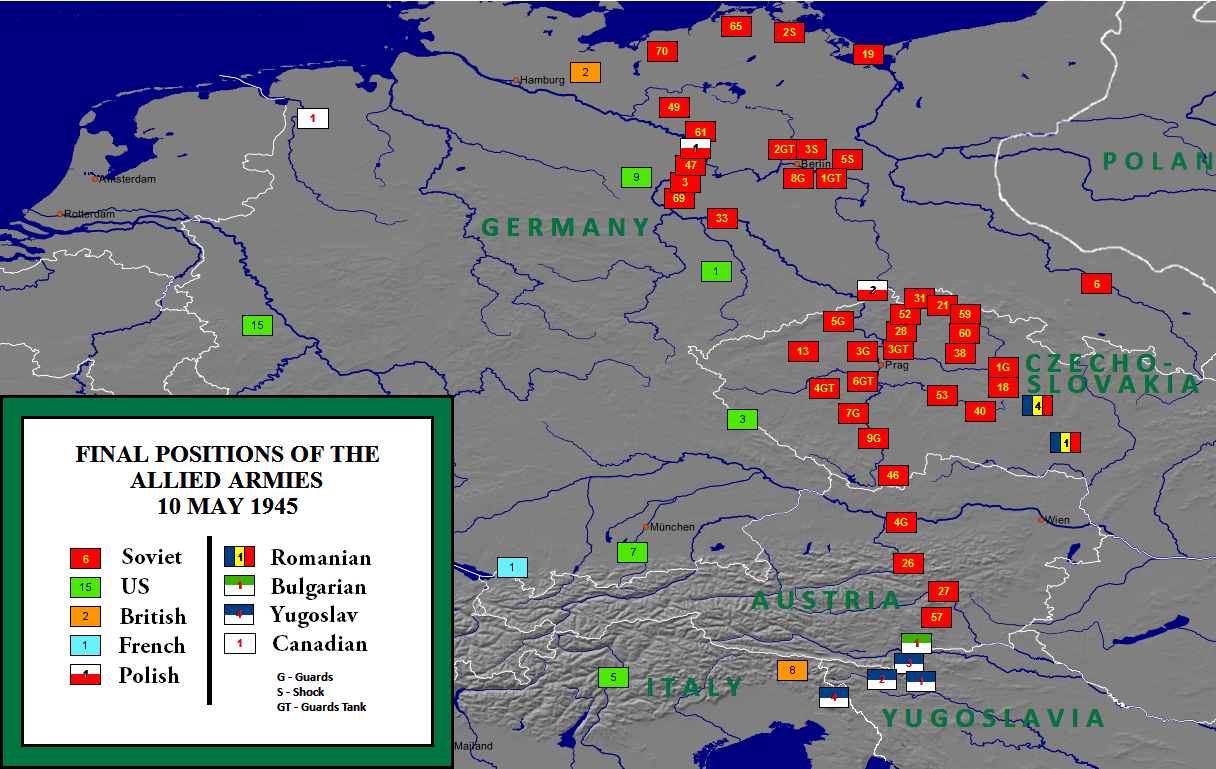
Adolf Hitler killed himself on 30 April 1945, during the fighting for Berlin. Karl Dönitz, who succeeded him as Reichspräsident, allowed the surrender, and his short-lived administration is known as the Flensburg Government. A first act of military surrender was signed at the headquarters of the Allied Expeditionary Forces in Reims, on the morning of 7 May. A revised and definitive document was signed at Karlshorst, in Berlin, on the evening of 8 May. Orders then went out to all German land, sea and air forces to stop fighting at 23:01 Central European time on 8 May.
The first celebrations
London saw the largest crowds. Over a million people filled the streets of Britain, gathering in Trafalgar Square and pressing towards Buckingham Palace. King George VI and Queen Elizabeth came out on the balcony with their daughters and the prime minister, Winston Churchill, who then went to Whitehall and spoke to another crowd. Ernest Bevin, asked to share the applause, said that the day belonged to Churchill and led the singing. Princess Elizabeth and Princess Margaret were allowed to walk unknown among the crowds. In the United States the date was also President Truman's sixty-first birthday, and celebrations filled Times Square in New York.
Dates and countries
Most places keep 8 May. It is a public holiday in France, where it is called 8 mai 1945, and in Poland, where the official name is National Victory Day. Poland recognised 9 May from 1945 until a change made in 2015. Germany holds events in Berlin on 8 May, and the eastern German state kept it as Liberation Day from 1950 until the end of communist rule. Austria's Festival of Joy has been held each year since 2013 on Heldenplatz in Vienna. In Britain the day is not an annual public holiday, though the early May bank holiday was moved to 8 May in 1995 and again in 2020.
Why 9 May
The surrender came into force at 23:01 Central European Summer Time on 8 May. In Moscow that same moment fell at 00:01 on 9 May, so Russia and several other former Soviet states, among them most of the republics that were then part of the Soviet Union, keep Victory Day a day later. The three Baltic states, Estonia, Latvia and Lithuania, mark 8 May instead, because for them 9 May recalls the Soviet occupation that began in 1944, though Russian communities there still celebrate informally.
How Victory in Europe Day is kept
In France and Poland the date is a public holiday, with official ceremonies and wreaths. In Berlin, events on 8 May honour those in the German Resistance who fought Nazism and died. Vienna holds the Festival of Joy on Heldenplatz, organised by the Austrian Mauthausen Committee with the city and the national government. Britain marks the day with national events, though not with an annual holiday. Belgium folds its commemoration into Armistice Day on 11 November, when a truce ceremony is held in the king's presence at the Tomb of the Unknown Soldier in Brussels. In the Baltic states 8 May is officially observed, while local Russian communities still hold 9 May gatherings.
When and where
The date is 8 May, the day the surrender took effect in 1945. Russia and several former Soviet states keep 9 May instead, because the same moment fell after midnight in Moscow time. In Britain the day is not a yearly holiday, but the early May bank holiday was shifted to 8 May for the 50th and 75th anniversaries.
It is kept above all in Europe. France, Poland and other European states treat 8 May as a public holiday, and the European Union observes 9 May as Europe Day. Commemoration is strongest in Britain, where the first crowds gathered, and in Berlin. Russia and several former Soviet states keep 9 May, while Estonia, Latvia and Lithuania mark 8 May. Austria has its own annual Festival of Joy.
What Victory in Europe Day means
For the countries that keep it, the day stands for the end of a war that had lasted six years in Europe. In France, Orléans marks it alongside the lifting of the siege of 1429, when forces led by Joan of Arc raised the siege, and she is the patron saint of France. For Estonia, Latvia and Lithuania the same spring carries a second meaning, the start of Soviet rule. In Algeria, 8 May 1945 is remembered as the beginning of the Sétif and Guelma massacre, and it remains a matter of dispute between Algeria and France.


Days Victory in Europe Day is marked
Questions people ask about Victory in Europe Day
When is Victory in Europe Day marked?
Victory in Europe Day is kept as part of Victory Day, which is on Sunday, 9 May 2027.
What is Victory in Europe Day?
It is the day that marks the Allies' formal acceptance of Nazi Germany's surrender in 1945. The surrender took effect on 8 May, which is why that date is kept. It is known in Britain as VE Day, and elsewhere as Victory Day, Liberation Day or Victory Over Fascism Day.
Is it a public holiday?
In France and Poland it is a public holiday. It is not an annual public holiday in Britain or a federal holiday in the United States, though both have marked it officially, and the United States issued a proclamation for 8 May in 2025.
Why do some countries keep 9 May?
The surrender came into force at 23:01 Central European Summer Time on 8 May. Moscow was ahead of that clock, so the moment fell at 00:01 on 9 May there. Russia and most former Soviet states therefore hold Victory Day a day later.
How was the first one marked?
Crowds filled the streets. In Britain more than a million people came out, gathering in London between Trafalgar Square and Buckingham Palace, where the king and queen appeared on the balcony. In the United States celebrations centred on Times Square. Churchill and Truman both warned that the war with Japan was not over.
See also
 Beating RetreatA military ceremony of music and drill held at sunset to mark the end of a day or a festival.
 Olympic torch relayThe ceremonial journey of the flame from Olympia to each host city of the Olympic Games
 March of the LivingAn annual two-week journey to Poland ending in a silent walk from Auschwitz to Birkenau
 Lord Mayor's ShowAn annual civic parade in London marking the inauguration of the Lord Mayor with a procession and pageantry.
Good reading and sources
- Encyclopaedia BritannicaArticle
- VE Day: Berlin marks end of WW2 in Europe with unprecedented holidayBBC, Article
- May 8, 1945: Total defeat or day of liberation?Deutsche Welle, Article
- VE Day: Berlin marks end of WW2 in Europe with unprecedented holidayBBC, Article
- May 8, 1945: Total defeat or day of liberation?Deutsche Welle, Article
- Victory in Europe Day on WikipediaEncyclopedia
- More photos on Wikimedia CommonsPhotos and video
- Wikidata recordOpen data
The facts on this page come from the Wikipedia article "Victory in Europe Day", written by its contributors and used under the CC BY-SA 4.0 licence, and from its Wikidata record (CC0). EveryParampara rewrote the text in its own words, with AI assistance, and compares every page with the article to make sure no passage is copied. It may be reused under the same CC BY-SA 4.0 licence with a link back.
It may contain mistakes. Traditions differ from one family, village and community to the next, and the people who keep them know them best. If something is wrong, tell us. Last refreshed 2026-10-05.
More from France
All the traditions of France 🇫🇷 Paris, France and 5 moreBastille DayFête nationale française
France's national day marking the storming of the Bastille and the unity of the people on 14 July.Ceremony
🇫🇷 Paris, France and 5 moreBastille DayFête nationale française
France's national day marking the storming of the Bastille and the unity of the people on 14 July.Ceremony
 🇧🇪 Antwerp, Belgium and 2 moreOmmegangommegang (Dutch)
Medieval town processions of the Low Countries, with giants, guilds and horsesCeremony
🇧🇪 Antwerp, Belgium and 2 moreOmmegangommegang (Dutch)
Medieval town processions of the Low Countries, with giants, guilds and horsesCeremony
 🇫🇷 France and 3 moreCashiering
A ceremonial military dismissal that publicly strips an officer of rank and insigniaCeremony
🇫🇷 France and 3 moreCashiering
A ceremonial military dismissal that publicly strips an officer of rank and insigniaCeremony
 🇲🇦 Morocco and 1 moreTweezaتويزة
A North African tradition of communal voluntary work, mutual aid and shared harvestsCeremony · Dinner
🇲🇦 Morocco and 1 moreTweezaتويزة
A North African tradition of communal voluntary work, mutual aid and shared harvestsCeremony · Dinner
The same idea elsewhere
All of this kind 🇺🇸 Philadelphia, United States and 1 moreIndependence Day
The United States' national day of parades, barbecues and fireworks, kept each July 4Ceremony
🇺🇸 Philadelphia, United States and 1 moreIndependence Day
The United States' national day of parades, barbecues and fireworks, kept each July 4Ceremony
 🇺🇸 Washington, United StatesState of the Union address
The US president's yearly report to Congress and the nation, given in the House chamberCeremony
🇺🇸 Washington, United StatesState of the Union address
The US president's yearly report to Congress and the nation, given in the House chamberCeremony
 🇮🇳 Kolkata, IndiaJana Gana Mana
India's national anthem, from a Bengali hymn of 1911, sung at civic occasionsCeremony
🇮🇳 Kolkata, IndiaJana Gana Mana
India's national anthem, from a Bengali hymn of 1911, sung at civic occasionsCeremony
 🇺🇸 United StatesTalking stick
A carved staff that shows who may speak at a Northwest Coast gatheringCeremony
🇺🇸 United StatesTalking stick
A carved staff that shows who may speak at a Northwest Coast gatheringCeremony