Festivals and celebrationsSouth AsiaHindu
Dhanu Jatra
An annual open-air theatrical performance in Bargarh, Odisha, enacting the myth of Krishna and Kansa.
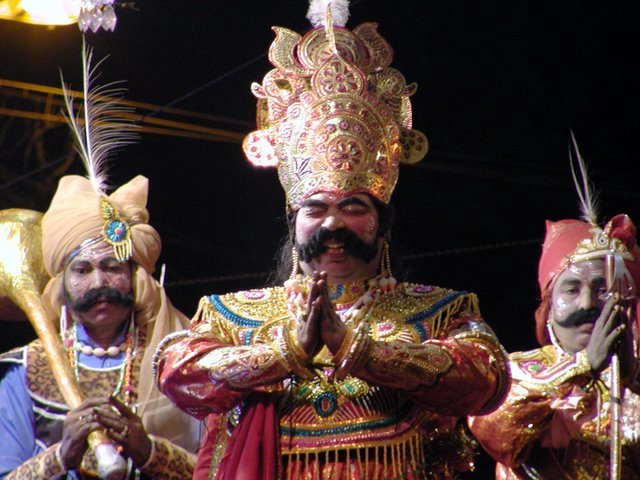
Dhanu Jatra is an annual open-air theatrical performance celebrated in Bargarh, Odisha. It transforms the town into a living stage for the mythological story of Krishna and his uncle Kansa. The event spans ten days and involves the entire community in reenacting ancient episodes without a fixed script.
When is Dhanu Jatra kept?
Dhanu Jatra is kept on ten days starting from Pausha Shukla Chaturthi to Pausha Purnima.
Dhanu Jatra is a unique open-air theater festival held in Bargarh, Odisha. It dramatizes the Hindu myth of Krishna and King Kansa. The entire town becomes a stage for this ten-day performance. Residents participate in reenacting historical and mythological events. It is recognized as the world's largest open-air theater.
What it is
Dhanu Jatra is an annual drama-based performance that covers an eight-kilometer radius in Bargarh. It is known as the world's largest open-air theater and holds a place in the Guinness Book of World Records. The event dramatizes the mythological story of Krishna and his demon uncle Kansa. Unlike traditional plays, there is no written script. The actors improvise their lines and actions based on the oral traditions passed down through generations. This improvisation allows for spontaneous interactions with the audience.
Origins and history
The festival began in 1947 as a celebration of India's independence from British rule. Labor class workers initiated the event to symbolize freedom. The death of Kansa in the play represents the end of colonial oppression. Over time, the festival has grown in scale and popularity. It was accorded National Festival status by the Government of India in November 2014. The tradition has expanded beyond Bargarh to other towns in Western Odisha.
How it is kept
The municipality area transforms into the historical town of Mathura Nagari. The Jeera river is treated as the Yamuna, and Ambapali village becomes Gopapura. Performances take place at various locations, including the Nishamani School Ground. The main vegetable market serves as a central stage. Actors portray characters like King Kansa, Krishna, and Balaram. The narrative begins with Kansa dethroning Ugrasena and ends with Kansa's death. The festival includes cultural troops and nightly performances to engage visitors.
Symbolism and meaning
The festival carries deep symbolic meaning for the local community. It represents the triumph of good over evil through the story of Krishna and Kansa. Historically, it also symbolizes the victory of freedom over colonial rule. The transformation of real places into mythological settings reinforces this connection. Villagers paint their houses with themes from the mythology. Wall writings of poetic stanzas are common throughout the festival area. This artistic expression strengthens the community's bond with their heritage.
Today and change
The festival continues to evolve while maintaining its core traditions. New venues have been added, such as the Nishamani School Ground since 2005. Other towns in Western Odisha now host similar enactments. Notable places include Chicholi, Thuaapaali, and Remanda. The role of key performers remains important, with some actors playing Kansa for many years. Traditional dance forms like Sanchaar are still performed, though they are declining. The festival attracts non-local visitors and remains a significant cultural event in Odisha.
How Dhanu Jatra is kept
The town of Bargarh transforms into a massive open-air theater. Residents act out scenes from the Krishna myth across multiple locations. The Jeera river becomes the Yamuna, and villages are renamed to match mythological sites. Performances occur at the vegetable market and school grounds. Actors improvise without scripts, interacting directly with the crowd. The narrative follows Krishna's visit to Mathura and the eventual defeat of Kansa. Cultural troops perform nightly shows to entertain audiences.
When and where
It occurs annually for ten days, starting on Pausha Shukla Chaturthi and ending on Pausha Purnima. The exact dates vary each year according to the lunar calendar. For example, it fell between January 6 and 16 in 2014. The timing aligns with the winter months in Odisha.
The primary location is Bargarh, Odisha. The festival spreads across an eight-kilometer radius around the municipality. Secondary venues include Mathura and Patna, where smaller enactments take place. Other notable locations in Western Odisha are Chicholi, Thuaapaali, and Remanda. These areas replicate the main festival's atmosphere.
What Dhanu Jatra means
The festival symbolizes freedom and the victory of good over evil. Originally started in 1947, it represented India's independence from British rule. The death of Kansa mirrors the end of colonial oppression. The transformation of physical spaces into mythological settings reinforces this symbolism. Artistic expressions like house paintings and wall writings deepen the connection to heritage. The community views it as both a religious and patriotic observance.
Questions people ask about Dhanu Jatra
When is Dhanu Jatra kept?
Dhanu Jatra is kept on ten days starting from Pausha Shukla Chaturthi to Pausha Purnima.
What is Dhanu Jatra?
Dhanu Jatra is an annual open-air theatrical performance held in Bargarh, Odisha. It dramatizes the Hindu myth of Krishna and King Kansa. The entire town serves as a stage for this ten-day event. It is recognized as the world's largest open-air theater.
Where is Dhanu Jatra held?
The main event takes place in Bargarh, Odisha. It covers an eight-kilometer radius around the municipality. Smaller versions are also held in Mathura, Patna, and other towns in Western Odisha.
Why is it called the world's largest open-air theater?
The festival uses the entire town of Bargarh as its stage. Performances occur across multiple locations within an eight-kilometer radius. This extensive use of public space earns it the Guinness World Record title.
See also
 DiwaliA five-day festival of lights celebrated across India and its diaspora to mark the victory of light over darkness.
 MawlidAn annual festival marking the birth of the Prophet Muhammad, marked by poetry, processions and feasts.
 HoliA spring festival of colours and bonfires that marks the end of winter and the triumph of good over evil.
 Fête de la MusiqueAn annual celebration where people play music in public spaces on the summer solstice.
Good reading and sources
- Dhanu jatra on WikipediaEncyclopedia
- More photos on Wikimedia CommonsPhotos and video
- Wikidata recordOpen data
The facts on this page come from the Wikipedia article "Dhanu jatra", written by its contributors and used under the CC BY-SA 4.0 licence, and from its Wikidata record (CC0). EveryParampara rewrote the text in its own words, with AI assistance, and compares every page with the article to make sure no passage is copied. It may be reused under the same CC BY-SA 4.0 licence with a link back.
It may contain mistakes. Traditions differ from one family, village and community to the next, and the people who keep them know them best. If something is wrong, tell us. Last refreshed 2026-10-13.
More from India
All the traditions of India
🇮🇳 Ayodhya, India and 10 moreDiwaliदीपावली (Dīpāvalī)
A five-day festival of lights celebrated across India and its diaspora to mark the victory of light over darkness.Festival · Feasts and festival meals
🇪🇬 Egypt and 6 moreMawlidمولد (Mawlid)
An annual festival marking the birth of the Prophet Muhammad, marked by poetry, processions and feasts.Festival · Feasts and festival meals
🇮🇳 Mathura, India and 5 moreHoliहोली (Hindi)
A spring festival of colours and bonfires that marks the end of winter and the triumph of good over evil.Festival
 🇫🇷 France and 4 morePicnic
A meal taken outdoors in a park or scenic spot, often shared with friends and family.Festival · Lunch
🇫🇷 France and 4 morePicnic
A meal taken outdoors in a park or scenic spot, often shared with friends and family.Festival · Lunch
The same idea elsewhere
All of this kind 🇮🇹 Rome, Italy and 4 moreChristmas
A festival of Jesus's birth, kept on 25 December with gifts, lights and shared mealsFestival
🇮🇹 Rome, Italy and 4 moreChristmas
A festival of Jesus's birth, kept on 25 December with gifts, lights and shared mealsFestival
 🇮🇪 Ireland and 5 moreHalloween
An annual observance on 31 October marking the eve of All Saints' Day, rooted in Christian tradition and Celtic heritageFestival · Sweets given and shared
🇮🇪 Ireland and 5 moreHalloween
An annual observance on 31 October marking the eve of All Saints' Day, rooted in Christian tradition and Celtic heritageFestival · Sweets given and shared
 🇮🇹 Rome, Italy and 4 moreValentine's Day
A Christian feast day and cultural celebration of love kept on February 14 in many countries.Festival
🇮🇹 Rome, Italy and 4 moreValentine's Day
A Christian feast day and cultural celebration of love kept on February 14 in many countries.Festival
 🇹🇷 Turkey and 5 moreEid al-Fitrعيد الفطر
The feast that ends Ramadan, opened with morning prayers, sweets and visits homeFestival · Feasts and festival meals
🇹🇷 Turkey and 5 moreEid al-Fitrعيد الفطر
The feast that ends Ramadan, opened with morning prayers, sweets and visits homeFestival · Feasts and festival meals