Spiritual and religiousMiddle EastJewish
Ha Lachma Anya
The Aramaic call that opens the Passover Seder: matzah lifted, the poor invited in
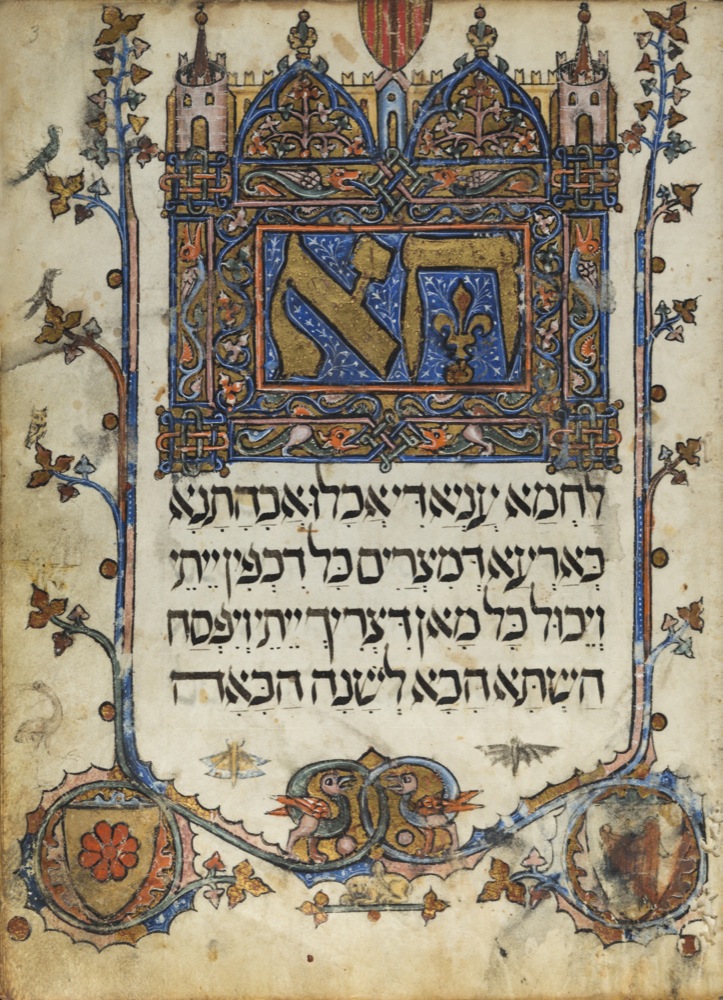
Ha Lachma Anya is an Aramaic declaration said near the start of the Magid section of the Passover Seder. Jewish families lift the matzah as they say it, naming it the bread of poverty, explaining why unleavened bread is on the table, and inviting anyone in need to join the meal.
When is Ha Lachma Anya marked?
Ha Lachma Anya is kept as part of Passover, which runs from 22 to 29 April 2027.
Before the Passover Seder meal is eaten, the matzah is uncovered and lifted, and someone at the table recites Ha Lachma Anya. The words are Aramaic. They name the matzah the bread of poverty that our ancestors ate in Egypt, and they invite anyone who is hungry or in need to come in and share the Seder.
What it is
Ha Lachma Anya is said aloud at the Seder table, near the start of the Magid, the part of the evening given to the story of the Exodus. The lines are in Aramaic. They offer the first reason the Haggadah gives for the matzah on the table: this is the bread of poverty, the flatbread the Israelites ate in Egypt. A verse in Deuteronomy ties unleavened bread to a hurried departure from that land, and the declaration rests on it. The matzah is uncovered and lifted while the words are spoken, so that everyone at the table can see it.
Origins and history
Two early Haggadah texts are known, one from Eretz Yisrael and one from Babylon, and scholars date the work to the Talmudic era. Today's Haggadot follow the Babylonian line, whose oldest complete copies sit in the prayer books of Rabbis Amram Gaon and Saadia Gaon. Ashkenazic, Sephardic and Mizrahi forms later grew apart, yet the basic text barely differs. Where Ha Lachma Anya comes from is argued: Shibbolei ha-Leket places it in Israel, while the Malbim and the Ra'avyah point to Babylon. Ma'aseh Nissim dates it to a time when the Temple no longer stood, while Maimonides holds it was not said while the Temple stood. David Arnow reports that some place it in the Gaonic period, roughly 750 to 1038 CE, and others reach back to the first or second century CE.
The open door
One reading of Ha Lachma Anya turns it into an act of welcome. Abravanel teaches that the words belong at the doorway of the house, with the door open, so that poor people can hear the invitation and come inside. Sol Scharfstein notes that in earlier times the head of the household would go out into the street to recite it, asking poor people to join him at the Seder. The lines themselves are addressed to anyone in want, and the open door is what makes that invitation real. The welcome comes before the meal is served.
Changes in wording
A few Haggadot read K'Ha Lachma or Ha K'Lachma, which shifts the sense to 'this is like the bread of poverty'. In that reading the matzah on the Seder table is not the loaf the Israelites carried out of Egypt but a likeness of it, eaten in memory. Professor David Daube proposed another reason for the change: the plain phrase 'this is the bread' might be misread as pointing to transubstantiation, a Christian teaching about the bread, so some texts put in the word 'like'. Other medieval Haggadot added a line at the beginning about leaving Egypt in haste.
What it means today
Modern readers hear several things in these few lines. Anisfeld, Mohr and Spector say the recitation gives the telling of the Exodus a sense of urgency, and that it draws the people at the table close to the ancient Israelites, since they eat the bread their ancestors ate and so taste something of slave life. Zion and Dishon read the matzah here as a memorial of slavery, not of freedom. Isaacs and Scharfstein point out that looking at the matzah as Magid opens fixes the events of Egypt in the mind, and that those words press the duty of opening one's home to the poor, since generosity of that kind is the road to redemption.
How Ha Lachma Anya is kept
At the Seder table, before the meal, the matzah is uncovered and lifted up. The person leading the Seder recites Ha Lachma Anya in Aramaic, and everyone present hears it. These words open the Magid, the long telling of the Exodus from Egypt that follows. According to Abravanel the recitation belongs at the open door, and in older practice the head of the household stood in the street so that poor neighbours could hear the invitation and come in. The lifted matzah gives the people at the table something to look at while the story of slavery and departure begins.
When and where
It is recited once a year, at the start of the Magid in the Passover Seder. The Seder takes place during Passover, and the recitation comes before the festival meal is eaten, at the moment when the matzah is uncovered and lifted.
It is kept wherever Jewish households hold a Passover Seder, in Israel and across the diaspora. The Haggadah that carries it descends from the Babylonian text, and its wording is shared by Ashkenazic, Sephardic and Mizrahi communities, with almost no change in the basic text between them.
What Ha Lachma Anya means
The lifted matzah is a piece of the past in the hand. Those who keep the custom say the bread they hold is the kind their ancestors ate as slaves, so the story is not only told but tasted. The invitation to the hungry turns that memory outward: a people who were once poor are asked to open the door. For some readers the matzah at this moment stands for slavery rather than freedom, and the generosity it calls for is a step toward redemption.

Days Ha Lachma Anya is marked
Questions people ask about Ha Lachma Anya
When is Ha Lachma Anya marked?
Ha Lachma Anya is kept as part of Passover, which runs from 22 to 29 April 2027.
What is Ha Lachma Anya?
It is a short declaration in Aramaic recited at the beginning of the Magid in the Passover Seder. It names the matzah the bread of poverty that the Israelites ate in Egypt, and it is the first explanation the Haggadah gives for why matzah is on the table.
Why do some Haggadot say 'this is like the bread'?
Some texts read K'Ha Lachma or Ha K'Lachma to make clear that the matzah is a copy of what the Israelites ate, not the same loaf. Professor David Daube suggested the change was also meant to keep the plain phrase from being heard as a Christian teaching about the bread.
Who is invited to the Seder?
The recitation carries an invitation to the poor. Abravanel taught that it should be said at the open door so that people in need could hear and come in, and Sol Scharfstein records that the head of the household once went into the street to call them.
Where does the custom come from?
Sources disagree. Shibbolei ha-Leket says it was instituted in Israel, while the Malbim and the Ra'avyah trace it to Babylon. David Arnow notes that some place it in the Gaonic period, between about 750 and 1038 CE, and others as far back as the first or second century CE.
See also
 SukkotA seven-day autumn Jewish festival of temporary booths, harvest prayers and hospitality
 Mishloach manotFood parcels exchanged on Purim, so everyone has plenty for the day's festive meal
 Passover SederA ritual meal opening Passover, told over wine, matzah and symbolic foodsShalom AleichemA traditional song sung on Friday night to welcome Sabbath angels into the home
Good reading and sources
- Ha Lachma Anya on WikipediaEncyclopedia
- More photos on Wikimedia CommonsPhotos and video
- Wikidata recordOpen data
The facts on this page come from the Wikipedia article "Ha Lachma Anya", written by its contributors and used under the CC BY-SA 4.0 licence, and from its Wikidata record (CC0). EveryParampara rewrote the text in its own words, with AI assistance, and compares every page with the article to make sure no passage is copied. It may be reused under the same CC BY-SA 4.0 licence with a link back.
It may contain mistakes. Traditions differ from one family, village and community to the next, and the people who keep them know them best. If something is wrong, tell us. Last refreshed 2026-10-14.
More from Israel
All the traditions of Israel
🇮🇱 Jerusalem, IsraelSukkotסוכות
A seven-day autumn Jewish festival of temporary booths, harvest prayers and hospitalitySpiritual
🇮🇱 IsraelMishloach manotמשלוח מנות
Food parcels exchanged on Purim, so everyone has plenty for the day's festive mealSpiritual · Feasts and festival meals
🇮🇱 Jerusalem, IsraelPassover Sederסדר פסח
A ritual meal opening Passover, told over wine, matzah and symbolic foodsSpiritual · Feasts and festival meals
 🇮🇱 Israel and 2 moreSukkahסוכה
A temporary hut with a branch roof, lived in for the seven days of SukkotSpiritual
🇮🇱 Israel and 2 moreSukkahסוכה
A temporary hut with a branch roof, lived in for the seven days of SukkotSpiritual
The same idea elsewhere
Hospitality and welcome compared 🇫🇷 France and 4 morePicnic
A meal taken outdoors in a park or scenic spot, often shared with friends and family.Festival · Lunch
🇫🇷 France and 4 morePicnic
A meal taken outdoors in a park or scenic spot, often shared with friends and family.Festival · Lunch
 🇮🇩 Indonesia and 2 moreKenduri
A communal prayer meal and gathering shared across Indonesia, Malaysia and BruneiSpiritual · Feasts and festival meals
🇮🇩 Indonesia and 2 moreKenduri
A communal prayer meal and gathering shared across Indonesia, Malaysia and BruneiSpiritual · Feasts and festival meals
 🇩🇰 Copenhagen, Denmark and 1 moreHygge
A Danish word for unhurried time at home with others, kept with candles and cookingHome
🇩🇰 Copenhagen, Denmark and 1 moreHygge
A Danish word for unhurried time at home with others, kept with candles and cookingHome