Hygge
A Danish word for unhurried time at home with others, kept with candles and cooking

A Danish and Norwegian word for the ease of being at home with others, and the habits that go with it: candlelight, home cooking, wool and long evenings in. Danes count it a core part of their culture, though writers trace that emphasis only to the late twentieth century.
When is Hygge kept?
Hygge is kept on all year round, with the strongest showings in autumn and winter.
Hygge is a Danish and Norwegian word for a mood of ease and good company, the feel of a low-lit evening indoors with plain food and people you like. Danes treat it as a daily practice, not a holiday. It shapes winter cooking, home design and the way hosts receive guests, and since the 2010s it has travelled far beyond the Nordic countries.
What the word means
Hygge is a noun in both Danish and Norwegian. It describes a state of mind rather than an event: something good, safe and known, and the feel of an ordinary day spent in other people's company. Because the word does not travel easily into English, translators often keep it in Danish. The Collins English Dictionary calls it a Danish idea of making a cozy, sociable setting that helps people feel well. Norwegians use the word every day, much as English speakers say cozy.
Roots and recent use
Writers usually trace the word to an old Danish verb meaning to give someone courage or ease, and further back to Old Norse hyggja, to think, and hugr, the mind or soul. A second suggestion links it to a sixteenth-century word hugge, to embrace, though nobody knows where that word came from. Hygge appeared in Danish writing in the 1800s. The habit of treating it as a marker of national character is much newer, usually placed in the last decades of the twentieth century.
How it is kept
In the cold months Danes cook at home from scratch, cakes and meatballs among the dishes, and set out candles, blankets and plain furnishings. Hygge returns in warm weather too. Picnics, barbecues, concerts, street fairs and bicycle rides all count. In Danish prisons, women are allowed their own clothes and may arrange their cells simply, and researchers who interviewed them found the practice did them good. Danes who play online games also look after one another in shared spaces, keeping the tone friendly and holding back on showing off.
Beyond the Nordic countries
Interest outside Denmark grew in the twenty-first century. Collins named hygge runner-up as its word of the year in Britain in 2016, after Brexit, following a run of books on the subject. Searches and the Instagram tag #Hygge rose sharply in late 2017. Danish firms and institutions have leaned on the idea to draw attention and talent, and other northern peoples have their own versions: lagom and mysig in Sweden, koselig in Norway, þetta reddast in Iceland, sisu in Finland, gezelligheid in Dutch and Gemütlichkeit in German.
What it means
Many Danes treat hygge as a rule for living rather than a treat for holidays: keep things plain and value the people in front of you. An author of a popular book on the subject set out ten principles for a good life, from how a room is arranged to how people behave towards one another, and argued that they matter for happiness. Danish researchers call the practice restorative and note how firmly Danes hold to it. Soup, sweaters, hot cocoa and home-baked cakes make up the familiar picture, yet people find hygge in summer too.
How Hygge is kept
Anyone at home can make hygge, alone or with guests, and Danes describe it as part of ordinary days rather than a set date. The evening usually starts with low light: candles, lamps, a fire. Cooking is done at home and from scratch, cakes or meatballs, and the food is plain. Blankets, wool and simple furniture are part of the scene. Talk is easy and nothing is rushed. In summer the same feeling turns up at picnics, barbecues, concerts, street fairs and on bicycles. In shared online games, Danish players keep the group friendly and play down their own wins.
When and where
Hygge has no date. It is kept all year, though the short, dark and wet winters of the north give it its best-known shape: evenings indoors, with light and warmth against the cold outside. Autumn and winter look like its season, and the colder months carry the heavier share of it, but summer days and nights count as well.
The word belongs to Denmark and Norway, where it is used in everyday speech. Treating hygge as a badge of national identity is mainly a Danish habit, and Denmark is where it is studied, written about and sold to visitors. Danish companies and the University of Copenhagen have used it abroad, and readers in Britain, the United States and elsewhere have taken it up.
What Hygge means
For those who keep it, hygge stands for a plain, kindly way of living: small rooms, warm light, food made at home, and the company of family and friends. Writers tie it to the far north, where winters are long, dark and wet and people have always needed warmth, safety and company inside the home, with fire standing for protection from what lies beyond the door. Danish researchers describe it as restorative, and many Danes see it as one of the things that make life good.

Questions people ask about Hygge
When is Hygge kept?
Hygge is kept on all year round, with the strongest showings in autumn and winter.
What does hygge mean?
It is a Danish and Norwegian noun for a state of mind: something good, safe and known. It covers the feel of an ordinary day spent with other people, at home, in low light, with plain food. English has no single word for it, so translators usually leave it as hygge.
Where does hygge come from?
The word appears in both Danish and Norwegian. Old Norse is its ancestor, and it turns up in Danish writing in the 1800s. Writers say the habit of calling it a central part of Danish identity is far newer, taking hold in Denmark in the late twentieth century.
Is hygge only Danish?
The word is used just as widely in Norway, where it sits in ordinary speech. What is mainly Danish is treating hygge as a badge of cultural identity. Neighbouring peoples have related ideas of their own, such as lagom in Sweden, koselig in Norway and sisu in Finland.
Has hygge become popular outside Denmark?
Yes. Collins made it runner-up word of the year in Britain in 2016, several books followed, and online interest and the hashtag #Hygge grew quickly in late 2017. Danish companies and universities have used the word to attract attention and students.
See also
 St John's EveBonfires, feasting and worship on the short night before John the Baptist's feast
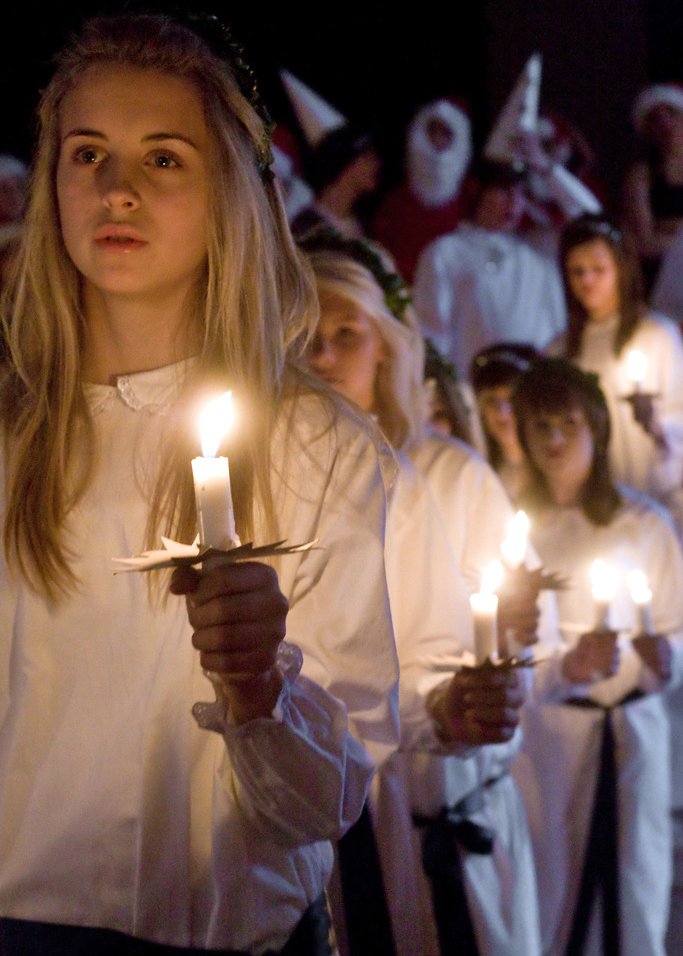 Saint Lucy's DayA December festival of light and song held across Scandinavia and Italy to honour a Christian martyr.
 RisalamandeA chilled Danish Christmas rice dessert with cream, chopped almonds and cherry sauceJulAn eight-week Norwegian midwinter season of feasts, family gatherings, and gift-giving
Good reading and sources
- HyggeThe Guardian, Article
- Hygge: A heart-warming lesson from DenmarkBBC, Article
- HyggeThe Guardian, Article
- Hygge: A heart-warming lesson from DenmarkBBC, Article
- Hygge on WikipediaEncyclopedia
- More photos on Wikimedia CommonsPhotos and video
- Wikidata recordOpen data
The facts on this page come from the Wikipedia article "Hygge", written by its contributors and used under the CC BY-SA 4.0 licence, and from its Wikidata record (CC0). EveryParampara rewrote the text in its own words, with AI assistance, and compares every page with the article to make sure no passage is copied. It may be reused under the same CC BY-SA 4.0 licence with a link back.
It may contain mistakes. Traditions differ from one family, village and community to the next, and the people who keep them know them best. If something is wrong, tell us. Last refreshed 2026-10-05.
More from Denmark
All the traditions of Denmark
🇪🇸 Spain and 5 moreSt John's Eve
Bonfires, feasting and worship on the short night before John the Baptist's feastSpiritual
🇸🇪 Stockholm, Sweden and 4 moreSaint Lucy's Day
A December festival of light and song held across Scandinavia and Italy to honour a Christian martyr.Festival · Breakfast
🇩🇰 Copenhagen, Denmark and 4 moreRisalamande
A chilled Danish Christmas rice dessert with cream, chopped almonds and cherry sauceTable custom · Sweets given and shared
 🇬🇧 United Kingdom and 4 moreSaffron bun
A golden, spiced yeast roll flavoured with saffron, baked for festive and holy daysTable custom · Tea-time and snacking customs
🇬🇧 United Kingdom and 4 moreSaffron bun
A golden, spiced yeast roll flavoured with saffron, baked for festive and holy daysTable custom · Tea-time and snacking customs
The same idea elsewhere
Hospitality and welcome compared 🇲🇽 Mexico and 7 moreLas Posadas
A nine-night Christmas pageant remembering Mary and Joseph seeking shelterSpiritual · Feasts and festival meals
🇲🇽 Mexico and 7 moreLas Posadas
A nine-night Christmas pageant remembering Mary and Joseph seeking shelterSpiritual · Feasts and festival meals
 🇱🇧 Beirut, Lebanon and 7 moreEid il-Burbaraعيد البربارة
A winter feast of costumes, sweet boiled wheat, and sprouting seeds across the LevantFestival · Feasts and festival meals
🇱🇧 Beirut, Lebanon and 7 moreEid il-Burbaraعيد البربارة
A winter feast of costumes, sweet boiled wheat, and sprouting seeds across the LevantFestival · Feasts and festival meals
 🇨🇦 Canada and 2 moreMummering
A festive midwinter custom of disguised visits, music and playful guessing gamesFestival · Tea-time and snacking customs
🇨🇦 Canada and 2 moreMummering
A festive midwinter custom of disguised visits, music and playful guessing gamesFestival · Tea-time and snacking customs
 🇹🇷 Turkey and 5 moreEid al-Fitrعيد الفطر
The feast that ends Ramadan, opened with morning prayers, sweets and visits homeFestival · Feasts and festival meals
🇹🇷 Turkey and 5 moreEid al-Fitrعيد الفطر
The feast that ends Ramadan, opened with morning prayers, sweets and visits homeFestival · Feasts and festival meals