Festivals and celebrationsEast AsiaShinto, Taoist and folk Chinese
Hakata Gion Yamakasa
In its own language: 博多祇園山笠
A July festival in Fukuoka featuring heavy float races through the streets of Hakata.
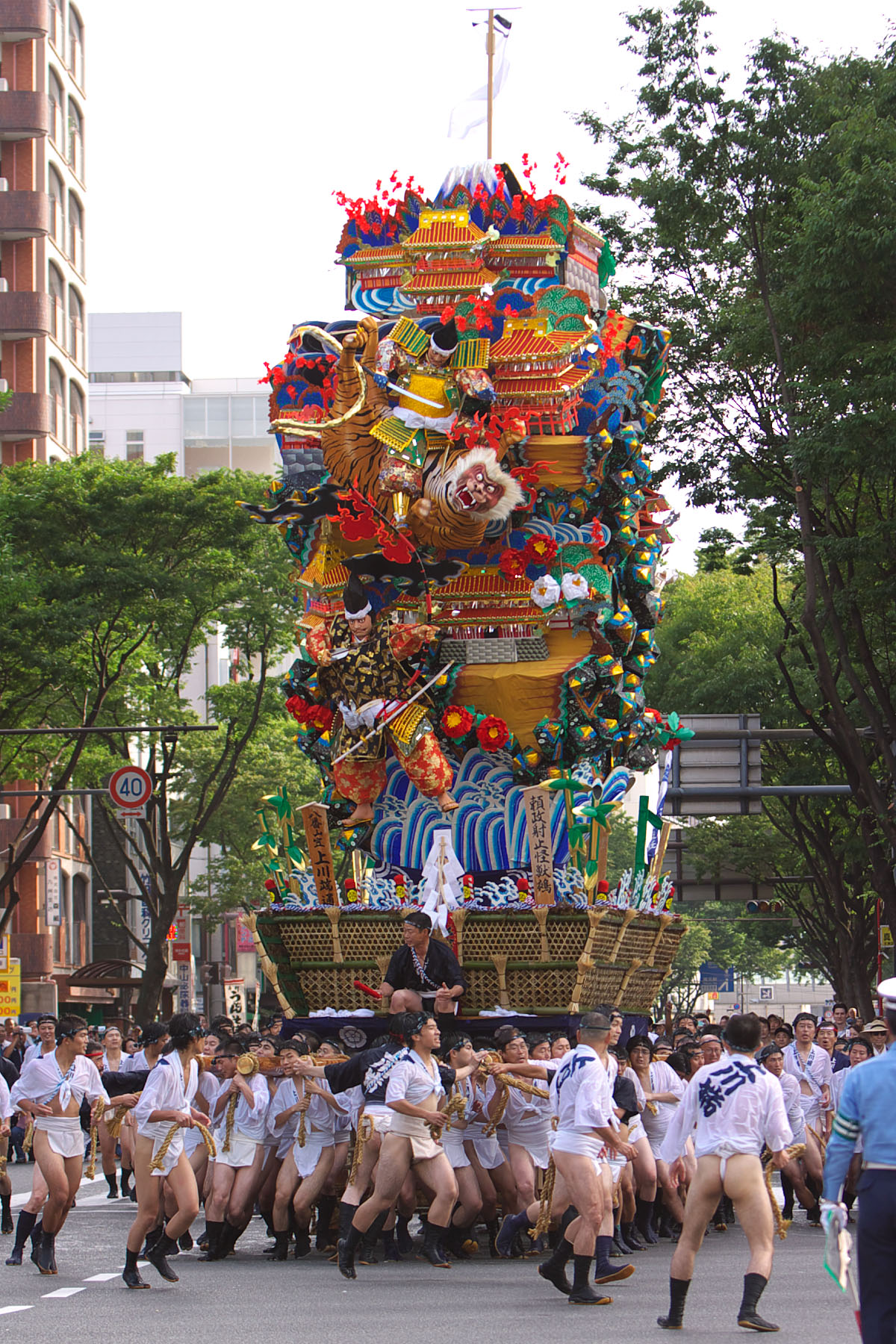
The Hakata Gion Yamakasa is a Shinto festival held annually from 1 to 15 July in the Hakata ward of Fukuoka, Japan. It centers on the Kushida Shrine and features massive floats raced by local district teams. The event traces its roots to a 13th-century prayer against plague and remains a vital community tradition today.
When is Hakata Gion Yamakasa kept?
Hakata Gion Yamakasa is kept from 1 to 15 July each year.
This annual summer gathering in Fukuoka honors local deities through intense physical competition. Teams from seven historic wards race heavy wooden floats through narrow streets. The event blends religious devotion with neighborhood pride, drawing crowds who watch the swift runners navigate the course.
Origins and history
Local tradition holds that the practice began in 1241 during a severe illness outbreak. A monk named Enni asked residents to carry him on a float while praying for recovery. The community complied, and the plague reportedly subsided. This act of collective prayer evolved into an annual observance. In 1979, the Japanese government recognized the event as an Important Intangible Folk Cultural Property, acknowledging its deep historical roots and social importance.
Float types and changes
The celebration uses two distinct categories of structures. The Kakiyama are lightweight versions weighing about one ton. These are carried at high speed around a set route. The Kazariyama are much larger, reaching up to 13 meters tall. They remain stationary and feature intricate carvings of mythological scenes. Until 1898, only the large floats were used. Modern electrical wiring forced a switch to the smaller, faster models to ensure safety.
District rivalry
The city of Hakata was organized into seven specific wards by Toyotomi Hideyoshi in the late 16th century. Each ward maintains its own identity and team. Participants wear traditional happi coats and fundoshi loincloths. The main event, called Oiyama, pits these districts against each other in a timed race. This competition fosters strong local bonds and friendly rivalry among the neighbors.
Soundscape recognition
The auditory experience of the festival has gained national attention. Authorities selected the sounds produced by the moving floats as one of the 100 Soundscapes of Japan. This designation highlights the unique acoustic environment created by the runners and the crowd. The noise reflects the energy and scale of the event, marking it as a significant cultural audio landmark.
How Hakata Gion Yamakasa is kept
Teams from seven Hakata districts prepare their floats throughout June. On July 15, the Kakiyama floats are lifted onto shoulders. Runners sprint through the streets following a strict path. Spectators line the route to cheer. The Kazariyama floats stand nearby for viewing. The event concludes after the race finishes, bringing the community together.
When and where
It runs from 1 to 15 July every year. The final race happens on the 15th.
The festivities center on Kushida Shrine in Hakata, Fukuoka. The race follows a specific urban route within the ward.
What Hakata Gion Yamakasa means
The race honors the original prayer against disease. It reinforces community ties and district loyalty. Carrying the float represents shared responsibility and strength.

Questions people ask about Hakata Gion Yamakasa
When is Hakata Gion Yamakasa kept?
Hakata Gion Yamakasa is kept from 1 to 15 July each year.
What is the Hakata Gion Yamakasa?
It is a major summer festival in Fukuoka, Japan. Held in July, it features teams racing heavy wooden floats through the streets of Hakata. The event combines Shinto worship with neighborhood competition.
Why are there different types of floats?
Originally, only large stationary floats existed. Modern power lines made them unsafe to move. Communities now use lighter Kakiyama floats for racing and keep the large Kazariyama floats for display.
See also
 HalloweenAn annual observance on 31 October marking the eve of All Saints' Day, rooted in Christian tradition and Celtic heritage
 Kishiwada Danjiri MatsuriA high-speed festival of wooden shrine floats pulled through Kishiwada, Japan
 Aomori Nebuta MatsuriA summer festival in Aomori featuring large warrior floats and dancing participants.
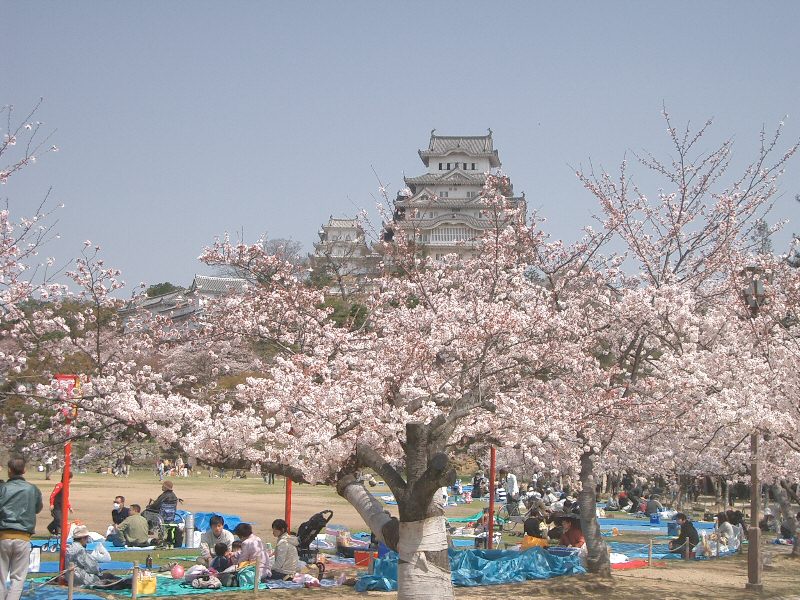 HanamiA Japanese spring custom of gathering under blooming cherry trees to eat, drink, and celebrate the fleeting beauty of th
Good reading and sources
- Hakata Gion Yamakasa on WikipediaEncyclopedia
- More photos on Wikimedia CommonsPhotos and video
- Wikidata recordOpen data
The facts on this page come from the Wikipedia article "Hakata Gion Yamakasa", written by its contributors and used under the CC BY-SA 4.0 licence, and from its Wikidata record (CC0). EveryParampara rewrote the text in its own words, with AI assistance, and compares every page with the article to make sure no passage is copied. It may be reused under the same CC BY-SA 4.0 licence with a link back.
It may contain mistakes. Traditions differ from one family, village and community to the next, and the people who keep them know them best. If something is wrong, tell us. Last refreshed 2026-10-05.
More from Japan
All the traditions of Japan
🇮🇪 Ireland and 5 moreHalloween
An annual observance on 31 October marking the eve of All Saints' Day, rooted in Christian tradition and Celtic heritageFestival · Sweets given and shared
🇯🇵 Aomori, JapanAomori Nebuta Matsuri青森ねぶた祭
A summer festival in Aomori featuring large warrior floats and dancing participants.Festival
🇯🇵 Kishiwada, JapanKishiwada Danjiri Matsuri岸和田だんじり祭
A high-speed festival of wooden shrine floats pulled through Kishiwada, JapanFestival
 🇮🇳 India and 4 moreWater lantern
Small lamps floated on water to honour the dead and ask for good fortuneFestival
🇮🇳 India and 4 moreWater lantern
Small lamps floated on water to honour the dead and ask for good fortuneFestival
The same idea elsewhere
All of this kind 🇮🇹 Rome, Italy and 4 moreChristmas
A festival of Jesus's birth, kept on 25 December with gifts, lights and shared mealsFestival
🇮🇹 Rome, Italy and 4 moreChristmas
A festival of Jesus's birth, kept on 25 December with gifts, lights and shared mealsFestival
 🇬🇧 United Kingdom and 4 moreValentine's Day
A Christian feast day and cultural celebration of love kept on February 14 in many countries.Festival
🇬🇧 United Kingdom and 4 moreValentine's Day
A Christian feast day and cultural celebration of love kept on February 14 in many countries.Festival
 🇹🇷 Turkey and 5 moreEid al-Fitrعيد الفطر
The feast that ends Ramadan, opened with morning prayers, sweets and visits homeFestival · Feasts and festival meals
🇹🇷 Turkey and 5 moreEid al-Fitrعيد الفطر
The feast that ends Ramadan, opened with morning prayers, sweets and visits homeFestival · Feasts and festival meals
 🇩🇪 Germany and 5 moreChristmas tree
A decorated evergreen or artificial tree placed indoors to mark the Christmas season.Festival
🇩🇪 Germany and 5 moreChristmas tree
A decorated evergreen or artificial tree placed indoors to mark the Christmas season.Festival