Music, dance and storytellingSoutheast Asia
Harana
A Filipino serenade where a suitor sings beneath his beloved's window at night
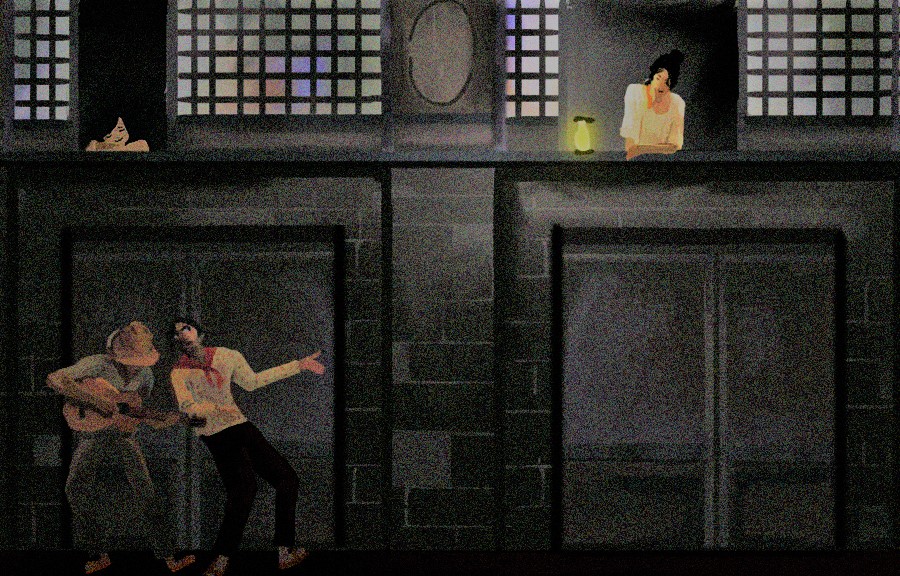
The harana is a Filipino courtship custom in which a young man sings beneath the window of the woman he hopes to win, often with friends playing guitar. Blending pre-colonial song with Spanish and Mexican influences, it is kept in rural areas through a set order of calling, confessing and replying.
When is Harana kept?
Harana is kept at night, when a suitor visits the house of the woman he courts.
Harana is the Filipino art of courting by song. Under cover of night, a young man comes to the window of the woman he hopes to win, guitar in hand, and sings of his feelings until she answers. The practice weaves older Filipino song forms with music brought from Spain and Mexico, and it remains a byword for romantic devotion in the Philippines.
A night visit
The custom follows a set order. First comes pagatawag, the call: a suitor, the manliligaw, arrives at the house of the dalaga, the young woman he courts, and sings beneath her window until she appears to answer him. Friends often join him, playing guitar or adding backing voices as he makes his confession, a step called pagtug-an or pagsugid. Last comes pagtubag, the reply, when she accepts or turns him away. A welcoming family may invite the singers in for food and drink, though some households answer with open disapproval. Whatever the outcome, the young woman can expect teasing from her close community afterwards.
Where it came from
Harana took shape during the Spanish colonial era, winning popularity in its early decades. Its musical makeup joins two streams: the folk music of Spain and the mariachi sound of Mexico. A more precise ancestor is the Mexican custom of serenading the Virgin of Guadalupe at sunrise each 12 December. Yet the practice also grows from older Philippine roots, pre-colonial song styles that survive around the country, such as the Kapanirong tradition of the Maguindanao people on Mindanao. Filipino hospitality shapes its welcome, and the songs set out to lift the woman up, showing her as beloved.
Songs and their words
The usual repertoire draws on kundiman and dansa songs, most of them in a major key and moving in 2/4 or 4/4 time with a habanera lilt. The words are sung like speech, in the present tense, as the suitor begs for his love to be returned. The lyrics set out to lift women up, portraying them as angelic and beloved. Among the Yogad people, courtship songs are the best-loved folk songs: 'Yu Lappao' (The Flower) likens the woman and her features to a flower whose loveliness could cure a man's fatal wound, while 'O, Bulan' (Oh, Moon) hears a singer praying to the moon for guidance, fearing the loss of his love more than death.
Strings and serenaders
The very word harana traces back to the jarana, a small Spanish string instrument. In practice the guitar does most of the work, usually played by the suitor himself. It opens each song with an instrumental solo that sets the tone, and often adds an interlude between the second and third verse. Ukuleles are heard too, with violin and trumpet turning up less often. Skilled singers earn a name of their own: haranista. The best known was Inastacio 'Stax' Huguete, the 'Visayan Harana King', who rose to fame in the 1950s and popularized Cebuano songs such as 'Bisan sa Damgo Lang', 'Patay'ng Buhi' and 'Dahong Laya'.
Today and change
The nightly serenade has grown quieter. A decline has been noticed since the 1980s, as electricity reached more Filipino homes and brought new music such as disco, while western influences came to dominate media and pushed traditional sounds aside. Martial law added curfews that discouraged courtship conducted at night. As a result, harana and other local traditions now live mostly in school shows and cultural programmes, performed for audiences rather than offered beneath a window.
How Harana is kept
A young man, the manliligaw, decides to court a dalaga, a young unmarried woman. At night he goes to her family's house and sings beneath her window, calling out to her (pagatawag). Friends may come along to play guitar or sing backing parts while he confesses his feelings (pagtug-an or pagsugid). The young woman answers, accepting or refusing him (pagtubag). If the serenade succeeds, her family may invite the singers inside for food and drink. Families sometimes voice open disapproval, and the serenaded young woman is often teased by her community afterwards, whatever her answer.
When and where
Harana has no fixed date. It happens at night, when a suitor chooses to visit the house of the woman he is courting, and traditionally formed part of nightly courtship in rural areas.
The custom is tied to the rural Philippines and is described as widely practised across many parts of the country. Its oldest roots are pre-colonial song styles still heard around the archipelago, later shaped by Spanish and Mexican music.
What Harana means
For those who keep it, harana is more than music. The songs are meant to raise the woman up, showing her as angelic and dearly loved. Among the Yogad, the words honour women as sacred and liken them to whatever makes life fuller: the beloved becomes a flower that could heal a dying man, or a reason to pray to the moon. The custom also carries Filipino hospitality, since a successful serenade can open the family door. It is a formal, open declaration of love, made in song.

Questions people ask about Harana
When is Harana kept?
Harana is kept at night, when a suitor visits the house of the woman he courts.
What is a harana?
It is a Filipino serenade tradition in which a young man sings beneath the window of the woman he hopes to court, usually with friends playing guitar. The songs follow a set order of calling, confessing and replying, and are meant to honour the woman.
Where is harana kept alive today?
It has been practised widely across the rural Philippines, though it has declined since the 1980s. Curfews under martial law and new music reaching more electrified homes took their toll, so harana now survives chiefly in school performances and cultural programmes.
What music does a harana use?
Love songs in a major key, played in 2/4 or 4/4 time with a habanera lilt and sung conversationally in the present tense. Kundiman and dansa songs are the usual choices, and the guitar opens each piece with a short instrumental solo.
What happens if the woman says no?
She may refuse; the tradition expects either answer. Families often show little interest in the suitor and sometimes voice disapproval openly. Even after a warm welcome, the serenaded young woman usually becomes the subject of teasing within her close community.
See also
 Patronal festivalA town's yearly feast for its patron saint, with processions, a fair and shared food
 Las PosadasA nine-night Christmas pageant remembering Mary and Joseph seeking shelter
 Red envelopeMoney in a red packet, given at Lunar New Year, weddings and other big days
 ManoA Filipino greeting where a younger person bows and asks an elder for a blessing
Good reading and sources
- Harana (serenade) on WikipediaEncyclopedia
- More photos on Wikimedia CommonsPhotos and video
- Wikidata recordOpen data
The facts on this page come from the Wikipedia article "Harana (serenade)", written by its contributors and used under the CC BY-SA 4.0 licence, and from its Wikidata record (CC0). EveryParampara rewrote the text in its own words, with AI assistance, and compares every page with the article to make sure no passage is copied. It may be reused under the same CC BY-SA 4.0 licence with a link back.
It may contain mistakes. Traditions differ from one family, village and community to the next, and the people who keep them know them best. If something is wrong, tell us. Last refreshed 2026-10-06.
More from the Philippines
All the traditions of the Philippines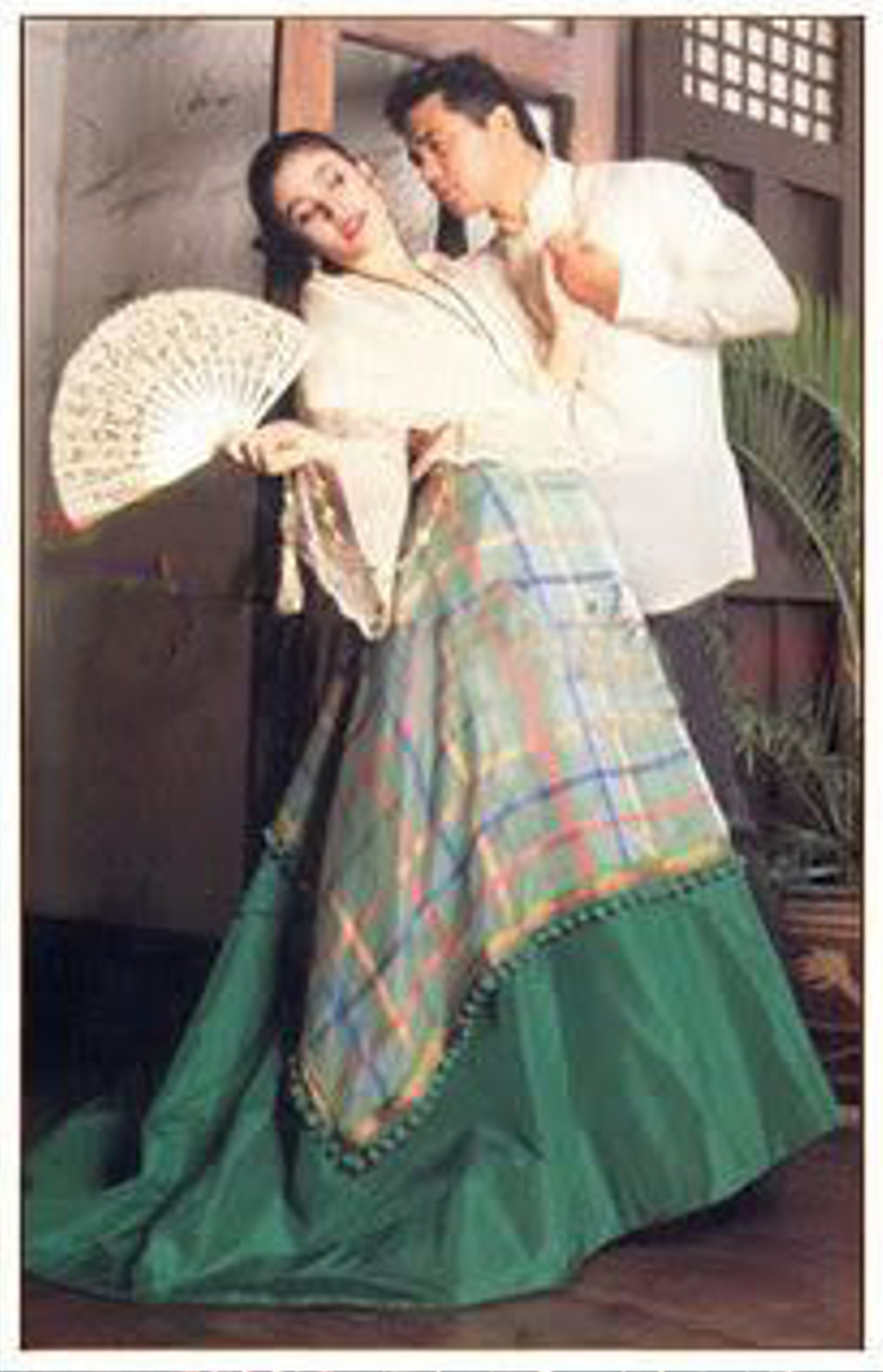 🇵🇭 PhilippinesCariñosa
A Philippine folk dance of colonial origin where a couple uses a fan and handkerchief to enact a playful romance.Performance
🇵🇭 PhilippinesCariñosa
A Philippine folk dance of colonial origin where a couple uses a fan and handkerchief to enact a playful romance.Performance
 🇵🇭 PhilippinesPandanggo
A lively Philippine folk dance of quick steps, clapping and balanced lightsPerformance
🇵🇭 PhilippinesPandanggo
A lively Philippine folk dance of quick steps, clapping and balanced lightsPerformance
 🇹🇼 Yilan, Taiwan and 4 moreTaiwanese opera歌仔戲
A Taiwanese theatrical art of Hokkien balladry, stylized staging, and expressive song.Performance
🇹🇼 Yilan, Taiwan and 4 moreTaiwanese opera歌仔戲
A Taiwanese theatrical art of Hokkien balladry, stylized staging, and expressive song.Performance
 🇵🇭 Philippines and 1 morePangalay
A traditional fingernail dance of the Tausūg and Bajau peoples in the Sulu Archipelago and Sabah.Performance
🇵🇭 Philippines and 1 morePangalay
A traditional fingernail dance of the Tausūg and Bajau peoples in the Sulu Archipelago and Sabah.Performance
The same idea elsewhere
Hospitality and welcome compared 🇹🇷 Turkey and 5 moreEid al-Fitrعيد الفطر
The feast that ends Ramadan, opened with morning prayers, sweets and visits homeFestival · Feasts and festival meals
🇧🇩 Bangladesh and 3 moreAs-salamu alaykumسَلَامٌ عَلَيْكُمْ
A traditional Arabic greeting of peace exchanged in daily life and prayerEtiquette
🇹🇷 Turkey and 5 moreEid al-Fitrعيد الفطر
The feast that ends Ramadan, opened with morning prayers, sweets and visits homeFestival · Feasts and festival meals
🇧🇩 Bangladesh and 3 moreAs-salamu alaykumسَلَامٌ عَلَيْكُمْ
A traditional Arabic greeting of peace exchanged in daily life and prayerEtiquette
 🇮🇱 Jerusalem, IsraelSukkotסוכות
A seven-day autumn Jewish festival of temporary booths, harvest prayers and hospitalitySpiritual
🇮🇱 Jerusalem, IsraelSukkotסוכות
A seven-day autumn Jewish festival of temporary booths, harvest prayers and hospitalitySpiritual
 🇮🇱 Jerusalem, Israel and 1 morePurimפּוּרִים
A lively Jewish festival of storytelling, shared food, masks and charityFestival · Feasts and festival meals
🇮🇱 Jerusalem, Israel and 1 morePurimפּוּרִים
A lively Jewish festival of storytelling, shared food, masks and charityFestival · Feasts and festival meals