Greetings, manners and hospitalitySoutheast AsiaChristianMuslim
Mano
In its own language: Pagmamano
A Filipino greeting where a younger person bows and asks an elder for a blessing

The mano, also called pagmamano, is a Filipino gesture of respect. A younger person bows, takes the hand an elder offers, and asks for a blessing. It is kept in the Philippines for parents, grandparents, godparents and priests, and a related gesture is found in Indonesia, Malaysia and Brunei.
When is Mano kept?
Mano is kept on when an elder is met: on first seeing them that day, on entering a home, and after Mass.
In the Philippines, a young person greets an older relative by bowing and taking the elder's hand to ask for a blessing. The gesture is called mano, or pagmamano, and it marks respect for age and for family. It is offered to parents and grandparents, to godparents, to priests after Mass, and sometimes to older people who are not relatives at all.
What it is
Mano is the Filipino way of greeting an older person and asking for a blessing. The younger person says "Mano po" or "Bless po" first, which asks permission to begin. The elder holds out a hand, usually the right one. The younger person bends forward and brings the forehead down to that hand. The elder answers with a blessing, often "God bless you", and may trace a small sign of the cross over the younger person.
Words and honorifics
The name is not Filipino. Mano is Spanish for hand. Po is a Filipino word placed in a sentence to show respect, mostly when speaking to someone older, so the phrase mano po asks, politely, for the hand. Opo is the respectful form of yes, and an apology becomes paumanhin po. In Philippine English people often simply say "bless". Po once carried a stronger sense of rank than it does now, but it still marks formality, which is why it travels with the gesture. Filipinos also call the gesture pagmamano.
Who receives it
The rule of thumb is one generation. Parents, grandparents, aunts and uncles are greeted this way, while older brothers, sisters and cousins are not. Godparents receive it, as do the older relatives of a friend or partner, and the friends of one's own older relatives. Priests and ministers receive it too, often after Mass. Filipino families also use kinship words for older people outside the family, calling them aunt, uncle, grandmother or grandfather, so neighbours and even strangers of a certain age may be greeted with the mano. The gesture is one sign of how much weight family holds in Filipino life, where grandparents often live with their children and grandchildren.
Origins and history
Spanish gives the word, but the gesture is older than Spanish rule, and it is shared across island Southeast Asia. Pedro Chirino, a Spanish priest, described islanders who bowed low and raised their hands to the face when they met a superior. A later chronicle from 1738 records bows, lifted hands and a squatting posture before someone of higher rank. In Indonesia the same habit is called salim, a name that comes from Arabic, and in Malaysia it is salam. Brunei is named among the places where it is followed. This spread suggests the custom belongs to pre-colonial times.
Asking pardon
There is a fuller version of the gesture for serious matters. The younger person takes both of the elder's hands and raises them to the forehead, asking forgiveness for an offence. This may be done on the knees and in tears. When the mano is made this way, the elder's reply is more likely to ask for mercy from God than to give a simple blessing. The elaborate form is considered the highest degree of pagmamano, kept for moments when a plain greeting would not be enough.
How Mano is kept
A younger person sees an elder, says "Mano po", and reaches for the hand the elder offers, usually the right one. Bending forward, the younger person rests the forehead on that hand while the elder blesses them, often with "God bless you". The elder may draw a small cross in the air. At the end of Mass, people greet the priest the same way. For a serious apology, the person takes the elder's hands in both of theirs, lifts them to the forehead, and may kneel. This is treated as the fullest form of the gesture.
When and where
There is no fixed day. The gesture belongs to the moment of meeting. It is done when an elder is seen for the first time that day, when someone enters a house or joins a gathering, and after Mass. Filipinos who meet an older relative after a long absence often begin with it.
It is kept throughout the Philippines and among Filipino families abroad. Related greetings are found in Indonesia, Malaysia and Brunei, where the gesture is called salim or salam and is offered to older relatives and to religious scholars.
What Mano means
Offering a hand to an elder is a way of placing oneself lower and accepting that person's blessing and wisdom. To skip it, especially on entering an elder's home or meeting them at a gathering, is thought rude. The practice rests on how much Filipino culture values family and age, and it says that older people deserve a public sign of honour.


Questions people ask about Mano
When is Mano kept?
Mano is kept on when an elder is met: on first seeing them that day, on entering a home, and after Mass.
What does mano mean?
The word comes from Spanish, where it means hand. The Filipino phrase mano po is a polite request for the hand of an older person, and the full name for the gesture in Tagalog is pagmamano.
Who may receive it?
Anyone older by at least one generation: parents, grandparents, aunts, uncles and godparents. Priests, ministers and older acquaintances or strangers may also receive it, but older siblings and cousins usually do not.
How does the elder reply?
With a blessing. The usual words are "God bless you". The elder may also trace a small sign of the cross. When the gesture is made with both hands to ask forgiveness, the reply asks God for mercy instead.
Is the beso-beso the same thing?
No. The beso-beso is another Filipino greeting, in which two people lean towards each other and touch cheeks. It is common between relatives and close friends and has nothing to do with age, while the mano is offered to an older person for a blessing.
See also
 HandshakeA brief clasp of hands to greet, part or seal a deal, with local rules on how it is done
 KopitiamA neighbourhood coffee shop where Southeast Asians share meals, drinks and news
 KenduriA communal prayer meal and gathering shared across Indonesia, Malaysia and Brunei
 Lion danceA dynamic ritual dance featuring costumed lions, drums and martial acrobatics
Good reading and sources
- Mano (gesture) on WikipediaEncyclopedia
- More photos on Wikimedia CommonsPhotos and video
- Wikidata recordOpen data
The facts on this page come from the Wikipedia article "Mano (gesture)", written by its contributors and used under the CC BY-SA 4.0 licence, and from its Wikidata record (CC0). EveryParampara rewrote the text in its own words, with AI assistance, and compares every page with the article to make sure no passage is copied. It may be reused under the same CC BY-SA 4.0 licence with a link back.
It may contain mistakes. Traditions differ from one family, village and community to the next, and the people who keep them know them best. If something is wrong, tell us. Last refreshed 2026-10-05.
More from the Philippines
All the traditions of the Philippines 🇨🇳 China and 6 moreRed envelope紅包 / 红包 (hóngbāo)
Money in a red packet, given at Lunar New Year, weddings and other big daysEtiquette
🇨🇳 China and 6 moreRed envelope紅包 / 红包 (hóngbāo)
Money in a red packet, given at Lunar New Year, weddings and other big daysEtiquette
 🇲🇽 Mexico and 7 moreLas Posadas
A nine-night Christmas pageant remembering Mary and Joseph seeking shelterSpiritual · Feasts and festival meals
🇲🇽 Mexico and 7 moreLas Posadas
A nine-night Christmas pageant remembering Mary and Joseph seeking shelterSpiritual · Feasts and festival meals
 🇮🇹 Italy and 5 morePatronal festivalFiesta patronal
A town's yearly feast for its patron saint, with processions, a fair and shared foodFestival
🇮🇹 Italy and 5 morePatronal festivalFiesta patronal
A town's yearly feast for its patron saint, with processions, a fair and shared foodFestival
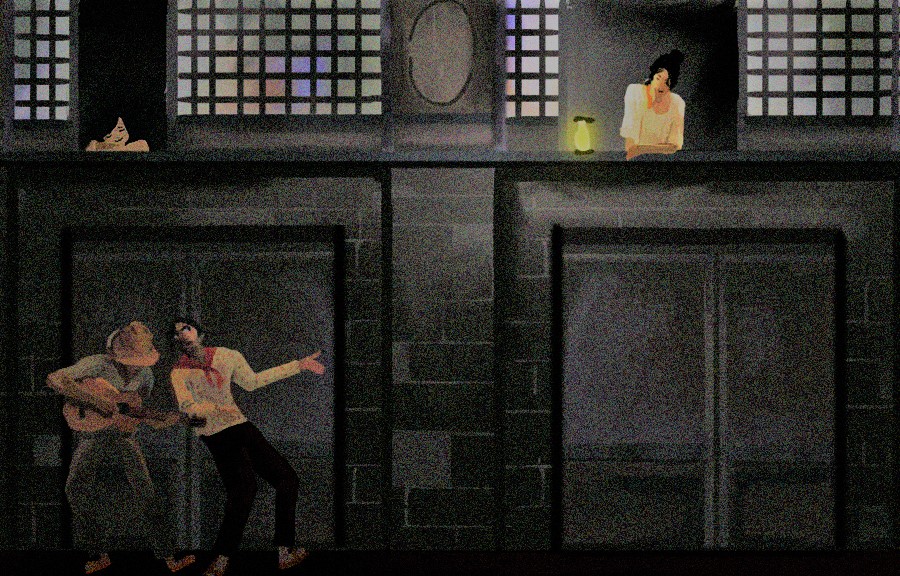 🇵🇭 PhilippinesHarana
A Filipino serenade where a suitor sings beneath his beloved's window at nightPerformance
🇵🇭 PhilippinesHarana
A Filipino serenade where a suitor sings beneath his beloved's window at nightPerformance
The same idea elsewhere
Greetings and farewells compared 🇳🇿 New Zealand and 2 moreMarae
A cleared, sacred gathering place at the heart of Māori and Polynesian community lifeSpiritual
🇬🇷 Greece and 5 moreHandshake
A brief clasp of hands to greet, part or seal a deal, with local rules on how it is doneEtiquette
🇰🇼 KuwaitDewaniya
An evening gathering and reception central to Kuwaiti social, business, and civic lifeEtiquette · Tea, coffee and drinking ceremonies
🇳🇿 New Zealand and 2 moreMarae
A cleared, sacred gathering place at the heart of Māori and Polynesian community lifeSpiritual
🇬🇷 Greece and 5 moreHandshake
A brief clasp of hands to greet, part or seal a deal, with local rules on how it is doneEtiquette
🇰🇼 KuwaitDewaniya
An evening gathering and reception central to Kuwaiti social, business, and civic lifeEtiquette · Tea, coffee and drinking ceremonies