Festivals and celebrationsMiddle EastJewish
Purim
In its own language: פּוּרִים
A lively Jewish festival of storytelling, shared food, masks and charity

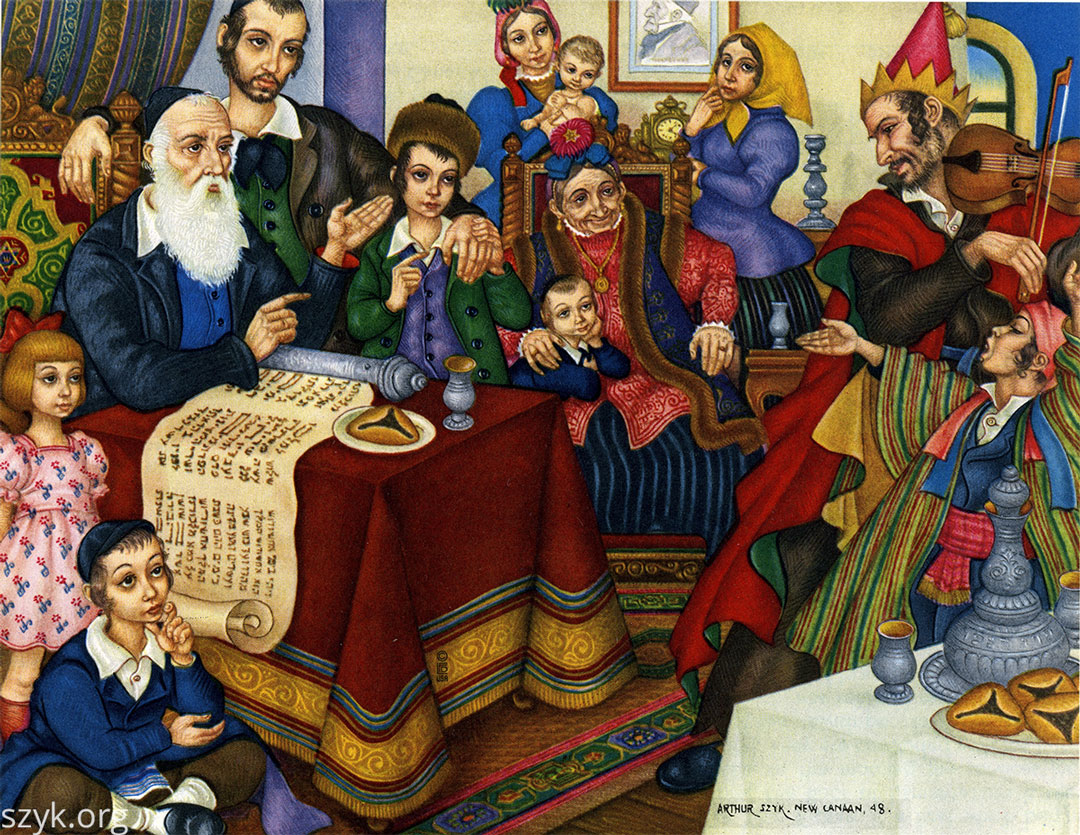
Purim is an annual Jewish festival commemorating the deliverance of Jews in the ancient Persian Empire. Communities observe the occasion by hearing the Book of Esther read aloud, exchanging parcels of food, giving alms to the needy, and enjoying a festive shared banquet.
When is Purim in 2027?
Purim 2027 is on Tuesday, 23 March 2027. Other years: 2026, Tuesday, 3 March 2026; 2028, Sunday, 12 March 2028.
Purim is a joyous Jewish holiday that recalls how Esther and Mordecai rescued the Jewish population of Persia from destruction. Mentioned in the biblical Book of Esther, the festival centres on deliverance and gratitude. People celebrate by gathering in synagogues to hear the ancient scroll read, sharing gifts of prepared food with neighbours, donating funds to those in poverty, dressing up in costumes, and gathering for an afternoon feast with wine.
The ancient story
The festival recounts events from the Persian royal court under King Ahasuerus. A royal minister named Haman plotted to eradicate the Jewish population across the empire. He cast lots, known in Hebrew as purim, to determine the date for their massacre. Mordecai, a Jewish courtier, learned of the scheme and urged his orphaned cousin Esther, who had become queen, to intervene. Risking her life, Esther revealed her heritage to the king and exposed Haman at a banquet. The king ordered Haman executed and granted the Jewish community the right to defend themselves. Following their victory, Mordecai established an annual day of joy and thanksgiving.
Synagogue readings and costumes
Celebrations begin with a public reading of the Scroll of Esther, known in Hebrew as Megillat Esther. Synagogues fill with listeners of all ages, many dressed in fancy dress, masquerade masks, or festive robes. Special blessings and additions are inserted into the daily liturgies and the grace following meals. In Sephardic and Mizrahi households, families historically applied henna for the occasion. Many towns also host street parades and carnivals called Adloyada, where music, theatre, and elaborate costumes turn the holiday into a bright public celebration.
Feasting, gifts and charity
Four core duties shape the observance. Beyond listening to the scroll, Jewish law instructs people to send packages of ready-to-eat food and drink, called mishloach manot, to friends and neighbours. Donating to the impoverished, known as mattanot la-evyonim, ensures that everyone can participate in the festivities regardless of wealth. In the afternoon, households gather for a celebratory banquet named seudat Purim, featuring wine, alcoholic drinks, and sweet triangular pastries called hamantashen, which translates to Haman's pockets. The atmosphere is meant to be joyful and relaxed.
Walled cities and Shushan Purim
The timing of the festival reflects ancient geography. While most Jewish communities mark the holiday on the fourteenth day of the month, Shushan Purim is observed on the fifteenth. This tradition stems from the capital city of Shushan, where fighting continued an extra day. Ancient Jewish law established that settlements fortified with walls during the era of Joshua follow this later date. Today, Jerusalem observes Purim primarily on the fifteenth. Certain historical towns with ancient roots, such as Hebron and Tiberias, hold celebrations across both consecutive days.
How Purim is kept
Observance begins around sunset as congregations gather in synagogues to hear the Megillah read from a parchment scroll. Attendees often wear costumes and masks. The following morning, the scroll is chanted again during prayer services. During the day, families distribute food packages containing at least two edible items to acquaintances and distribute monetary gifts to those in need. In the late afternoon, relatives and friends sit down for a festive meal with wine and sweet baked goods like hamantashen, singing and celebrating together until nightfall.
When and where
Purim takes place each year in late winter or early spring on the Hebrew calendar date of 14 Adar. In leap years, which occur seven times across every nineteen years, it is kept during the second month of Adar. A preceding fast commemorates Esther's three days of prayer.
Purim is celebrated across Jewish communities worldwide. In Israel, public parades and street festivities fill cities, while in Jerusalem, the holiday is observed on the fifteenth of Adar under the ancient designation of Shushan Purim. Other historic settlements celebrate on both dates.
What Purim means
The name Purim comes from the ancient word for lots, recalling how a hostile minister drew lots to pick a day of destruction. For Jewish communities, the festival represents unexpected rescue, divine providence working behind historical events, and the power of communal solidarity. Giving food to friends and money to the poor reinforces social bonds and ensures shared relief.
On the table
- hamantashen
- wine


Days Purim is marked
Purim dates: 2026, 2027, 2028
| Year | Purim date |
|---|---|
| 2026 | Tuesday, 3 March 2026 |
| 2027 | Tuesday, 23 March 2027 |
| 2028 | Sunday, 12 March 2028 |
Questions people ask about Purim
When is Purim in 2027?
Purim 2027 is on Tuesday, 23 March 2027. Other years: 2026, Tuesday, 3 March 2026; 2028, Sunday, 12 March 2028.
What is Purim?
Purim is an annual Jewish festival celebrating the rescue of the Jewish people from an annihilation plot in the ancient Persian Empire. The story is recorded in the biblical Book of Esther, which is read publicly during the holiday.
Why do people wear costumes on Purim?
Dressing up in fancy dress, masquerade masks, and costumes is a traditional Purim custom reflecting the holiday's carnival spirit and themes of hidden identity from Queen Esther's story. Parades called Adloyada feature these costumes in public.
What foods are traditionally eaten on Purim?
A famous Purim treat is hamantashen, a triangular filled pastry whose name translates as Haman's pockets. Celebrants also drink wine during a rich afternoon feast and share parcels of prepared foods with friends.
See also


Good reading and sources
- Encyclopaedia BritannicaArticle
- Jewish Holidays: The Fast of EstherJewish Virtual Library, Article
- Jewish Holidays: The Fast of EstherJewish Virtual Library, Article
- Purim on WikipediaEncyclopedia
- More photos on Wikimedia CommonsPhotos and video
- Wikidata recordOpen data
The facts on this page come from the Wikipedia article "Purim", written by its contributors and used under the CC BY-SA 4.0 licence, and from its Wikidata record (CC0). EveryParampara rewrote the text in its own words, with AI assistance, and compares every page with the article to make sure no passage is copied. It may be reused under the same CC BY-SA 4.0 licence with a link back.
It may contain mistakes. Traditions differ from one family, village and community to the next, and the people who keep them know them best. If something is wrong, tell us. Last refreshed 2026-10-04.
More from Israel
All the traditions of Israel 🇲🇦 Morocco and 4 moreMimounaמִימוּנָה
A Maghrebi Jewish celebration marking the end of Passover with sweets and open doorsFestival · Dinner
🇲🇦 Morocco and 4 moreMimounaמִימוּנָה
A Maghrebi Jewish celebration marking the end of Passover with sweets and open doorsFestival · Dinner
 🇷🇺 Moscow, Russia and 5 moreNovy GodНовый Год
A secular winter celebration of decorated trees, family feasts and midnight giftsFestival · Feasts and festival meals
🇷🇺 Moscow, Russia and 5 moreNovy GodНовый Год
A secular winter celebration of decorated trees, family feasts and midnight giftsFestival · Feasts and festival meals
 🇮🇱 Jerusalem, Israel and 1 moreHoshana Rabbahהוֹשַׁעְנָא רַבָּה
The seventh and final day of Sukkot, marked by seven synagogue processions and night-long study.Festival · Dinner
🇮🇱 Jerusalem, Israel and 1 moreHoshana Rabbahהוֹשַׁעְנָא רַבָּה
The seventh and final day of Sukkot, marked by seven synagogue processions and night-long study.Festival · Dinner
 🇮🇱 Jerusalem, Israel and 1 moreHanukkahחֲנֻכָּה
An eight-day Jewish festival marking the rededication of the Second Temple in Jerusalem and the miracle of a single day'Festival
🇮🇱 Jerusalem, Israel and 1 moreHanukkahחֲנֻכָּה
An eight-day Jewish festival marking the rededication of the Second Temple in Jerusalem and the miracle of a single day'Festival
The same idea elsewhere
Fasting and feasting compared 🇧🇪 Belgium and 5 moreSaint Nicholas Day
The feast day of Saint Nicholas, kept in Advent with gifts, shoes and church servicesSpiritual
🇧🇪 Belgium and 5 moreSaint Nicholas Day
The feast day of Saint Nicholas, kept in Advent with gifts, shoes and church servicesSpiritual
 🇷🇸 SerbiaSlavaСлава
An annual Serbian family feast honouring their patron saint with blessed bread and wineSpiritual · Feasts and festival meals
🇷🇸 SerbiaSlavaСлава
An annual Serbian family feast honouring their patron saint with blessed bread and wineSpiritual · Feasts and festival meals
 🇮🇩 Indonesia and 4 moreLebaranHari Raya Lebaran
Indonesia's festive season of homecoming, seeking forgiveness and shared feastsFestival · Breakfast
🇮🇩 Indonesia and 4 moreLebaranHari Raya Lebaran
Indonesia's festive season of homecoming, seeking forgiveness and shared feastsFestival · Breakfast
 🇷🇸 Serbia and 5 moreSerbian ChristmasБожић
A three-day midwinter observance focused on oak logs, floor straw and family gatheringsSpiritual · Dinner
🇷🇸 Serbia and 5 moreSerbian ChristmasБожић
A three-day midwinter observance focused on oak logs, floor straw and family gatheringsSpiritual · Dinner