Greetings, manners and hospitalityEuropeSecular and civic
Hat tip
A gesture of lifting or touching one's hat to show respect, greeting, or thanks

The hat tip is a traditional greeting and gesture of respect where a person briefly lifts or touches their headwear. Originating in Western social etiquette during the nineteenth century, it signaled courtesy without spoken words and now continues both as a nod and as an online convention for crediting sources.
When is Hat tip kept?
Hat tip is kept on when greeting someone, passing an acquaintance, or acknowledging a contribution.
A hat tip, also called doffing a hat, is a gesture where a person lifts or touches headwear as a greeting or an expression of thanks and respect. Common across Western societies during the nineteenth and twentieth centuries, the movement conveyed polite acknowledgement between individuals without words. Today, the practice survives both in bodily nods and as an online convention to credit sources.
Forms of the gesture
Traditionally, two men walking past each other or meeting in a room lifted their headwear rather than speaking aloud. The physical movement varied according to status and hierarchy. A person of lower rank was expected to make a more noticeable gesture, such as taking off their hat completely, while a higher-ranking peer might simply touch the brim. Anthropologists describe the act as a symbolic lowering of body height to show deference. Over time, the military hand salute emerged as a stylized variation of this gesture, and modern etiquette often replaces the motion with an upward or downward head nod.
Social meaning and encounters
Sociological observers noted that tipping headwear helped manage delicate interpersonal encounters. Sociologist Erving Goffman pointed out that raising a hat allowed a man and a woman to conclude an interaction smoothly and return to mutual inattention in public spaces. Goffman also observed that tipping a hat served as an acknowledgement for a stranger, whereas an acquaintance was customarily greeted with a bow. During the Nazi occupation of Bohemia and Moravia, tipping headwear toward Jewish neighbours became a quiet form of public protest, leading the authorities to outlaw the practice along with other polite gestures.
Metaphor and modern usage
Beyond physical headwear, the phrase entered media and internet culture as a sign of appreciation. Cartoonist Jimmy Hatlo popularized the concept from 1929 onward by including a printed acknowledgement thanking readers who sent funny ideas for his strip. In the digital age, bloggers and journalists adopted the expression, frequently shortened to initials like HT or h/t. Online etiquette encourages using the phrase to credit someone who originally pointed out a news story, web link, or interesting concept. Modern digital news organizations regularly give these acknowledgements to readers and online users who contribute story leads.
How Hat tip is kept
When encountering another person on the street or in a gathering, an individual touches or raises their hat to acknowledge them. Subordinates historically removed their hat entirely to honour a superior, who might simply touch the brim in return. When meeting a stranger, the hat was lifted to greet them, or used by a man to conclude a conversation with a woman. In digital spaces, people perform the gesture metaphorically by writing hat tip or abbreviations like h/t next to a credited name.
When and where
The gesture occurs whenever people cross paths, meet at a gathering, or say goodbye. It is also used when acknowledging a helpful tip, contribution, or creative suggestion online or in print.
Hat tipping was common across Western societies during the nineteenth and twentieth centuries. It was also noted as a form of social courtesy and political protest in Bohemia and Moravia, and is used globally on digital platforms.
What Hat tip means
The gesture conveys courtesy, gratitude, and acknowledgement. Desmond Morris explained the movement as a modified posture of submission, where taking off the hat symbolically lowers a person's height. In social settings, it establishes respect, clarifies social rank, and marks the polite opening or closing of an encounter.

Questions people ask about Hat tip
When is Hat tip kept?
Hat tip is kept on when greeting someone, passing an acquaintance, or acknowledging a contribution.
What is a hat tip?
A hat tip is a physical gesture where a person lifts or touches their headwear to show recognition, gratitude, or greeting toward another individual without speaking.
How did the gesture reflect social rank?
A subordinate person was expected to remove their hat completely to show respect, while a superior would merely touch the rim of their own hat in return.
What does a hat tip mean on the internet?
Online, a hat tip, often written as HT or h/t, is used to publicly credit someone who discovered a story, shared a link, or provided a helpful idea.
How is the gesture related to the military salute?
The military hand salute is considered a stylized development of the civilian hat tip, and civilians sometimes returned military salutes by tipping their hats.
See also
 VisitationA Christian feast commemorating Mary's journey to visit her cousin Elizabeth
 Saint Nicholas DayThe feast day of Saint Nicholas, kept in Advent with gifts, shoes and church services
 Cologne CarnivalA street festival in Cologne with parades, masquerades and a ruling trioAs-salamu alaykumA traditional Arabic greeting of peace exchanged in daily life and prayer
Good reading and sources
- Hat tip on WikipediaEncyclopedia
- More photos on Wikimedia CommonsPhotos and video
- Wikidata recordOpen data
The facts on this page come from the Wikipedia article "Hat tip", written by its contributors and used under the CC BY-SA 4.0 licence, and from its Wikidata record (CC0). EveryParampara rewrote the text in its own words, with AI assistance, and compares every page with the article to make sure no passage is copied. It may be reused under the same CC BY-SA 4.0 licence with a link back.
It may contain mistakes. Traditions differ from one family, village and community to the next, and the people who keep them know them best. If something is wrong, tell us. Last refreshed 2026-10-06.
More from Germany
All the traditions of Germany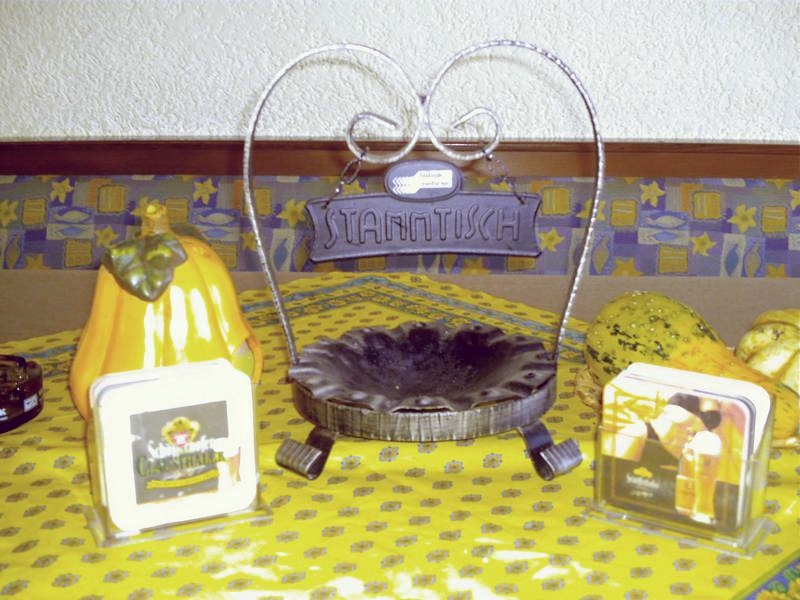 🇩🇪 Germany and 2 moreStammtisch
A weekly gathering of regulars at a reserved table in a pub or restaurant for conversation and community.Etiquette
🇧🇪 Belgium and 5 moreSaint Nicholas Day
The feast day of Saint Nicholas, kept in Advent with gifts, shoes and church servicesSpiritual
🇩🇪 Cologne, GermanyCologne CarnivalKölner Karneval
A street festival in Cologne with parades, masquerades and a ruling trioFestival
🇩🇪 Germany and 3 moreVisitation
A Christian feast commemorating Mary's journey to visit her cousin ElizabethSpiritual
🇩🇪 Germany and 2 moreStammtisch
A weekly gathering of regulars at a reserved table in a pub or restaurant for conversation and community.Etiquette
🇧🇪 Belgium and 5 moreSaint Nicholas Day
The feast day of Saint Nicholas, kept in Advent with gifts, shoes and church servicesSpiritual
🇩🇪 Cologne, GermanyCologne CarnivalKölner Karneval
A street festival in Cologne with parades, masquerades and a ruling trioFestival
🇩🇪 Germany and 3 moreVisitation
A Christian feast commemorating Mary's journey to visit her cousin ElizabethSpiritual
The same idea elsewhere
Greetings and farewells compared 🇱🇦 Laos and 1 moreBaciບາສີ (Lao)
A Lao rite that calls the soul home and ties a thread on the wrist for good luckSpiritual
🇱🇦 Laos and 1 moreBaciບາສີ (Lao)
A Lao rite that calls the soul home and ties a thread on the wrist for good luckSpiritual
 🇳🇿 New Zealand and 2 moreMarae
A cleared, sacred gathering place at the heart of Māori and Polynesian community lifeSpiritual
🇼🇸 Samoa and 1 moreTalofa
The Samoan hello and goodbye, also heard in Tuvalu and on LifouEtiquette
🇳🇿 New Zealand and 2 moreMarae
A cleared, sacred gathering place at the heart of Māori and Polynesian community lifeSpiritual
🇼🇸 Samoa and 1 moreTalofa
The Samoan hello and goodbye, also heard in Tuvalu and on LifouEtiquette