Greetings, manners and hospitalityEurope
Stammtisch
A weekly gathering of regulars at a reserved table in a pub or restaurant for conversation and community.
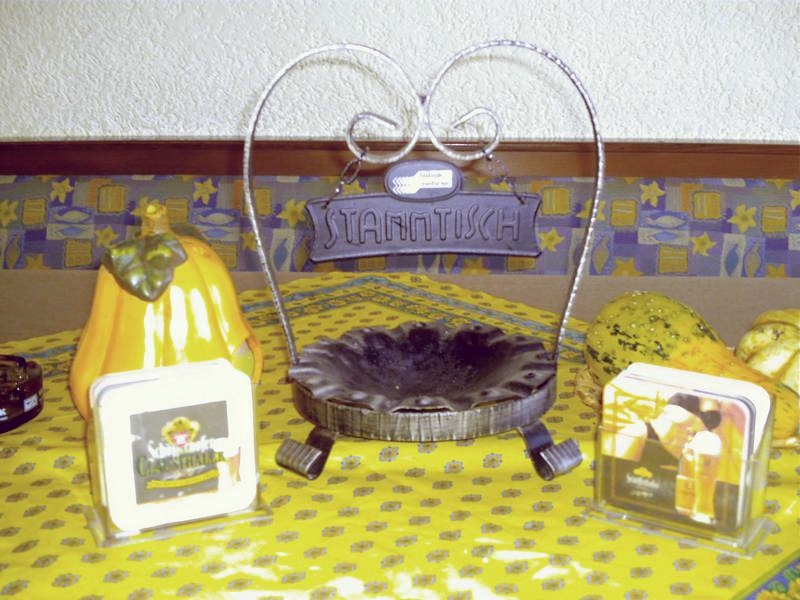
The Stammtisch is an informal social tradition found primarily in German-speaking regions. It involves a group of people meeting on a fixed schedule at a specific table to share food, drink, and conversation. Historically linked to local dignitaries, it has evolved into a broader practice of community building and networking across various social groups.
When is Stammtisch kept?
Stammtisch is kept on weekly or monthly, often after Sunday Mass or in the evening.
The Stammtisch represents a cornerstone of social life in German-speaking areas. It is a recurring meeting of friends or colleagues at a designated table in a public house. Participants gather to discuss local news, play cards, or network. This custom fosters intimacy and strengthens community bonds through regular, unstructured interaction.
What it is
A Stammtisch is an informal gathering held at a regular interval. The term refers both to the group of attendees and the physical table they occupy. This table is usually marked with a sign indicating it is reserved for these specific individuals. Unlike formal meetings, there is no agenda or structured program. The atmosphere is relaxed, focusing on friendly conversation and shared interests. Participants might engage in card games like Skat or Schafkopf while enjoying drinks.
Origins and history
In the second half of the nineteenth century, this tradition was closely tied to social status. Rural Stammtische typically included local figures such as mayors, doctors, teachers, and wealthy farmers. Inviting an outsider to sit at the table was a gesture of high respect. Similar customs existed among writers and artists in cafes. Over time, the strict class associations faded. Today, the focus is on community rather than hierarchy, making it accessible to a wider range of people.
How it is kept
In rural villages, the Stammtisch serves as a central hub for social interaction. It compensates for limited leisure facilities by providing a space to exchange news and manage local relationships. Gatherings often occur after Sunday Mass, known as Frühschoppen, or in the evenings. In cities, the practice adapts to modern needs. Groups form around specific topics, such as parenting or professional networking. These urban versions act like loose clubs, facilitating experience sharing and connection among members.
Cultural impact
The concept has influenced language and media. Terms like Stammtischpolitik describe simplified political discussions outside formal settings. Literary examples include gatherings depicted by Wilhelm Busch and Ernest Müller. Television programs have also adopted the format, featuring hosts discussing topics with guests at a round table. While the word lacks a direct English equivalent, it captures a unique blend of hospitality and routine social bonding cherished in German culture.
How Stammtisch is kept
Participants meet weekly or monthly at a pre-reserved table in a pub or restaurant. They arrive informally, often bringing their own drinks or ordering from the venue. Activities include casual conversation, playing traditional card games, and discussing local or general topics. In rural areas, it may follow religious services. In cities, it often centers on professional or hobby-based networking.
When and where
Usually held on a fixed day each week or month. In villages, it frequently takes place after Sunday morning Mass or in the evening. Urban groups set their own schedules based on member availability.
Most common in Germany, Austria, and Switzerland. It thrives in both rural villages and urban centers. Similar traditions exist in Spain, Portugal, and Brazil under the name Tertulia, and in British pubs via snugs.
What Stammtisch means
It symbolizes belonging and trust within a community. The reserved table marks a safe space for open dialogue. Historically, it represented local authority and status. Now, it signifies mutual interest and friendship. The ritual reinforces social ties and provides a consistent point of contact for neighbors and peers.


Questions people ask about Stammtisch
When is Stammtisch kept?
Stammtisch is kept on weekly or monthly, often after Sunday Mass or in the evening.
What is a Stammtisch?
It is an informal gathering of regulars who meet at a specific table in a pub or restaurant. The group meets on a fixed schedule to socialize, play cards, and discuss topics of interest without a formal agenda.
Where is this tradition kept?
It is primarily found in German-speaking countries like Germany, Austria, and Switzerland. Variations exist in other cultures, such as Tertulias in Iberia and Latin America, or snug gatherings in British pubs.
Who participates in a Stammtisch?
Originally, it consisted of local dignitaries and wealthy farmers. Today, it includes anyone interested in the group's theme, such as parents, professionals, or hobbyists. Strangers are rarely invited unless personally introduced.
See also
 Housewarming partyA gathering held soon after moving into a new home to celebrate the space and welcome guests.
 Christmas marketA seasonal street market held during Advent in German-speaking regions and beyond, featuring stalls, food, and crafts.As-salamu alaykumA traditional Arabic greeting of peace exchanged in daily life and prayerDewaniyaAn evening gathering and reception central to Kuwaiti social, business, and civic life
Good reading and sources
- Stammtisch on WikipediaEncyclopedia
- More photos on Wikimedia CommonsPhotos and video
- Wikidata recordOpen data
The facts on this page come from the Wikipedia article "Stammtisch", written by its contributors and used under the CC BY-SA 4.0 licence, and from its Wikidata record (CC0). EveryParampara rewrote the text in its own words, with AI assistance, and compares every page with the article to make sure no passage is copied. It may be reused under the same CC BY-SA 4.0 licence with a link back.
It may contain mistakes. Traditions differ from one family, village and community to the next, and the people who keep them know them best. If something is wrong, tell us. Last refreshed 2026-10-05.
More from Germany
All the traditions of Germany 🇩🇪 GermanyHat tip
A gesture of lifting or touching one's hat to show respect, greeting, or thanksEtiquette
🇷🇺 Russia and 4 moreHousewarming party
A gathering held soon after moving into a new home to celebrate the space and welcome guests.Home
🇩🇪 Nuremberg, Germany and 5 moreChristmas marketWeihnachtsmarkt
A seasonal street market held during Advent in German-speaking regions and beyond, featuring stalls, food, and crafts.Festival · Tea, coffee and drinking ceremonies
🇩🇪 GermanyHat tip
A gesture of lifting or touching one's hat to show respect, greeting, or thanksEtiquette
🇷🇺 Russia and 4 moreHousewarming party
A gathering held soon after moving into a new home to celebrate the space and welcome guests.Home
🇩🇪 Nuremberg, Germany and 5 moreChristmas marketWeihnachtsmarkt
A seasonal street market held during Advent in German-speaking regions and beyond, featuring stalls, food, and crafts.Festival · Tea, coffee and drinking ceremonies
 🇧🇪 Belgium and 5 moreSaint Nicholas Day
The feast day of Saint Nicholas, kept in Advent with gifts, shoes and church servicesSpiritual
🇧🇪 Belgium and 5 moreSaint Nicholas Day
The feast day of Saint Nicholas, kept in Advent with gifts, shoes and church servicesSpiritual
The same idea elsewhere
Hospitality and welcome compared 🇹🇷 Turkey and 5 moreEid al-Fitrعيد الفطر
The feast that ends Ramadan, opened with morning prayers, sweets and visits homeFestival · Feasts and festival meals
🇧🇩 Bangladesh and 3 moreAs-salamu alaykumسَلَامٌ عَلَيْكُمْ
A traditional Arabic greeting of peace exchanged in daily life and prayerEtiquette
🇹🇷 Turkey and 5 moreEid al-Fitrعيد الفطر
The feast that ends Ramadan, opened with morning prayers, sweets and visits homeFestival · Feasts and festival meals
🇧🇩 Bangladesh and 3 moreAs-salamu alaykumسَلَامٌ عَلَيْكُمْ
A traditional Arabic greeting of peace exchanged in daily life and prayerEtiquette
 🇮🇱 Jerusalem, IsraelSukkotסוכות
A seven-day autumn Jewish festival of temporary booths, harvest prayers and hospitalitySpiritual
🇮🇱 Jerusalem, IsraelSukkotסוכות
A seven-day autumn Jewish festival of temporary booths, harvest prayers and hospitalitySpiritual
 🇮🇱 Jerusalem, Israel and 1 morePurimפּוּרִים
A lively Jewish festival of storytelling, shared food, masks and charityFestival · Feasts and festival meals
🇮🇱 Jerusalem, Israel and 1 morePurimפּוּרִים
A lively Jewish festival of storytelling, shared food, masks and charityFestival · Feasts and festival meals