Music, dance and storytellingSub-Saharan Africa
Indlamu
A Zulu war dance of two warriors in pelts, matched move for move and stamped on the beat

Indlamu is a Zulu dance of southern Africa, kept by Zulu communities in South Africa and by Northern Ndebele people in western Zimbabwe. Two dancers in warrior's pelts move as a pair, each lifting a leg high above the head and driving it down on the beat.
When is Indlamu kept?
Indlamu is kept on no fixed date; historically danced at many kinds of gathering, before battle and at harvest.
Indlamu is a dance of the Zulu people of South Africa and of the Northern Ndebele of western Zimbabwe. Its story starts in the time of King Shaka, and it was once a war dance. Two people often dance it as a pair, dressed in warrior's pelts. A leg rises past the head and falls on the beat. The dance carries both the memory of preparing for battle and the gladness of a harvest safely gathered.
What it is
Indlamu is a traditional dance of the Zulu people. The Northern Ndebele, who live in the west of Zimbabwe, keep it as well, so the dance reaches across southern Africa. The word itself is Zulu. In Afrikaans the same dance goes by Zoeloedans. In English it is often called the Zulu war dance. Two dancers usually take part, and they wear warrior's pelts. The dance has one signature move: a leg swings up over the head and then comes down hard. What makes it sharp is the landing, which falls on the strong first beat of the music.
Origins and history
The sources place the beginnings of indlamu in the time of King Shaka, when warriors danced it before going out to fight. In that older setting it was not tied to one occasion. It was danced at many kinds of gathering, and two of them stand out. The first was the run-up to battle, when warriors were getting ready. The second was the harvest, danced once the crop had been brought in. Those two settings, one of danger and one of plenty, are both part of how the dance is remembered.
Two dancers together
Indlamu is usually a dance for a pair. Both dancers dress in warrior's pelts. They work through the routine side by side, and each one shadows the other so exactly that the two look like a single person moving. The step people notice first is the high lift: a foot goes above the head, then drops. The drop is timed to the downbeat, the first and heaviest beat of the bar, and that timing is what gives the dance its force. Watching closely, you see the pair hold their movements together, beat after beat.
What it means
Two ideas sit inside indlamu. One is preparation for war, the steadying of a warrior before a fight. The other is thankfulness at harvest, when the work of the fields is over. Holding both together says something about how the dance is understood: strength and celebration belong to the same tradition. The pair work carries its own meaning too, since two dancers who match each other exactly show discipline and a shared purpose. For Zulu people especially, the dance is bound up with who they are, and the Northern Ndebele keep it as theirs as well.
How Indlamu is kept
A pair of dancers usually carries the routine. Each one wears warrior's pelts. They move through the steps side by side, and each dancer copies the other's movements so closely that the two seem to be one body. The move that stands out is the high lift: a foot is taken up above the head and then brought down hard. The landing is placed on the downbeat, the strong first beat of the bar. That timing gives the dance its weight and its drive.
When and where
There is no single date for indlamu. The sources describe it as a dance given at many kinds of gathering rather than on one fixed day of the year. Historically it came out when warriors were getting ready to fight and when a harvest was celebrated. Nothing in the article ties it to a month, a season or a day of the week.
Indlamu belongs to southern Africa. It is closely tied to the Zulu people of South Africa, and the Northern Ndebele of western Zimbabwe keep it as well. Those two communities are the ones the article names. No particular town or city is given as its home, so the dance is best described as belonging to the region as a whole.
What Indlamu means
For those who keep it, indlamu carries two memories at once. One is the making ready of warriors, the point at which fighting was near and the body had to be steady. The other is the harvest, when the crop was in and people had cause to celebrate. The pairing says something too: two dancers who match each other exactly show discipline and a single purpose. The dance stands for Zulu identity and is closely tied to the name of the Zulu people.

Questions people ask about Indlamu
When is Indlamu kept?
Indlamu is kept on no fixed date; historically danced at many kinds of gathering, before battle and at harvest.
What is indlamu?
It is a traditional dance of the Zulu people, and the Northern Ndebele of western Zimbabwe keep it as well. Two dancers in warrior's pelts usually perform it as a pair, copying each other's moves. The step that defines it is a high leg lift that comes down on the beat.
Where does the dance come from?
The article traces it to the time of King Shaka, when it was a war dance. It is a traditional Zulu dance, and the Northern Ndebele keep it too. In Afrikaans the dance is called Zoeloedans, and in English it is often known as the Zulu war dance.
What does the dance look like?
One dancer lifts a leg over the head and brings it down hard, landing exactly on the downbeat. Usually two dancers work as a pair in warrior's pelts, shadowing each other's movements perfectly.
See also
 Umkhosi WokweshwamaThe annual Zulu first fruits and harvest festival held around the December solstice
 PulikaliPainted tigers and leopards dance through Thrissur on the fourth day of Onam
 BhangraA Punjabi harvest dance, first kept by farmers and now performed worldwide
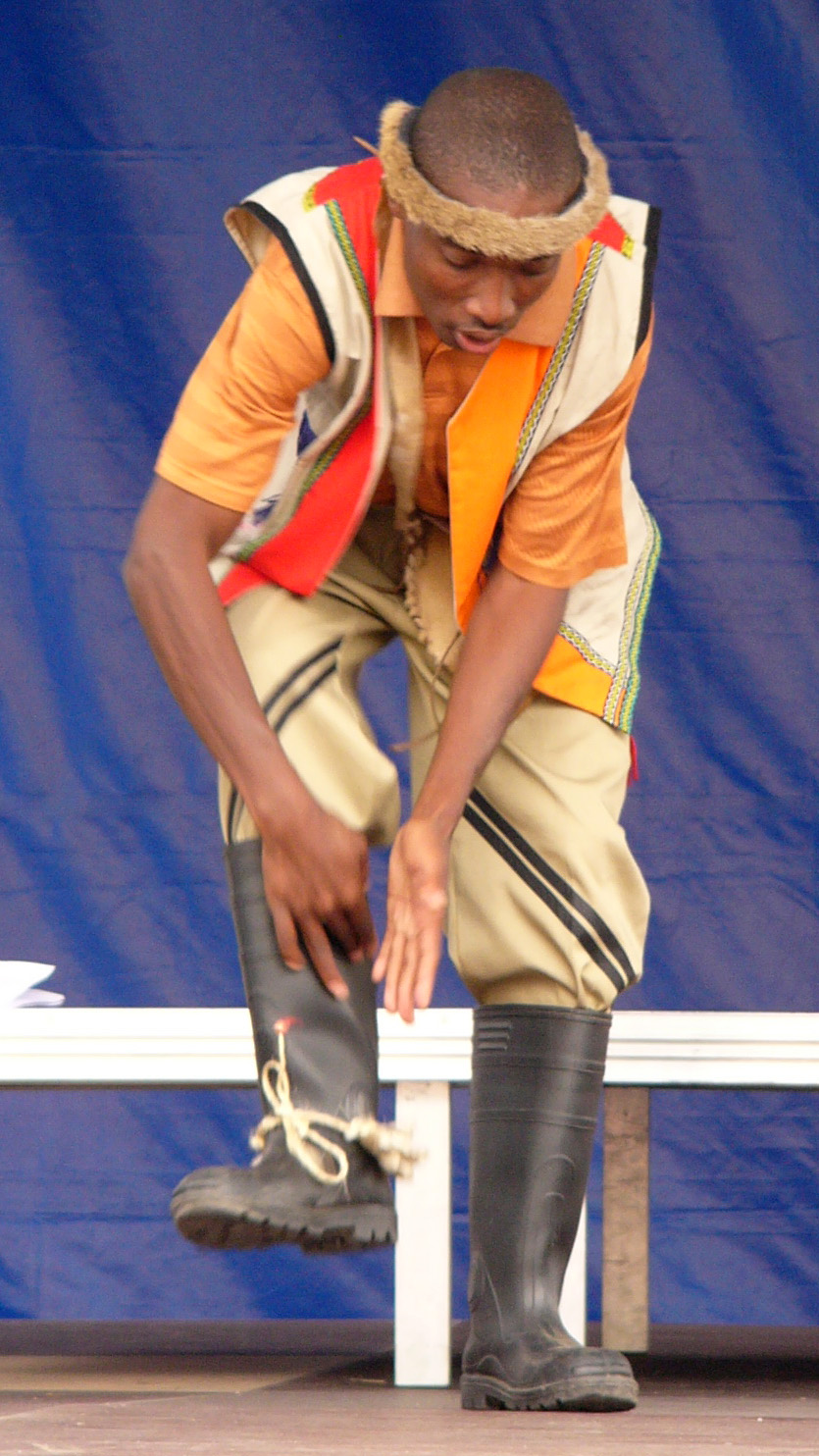 Gumboot danceA percussive South African dance born in the mines, performed in Wellington boots to communicate and celebrate.
Good reading and sources
- Indlamu (dance) on WikipediaEncyclopedia
- More photos on Wikimedia CommonsPhotos and video
- Wikidata recordOpen data
The facts on this page come from the Wikipedia article "Indlamu (dance)", written by its contributors and used under the CC BY-SA 4.0 licence, and from its Wikidata record (CC0). EveryParampara rewrote the text in its own words, with AI assistance, and compares every page with the article to make sure no passage is copied. It may be reused under the same CC BY-SA 4.0 licence with a link back.
It may contain mistakes. Traditions differ from one family, village and community to the next, and the people who keep them know them best. If something is wrong, tell us. Last refreshed 2026-10-05.
More from South Africa
All the traditions of South Africa
🇿🇦 Cape Town, South AfricaGumboot danceIsicathulo
A percussive South African dance born in the mines, performed in Wellington boots to communicate and celebrate.Performance
 🇮🇳 India and 3 moreBhajanभजनम् (bhajanam)
Devotional songs of South Asia, sung alone or together with drums and cymbalsPerformance
🇮🇳 India and 3 moreBhajanभजनम् (bhajanam)
Devotional songs of South Asia, sung alone or together with drums and cymbalsPerformance
 🇬🇧 United Kingdom and 4 moreBonfire Night
Yearly nights of bonfires and fireworks, kept in Britain, Ireland and beyondFestival
🇿🇦 Nongoma, South AfricaUmkhosi Wokweshwama
The annual Zulu first fruits and harvest festival held around the December solsticeSeasonal
🇬🇧 United Kingdom and 4 moreBonfire Night
Yearly nights of bonfires and fireworks, kept in Britain, Ireland and beyondFestival
🇿🇦 Nongoma, South AfricaUmkhosi Wokweshwama
The annual Zulu first fruits and harvest festival held around the December solsticeSeasonal
The same idea elsewhere
Harvest and thanksgiving compared 🇮🇳 Ayodhya, India and 7 moreDiwaliदीपावली (Dīpāvalī)
A five-day festival of lights celebrated across India and its diaspora to mark the victory of light over darkness.Festival · Feasts and festival meals
🇮🇳 Ayodhya, India and 7 moreDiwaliदीपावली (Dīpāvalī)
A five-day festival of lights celebrated across India and its diaspora to mark the victory of light over darkness.Festival · Feasts and festival meals
 🇮🇱 Jerusalem, IsraelPassoverפסח
A Jewish spring festival celebrating freedom from slavery with ritual mealsSpiritual · Dinner
🇮🇱 Jerusalem, IsraelPassoverפסח
A Jewish spring festival celebrating freedom from slavery with ritual mealsSpiritual · Dinner
 🇮🇱 Jerusalem, IsraelSukkotסוכות
A seven-day autumn Jewish festival of temporary booths, harvest prayers and hospitalitySpiritual
🇮🇱 Jerusalem, IsraelSukkotסוכות
A seven-day autumn Jewish festival of temporary booths, harvest prayers and hospitalitySpiritual
 🇮🇪 Ireland and 2 moreJack-o'-lantern
A carved pumpkin lantern lit with a candle to brighten and protect Halloween nightsFolklore
🇮🇪 Ireland and 2 moreJack-o'-lantern
A carved pumpkin lantern lit with a candle to brighten and protect Halloween nightsFolklore