Festivals and celebrationsSouth AsiaHindu
Karva Chauth
In its own language: करकचतुर्थी
A fasting festival kept by married women in North India and Nepal for the safety of their husbands.

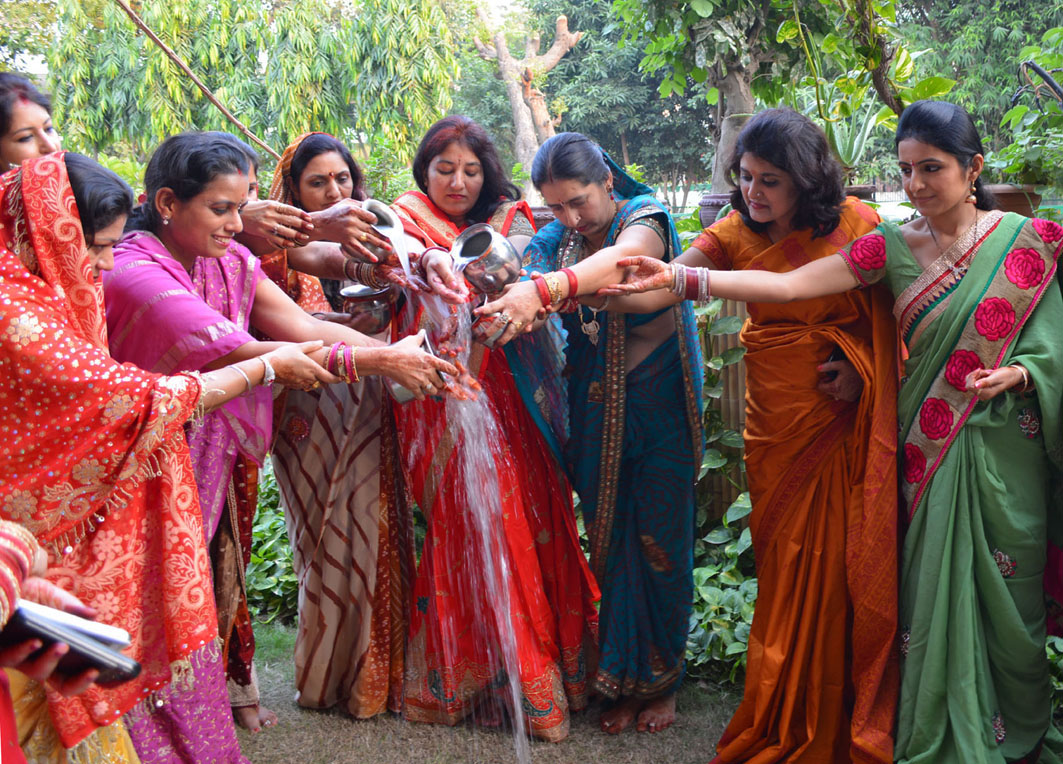
Married Hindu women in Northern and Western India, Nepal, and Fiji observe a strict fast from sunrise to moonrise on the fourth day of the waning moon in Kartika. They pray for their husbands' longevity, exchange decorated clay pots, and gather with friends before breaking the fast together after viewing the moon through a sieve.
When is Karva Chauth in 2026?
Karva Chauth 2026 is on Thursday, 29 October 2026. Other years: 2027, Monday, 18 October 2027; 2028, Saturday, 7 October 2028.
Karva Chauth is a Hindu festival where married women keep a strict fast from sunrise to moonrise for the health and long life of their husbands. Celebrated across North India, Nepal, and parts of Western India, the observance involves prayer, exchanging decorated clay pots, and gathering with female friends before breaking the fast together under the rising moon.
Origins and meaning
Scholars trace the roots of this observance to regional customs in northwestern India. The name combines words for an earthen water pot and the number four, reflecting its place on the fourth day of the lunar month. Early practices likely began as prayers for a successful wheat harvest during the sowing season. Over time, the ritual absorbed stories of Rajput warriors leaving their families for military campaigns, prompting wives to fast for their safe return. Another layer of meaning highlights the deep friendship formed between newlyweds and other women in the household, creating a lifelong sisterhood.
Rituals and preparation
Preparation begins days ahead when women purchase spherical clay pots, painting them with intricate patterns. These vessels are filled with bangles, sweets, and small gifts to exchange with friends. On the morning of the fast, women wake before sunrise to eat a special meal known as sargi, which often includes fenia and milk. They apply henna to their hands and choose bright traditional attire, such as red or gold saris and lehengas. During the day, they refrain from housework and spend time visiting relatives, singing devotional songs, and listening to folk tales narrated by elders.
Moonrise and breaking the fast
As evening falls, women gather in circles holding decorated plates containing lamps, incense, and rice. They recite stories about deities and historical figures associated with the day. Once the moon appears, each woman looks at its reflection in water or directly through a woven sieve. She then gazes at her husband's face through the same sieve. This act symbolizes her spiritual strength and devotion. In some areas, participants offer water to the moon deity to ask for blessings upon their marriages and families.
Modern practice
In contemporary society, the festival has taken on romantic connotations similar to Valentine's Day. Media and advertising frequently portray the occasion as a celebration of marital affection and mutual care. Films and television shows depict husbands supporting their wives through the day and eagerly awaiting the moment to break the fast. For unmarried women, the day can highlight feelings of loneliness, yet many still participate to express hope for a future partnership or to honor cultural traditions alongside their peers.
How Karva Chauth is kept
Women wake before dawn for a pre-dawn meal called sargi, often provided by their mother-in-law. They apply henna and wear bright traditional clothes like saris or lehengas. Throughout the day, they avoid housework and gather with friends to sing songs and listen to folk tales. In the evening, women sit in circles holding decorated plates. After sunset, they view the moon through a sieve and look at their husband's face through the same sieve. The husband then offers his wife water to end her fast.
When and where
The festival falls in October or November according to the Gregorian calendar. It follows the lunisolar Hindu calendar, specifically occurring on the fourth day of the dark fortnight during the month of Kartika.
The tradition is strongest in Northern and Northwestern India, including states such as Delhi, Haryana, Rajasthan, Punjab, Uttar Pradesh, Madhya Pradesh, Jammu, and Himachal Pradesh. It is also widely observed in Nepal, Fiji, and parts of Western India.
What Karva Chauth means
Originally linked to agricultural cycles and prayers for good harvests, the festival evolved to honor marital devotion and the bond between women. While historically rooted in the anxiety of wives waiting for husbands returning from war, modern interpretations emphasize mutual love, partnership, and the strengthening of friendships among women who navigate life within extended families.
On the table
- Soot feni
- Sargi
- Halwa
- Puri
- Mathri


Days Karva Chauth is marked
Karva Chauth dates: 2026, 2027, 2028
| Year | Karva Chauth date |
|---|---|
| 2026 | Thursday, 29 October 2026 |
| 2027 | Monday, 18 October 2027 |
| 2028 | Saturday, 7 October 2028 |
Questions people ask about Karva Chauth
When is Karva Chauth in 2026?
Karva Chauth 2026 is on Thursday, 29 October 2026. Other years: 2027, Monday, 18 October 2027; 2028, Saturday, 7 October 2028.
What does the name Karva Chauth mean?
The word karva refers to an earthen pot used in the rituals, while chauth means fourth, marking the festival's timing on the fourth day of the waning moon in the Hindu month of Kartika.
Who participates in the festival?
Primarily married Hindu women observe the strict fast. In some regions of Bengal, Assam, and lower Bhutan, teenage boys also take part in the celebrations.
How do women prepare for the fast?
Days before the festival, women buy new clay pots painted with designs and fill them with bangles, sweets, and ribbons. On the day, they eat a pre-dawn meal called sargi and apply henna to their hands.
How is the fast broken?
After moonrise, the woman views the moon and her husband's face through a sieve. Her husband then takes water from her plate and gives it to her to drink, officially ending the fast.
See also
 NavaratriA nine-night Hindu festival honoring the goddess Durga and her nine forms through prayer, fasting, and dance.
 Rama NavamiA Hindu spring festival marking the birth of Rama with prayer, fasting and processions
 Krishna JanmashtamiA Hindu festival celebrating the birth of Krishna with fasting, singing and night vigils
 Naga PanchamiA day of worship for serpent deities and cobras, observed by Hindus, Jains, and Buddhists across South Asia.
Good reading and sources
- Karva Chauth on WikipediaEncyclopedia
- More photos on Wikimedia CommonsPhotos and video
- Wikidata recordOpen data
The facts on this page come from the Wikipedia article "Karva Chauth", written by its contributors and used under the CC BY-SA 4.0 licence, and from its Wikidata record (CC0). EveryParampara rewrote the text in its own words, with AI assistance, and compares every page with the article to make sure no passage is copied. It may be reused under the same CC BY-SA 4.0 licence with a link back.
It may contain mistakes. Traditions differ from one family, village and community to the next, and the people who keep them know them best. If something is wrong, tell us. Last refreshed 2026-10-04.
More from India
All the traditions of India 🇮🇳 Ayodhya, India and 7 moreDiwaliदीपावली (Dīpāvalī)
A five-day festival of lights celebrated across India and its diaspora to mark the victory of light over darkness.Festival · Feasts and festival meals
🇮🇳 Kolkata, India and 5 moreNavaratriनवरात्रि (Navarātri)
A nine-night Hindu festival honoring the goddess Durga and her nine forms through prayer, fasting, and dance.Festival · Fasting and breaking the fast
🇮🇳 Ayodhya, India and 7 moreDiwaliदीपावली (Dīpāvalī)
A five-day festival of lights celebrated across India and its diaspora to mark the victory of light over darkness.Festival · Feasts and festival meals
🇮🇳 Kolkata, India and 5 moreNavaratriनवरात्रि (Navarātri)
A nine-night Hindu festival honoring the goddess Durga and her nine forms through prayer, fasting, and dance.Festival · Fasting and breaking the fast
 🇮🇳 India and 3 moreMaha Shivaratriमहाशिवरात्रि
A Hindu night of fasting and vigil dedicated to Shiva, marking his divine union with Parvati.Festival
🇮🇳 Ayodhya, India and 5 moreRama Navamiराम नवमी
A Hindu spring festival marking the birth of Rama with prayer, fasting and processionsFestival
🇮🇳 India and 3 moreMaha Shivaratriमहाशिवरात्रि
A Hindu night of fasting and vigil dedicated to Shiva, marking his divine union with Parvati.Festival
🇮🇳 Ayodhya, India and 5 moreRama Navamiराम नवमी
A Hindu spring festival marking the birth of Rama with prayer, fasting and processionsFestival
The same idea elsewhere
Fasting and feasting compared 🇮🇪 Ireland and 5 moreHalloween
An annual observance on 31 October marking the eve of All Saints' Day, rooted in Christian tradition and Celtic heritageFestival · Sweets given and shared
🇮🇪 Ireland and 5 moreHalloween
An annual observance on 31 October marking the eve of All Saints' Day, rooted in Christian tradition and Celtic heritageFestival · Sweets given and shared
 🇹🇷 Turkey and 5 moreEid al-Fitrعيد الفطر
The feast that ends Ramadan, opened with morning prayers, sweets and visits homeFestival · Feasts and festival meals
🇹🇷 Turkey and 5 moreEid al-Fitrعيد الفطر
The feast that ends Ramadan, opened with morning prayers, sweets and visits homeFestival · Feasts and festival meals
 🇦🇺 Australia and 5 moreGood Friday
A solemn Christian holy day commemorating the crucifixion and death of Jesus Christ.Spiritual · Fasting and breaking the fast
🇦🇺 Australia and 5 moreGood Friday
A solemn Christian holy day commemorating the crucifixion and death of Jesus Christ.Spiritual · Fasting and breaking the fast
 🇵🇭 Philippines and 5 moreHoly WeekἉγία καὶ Μεγάλη Ἑβδομάς
The solemn seven days leading to Easter, recalling the final week and Passion of JesusSpiritual · Fasting and breaking the fast
🇵🇭 Philippines and 5 moreHoly WeekἉγία καὶ Μεγάλη Ἑβδομάς
The solemn seven days leading to Easter, recalling the final week and Passion of JesusSpiritual · Fasting and breaking the fast