Spiritual and religiousLatin America and the CaribbeanChristianIndigenous and traditional
Lavagem do Bonfim
An annual inter-religious procession and cleansing ritual in Salvador, Brazil

Lavagem do Bonfim is an annual inter-religious observance held every January in Salvador, Brazil, uniting Catholic and Candomblé traditions. Participants dressed in white journey eight kilometres to pour scented water over church steps, accompanied by sacred drumming and community prayers.
When is Lavagem do Bonfim in 2027?
Lavagem do Bonfim 2027 is on Thursday, 14 January 2027. Other years: 2028, Thursday, 20 January 2028.
The Lavagem do Bonfim is a major joint celebration between Catholic and Candomblé communities in Salvador, Brazil. Every January, thousands of pilgrims walk through the city clad in white to cleanse the outdoor stone stairs of the Church of Our Lord of Bonfim. It honours Christ alongside the orisha Oxalá, bridging distinct faiths through shared devotion, musical rhythm, and fragrant water.
Origins and early history
Devotion to Our Lord of Bonfim grew after a Portuguese naval officer, Teodósio Rodrigues de Farias, brought a statue of Christ from Lisbon in 1745. The figure initially rested in Itapagipe before moving in 1754 to its dedicated sanctuary upon the Colina Sagrada. In 1773, lay fraternity members compelled enslaved workers to scour the building before annual feast celebrations. Over time, practitioners of Candomblé connected this cleaning to the Waters of Oxalá ritual. Catholic authorities eventually banned cleaning within the sanctuary itself, which transferred the ceremonial pouring of water to the exterior staircase and courtyard where it takes place today.
The walking pilgrimage
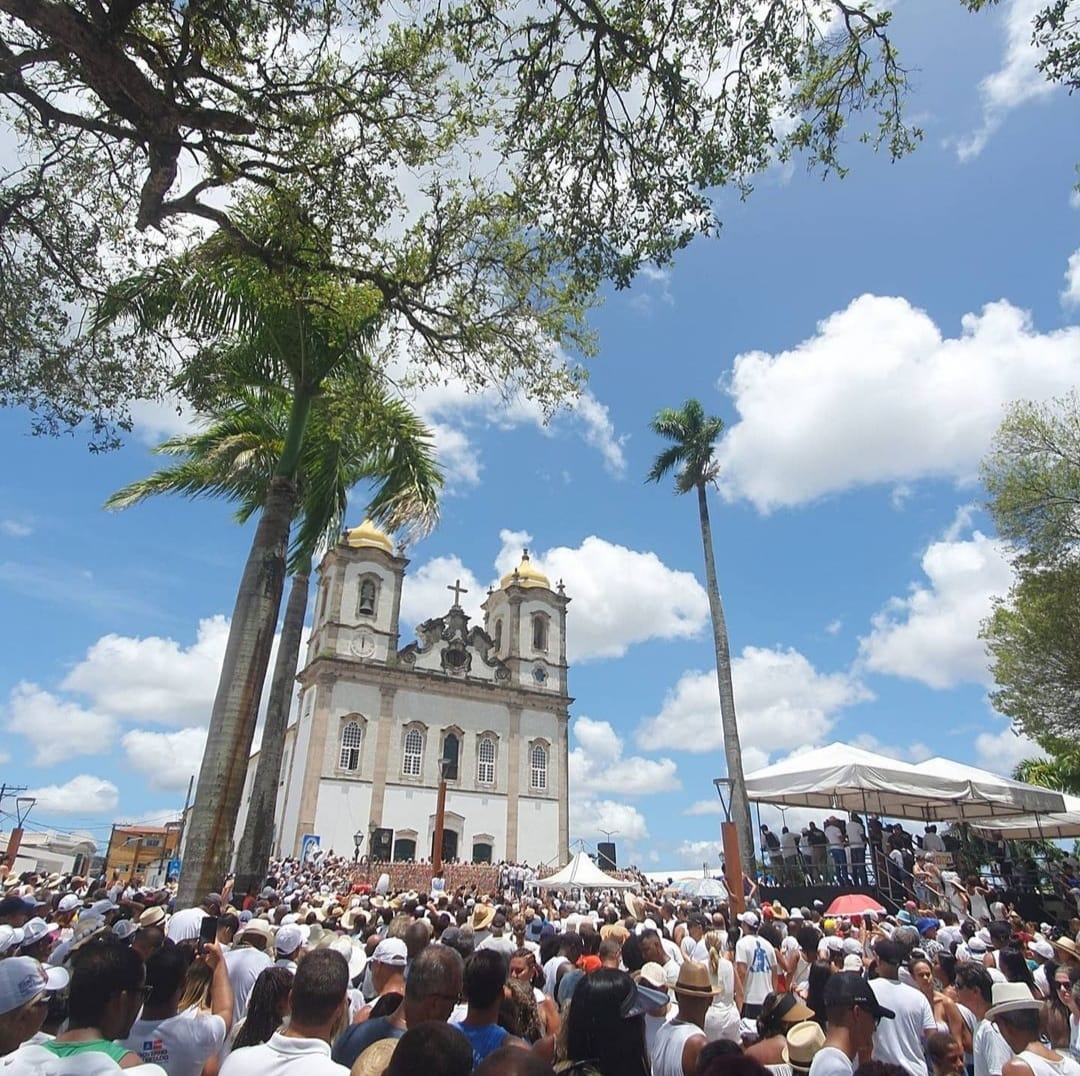
The event begins on Thursday morning outside the Basilica of the Conception. Crowds form a walking procession that covers an eight-kilometre route ending at the Largo do Bonfim. Participants universally dress in white attire to honour the orisha. Leading the massive assembly are the baianas, traditional women who carry earthenware vessels known as quartinhas upon their shoulders. As people advance across the city, the atmosphere combines solemn prayer with energetic street gatherings. The chaplain displays a small sacred image on the church facade and offers a blessing to the gathered crowd, while church doors stay shut for the ceremony.
Cleansing the steps
At the destination, roughly two hundred baianas pour perfumed water across the stone steps and forecourt. Rhythmic handclapping, drumming, and ancestral Afro-Brazilian chants guide the cleansing ritual. Because internal church washing was prohibited by the archdiocese, this outdoor threshold became the spiritual heart of the gathering. Once the formal prayers and washing conclude, secular revelry spreads throughout the plaza with open-air dancing, percussion ensembles, and food stalls. The broader festival concludes on the following Sunday with mass, novena prayers, and a procession where worshippers circle the sanctuary three times to make three personal requests.
How Lavagem do Bonfim is kept
On Thursday morning, pilgrims wearing white depart from the Basilica of the Conception and march eight kilometres to the Colina Sagrada. Leading the crowd, around two hundred baianas balance clay jugs called quartinhas on their shoulders. Upon arriving at the Church of Our Lord of Bonfim, the chaplain presents a holy figure on the building front to bless the crowd. The baianas then pour scented water over the outer steps and courtyard amidst drumming, clapping, and Afro-religious songs. Afterwards, people enjoy street percussion, traditional foods, and dancing in the square.
When and where
The celebration happens every year in January on the Thursday preceding the second Sunday after Three Kings' Day. It takes place during a wider period of Catholic novena services and Eucharistic adoration that finishes on the subsequent Sunday.
The rite is held in Salvador, the capital of Bahia state in northeastern Brazil. The procession moves from the Basilica of the Conception in the lower city to the Church of Our Lord of Bonfim upon the Colina Sagrada.
What Lavagem do Bonfim means
The ritual embodies religious syncretism, blending Catholic veneration of Jesus Christ with Candomblé devotion to Oxalá, represented by the colour white. Originating in the forced labour of enslaved people cleaning the sanctuary, the washing was reshaped by African descendants into the sacred Waters of Oxalá rite. The scented water poured over the threshold symbolizes spiritual purification and shared community identity.
Days Lavagem do Bonfim is marked
Lavagem do Bonfim dates: 2027, 2028
| Year | Lavagem do Bonfim date |
|---|---|
| 2027 | Thursday, 14 January 2027 |
| 2028 | Thursday, 20 January 2028 |
Questions people ask about Lavagem do Bonfim
When is Lavagem do Bonfim in 2027?
Lavagem do Bonfim 2027 is on Thursday, 14 January 2027. Other years: 2028, Thursday, 20 January 2028.
What is the Lavagem do Bonfim?
It is an annual Brazilian religious celebration where Catholic and Candomblé traditions unite in the city of Salvador, highlighted by pouring scented water on church steps.
Why do participants wear white clothing?
Pilgrims dress in white garments to honour Oxalá, an important orisha in Candomblé. The ritual is linked to the Waters of Oxalá, making white the signature colour of the entire procession.
How did the washing ritual originate?
In 1773, lay Catholic fraternity members made enslaved people wash the church ahead of feast day celebrations. Over time, Afro-descendant practitioners turned the chore into an ecumenical spiritual rite.
See also
 PassoverA Jewish spring festival celebrating freedom from slavery with ritual meals
 SukkotA seven-day autumn Jewish festival of temporary booths, harvest prayers and hospitality
 Isra and Mi'rajAn Islamic observance marking the prophet Muhammad’s night journey and ascent through the heavens.
 Krishna JanmashtamiA Hindu festival celebrating the birth of Krishna with fasting, singing and night vigils
Good reading and sources
- Lavagem do Bonfim on WikipediaEncyclopedia
- More photos on Wikimedia CommonsPhotos and video
- Wikidata recordOpen data
The facts on this page come from the Wikipedia article "Lavagem do Bonfim", written by its contributors and used under the CC BY-SA 4.0 licence, and from its Wikidata record (CC0). EveryParampara rewrote the text in its own words, with AI assistance, and compares every page with the article to make sure no passage is copied. It may be reused under the same CC BY-SA 4.0 licence with a link back.
It may contain mistakes. Traditions differ from one family, village and community to the next, and the people who keep them know them best. If something is wrong, tell us. Last refreshed 2026-10-04.
More from Brazil
All the traditions of Brazil 🇳🇬 Oyo, Nigeria and 1 moreEgungunEgúngún
Yoruba ancestral masquerades bringing blessings, counsel and moral renewalSpiritual
🇪🇸 Spain and 5 moreCompadre
A ritual kinship made at a child's baptism, binding parents and godparents for lifeSpiritual
🇳🇬 Oyo, Nigeria and 1 moreEgungunEgúngún
Yoruba ancestral masquerades bringing blessings, counsel and moral renewalSpiritual
🇪🇸 Spain and 5 moreCompadre
A ritual kinship made at a child's baptism, binding parents and godparents for lifeSpiritual
 🇮🇹 Rome, Italy and 7 moreSaint Joseph's Day
A 19 March feast honouring Jesus' earthly father, kept with altars and processionsSpiritual · Feasts and festival meals
🇨🇺 Cuba and 5 moreLetra del Año
Annual prophecies and guidance proclaimed by babalawo priests for the coming yearSpiritual
🇮🇹 Rome, Italy and 7 moreSaint Joseph's Day
A 19 March feast honouring Jesus' earthly father, kept with altars and processionsSpiritual · Feasts and festival meals
🇨🇺 Cuba and 5 moreLetra del Año
Annual prophecies and guidance proclaimed by babalawo priests for the coming yearSpiritual
The same idea elsewhere
Pilgrimage compared 🇺🇸 United States and 5 moreMother's Day
A worldwide annual celebration dedicated to mothers, maternal bonds and family careHome
🇮🇱 Jerusalem, IsraelPassoverפסח
A Jewish spring festival celebrating freedom from slavery with ritual mealsSpiritual · Dinner
🇺🇸 United States and 5 moreMother's Day
A worldwide annual celebration dedicated to mothers, maternal bonds and family careHome
🇮🇱 Jerusalem, IsraelPassoverפסח
A Jewish spring festival celebrating freedom from slavery with ritual mealsSpiritual · Dinner
 🇵🇱 Poland and 5 moreChristmas Eve
The evening before Christmas, marked by church services, family meals, and gift preparations across Christian cultures.Festival · Dinner
🇮🇱 Jerusalem, IsraelSukkotסוכות
A seven-day autumn Jewish festival of temporary booths, harvest prayers and hospitalitySpiritual
🇵🇱 Poland and 5 moreChristmas Eve
The evening before Christmas, marked by church services, family meals, and gift preparations across Christian cultures.Festival · Dinner
🇮🇱 Jerusalem, IsraelSukkotסוכות
A seven-day autumn Jewish festival of temporary booths, harvest prayers and hospitalitySpiritual