Spiritual and religiousSub-Saharan AfricaIndigenous and traditional
Egungun
In its own language: Egúngún
Yoruba ancestral masquerades bringing blessings, counsel and moral renewal

Egungun is an ancestral masquerade tradition of the Yoruba people in southwestern Nigeria and the diaspora. During annual festivals and family rites, costumed dancers embody the collective dead to cleanse the town, offer blessings, and guide the living.
When is Egungun kept?
Egungun is kept on annually during community festivals and for family ancestral rites.
Egungun is a Yoruba masquerade tradition that honours the collective dead, known as Ará Ọ̀run. Through dance, drumming, and elaborate multi-layered textiles, masked figures embody departed ancestors who return to visit their descendants. The performers cleanse the community, remind people of their shared moral duties, and deliver warnings and blessings. The tradition is maintained through family lineages and celebrated across Yorubaland and in overseas communities.
Embodying the ancestors
Yoruba belief holds that ancestors keep an ongoing watch over the living, urging families to maintain high ethical standards. During annual ceremonies called Odun Egungun or private domestic rituals, priests and trained initiates invoke departed spirits. Dancers in full masquerade enter a state of possession, acting as a single ancestral entity. Through mime, movement, and drama, the performers reenact local events and critique community behaviour. They expose misconduct and celebrate good deeds, before speaking directly to onlookers with spiritual counsel, protection, and blessings.
The sacred garments
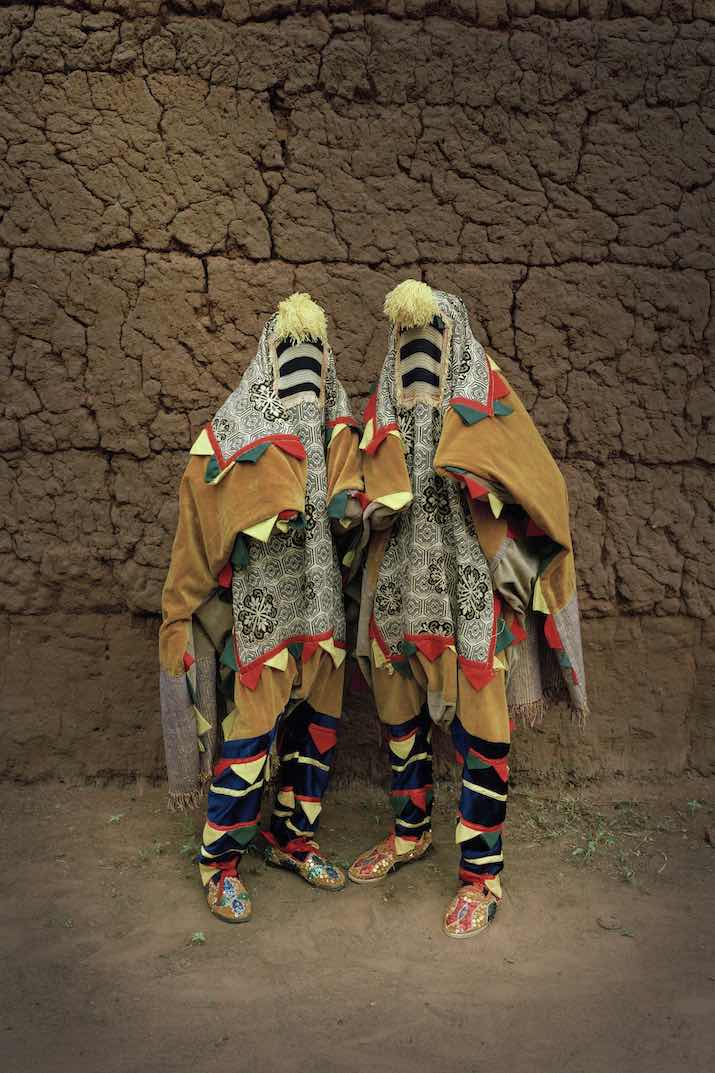
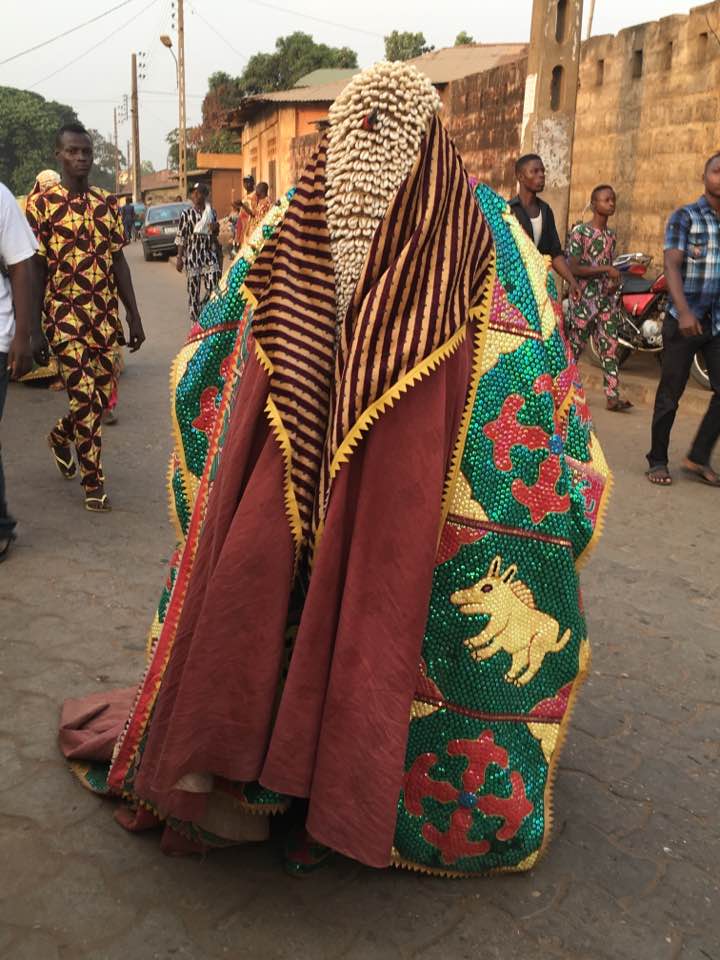
The costume, or ensemble, transforms the dancer into a spirit. Its innermost layer is a fitted sack woven from indigo and white strip-cloth known as aso-oke, echoing a traditional burial shroud. Mesh netting covers the face and hands so no living identity is visible. Outer layers feature flying strips of fine fabric called lappets, decorated with sequins, braids, shiny metal, and tassels. Concealed inside are medicinal charms that shield the performer. As the dancer spins, the lappets flare outward, spreading what observers call a breeze of blessing.
Lineage and roles
Masking societies consist of family lineages with inherited rights to stage specific masquerades. While men perform the physical masking, women hold vital responsibilities throughout the ritual. Elder women offer prayers, make invocations, and present offerings to the spirits. Women also sing praise poetry known as oriki, recounting clan genealogies and town history to accompany the drummers. Lineages collaborate with diviners, tailors, and herbalists to maintain their costumes, storing the sacred robes carefully until the next gathering.
Festivals and spread
During the days of the Odun Egungun festival, masquerades parade through markets and neighbourhoods, drawing together people of diverse faiths. Each lineage is allocated its own day to present its figures, guarded by costumed attendants who manage the crowds. Specific ancestral figures hold regional prominence, such as Alapansanpa in Ibadan or Elewe in Igbomina towns. Outside Nigeria, Yoruba diaspora communities in Brazil also sustain active houses of worship and ceremonies dedicated to the ancestors.
How Egungun is kept
An Egungun festival unfolds over several days. Before the public dances, family elders and initiated priests offer prayers and invoke the spirits. Masked dancers, completely covered in layered textiles and facial mesh, proceed into town squares and market spaces accompanied by drummers and praise singers. As the maskers spin and mime recent local events, they expose wrongdoings and impart ancestral blessings. Attendants maintain space between the performers and the crowd. Each lineage takes its assigned day to dance before the garments are stored away.
When and where
The festival takes place once a year over multiple days. Individual family rites and ancestral remembrances are also held at other times as determined by lineage elders or spiritual divination.
Egungun is centred across southwestern Nigeria, including towns like Ibadan, Oyo, and Ogbomoso. Dedicated shrines and ancestral traditions are also observed across the Atlantic, notably in Brazilian communities.
What Egungun means
To the Yoruba, cloth signifies dignity, wealth, and civic maturity, whereas nakedness denotes childhood or disorder. The costume reflects this idea by joining hidden base layers with decorative outer fabrics, uniting the spirit realm of Orun with the physical world. Whirling fabric strips represent sweeping winds of fortune, and the masquerade itself reinforces moral accountability between the living and their forebears.


Questions people ask about Egungun
When is Egungun kept?
Egungun is kept on annually during community festivals and for family ancestral rites.
What is Egungun?
Egungun refers to Yoruba ancestral masquerades and to the collective spirits of the dead. Costumed performers channel ancestors to guide, bless, and spiritually cleanse their descendants.
Where is this tradition observed?
The tradition is rooted in the Yoruba communities of southwestern Nigeria, including cities such as Ibadan and Oyo. It is also preserved in spiritual houses in Brazil.
Who takes part in the performances?
Initiated men wear the masquerade robes and embody the spirits. Women participate by singing family praise poetry, creating textiles, and leading essential prayers and invocations.
What does the costume look like?
The ensemble features an inner shroud of handwoven cloth, complete mesh coverings for the head and hands, and layered outer lappets embellished with sequins, metal, and protective amulets.
See also
 KwanzaaA seven-day African American celebration of heritage, family and community values
 GeledeA Yoruba masked dance festival honoring the spiritual power of mothers and social harmony.
 Eyo FestivalA Yoruba masquerade procession honouring departed leaders and royalty in Lagos
 Igbo New Yam FestivalA harvest thanksgiving and feast marking the first yam crop among the Igbo of Nigeria
Good reading and sources
- Encyclopaedia BritannicaArticle
- Nigeria's Egungun festival: Colour, culture and communityBBC, Article
- Nigeria's Egungun festival: Colour, culture and communityBBC, Article
- Egungun on WikipediaEncyclopedia
- More photos on Wikimedia CommonsPhotos and video
- Wikidata recordOpen data
The facts on this page come from the Wikipedia article "Egungun", written by its contributors and used under the CC BY-SA 4.0 licence, and from its Wikidata record (CC0). EveryParampara rewrote the text in its own words, with AI assistance, and compares every page with the article to make sure no passage is copied. It may be reused under the same CC BY-SA 4.0 licence with a link back.
It may contain mistakes. Traditions differ from one family, village and community to the next, and the people who keep them know them best. If something is wrong, tell us. Last refreshed 2026-10-04.
More from Nigeria
All the traditions of Nigeria 🇳🇬 NigeriaMmanwuMmanwụ
An Igbo masquerade tradition invoking ancestral spirits through masked performanceSpiritual
🇳🇪 Niger and 1 moreSitta min Shawwalستة من شوال
A voluntary six-day Islamic fast observed during the month following RamadanSpiritual · Fasting and breaking the fast
🇳🇬 Ibadan, Nigeria and 1 moreYoruba naming ceremonyÌkòlọ́pọ̀ Orúkọ Yorùbá
A rite of passage where a newborn receives a destiny name through divination and family celebration.Rite of passage · Feasts and festival meals
🇳🇬 NigeriaMmanwuMmanwụ
An Igbo masquerade tradition invoking ancestral spirits through masked performanceSpiritual
🇳🇪 Niger and 1 moreSitta min Shawwalستة من شوال
A voluntary six-day Islamic fast observed during the month following RamadanSpiritual · Fasting and breaking the fast
🇳🇬 Ibadan, Nigeria and 1 moreYoruba naming ceremonyÌkòlọ́pọ̀ Orúkọ Yorùbá
A rite of passage where a newborn receives a destiny name through divination and family celebration.Rite of passage · Feasts and festival meals
 🇳🇬 Onitsha, NigeriaAgbogho MmuoAgbọghọ Mmụọ
An Igbo masked dance celebrating maidenhood and the female spiritPerformance
🇳🇬 Onitsha, NigeriaAgbogho MmuoAgbọghọ Mmụọ
An Igbo masked dance celebrating maidenhood and the female spiritPerformance
The same idea elsewhere
Remembering the ancestors compared 🇲🇽 Mexico City, Mexico and 1 moreDay of the DeadDía de Muertos
A Mexican remembrance of deceased family and friends with altars, marigolds and feastsFestival · Sweets given and shared
🇲🇽 Mexico City, Mexico and 1 moreDay of the DeadDía de Muertos
A Mexican remembrance of deceased family and friends with altars, marigolds and feastsFestival · Sweets given and shared
 🇳🇿 New Zealand and 2 moreMarae
A cleared, sacred gathering place at the heart of Māori and Polynesian community lifeSpiritual
🇳🇿 New Zealand and 2 moreMarae
A cleared, sacred gathering place at the heart of Māori and Polynesian community lifeSpiritual
 🇼🇸 Samoa and 1 moreʻIe tōga
Precious woven mats exchanged in Samoan ceremonies to honor family ties and chiefly status.Dress
🇼🇸 Samoa and 1 moreʻIe tōga
Precious woven mats exchanged in Samoan ceremonies to honor family ties and chiefly status.Dress
 🇹🇱 Timor-LesteUma Lulik
Sacred ancestral clan houses and ritual shrines in East TimorSpiritual
🇹🇱 Timor-LesteUma Lulik
Sacred ancestral clan houses and ritual shrines in East TimorSpiritual