Festivals and celebrationsEuropeSecular and civic
Lithuanian Song Festival
In its own language: Lietuvių dainų ir šokių šventė
A periodic national festival of choral singing, dance and folklore in Lithuania

The Lithuanian Song and Dance Festival is a massive gathering held roughly every four to five years in Lithuania, centered at Vingis Park in Vilnius. Tens of thousands of singers, dancers and musicians come together over seven days to perform traditional folk music, large-scale choreography and a cappella choral pieces.
When is Lithuanian Song Festival kept?
Lithuanian Song Festival is kept on roughly every four or five years, usually lasting seven days.
The Lithuanian Song and Dance Festival brings tens of thousands of singers and dancers together for a week of performances in Vilnius. Known in Lithuanian as Dainų šventė, the national gathering celebrates traditional culture through choral music, staged choreography, instrumental ensembles and folk customs. It stands as an expression of cultural unity, drawing participants from across Lithuania and overseas communities to perform together in vast outdoor venues.
Nineteenth century origins
Roots trace back to the Lithuania Minor region at the end of the nineteenth century. Rambynas Hill became a central meeting place for artists and vocal groups. In 1895, the first Lithuanian choir debuted in honor of the Birutė Society, and Vydūnas founded the Tilsit Lithuanian Singers’ Community later that winter. This group arranged concerts, evenings and theatrical events across towns like Klaipėda and Ragainė. These gatherings, attracting up to a thousand spectators, were formally retitled as Song Celebrations in 1902, paving the way for wider regional festivals.
Growth and survival
The first nationwide song festival took place in Kaunas in August 1924, drawing seventy-seven choirs and fifty thousand onlookers. Subsequent festivals commemorated national milestones, incorporating church groups, schools and gymnastics displays set to folk melodies. Folk dancing joined the program in 1937 with regional performers. Despite political pressure during the Soviet era, gatherings persisted on a five-year cycle with the addition of National Dance Day and the construction of the Vingis Park amphitheater in 1960. Lithuanian emigrants also kept the tradition alive abroad, organising events in Germany and the United States.
Structure of the celebration
Today, the gathering spans seven days and involves over forty thousand participants from amateur and professional groups. The program is divided into four primary parts. Folklore Day showcases regional customs and musical genres, while the Ensembles Evening highlights combined song, dance and instrumental troupes. Dance Day features massive group choreography across open grounds. The celebration concludes with Song Day, when more than twenty thousand vocalists assemble to perform harmonized folk tunes and modern Lithuanian compositions, singing primarily a cappella in front of huge crowds.
How Lithuanian Song Festival is kept
The festival unfolds across four major stages over a seven-day period. It begins with Folklore Day to highlight local traditions from different regions. The Ensembles Evening follows, bringing together instrumental players, vocalists and dancers. Next, Dance Day presents intricate, synchronized choreographies performed by thousands of dancers on an open field. The celebration culminates with Song Day at Vingis Park, where a massive joint choir of more than twenty thousand people sings a cappella arrangements of folk tunes and works by Lithuanian composers.
When and where
The national festival takes place roughly every four to five years and usually spans seven days. Specific dates vary between editions, typically occurring in the summer months.
The primary events are hosted in Vilnius, Lithuania, with the grand finale held at the open-air amphitheater in Vingis Park. Related celebrations also take place across local communities and within diaspora groups abroad.
What Lithuanian Song Festival means
Participants view the festival as a powerful symbol of national unity, cultural survival and strength. The shared performance of regional folk songs and synchronized dances represents the preservation of Lithuanian identity, linking different generations and dispersed communities through communal music.


Questions people ask about Lithuanian Song Festival
When is Lithuanian Song Festival kept?
Lithuanian Song Festival is kept on roughly every four or five years, usually lasting seven days.
What is the Lithuanian Song and Dance Festival?
It is a massive national celebration in Lithuania that gathers tens of thousands of singers, dancers and musicians. Held over seven days, it features traditional folklore, group choreography and choral concerts.
Where and how often does the festival take place?
The festival is held roughly every four to five years in Lithuania, with the largest performances staged at Vingis Park in Vilnius.
What are the primary events during the festival week?
The event includes four main parts: Folklore Day, the Ensembles Evening, Dance Day with large-scale choreographies, and Song Day featuring a massive a cappella choir.
See also
 Christmas EveThe evening before Christmas, marked by church services, family meals, and gift preparations across Christian cultures.
 PysankaA wax-resist egg decorating tradition kept by Slavic communities for Easter and spring renewal.
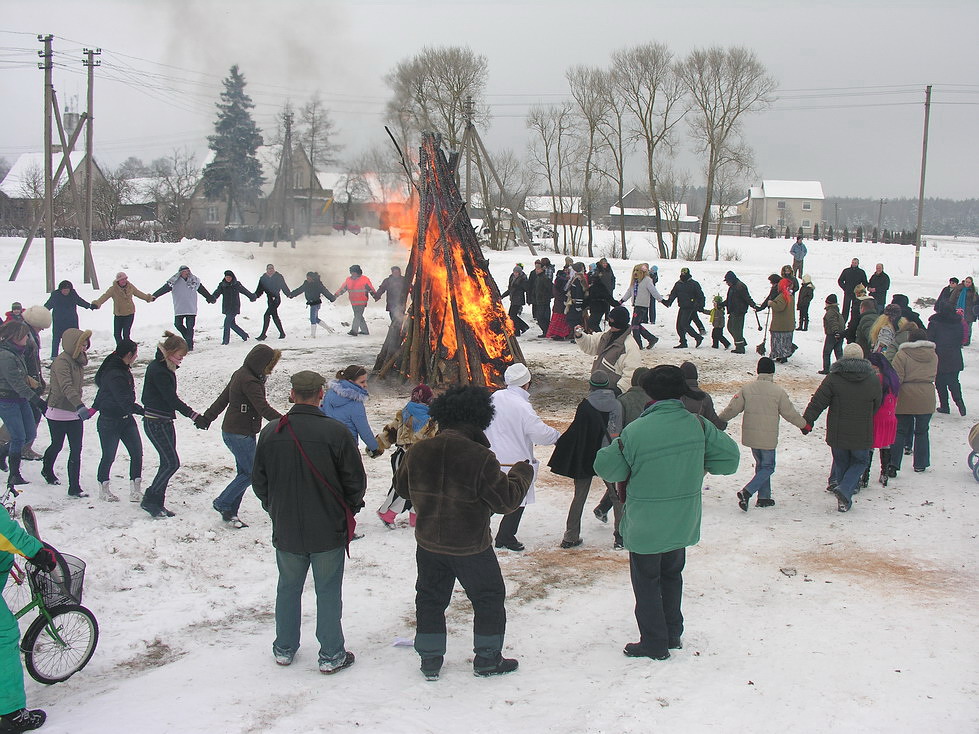 UžgavėnėsA Lithuanian winter-ending festival of masks, mock battles and pancakes
Good reading and sources
- Baltic song and dance celebrationsUNESCO, Heritage listing
- Baltic song and dance celebrationsUNESCO, Article
- Lithuanian Song and Dance Festival on WikipediaEncyclopedia
- More photos on Wikimedia CommonsPhotos and video
- Wikidata recordOpen data
The facts on this page come from the Wikipedia article "Lithuanian Song and Dance Festival", written by its contributors and used under the CC BY-SA 4.0 licence, and from its Wikidata record (CC0). EveryParampara rewrote the text in its own words, with AI assistance, and compares every page with the article to make sure no passage is copied. It may be reused under the same CC BY-SA 4.0 licence with a link back.
It may contain mistakes. Traditions differ from one family, village and community to the next, and the people who keep them know them best. If something is wrong, tell us. Last refreshed 2026-10-04.
More from Lithuania
All the traditions of Lithuania
🇵🇱 Poland and 5 moreChristmas Eve
The evening before Christmas, marked by church services, family meals, and gift preparations across Christian cultures.Festival · Dinner
🇺🇦 Kyiv, Ukraine and 7 morePysankaписанка
A wax-resist egg decorating tradition kept by Slavic communities for Easter and spring renewal.Festival
🇱🇹 LithuaniaUžgavėnės
A Lithuanian winter-ending festival of masks, mock battles and pancakesFestival
 🇺🇸 Spokane, United States and 5 moreFather's Day
A day to honour fathers and fatherhood, kept on many different dates worldwideFestival
🇺🇸 Spokane, United States and 5 moreFather's Day
A day to honour fathers and fatherhood, kept on many different dates worldwideFestival
The same idea elsewhere
All of this kind 🇹🇷 Turkey and 5 moreEid al-Fitrعيد الفطر
The feast that ends Ramadan, opened with morning prayers, sweets and visits homeFestival · Feasts and festival meals
🇹🇷 Turkey and 5 moreEid al-Fitrعيد الفطر
The feast that ends Ramadan, opened with morning prayers, sweets and visits homeFestival · Feasts and festival meals
 🇮🇳 Ayodhya, India and 7 moreDiwaliदीपावली (Dīpāvalī)
A five-day festival of lights celebrated across India and its diaspora to mark the victory of light over darkness.Festival · Feasts and festival meals
🇮🇳 Ayodhya, India and 7 moreDiwaliदीपावली (Dīpāvalī)
A five-day festival of lights celebrated across India and its diaspora to mark the victory of light over darkness.Festival · Feasts and festival meals
 🇮🇱 Jerusalem, Israel and 1 moreHanukkahחֲנֻכָּה
An eight-day Jewish festival marking the rededication of the Second Temple in Jerusalem and the miracle of a single day'Festival
🇮🇱 Jerusalem, Israel and 1 moreHanukkahחֲנֻכָּה
An eight-day Jewish festival marking the rededication of the Second Temple in Jerusalem and the miracle of a single day'Festival
 🇪🇬 Egypt and 5 moreMawlidمولد (Mawlid)
An annual festival marking the birth of the Prophet Muhammad, marked by poetry, processions and feasts.Festival · Feasts and festival meals
🇪🇬 Egypt and 5 moreMawlidمولد (Mawlid)
An annual festival marking the birth of the Prophet Muhammad, marked by poetry, processions and feasts.Festival · Feasts and festival meals