Festivals and celebrationsEuropeChristian
Užgavėnės
A Lithuanian winter-ending festival of masks, mock battles and pancakes
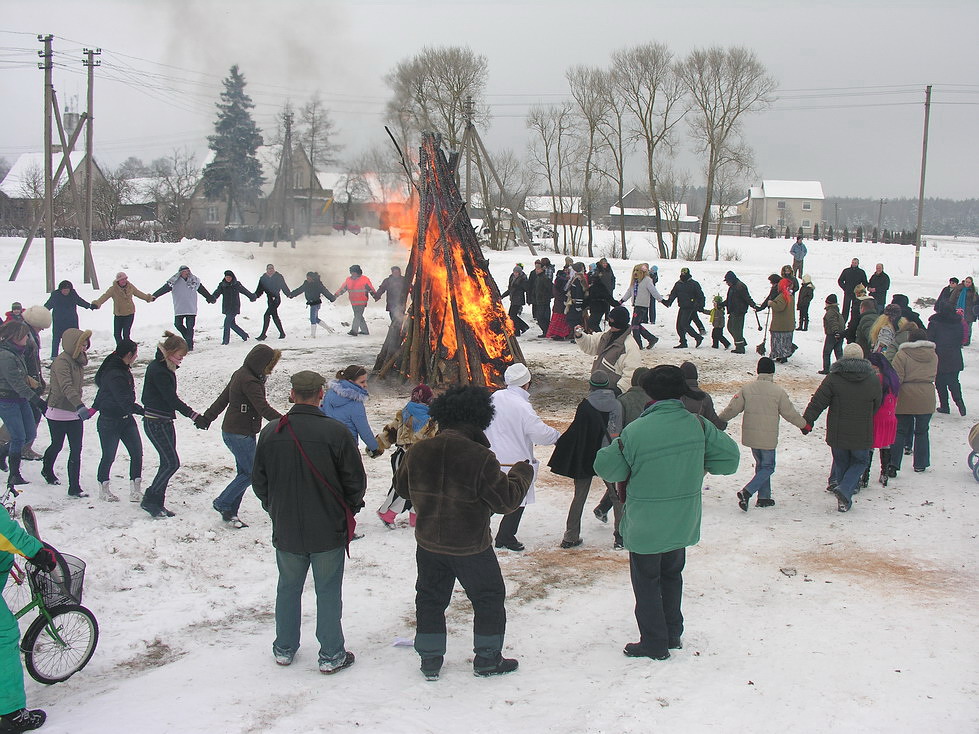
Užgavėnės is an ancient festival celebrated across Lithuania right before Ash Wednesday. People wear masks, stage a theatrical fight between figures of winter and spring, burn an effigy named Morė, and share warm pancakes to mark the end of the cold season.
When is Užgavėnės marked?
Užgavėnės is kept as part of Shrove Tuesday and Mardi Gras, which is on Tuesday, 9 February 2027.
Užgavėnės is an ancient Lithuanian folk celebration that marks the farewell to winter. Held during the seventh week before Easter, it aligns with Roman Catholic pre-Lenten carnivals. The gathering brings communities together for costumed mumming, lively dancing, and open-air theatrical rituals. By burning an effigy of the cold season and eating platters of pancakes, revellers welcome the coming arrival of spring.
Costumes and mumming
During Užgavėnės, participants dress up in expressive disguises that blend humour with fright. The streets and public spaces fill with figures such as goats, witches, devils, and the grim reaper. These masqueraders wander through towns, dancing and mingling with onlookers. The colourful assortment of mythical and earthly creatures creates a playful atmosphere designed to disturb the quiet gloom of winter. Through these disguises, community members step out of their everyday roles to take part in lively street revelry.
Seasonal mock battle
A central drama of the festival is a staged duel between two symbolic opponents. One fighter is Lašininis, representing porky excess and the cold months. His rival is Kanapinis, the hempen figure who stands for spring and upcoming lean times. Their theatrical fight enacts the contest between the freezing weather and the returning warmth. Kanapinis always overcomes his opponent, signalling that the cold season has finally been conquered and that the land is ready for renewal.
Effigy and pancakes
The festivities commence on the evening preceding Ash Wednesday with the burning of a winter effigy, commonly called Morė. Watching the straw figure burn represents casting off the freezing cold. Alongside the bonfire, participants gather to eat the customary dish of the celebration: freshly cooked pancakes served with diverse toppings. Eating plenty of pancakes and dancing together provides a joyous final feast before the solemnity of the upcoming religious season begins.
How Užgavėnės is kept
The festival gets under way on the eve of Ash Wednesday. People put on costumes portraying goats, witches, devils, and death, joining masquerades and dances in the open air. A mock battle is staged between the winter figure Lašininis and the spring champion Kanapinis, which spring invariably wins. The crowd watches the destruction of the winter effigy, Morė, by fire. Throughout the festivities, revellers share freshly made pancakes with assorted toppings to celebrate the coming turn of the seasons.
When and where
The festival is observed in the seventh week before Easter, starting on the eve of Ash Wednesday. Because it follows the Christian liturgical calendar leading up to Lent, its dates shift every year alongside the timing of Mardi Gras and Shrove Tuesday.
Užgavėnės is an ancient custom kept across Lithuania. Communities gather in public squares, villages, and towns throughout the country to take part in the seasonal masquerade and bonfires.
What Užgavėnės means
The rites of Užgavėnės represent the defeat of winter across the Northern Hemisphere. Burning the effigy of Morė and witnessing Kanapinis vanquish Lašininis dramatise the triumph of light, life, and spring over the darkness and cold of the departing winter.
On the table
- Pancakes

Days Užgavėnės is marked
Questions people ask about Užgavėnės
When is Užgavėnės marked?
Užgavėnės is kept as part of Shrove Tuesday and Mardi Gras, which is on Tuesday, 9 February 2027.
What is Užgavėnės?
Užgavėnės is an ancient Lithuanian festival celebrated with masks, dances, mock battles, and pancake feasts. It matches pre-Lenten carnival traditions such as Shrove Tuesday and Mardi Gras.
Who are Lašininis and Kanapinis?
They are characters who fight a mock battle during the festival. Lašininis, known as 'porky', personifies winter, while Kanapinis, the 'hempen man', personifies spring. Spring's victory symbolises the end of cold weather.
What food is traditional for the festival?
Pancakes are the traditional dish of the festival. Revellers and costumed masqueraders eat them together with a variety of different toppings while dancing and celebrating.
See also
 Christmas EveThe evening before Christmas, marked by church services, family meals, and gift preparations across Christian cultures.
 Egg rollingA spring game of rolling decorated hard-boiled eggs down hills or along lawns
 NowruzThe Iranian new year at the March equinox, kept with fire, greenery and picnics
 PurimA lively Jewish festival of storytelling, shared food, masks and charity
Good reading and sources
- Užgavėnės on WikipediaEncyclopedia
- More photos on Wikimedia CommonsPhotos and video
- Wikidata recordOpen data
The facts on this page come from the Wikipedia article "Užgavėnės", written by its contributors and used under the CC BY-SA 4.0 licence, and from its Wikidata record (CC0). EveryParampara rewrote the text in its own words, with AI assistance, and compares every page with the article to make sure no passage is copied. It may be reused under the same CC BY-SA 4.0 licence with a link back.
It may contain mistakes. Traditions differ from one family, village and community to the next, and the people who keep them know them best. If something is wrong, tell us. Last refreshed 2026-10-04.
More from Lithuania
All the traditions of Lithuania
🇵🇱 Poland and 5 moreChristmas Eve
The evening before Christmas, marked by church services, family meals, and gift preparations across Christian cultures.Festival · Dinner
 🇱🇹 Lithuania and 5 moreNativity of John the Baptist
A Christian feast day on June 24 that marks the birth of John the Baptist and anticipates Christmas.Festival
🇱🇹 Lithuania and 5 moreNativity of John the Baptist
A Christian feast day on June 24 that marks the birth of John the Baptist and anticipates Christmas.Festival
 🇱🇻 Riga, Latvia and 4 moreMeteņi
A Latvian pre-Lenten festival marking the turn of time and welcoming spring.Festival · Feasts and festival meals
🇱🇻 Riga, Latvia and 4 moreMeteņi
A Latvian pre-Lenten festival marking the turn of time and welcoming spring.Festival · Feasts and festival meals
 🇺🇦 Kyiv, Ukraine and 7 morePysankaписанка
A wax-resist egg decorating tradition kept by Slavic communities for Easter and spring renewal.Festival
🇺🇦 Kyiv, Ukraine and 7 morePysankaписанка
A wax-resist egg decorating tradition kept by Slavic communities for Easter and spring renewal.Festival
The same idea elsewhere
Spring and renewal compared 🇺🇸 United States and 1 moreSaint Patrick's Day in the United States
An annual celebration of Irish heritage across America with parades, feasts and green dyeFestival · Dinner
🇺🇸 United States and 1 moreSaint Patrick's Day in the United States
An annual celebration of Irish heritage across America with parades, feasts and green dyeFestival · Dinner
 🇮🇳 Ayodhya, India and 5 moreRama Navamiराम नवमी
A Hindu spring festival marking the birth of Rama with prayer, fasting and processionsFestival
🇮🇳 Ayodhya, India and 5 moreRama Navamiराम नवमी
A Hindu spring festival marking the birth of Rama with prayer, fasting and processionsFestival
 🇨🇴 Barranquilla, ColombiaBarranquilla CarnivalCarnaval de Barranquilla
A four-day street festival of music, masquerade and dance in coastal ColombiaFestival
🇨🇴 Barranquilla, ColombiaBarranquilla CarnivalCarnaval de Barranquilla
A four-day street festival of music, masquerade and dance in coastal ColombiaFestival
 🇮🇳 IndiaMahavir Janma Kalyanak
A Jain festival of temple worship, street processions and acts of charitySpiritual
🇮🇳 IndiaMahavir Janma Kalyanak
A Jain festival of temple worship, street processions and acts of charitySpiritual