Festivals and celebrationsEuropeHinduJewish
Pysanka
In its own language: писанка
A wax-resist egg decorating tradition kept by Slavic communities for Easter and spring renewal.

This custom involves painting eggs with beeswax and dyes to create protective talismans. It began as a pagan spring ritual in Eastern Europe before merging with Christian Easter observances. The practice remains strong in Ukraine, Poland, Slovenia, and other Slavic nations today.
When is Pysanka marked?
Pysanka is kept as part of Easter, which runs from 28 to 29 March 2027.
The pysanka is a decorated egg made using a wax-resist technique. Communities across Eastern Europe create these eggs to mark the arrival of spring and the Easter season. The designs serve as blessings for health and protection against evil spirits.
Origins and history
The custom started long before Christianity arrived in the region. Ancient Slavs viewed the egg as a symbol of life and rebirth. They believed it held magical powers to protect households from harm. When Christianity spread through the area, the tradition merged with new religious beliefs. The egg came to represent the resurrection of Jesus Christ. Many older symbols remained but gained new spiritual meanings within the church calendar.
How it is kept
Artisans use beeswax to draw patterns on the shell before dipping it in dye. They repeat this process to build up layers of color. The wax is then melted away to reveal the white shell underneath. In Ukraine, this craft is called pysankarstvo. Women traditionally created these items for family members. Today, people also use modern tools like etching pens or decals to decorate eggs.
Regional styles
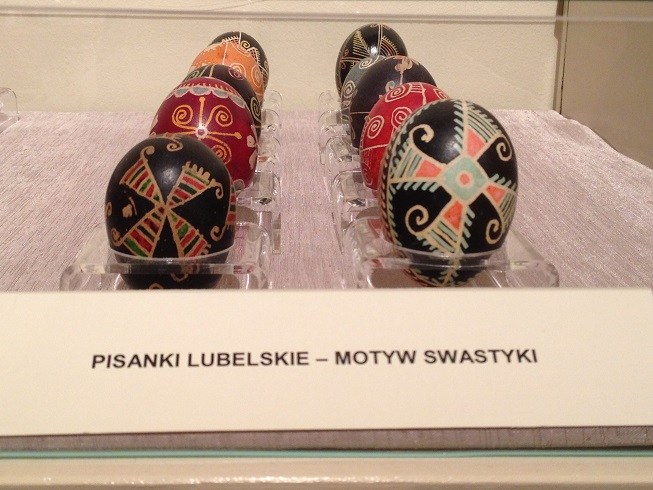
Different areas have unique names and methods. In Poland, the eggs are called pisanki and are blessed in baskets on Holy Saturday. Slovenian makers in the Brkini Hills scratch designs into onion-dyed shells. Croatian pisanicas often feature doves and crosses. Ukrainian pysanky are famous worldwide for their intricate geometric and floral motifs.
Modern practice
The tradition faced suppression during the Soviet era but has since revived. Ukrainian artists now display their work in museums and international exhibitions. A large statue of a pysanka stands in Canada as a cultural landmark. Schools and parishes offer workshops to teach younger generations how to make these eggs, ensuring the skill continues.
How Pysanka is kept
People write designs onto eggs using a tool called a kistka that holds melted beeswax. They dip the egg into dyes, starting with light colors and moving to dark ones. The wax cracks and falls away during heating, leaving the original pattern visible. Families exchange these eggs during Easter meals to share good fortune.
When and where
It takes place during Holy Week, leading up to Easter Sunday. The exact dates change each year based on the lunar calendar.
It is most common in Ukraine, Poland, and Slovenia. The practice extends to other Slavic regions and diaspora communities in North America and Australia.
What Pysanka means
The egg represents new life and the awakening of nature in spring. It serves as a talisman to ward off evil spirits. In Christian contexts, it symbolizes the empty tomb and the resurrection of Christ. Designs often include sun symbols, birds, and plants to invoke blessings.


Days Pysanka is marked
Questions people ask about Pysanka
When is Pysanka marked?
Pysanka is kept as part of Easter, which runs from 28 to 29 March 2027.
What is a pysanka?
It is a decorated egg made using a wax-resist method. Artisans apply beeswax to the shell to create patterns before adding dye. The name comes from a word meaning to write.
Where did this tradition start?
It originated in pre-Christian Slavic lands. Archaeological finds show decorated eggs dating back thousands of years in Ukraine and Poland.
Why are they important today?
They connect people to their ancestral heritage. The craft has seen a revival after being suppressed during the Soviet period.
See also
 ChristmasA festival of Jesus's birth, kept on 25 December with gifts, lights and shared meals
 Christmas treeA decorated evergreen or artificial tree placed indoors to mark the Christmas season.
 MaslenitsaA seven-day Eastern Slavic festival of pancakes and bonfires marking the end of winter before Lent.
 Kupala NightA summer solstice folk festival marked by bonfires, water rituals and herbal gatherings across Eastern Europe.
Good reading and sources
- Pysanka, Ukrainian tradition and art of decorating eggsUNESCO, Heritage listing
- Pysanka, Ukrainian tradition and art of decorating eggsUNESCO, Article
- Egg decorating in Slavic culture on WikipediaEncyclopedia
- More photos on Wikimedia CommonsPhotos and video
- Wikidata recordOpen data
The facts on this page come from the Wikipedia article "Egg decorating in Slavic culture", written by its contributors and used under the CC BY-SA 4.0 licence, and from its Wikidata record (CC0). EveryParampara rewrote the text in its own words, with AI assistance, and compares every page with the article to make sure no passage is copied. It may be reused under the same CC BY-SA 4.0 licence with a link back.
It may contain mistakes. Traditions differ from one family, village and community to the next, and the people who keep them know them best. If something is wrong, tell us. Last refreshed 2026-10-04.
More from Ukraine
All the traditions of Ukraine
🇺🇦 Ukraine and 5 moreKupala Night
A summer solstice folk festival marked by bonfires, water rituals and herbal gatherings across Eastern Europe.Festival
 🇺🇦 Kyiv, UkraineChristmas in UkraineРіздво (Rizdvo)
A Ukrainian Christmas celebration with a twelve-dish vegan supper on Christmas Eve and observance on January 6 or DecembFestival · Supper
🇷🇺 Russia and 2 moreMaslenitsaМасленица
A seven-day Eastern Slavic festival of pancakes and bonfires marking the end of winter before Lent.Festival · Breakfast
🇺🇦 Kyiv, UkraineChristmas in UkraineРіздво (Rizdvo)
A Ukrainian Christmas celebration with a twelve-dish vegan supper on Christmas Eve and observance on January 6 or DecembFestival · Supper
🇷🇺 Russia and 2 moreMaslenitsaМасленица
A seven-day Eastern Slavic festival of pancakes and bonfires marking the end of winter before Lent.Festival · Breakfast
 🇺🇦 Ukraine and 7 moreKoliadaКоляда
A traditional winter caroling and solstice festival kept across Slavic EuropeFestival
🇺🇦 Ukraine and 7 moreKoliadaКоляда
A traditional winter caroling and solstice festival kept across Slavic EuropeFestival
The same idea elsewhere
Remembering the ancestors compared 🇧🇩 Bangladesh and 1 moreAlpanaআলপনা (Alpona)
A Bengali floor painting tradition using rice flour paste to mark festivals and rituals.Performance
🇧🇩 Bangladesh and 1 moreAlpanaআলপনা (Alpona)
A Bengali floor painting tradition using rice flour paste to mark festivals and rituals.Performance
 🇨🇳 Puyang, ChinaFeng shui風水
The Chinese spatial practice of aligning homes and graves with natural energyFolklore
🇨🇳 Puyang, ChinaFeng shui風水
The Chinese spatial practice of aligning homes and graves with natural energyFolklore
 🇲🇽 San Salvador Huixcolotla, Mexico and 1 morePapel picado
A Mexican folk art of cutting intricate designs into tissue paper for festive and spiritual displays.Festival
🇲🇽 San Salvador Huixcolotla, Mexico and 1 morePapel picado
A Mexican folk art of cutting intricate designs into tissue paper for festive and spiritual displays.Festival
 🇮🇳 India and 2 morePujaपूजा (pūjā)
Hindu worship: light, flowers and food offered to a deity or a guestSpiritual
🇮🇳 India and 2 morePujaपूजा (pūjā)
Hindu worship: light, flowers and food offered to a deity or a guestSpiritual