Royal, civic and national ceremonyEast Asia
National Day
In its own language: 国庆节 (guóqìng jié)
China's national day on 1 October, marking the republic's founding in 1949
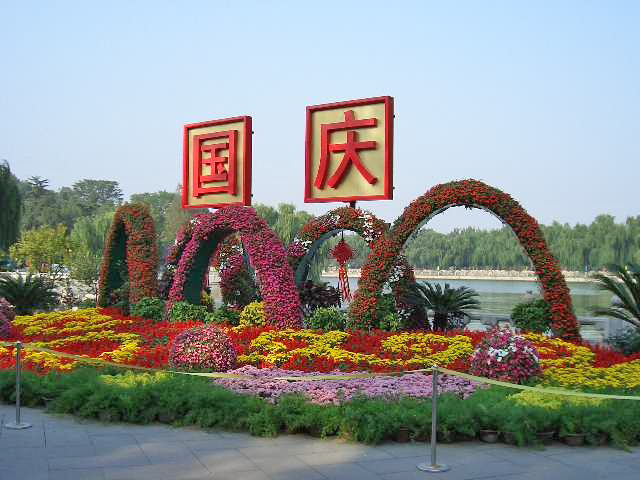
China's National Day falls on 1 October, the date in 1949 when Mao Zedong announced the founding of the People's Republic. It is a public holiday across the country, including Hong Kong and Macau, and it opens a week-long break called Golden Week. The day is marked with flag raisings, concerts and fireworks, and in some years with a military parade.
When is National Day in 2027?
National Day 2027 runs from 1 to 7 October 2027. Other years: 2026, 1 to 7 October 2026; 2028, 1 to 7 October 2028.
Every 1 October, China marks the day in 1949 when the People's Republic was proclaimed. The date is a public holiday at home and is also kept in Hong Kong and Macau, and by Chinese communities overseas. It opens a week of rest, and in some years it brings a parade. People watch flag raisings, fireworks and concerts, and remember those who died in the country's long struggles.
What the day marks
The holiday remembers 1 October 1949, when Mao Zedong, the Chinese Communist Party's chairman, gave the address that founded the People's Republic. A ceremony forming the Central People's Government was held that same day in Tiananmen Square, in the new capital, Peking, which had formerly been called Peiping, and the first public parade of the People's Liberation Army followed. The Communist Party had beaten the Kuomintang nationalist government in the Chinese Civil War, which ran from 1927 to 1950 apart from a short alliance against Japan, and the nationalists withdrew to Taiwan.
Fixing the date
Ma Xulun, who headed the China Association for Promoting Democracy and served as education minister, argued that the new state needed a national day of its own. He drafted a proposal suggesting 1 October, intending to present it to the first session of the Chinese People's Political Consultative Conference's National Committee. The meeting took place on 9 October 1949 in Qinzheng Hall at Zhongnanhai. Ma was unwell, so Xu Guangping spoke for him. Lin Boqu, secretary general of the Central People's Government, backed it, and Mao Zedong agreed. The motion passed unanimously, and on 2 December 1949 the government adopted the resolution. A December 1949 measure made 1 and 2 October a holiday for everyone, and from 1950 the day was kept on 1 October.
Flags and festivities
Across mainland China, Hong Kong and Macau, government bodies arrange fireworks, concerts, sports meetings and cultural events, and public squares are dressed for the occasion. Portraits of leaders such as Mao Zedong are put on display, and many Chinese living abroad join in. In years without a parade, the flag raising at Tiananmen Square becomes the centre of attention; anyone can attend in person, and cameras carry it to audiences at home and further afield. The Beijing Garrison Honor Guard Battalion's colour guard and the PLA's national marching band have taken part since 2017, and until 2016 armed police units supplied the ceremonial guard. Doves and coloured balloons are released at the end.
Parades through the square
The civil-military parade in Tiananmen Square joins the People's Liberation Army, the People's Armed Police and the militia with civilians, among them the Young Pioneers. Parades were yearly from 1950 to 1959, then lapsed until 1984. In 1960 the party and the State Council reworked the ceremony, settling on a small celebration every five years and a big parade every ten. Later parades came in 1999, 2009 and 2019; one planned for 1989 was called off. CCTV has carried the parade since 1984, and it goes out worldwide by satellite and cable.
Martyrs and memory
Wreaths were laid at the Monument to the People's Heroes on National Day from 2004 to 2013, after the flag raising, in years with no parade. That monument was finished in 1958 to remember the millions of Chinese who died during the long years of national struggle. Since 2014 the wreath-laying has moved to Martyrs' Day, 30 September, the eve of National Day, and is led by the paramount leader together with other party and state leaders.
How National Day is kept
The day begins with a flag raising at Tiananmen Square when no parade is scheduled. Governments then put on fireworks, concerts, sports fixtures and cultural shows, and public spaces are decorated. In some years a parade fills the morning. The holiday lasts seven days in a row, so people travel, visit family or rest. Many Chinese abroad mark the date too.
When and where
It is kept on 1 October every year. The date was fixed because the People's Republic was proclaimed on that day in 1949; the government confirmed it in December 1949 and it has been observed since 1950. Around it, six more days are added, usually in place of the adjacent weekend, making a seven-day break. The State Council sets the details each year.
It is kept all over mainland China, and also in Hong Kong and Macau. Beijing, and Tiananmen Square in particular, is the centre of the national events. Chinese communities abroad mark the day as well. The wreath-laying at the Monument to the People's Heroes was held in Tiananmen Square until it moved to Martyrs' Day.
What National Day means
For those who keep it, the day stands for the founding of the state itself, and for the civil war victory that put the Communist Party in power over the mainland. The parades present the country's armed forces and its ordinary people together, and the flag raising is a moment of national feeling. The wreaths laid at the Monument to the People's Heroes honour the millions who died in the long years of national struggle.


National Day dates: 2026, 2027, 2028
| Year | National Day date |
|---|---|
| 2026 | 1 to 7 October 2026 |
| 2027 | 1 to 7 October 2027 |
| 2028 | 1 to 7 October 2028 |
Questions people ask about National Day
When is National Day in 2027?
National Day 2027 runs from 1 to 7 October 2027. Other years: 2026, 1 to 7 October 2026; 2028, 1 to 7 October 2028.
What is this holiday?
It is China's national day, held on 1 October. It marks the day in 1949 when Mao Zedong declared the People's Republic of China founded, after the Communist Party won the Chinese Civil War. It is a public holiday across the mainland, Hong Kong and Macau.
Where are the main events?
In Beijing, mostly at Tiananmen Square, where the flag raising and any parade take place. Festivities are organized across mainland China and in Hong Kong and Macau, and many Chinese communities overseas also mark the day.
Does it always include a military parade?
No. Parades happen in selected years. They ran each year from 1950 to 1959, returned in 1984, and were held again in 1999, 2009 and 2019. A parade planned for 1989 was cancelled. In other years the flag-raising ceremony is the centrepiece.
Why is the holiday a week long?
Six additional days are added to the single public holiday, normally taking the place of the two weekend days close to 1 October. That makes seven consecutive days off, known as Golden Week. The State Council decides the exact arrangement each year.
See also
 Arbor DayAn annual secular observance dedicated to planting and caring for trees around the worldProgrammer's DayA professional day for programmers, fixed to the 256th day of the year
 Olympic flameA flame kindled in Greece, carried by torch to light the cauldron of each Games
 Water lanternSmall lamps floated on water to honour the dead and ask for good fortune
Good reading and sources
- Encyclopaedia BritannicaArticle
- China at 60: Nostalgia and progressThe Guardian, Article
- China anniversary: Beijing celebrations mark 70 years of Communist ruleBBC, Article
- China at 60: Nostalgia and progressThe Guardian, Article
- China anniversary: Beijing celebrations mark 70 years of Communist ruleBBC, Article
- National Day of the People's Republic of China on WikipediaEncyclopedia
- More photos on Wikimedia CommonsPhotos and video
- Wikidata recordOpen data
The facts on this page come from the Wikipedia article "National Day of the People's Republic of China", written by its contributors and used under the CC BY-SA 4.0 licence, and from its Wikidata record (CC0). EveryParampara rewrote the text in its own words, with AI assistance, and compares every page with the article to make sure no passage is copied. It may be reused under the same CC BY-SA 4.0 licence with a link back.
It may contain mistakes. Traditions differ from one family, village and community to the next, and the people who keep them know them best. If something is wrong, tell us. Last refreshed 2026-10-05.
More from China
All the traditions of China
🇪🇸 Spain and 5 moreArbor Day
An annual secular observance dedicated to planting and caring for trees around the worldCeremony
🇬🇷 Olympia, Greece and 5 moreOlympic flame
A flame kindled in Greece, carried by torch to light the cauldron of each GamesCeremony
🇺🇦 Ukraine and 2 moreProgrammer's Day
A professional day for programmers, fixed to the 256th day of the yearCeremony
 🇹🇷 Van, Turkey and 5 moreChildren's Day
An international observance supporting youth welfare, education and children's rightsCeremony
🇹🇷 Van, Turkey and 5 moreChildren's Day
An international observance supporting youth welfare, education and children's rightsCeremony
The same idea elsewhere
All of this kind 🇺🇸 Philadelphia, United States and 1 moreIndependence Day
The United States' national day of parades, barbecues and fireworks, kept each July 4Ceremony
🇺🇸 Philadelphia, United States and 1 moreIndependence Day
The United States' national day of parades, barbecues and fireworks, kept each July 4Ceremony
 🇺🇸 United StatesTalking stick
A carved staff that shows who may speak at a Northwest Coast gatheringCeremony
🇺🇸 United StatesTalking stick
A carved staff that shows who may speak at a Northwest Coast gatheringCeremony
 🇺🇸 Washington, United StatesState of the Union address
The US president's yearly report to Congress and the nation, given in the House chamberCeremony
🇺🇸 Washington, United StatesState of the Union address
The US president's yearly report to Congress and the nation, given in the House chamberCeremony
 🇮🇳 Kolkata, IndiaJana Gana Mana
India's national anthem, from a Bengali hymn of 1911, sung at civic occasionsCeremony
🇮🇳 Kolkata, IndiaJana Gana Mana
India's national anthem, from a Bengali hymn of 1911, sung at civic occasionsCeremony