Royal, civic and national ceremonyEuropePagan and ancientSecular and civic
Olympic flame
A flame kindled in Greece, carried by torch to light the cauldron of each Games

The Olympic flame is a fire kindled at Olympia in Greece some weeks or months before each Games, then carried by torch to the host city. It stands for the link between the ancient Greek Games and the modern ones, burns in the stadium cauldron for the whole Games, and goes out at the closing ceremony.
When is Olympic flame kept?
Olympic flame is kept on kindled at Olympia some weeks or months before each Games; put out at the closing ceremony.
The Olympic flame is a light kindled by the sun at Olympia in Greece, then carried by a long line of runners to whichever city is hosting the Games. It marks the link between the ancient Greek Games and the modern ones, and its arrival in the stadium cauldron opens the celebration. It burns for as long as the Games last.
Origins and history
The first symbolic flame arrived at the Amsterdam Games in 1928. Jan Wils, the architect who had designed the stadium, placed it in a bowl on a slender tower called the Marathon Tower, so that people for miles around could see where the Games were being held. Behind the idea lay older Greek practice. A sacred fire was kept at the altar of Hestia, and fire carried divine weight in Greek myth, where Prometheus stole it from the gods. Sanctuaries such as Olympia also kept sacred fires. In 1936 the flame and the relay that carries it were introduced at the Berlin Games by Carl Diem, with torches made by Krupp and a mirror by Zeiss Optics, firms with links to the Nazi government.
Lighting at Olympia
Kindling happens at the temple of Hera at Olympia, the site of the ancient Games. Eleven women, standing for the Vestal Virgins, take part while a fire is caught from sunlight focused through a parabolic mirror. If the sky is overcast, as in 2024, a flame lit during an earlier rehearsal is used instead. An actress plays the high priestess, and a Greek athlete already qualified for that edition usually receives the olive branch and the torch. A poem by Pindar is read, and doves are released for peace. Afterwards the flame burns at an altar near the burial place of Pierre de Coubertin's heart, then goes to the Panathenaic Stadium in Athens, where the Hellenic Olympic Committee hands it to that year's hosts.
The torch relay
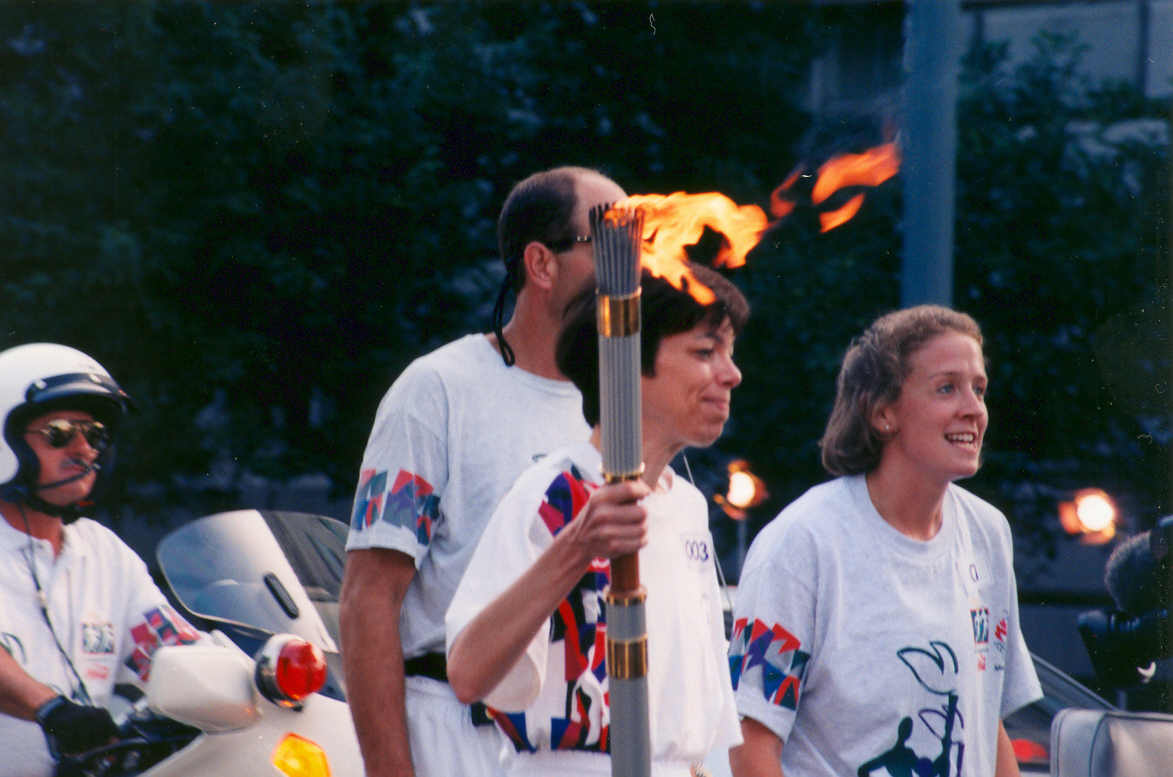
The relay that carries the flame has no ancient precedent. Carl Diem brought it in at the Berlin Games of 1936; the light covered 3,187 kilometres from Olympia to Berlin, carried by 3,331 runners over twelve days and eleven nights. Joseph Goebbels, the Nazi propaganda minister, had the filmmaker Leni Riefenstahl record it. Routes are picked to reflect a host country's history. Most bearers run, but the flame has also crossed water by boat, gone by air and travelled on horseback. In 2004 came the first relay to circle the world: 78 days, more than 78,000 kilometres, around 11,300 bearers, and first visits to Africa and South America. Protests marked the 2008 relay in London and Paris, and from 2010 the IOC allowed relays, after the Greek leg, only inside the host country.
The cauldron
The last stage of the relay is the lighting of the cauldron at the opening ceremony, in the main stadium of the Games. The final bearer runs up towards it, often at the top of a wide staircase, and touches the torch to it. That moment is taken as the symbolic start of the Games. Olympic protocol requires the lighting to be seen by those at the ceremony and to be visible to people living in the host city. Lighting the cauldron is a great honour, and it has become usual to give it to a well known athlete, sometimes a former competitor or someone whose career carries particular weight. The identity of the last runner is often kept secret until the moment itself.
Mishaps and backup flames
The flame goes out by accident or on purpose more often than people expect, and even the cauldron has gone dark during a Games. Several copies of the fire travel with the relay or wait in reserve, so a torch that dies can be lit again from one of them. Every fire can be traced back to the kindling at Olympia. In Montreal in 1976, rain put the flame out days after the opening, an official used a cigarette lighter, and organisers quickly put that out and relit from the original. In Athens in 2004, wind blew out the torch at the Panathenaic Stadium. At the Kremlin in 2013 a security officer's lighter was used instead of the backup flame.
How Olympic flame is kept
Around eleven women in the role of Vestal Virgins gather at the temple of Hera at Olympia, where a mirror focuses the sun's rays into a flame. The high priestess, an actress, presents the first runner with the olive branch and the torch; that runner is usually a Greek athlete. The flame then reaches Athens for the handover to the host country's committee. Runners carry it to the host city, and the last of them lights the cauldron at the opening ceremony. It burns there, or in a lantern as in 2024, until the closing ceremony.
When and where
The kindling happens some weeks or months before the opening ceremony, at Olympia. It is repeated on a two-year cycle, since Summer and Winter Games alternate. The flame reaches the stadium at the opening ceremony, stays alight for the length of the Games and is put out at the closing ceremony.
Kindling always takes place at Olympia in Greece, and the first handover is in Athens. From there the flame travels to whichever country is hosting, and since 2010 the relay has normally stayed within that country after the Greek leg, as Britain, Russia and Brazil chose to do.
What Olympic flame means
For those who keep the Games, the flame stands for a link running from the ancient Greek festival to the modern one. At the old festival, further fires burned at the temples of Zeus and Hera. In Greek thought fire belonged to the gods, and Prometheus's theft of it gave the flame a sacred weight. The cauldron alight in the stadium announces that the Games have begun, and the moment it goes out closes them.


Questions people ask about Olympic flame
When is Olympic flame kept?
Olympic flame is kept on kindled at Olympia some weeks or months before each Games; put out at the closing ceremony.
What is the Olympic flame?
It is a fire kindled at Olympia in Greece before each Games and carried by torch to the host city. It stands for the link between the ancient Greek Games and the modern ones, and it burns in the stadium cauldron for the whole of the Games.
Where does the lighting happen?
At the temple of Hera at Olympia, the site of the ancient Games. Eleven women in the role of Vestal Virgins assist, and sunlight focused through a parabolic mirror provides the fire.
Why does the relay travel so far?
Early relays covered great distances, and the 2004 relay went round the world over 78 days. After protests during the 2008 relay, the IOC ruled that relays after the Greek leg should stay inside the host country, and recent host nations have followed that rule.
What happens if the flame goes out?
Backup flames travel with the relay or wait in reserve, so a torch that dies is lit again from one of them. Every fire used can be traced back to the single kindling ceremony at Olympia.
See also
 Beating RetreatA military ceremony of music and drill held at sunset to mark the end of a day or a festival.
 Olympic torch relayThe ceremonial journey of the flame from Olympia to each host city of the Olympic Games
 Arbor DayAn annual secular observance dedicated to planting and caring for trees around the world
 Bastille DayFrance's national day marking the storming of the Bastille and the unity of the people on 14 July.
Good reading and sources
- Encyclopaedia BritannicaArticle
- 'A beautiful life': Formerly homeless boy who lit Olympic cauldron had suffered years of rejectionCBC, Article
- Thousands protest as Olympic flame carried through LondonThe Guardian, Article
- 'A beautiful life': Formerly homeless boy who lit Olympic cauldron had suffered years of rejectionCBC, Article
- Thousands protest as Olympic flame carried through LondonThe Guardian, Article
- Olympic flame on WikipediaEncyclopedia
- More photos on Wikimedia CommonsPhotos and video
- Wikidata recordOpen data
The facts on this page come from the Wikipedia article "Olympic flame", written by its contributors and used under the CC BY-SA 4.0 licence, and from its Wikidata record (CC0). EveryParampara rewrote the text in its own words, with AI assistance, and compares every page with the article to make sure no passage is copied. It may be reused under the same CC BY-SA 4.0 licence with a link back.
It may contain mistakes. Traditions differ from one family, village and community to the next, and the people who keep them know them best. If something is wrong, tell us. Last refreshed 2026-10-05.
More from Greece
All the traditions of Greece
🇬🇷 Olympia, Greece and 1 moreOlympic torch relay
The ceremonial journey of the flame from Olympia to each host city of the Olympic GamesCeremony
 🇬🇷 Athens, Greece and 1 moreOhi DayΕπέτειος του Όχι
A Greek national holiday on October 28 that marks the refusal of an Italian ultimatum in 1940.Ceremony
🇬🇷 Athens, Greece and 1 moreOhi DayΕπέτειος του Όχι
A Greek national holiday on October 28 that marks the refusal of an Italian ultimatum in 1940.Ceremony
 🇬🇷 Athens, Greece and 1 moreCelebration of the Greek RevolutionΕορτασμός της Ελληνικής Επανάστασης του 1821
An annual civic holiday of parades and church services marking Greek independenceCeremony
🇬🇷 Athens, Greece and 1 moreCelebration of the Greek RevolutionΕορτασμός της Ελληνικής Επανάστασης του 1821
An annual civic holiday of parades and church services marking Greek independenceCeremony
 🇫🇷 France and 3 moreCashiering
A ceremonial military dismissal that publicly strips an officer of rank and insigniaCeremony
🇫🇷 France and 3 moreCashiering
A ceremonial military dismissal that publicly strips an officer of rank and insigniaCeremony
The same idea elsewhere
All of this kind 🇺🇸 Philadelphia, United States and 1 moreIndependence Day
The United States' national day of parades, barbecues and fireworks, kept each July 4Ceremony
🇺🇸 Philadelphia, United States and 1 moreIndependence Day
The United States' national day of parades, barbecues and fireworks, kept each July 4Ceremony
 🇺🇸 Washington, United StatesState of the Union address
The US president's yearly report to Congress and the nation, given in the House chamberCeremony
🇺🇸 Washington, United StatesState of the Union address
The US president's yearly report to Congress and the nation, given in the House chamberCeremony
 🇮🇳 Kolkata, IndiaJana Gana Mana
India's national anthem, from a Bengali hymn of 1911, sung at civic occasionsCeremony
🇮🇳 Kolkata, IndiaJana Gana Mana
India's national anthem, from a Bengali hymn of 1911, sung at civic occasionsCeremony
 🇺🇸 United StatesTalking stick
A carved staff that shows who may speak at a Northwest Coast gatheringCeremony
🇺🇸 United StatesTalking stick
A carved staff that shows who may speak at a Northwest Coast gatheringCeremony