Royal, civic and national ceremonyEuropeSecular and civic
Arbor Day
An annual secular observance dedicated to planting and caring for trees around the world

Arbor Day is a worldwide observance where individuals and communities gather to plant and care for trees. Dating back centuries and held on various dates depending on local planting seasons, it encourages environmental stewardship and youth education through collective action.
When is Arbor Day kept?
Arbor Day is kept on annually on dates varying by climate and planting season.
Arbor Day is an annual secular observance encouraging people and communities to plant and nurture trees. Observed across numerous countries, the day highlights the value of forests, environmental care, and nature education. Because tree planting depends directly on regional weather and soil conditions, different nations and regions celebrate the holiday at different times of the year, mostly during their local spring planting seasons.
Early European roots
The earliest recorded tree-planting festival took place in the Spanish town of Mondoñedo in 1594, organized by the local mayor. Centuries later, in 1805, the Spanish village of Villanueva de la Sierra hosted what is recognized as the first modern Arbor Day. A local priest, Don Juan Abern Samtrés, initiated the celebration on Carnival Tuesday, motivated by the value of trees for hygiene, health, and the environment. Following Mass, clergy, teachers, and townsfolk planted poplars and celebrated with meals and dancing over three days. The priest also sent a manifesto to neighbouring settlements urging them to protect nature.
Growth across continents
In the United States, J. Sterling Morton established the first Arbor Day in Nebraska in 1872, where participants planted roughly one million saplings. The initiative expanded through advocates like Birdsey Northrop, who promoted the celebration across America, Europe, Australia, and Japan in the late nineteenth century. Later, conservationists urged United States President Theodore Roosevelt to address youth directly, resulting in a 1907 presidential proclamation advocating forestry education in schools. Over time, diverse countries adopted their own traditions, from Australia's school planting drives starting in 1889 to nationwide civic campaigns in China and India.
Observance and community activities
Celebrations focus on practical environmental stewardship and public education. Schoolchildren often receive young seedlings to take home or plant on school grounds, learning proper cultivation techniques and forest ecology. In various countries, governments coordinate mass afforestation drives, while civic groups organize tree-climbing, maintenance workshops, and poetry contests. Some places tie tree planting to weddings or health awareness campaigns. Because saplings require suitable weather to take root, each region selects its date based on the local climate, creating a calendar of celebrations that spans the entire year.
How Arbor Day is kept
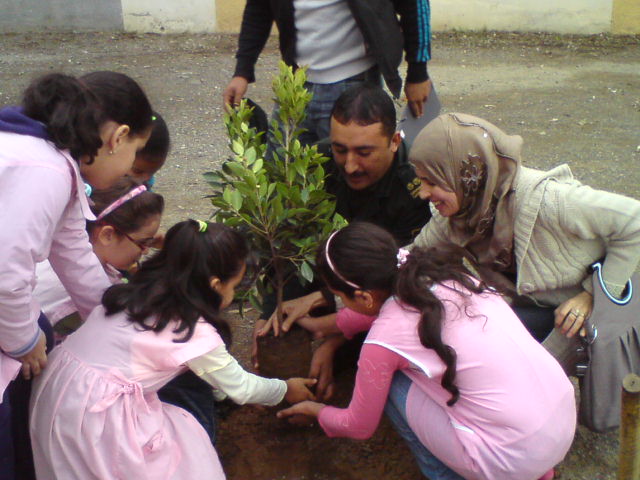
Communities, schools, and civic groups gather to plant saplings in parks, streets, schoolyards, and private gardens. Children take part in lessons on forest conservation, while volunteers dig soil, stake young trees, and water new growth. Local authorities and environmental bodies frequently distribute free seedlings to residents, and participants also join tree-tending workshops, climbing activities, or regional planting competitions.
When and where
The date varies across the globe to match the ideal local planting seasons and climate conditions. Many countries celebrate during the spring, while others choose specific months, such as March in Iran and China, July in Australia and India, or November in Kenya and Italy.
Arbor Day is observed internationally, with established traditions in nations across the Americas, Europe, Asia, Africa, and Oceania. Planting events occur in public parks, municipal forests, schoolyards, community centres, and coastal zones.
What Arbor Day means
The day represents environmental renewal, civic responsibility, and care for future generations. Planting a sapling signifies hope, hygiene, and harmony with nature. In some traditions, planting a tree alongside a wedding or civic milestone marks new beginnings, while mass planting efforts also honour conservation leaders and collective commitment to the earth.


Questions people ask about Arbor Day
When is Arbor Day kept?
Arbor Day is kept on annually on dates varying by climate and planting season.
What is Arbor Day?
It is an annual secular holiday where individuals, schools, and communities come together to plant trees and learn about the importance of forest conservation.
Who started the first modern Arbor Day?
Don Juan Abern Samtrés, a Spanish priest in Villanueva de la Sierra, launched the first modern celebration in 1805 with community tree planting, music, and feasts.
What activities take place on Arbor Day?
Participants plant seedlings, tend existing woodlands, join environmental education programmes, and take part in activities such as tree climbing or poetry competitions.
See also
 Victoria DayA Canadian public holiday celebrating the monarch and welcoming the return of summer
 Mother's DayA worldwide annual celebration dedicated to mothers, maternal bonds and family care
 NowruzThe Iranian new year at the March equinox, kept with fire, greenery and picnics
 CandlemasA Christian feast of candle blessings marking the end of the Christmas season
Good reading and sources
- [KOREA ENCOUNTERS]Arbor Day and the reforestation of KoreaThe Korea Times, Article
- [KOREA ENCOUNTERS]Arbor Day and the reforestation of KoreaThe Korea Times, Article
- Arbor Day on WikipediaEncyclopedia
- More photos on Wikimedia CommonsPhotos and video
- Wikidata recordOpen data
The facts on this page come from the Wikipedia article "Arbor Day", written by its contributors and used under the CC BY-SA 4.0 licence, and from its Wikidata record (CC0). EveryParampara rewrote the text in its own words, with AI assistance, and compares every page with the article to make sure no passage is copied. It may be reused under the same CC BY-SA 4.0 licence with a link back.
It may contain mistakes. Traditions differ from one family, village and community to the next, and the people who keep them know them best. If something is wrong, tell us. Last refreshed 2026-10-04.
More from Spain
All the traditions of Spain 🇪🇸 Valencia, SpainWater Tribunal of the plain of ValenciaTribunal de les Aigües de la Vega de València
A weekly outdoor gathering of Valencian farmers settling irrigation disputes by word of mouthCeremony
🇪🇸 Valencia, SpainWater Tribunal of the plain of ValenciaTribunal de les Aigües de la Vega de València
A weekly outdoor gathering of Valencian farmers settling irrigation disputes by word of mouthCeremony
 🇺🇸 United States and 5 moreColumbus Day
An annual autumn holiday marking the 1492 arrival of Christopher Columbus in the AmericasCeremony
🇺🇸 United States and 5 moreColumbus Day
An annual autumn holiday marking the 1492 arrival of Christopher Columbus in the AmericasCeremony
 🇨🇦 Canada and 5 moreWorkers' Memorial Day
An annual day remembering people killed, injured, or made ill by their workCeremony
🇪🇸 Spain and 5 moreInternet DayDía de Internet
An annual May observance dedicated to digital access, education and online community.Ceremony
🇨🇦 Canada and 5 moreWorkers' Memorial Day
An annual day remembering people killed, injured, or made ill by their workCeremony
🇪🇸 Spain and 5 moreInternet DayDía de Internet
An annual May observance dedicated to digital access, education and online community.Ceremony
The same idea elsewhere
Spring and renewal compared
🇺🇸 United States and 5 moreMother's Day
A worldwide annual celebration dedicated to mothers, maternal bonds and family careHome
🇮🇷 Iran and 7 moreNowruzنوروز
The Iranian new year at the March equinox, kept with fire, greenery and picnicsSeasonal
 🇮🇱 Jerusalem, IsraelPassoverפסח
A Jewish spring festival celebrating freedom from slavery with ritual mealsSpiritual · Dinner
🇮🇱 Jerusalem, IsraelPassoverפסח
A Jewish spring festival celebrating freedom from slavery with ritual mealsSpiritual · Dinner
 🇮🇳 Mathura, India and 5 moreHoliहोली (Hindi)
A spring festival of colours and bonfires that marks the end of winter and the triumph of good over evil.Festival
🇮🇳 Mathura, India and 5 moreHoliहोली (Hindi)
A spring festival of colours and bonfires that marks the end of winter and the triumph of good over evil.Festival