Festivals and celebrationsEuropeSecular and civic
Pinkpop
A three-day pop and rock festival in the Netherlands, held on the Pentecost weekend

Pinkpop is an annual pop and rock festival at the Megaland site in Landgraaf, in the Dutch province of Limburg. It has run since 1970 and usually falls on the Pentecost weekend, which gives the festival its name, though some years it moves to June.
When is Pinkpop marked?
Pinkpop is kept as part of Pentecost, which runs from 16 to 17 May 2027.
Each spring, tens of thousands of people travel to Landgraaf in the south of the Netherlands for Pinkpop, a pop music festival that has been held almost without a break since 1970. Its name comes from Pinksteren, the Dutch word for Pentecost, the holiday weekend it usually occupies. Three days of rock, pop, hip-hop and electronic acts play across several stages.
What it is
The festival takes place at Megaland, a site of about 27 hectares in Landgraaf, a town in Dutch Limburg. It runs for three days, with room for 60,000 people each day, and music is played on four separate stages. Since 1996 it has been a three-day event. Guinness World Records names it the world's longest unbroken yearly pop festival. Reading, which began in 1961, is older, but a local council ban cost it the 1984 and 1985 editions, so Pinkpop holds the record for the longest consecutive run.
How it began
The first Pinkpop was held in 1970 at the Burgemeester Damen Sportpark in Geleen, where more than 10,000 people watched a makeshift stage raised among the stands. Jan Smeets, then 23 years old, was one of the organisers. The music ran from one until six in the afternoon on 18 May, and there were still complaints about the noise. A year earlier a free gathering called Pinknick had drawn almost 10,000 people to hear local bands play for nothing, with a free pig roast and free apples on offer. Its model was the Monterey festival of 1967.
The name and the doll
Two words sit behind the name. Pink is short for Pinksteren, the Dutch term for Pentecost, and pop stands for pop music. A later and more playful reading takes pink as the English colour word and pop as the Dutch word for a doll, and that is where the logo comes from: a doll in a pink dress. The 1969 forerunner had a different name, Pinknick, chosen because visitors were expected to bring their own food. In 2007 the organisers added a spin-off, Pinkpop Classic, held on 11 August for an older rock audience and featuring bands from past decades. It returned in later years, but not in 2011, when too few acts could be booked.
When it falls
Pentecost, Pinksteren in Dutch, fixes the date in most years. Should the holiday land early in May, the organisers push the festival into June. That is what happened in 2008, the first year Pinkpop did not sit on the Pentecost weekend; it moved to late May and drew 94,000 different visitors, the largest figure up to then. Similar moves followed in 2010, 2013, 2015 and 2016. In 2005 the early date left touring bands elsewhere, only 22,000 tickets went, and the founder came close to ending the festival. The 2020 and 2021 editions were cancelled because of the COVID-19 pandemic.
Today and change
Rock and pop top the bill most years, with hip-hop, electronic music, heavy metal and indie bands also on the programme. The 50th anniversary was marked in 2019, and the festival has carried on through the 2020s with Pearl Jam, Metallica and P!nk among recent headliners. A ceiling of 60,000 tickets a day was brought in during 1994 to stop overcrowding, and the event sold out six years running between 2006 and 2011. About 700 acts have played across more than 40 editions, and total visits have passed two million.
How Pinkpop is kept
A ticket buys entry to a three-day weekend, usually Friday to Sunday. People arrive with tents and settle at the Megaland site; camping is part of the event. Music plays on four stages, and the biggest names close each evening on the main stage. Dutch bands appear alongside acts from abroad. Day tickets and weekend passes are both sold, and in strong years the passes run out. Between performances visitors eat, drink and walk between stages. The weekend ends on Sunday night, and the Monday after is often free because of Pentecost.
When and where
It is normally kept on the Pentecost weekend, known in Dutch as Pinksteren, so the date shifts each year with that Christian holiday. If Pentecost comes very early in May, the organisers postpone the festival to a later date in June. This has happened several times since 2008.
Pinkpop is a Dutch festival, staged since 1988 at Megaland in Landgraaf, in the province of Limburg. Its first editions were held at the Burgemeester Damen Sportpark in Geleen. The Megaland ground lies on what was once the Staatsmijn Wilhelmina coal mine, where building work started in 1982.
What Pinkpop means
Pinkpop carries a sense of continuity in Dutch music life. Guinness World Records recognises its unbroken yearly run, a point of pride for the festival and its audience. The name ties it to Pinksteren, the holiday that has shaped its dates from the start. The 1969 forerunner drew grandparents and grandchildren to the same field, and families went home with bags of free apples. For regular visitors the weekend has become a yearly meeting point, less a single concert than a fixed point in the calendar.


Days Pinkpop is marked
Questions people ask about Pinkpop
When is Pinkpop marked?
Pinkpop is kept as part of Pentecost, which runs from 16 to 17 May 2027.
What is Pinkpop?
A three-day pop music festival held each year in Landgraaf, in the Dutch province of Limburg. It began in 1970 and is known for its long unbroken run. Guinness World Records calls it the world's longest unbroken yearly pop festival.
Where does it take place?
At Megaland in Landgraaf, where it has been held since 1988. The early editions took place at the Burgemeester Damen Sportpark in Geleen, a venue in the same province. The Megaland site covers about 27 hectares.
Why is it called Pinkpop?
Pink is shortened from Pinksteren, the Dutch word for Pentecost, and pop stands for pop music. People later read the name another way, taking pink as the English colour and pop as the Dutch word for a doll, which explains the logo of a doll in a pink dress.
How big is the festival?
The site holds 60,000 people a day, and there are four stages. More than two million visits have been counted across 44 editions, with roughly 700 acts appearing. Between 2006 and 2011 it sold out six years in a row.
See also
 St. Martin's DayA November feast of lantern walks, bonfires, roast goose and new wine
 King's DayA Dutch national holiday celebrating the monarch's birthday with street markets and orange attire.
 KetikotiAn annual Emancipation Day marking the end of slavery in Suriname and the Netherlands
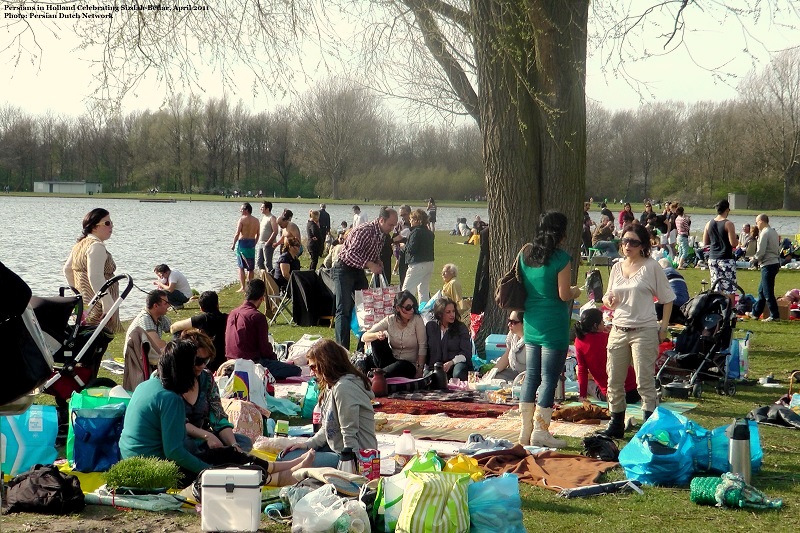 Sizdah BedarAn open-air picnic holiday concluding the Iranian New Year celebrations
Good reading and sources
- Pinkpop Festival on WikipediaEncyclopedia
- More photos on Wikimedia CommonsPhotos and video
- Wikidata recordOpen data
The facts on this page come from the Wikipedia article "Pinkpop Festival", written by its contributors and used under the CC BY-SA 4.0 licence, and from its Wikidata record (CC0). EveryParampara rewrote the text in its own words, with AI assistance, and compares every page with the article to make sure no passage is copied. It may be reused under the same CC BY-SA 4.0 licence with a link back.
It may contain mistakes. Traditions differ from one family, village and community to the next, and the people who keep them know them best. If something is wrong, tell us. Last refreshed 2026-10-05.
More from the Netherlands
All the traditions of the Netherlands
🇳🇱 Amsterdam, NetherlandsKing's DayKoningsdag
A Dutch national holiday celebrating the monarch's birthday with street markets and orange attire.Festival
🇮🇷 Iran and 4 moreSizdah Bedarسیزدهبدر
An open-air picnic holiday concluding the Iranian New Year celebrationsFestival
🇸🇷 Paramaribo, Suriname and 1 moreKetikotiKeti Koti
An annual Emancipation Day marking the end of slavery in Suriname and the NetherlandsFestival
 🇳🇱 NetherlandsBloemencorso Bollenstreek
An annual mid-April parade of flower-covered floats across the Dutch bulb regionFestival
🇳🇱 NetherlandsBloemencorso Bollenstreek
An annual mid-April parade of flower-covered floats across the Dutch bulb regionFestival
The same idea elsewhere
All of this kind 🇹🇷 Turkey and 5 moreEid al-Fitrعيد الفطر
The feast that ends Ramadan, opened with morning prayers, sweets and visits homeFestival · Feasts and festival meals
🇹🇷 Turkey and 5 moreEid al-Fitrعيد الفطر
The feast that ends Ramadan, opened with morning prayers, sweets and visits homeFestival · Feasts and festival meals
 🇮🇳 Ayodhya, India and 7 moreDiwaliदीपावली (Dīpāvalī)
A five-day festival of lights celebrated across India and its diaspora to mark the victory of light over darkness.Festival · Feasts and festival meals
🇮🇳 Ayodhya, India and 7 moreDiwaliदीपावली (Dīpāvalī)
A five-day festival of lights celebrated across India and its diaspora to mark the victory of light over darkness.Festival · Feasts and festival meals
 🇮🇱 Jerusalem, Israel and 1 moreHanukkahחֲנֻכָּה
An eight-day Jewish festival marking the rededication of the Second Temple in Jerusalem and the miracle of a single day'Festival
🇮🇱 Jerusalem, Israel and 1 moreHanukkahחֲנֻכָּה
An eight-day Jewish festival marking the rededication of the Second Temple in Jerusalem and the miracle of a single day'Festival
 🇪🇬 Egypt and 5 moreMawlidمولد (Mawlid)
An annual festival marking the birth of the Prophet Muhammad, marked by poetry, processions and feasts.Festival · Feasts and festival meals
🇪🇬 Egypt and 5 moreMawlidمولد (Mawlid)
An annual festival marking the birth of the Prophet Muhammad, marked by poetry, processions and feasts.Festival · Feasts and festival meals