Dress and adornmentEuropeSecular and civic
Podvorotnichok
In its own language: подворотничок
A detachable white fabric strip sewn inside military uniform collars for hygiene
The podvorotnichok is a detachable white cloth strip sewn inside military uniform collars to guard against chafing and dirt. Originating in Russia and standardized across Soviet forces, the daily routine of replacing it became a distinct barracks tradition.
When is Podvorotnichok kept?
Podvorotnichok is kept on daily during military service, sewn each evening before lights out.
A podvorotnichok is a detachable strip of white cloth hand-sewn along the inner collar of a military uniform. First adopted in Russia and later made standard during the Soviet era, this daily hygienic barrier shielded the neck from rough outerwear and infection. Beyond cleanliness, the ritual of stitching it each night became a quiet marker of military discipline and seniority.
Origins and hygiene
European armies had long used detachable collars to make stiff tunics more wearable, and the custom entered Russian military dress in the early twentieth century. Coarse greatcoats easily irritated bare skin, and medical understanding of the era emphasised how easily infections could enter through raw, chafed necks in field conditions. A strip of bleached calico created a protective barrier between rough wool and the skin, keeping uniforms cleaner for longer. The Soviet military made the white undercollar mandatory for all service personnel on 13 February 1935, cementing it as an essential component of the daily uniform.
The daily sewing routine
Maintaining the collar required constant handiwork. Every night before lights out, soldiers stripped away the worn cloth and hand-stitched a fresh white strip into place. Morning inspections tested both cleanliness and sewing skill. If an undercollar showed spots of grime, uneven stitching, or crooked alignment, the wearer faced discipline and was ordered to redo the work immediately. This strict standard reinforced military neatness, turning basic uniform upkeep into a daily test of attention to detail and personal hygiene across the ranks.
Customs of seniority
Although military regulations governed every stitch, conscripts developed informal customs to display their time in service. During the Brezhnev era, soldiers in their second year began stiffening their collars by inserting polyvinyl chloride insulation salvaged from electrical wiring, making the strip look thicker and more prominent than a standard recruit's collar. As soldiers neared the end of their service, some replaced standard issue white thread with coloured thread or embroidered the number of days remaining until their demobilisation, turning an austere hygiene requirement into a badge of veteran status.
Modern discontinuation
Following the collapse of the Soviet Union in 1991, several former Soviet republics continued requiring the undercollar, while others gradually abandoned it. In the 2010s, the Russian military modernised its equipment, rolling out the all-season VKPO field uniform. This new design made both traditional footwraps and the hand-sewn collar obsolete. The practice formally ended in Russia when Decree 300, signed on 22 June 2015 by Defense Minister Sergei Shoigu, removed the podvorotnichok from the official armed forces clothing schedule.
How Podvorotnichok is kept
Each evening before lights out, a soldier removes the soiled collar strip from the tunic and stitches on a fresh piece of bleached calico. The stitch lines must sit straight and taut without puckering. The next morning, commanding officers inspect the uniform to confirm the collar is spotless and correctly sewn. If inspectors detect any stains or flawed handiwork, the soldier is reprimanded and required to sew a replacement immediately.
When and where
This uniform upkeep occurred daily throughout an individual's military service. Soldiers replaced and restitched the collar each evening during barracks routine, ensuring it was clean and ready for morning uniform inspection.
The undercollar was worn across military bases and garrisons in Russia, throughout the Soviet Union, and across various post-Soviet states. The practice also made occasional appearances in civilian clothing.
What Podvorotnichok means
While intended as a sanitary measure against neck abrasions and field infections, the podvorotnichok came to symbolize military order and conscript hierarchy. The crispness of the white border signaled personal pride and obedience, while illicit modifications like wire padding or countdown stitching allowed veteran soldiers to subtly display their seniority within a rigid hierarchy.
Questions people ask about Podvorotnichok
When is Podvorotnichok kept?
Podvorotnichok is kept on daily during military service, sewn each evening before lights out.
What is a podvorotnichok?
It is a detachable white cloth band hand-sewn along the inside of a military uniform collar. It protects the neck from chafing against coarse fabric and helps prevent dirt and skin infections.
How did soldiers customize their collars?
Senior conscripts altered their collars to demonstrate veteran status. Some lined the cloth with electrical wire insulation to make it stand out, while soldiers close to discharge stitched the number of days left before leaving service.
Why was the tradition phased out?
The Russian armed forces phased out the collar alongside traditional footwraps in the 2010s after introducing modern uniforms. The requirement was officially eliminated by Russian ministerial decree in June 2015.
See also
 GáktiA traditional coat worn by the Sámi people across northern Scandinavia and Russia, signaling origin and status through c
 RushnykA sacred embroidered cloth used in East Slavic rituals, weddings and daily life.
 Traditional tattooingThe ancient custom of marking the skin for protection, healing, status and sacred rites
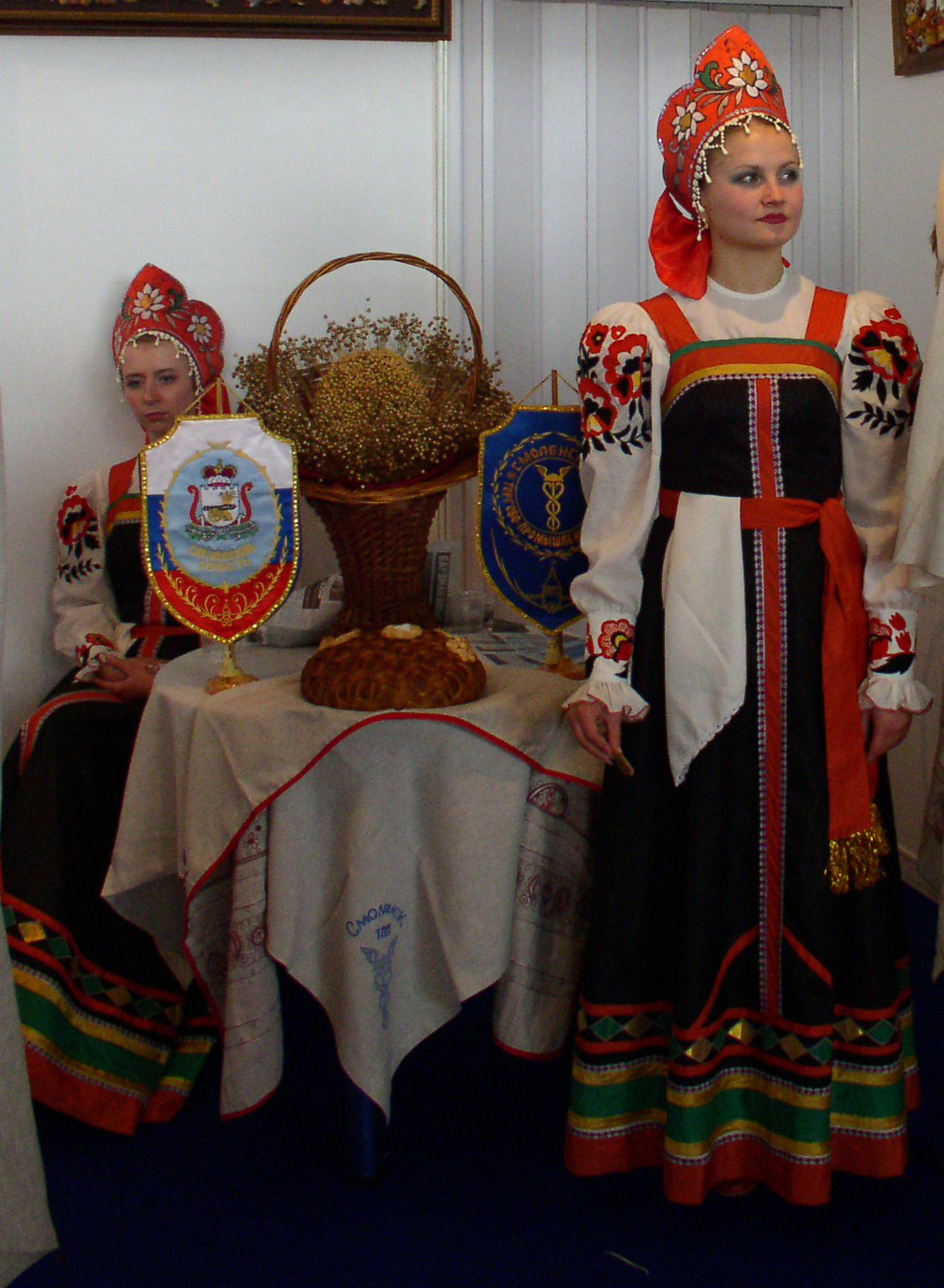 SarafanA long, flared Russian dress, the everyday wear of peasant women for centuries
Good reading and sources
The facts on this page come from the Wikipedia article "Podvorotnichok", written by its contributors and used under the CC BY-SA 4.0 licence, and from its Wikidata record (CC0). EveryParampara rewrote the text in its own words, with AI assistance, and compares every page with the article to make sure no passage is copied. It may be reused under the same CC BY-SA 4.0 licence with a link back.
It may contain mistakes. Traditions differ from one family, village and community to the next, and the people who keep them know them best. If something is wrong, tell us. Last refreshed 2026-10-06.
More from Russia
All the traditions of Russia
🇺🇦 Ukraine and 2 moreRushnykрушник
A sacred embroidered cloth used in East Slavic rituals, weddings and daily life.Dress
🇳🇴 Norway and 3 moreGákti
A traditional coat worn by the Sámi people across northern Scandinavia and Russia, signaling origin and status through cDress
🇪🇬 Egypt and 5 moreTraditional tattooing
The ancient custom of marking the skin for protection, healing, status and sacred ritesDress
 🇹🇷 Turkey and 3 moreKalpak
A tall cap of Turkic peoples, thick for winter and wide and light for summerDress
🇹🇷 Turkey and 3 moreKalpak
A tall cap of Turkic peoples, thick for winter and wide and light for summerDress
The same idea elsewhere
All of this kind 🇮🇳 Paithan, IndiaPaithani
A handwoven silk sari from Maharashtra, with a squared border and a peacock palluDress
🇮🇳 Paithan, IndiaPaithani
A handwoven silk sari from Maharashtra, with a squared border and a peacock palluDress
 🇮🇱 Israel and 1 moreTzitzitצִיצִית
Knotted ritual fringes worn on a four-cornered garment, a reminder of the commandmentsDress
🇮🇱 Israel and 1 moreTzitzitצִיצִית
Knotted ritual fringes worn on a four-cornered garment, a reminder of the commandmentsDress
 🇼🇸 Samoa and 1 moreʻIe tōga
Precious woven mats exchanged in Samoan ceremonies to honor family ties and chiefly status.Dress
🇼🇸 Samoa and 1 moreʻIe tōga
Precious woven mats exchanged in Samoan ceremonies to honor family ties and chiefly status.Dress
 🇱🇸 LesothoMokorotlo
A conical straw hat that serves as the national symbol of Lesotho and a key element of Basotho traditional dress.Dress
🇱🇸 LesothoMokorotlo
A conical straw hat that serves as the national symbol of Lesotho and a key element of Basotho traditional dress.Dress