Music, dance and storytellingSub-Saharan Africa
Poetry Africa
A week or more of readings, music and workshops in Durban, with poets from Africa
An annual international poetry festival in Durban, South Africa, it runs for seven to ten days in the last months of the year. More than twenty poets take part, most of them from South Africa and other African countries, in readings, music, theatre, workshops and school visits.
When is Poetry Africa kept?
Poetry Africa is kept on once a year, in the last three months of the calendar year, lasting seven to ten days.
Poetry Africa gathers poets from South Africa and elsewhere in Africa for a festival of roughly a week in Durban. Audiences hear readings, music and theatre, and there are workshops, seminars and open mic sessions. The Centre for Creative Arts at the University of KwaZulu-Natal runs it. Organisers say it strengthens artistic ties across the continent and brings professional art to communities that seldom see it.
What it is
Poetry Africa is an international festival devoted to poetry, held in Durban, South Africa, and mostly shaped by poets from that country and the rest of the continent. It is not a single reading but a gathering lasting a week or longer. Around twenty or more poets appear in a typical year, and the programme mixes the spoken word with other arts. Over its first fifteen editions, more than three hundred poets and writers took part. The event is one of several annual festivals coordinated by the Centre for Creative Arts.
Origins and growth
Poetry Africa has been organised by the Centre for Creative Arts, an arts body that works across disciplines. Fifteen editions had been held by 2011, and in that time more than three hundred poets and writers took part. The festival has travelled beyond its home city at least once: in 2007 it appeared at the World Social Forum in Kenya. South African poets form the core of each line-up, joined by writers from other parts of Africa and some from further afield. Book launches have become part of the programme, so new collections can reach an audience in person.
A festival programme
In a typical edition the days are full. Evenings bring readings and performances, sometimes with musicians or actors sharing the stage. In daylight hours the festival turns to teaching and talk: seminars, writing workshops and sessions where anyone may step up to an open microphone. Poets visit schools and colleges, which the organisers treat as an important part of the work. Launches for new books are fitted in. The whole thing closes with a finale at the BAT Centre in Durban. Theatre pieces and music sit alongside the poetry rather than being add-ons to it.
The organising body
The Centre for Creative Arts is an arts organisation at the University of KwaZulu-Natal, working from Durban. It describes itself as a facilitator, a promoter, a networker and a builder of capacity. Its work, in its own words, helps the artistic potential of the region come to fruition. The Centre runs four annual festivals and says each one is among the foremost of its kind locally. It also takes on other projects. Its stated concerns include intercultural artistic relationships within South Africa, across the continent and around the world, and reaching communities that have little contact with leading artists.
Poets who have come
Among the hundreds of participants are writers well known in poetry circles. Dennis Brutus, Gcina Mhlope, Pitika Ntuli and Lesego Rampolokeng each came in several different years. Chris Abani took part in 2002, and Benjamin Zephaniah appeared twice, in 2000 and 2006. Other guests include Werewere Liking in 2004, Mamta Sagar in 2005, Stanley Onjezani Kenani in 2007 and Myroslav Laiuk in 2018. Sutardji Calzoum Bachri, Bob Holman, Gabeba Baderoon, Kwame Dawes, Gary Cummiskey, Megan Hall, Didier Awadi and Bantu Mwaura also feature in the festival's history.
How Poetry Africa is kept
Poets apply or are invited, and twenty or more perform each year, with a strong showing from South Africa and the rest of Africa, plus guests from further away. Over the days of the festival, audiences attend readings, theatre pieces, concerts and book launches. Daytime sessions include seminars and writing workshops, and there are open mic slots where anyone can read. Poets also visit schools. The programme ends with a finale at the BAT Centre in Durban. Across fifteen editions by 2011, more than three hundred poets and writers had taken part.
When and where
It is held once a year, in the last quarter of the calendar year, and runs for seven to ten days. The organisers choose the dates for each edition. By 2011, fifteen editions had taken place.
Poetry Africa is based mainly in Durban, South Africa, and that city hosts most of the programme. One strand was taken to Kenya for the World Social Forum in 2007. Inside Durban, the closing event is held at the BAT Centre.
What Poetry Africa means
The organisers present the festival as more than a series of performances. In their mission statement they describe the Centre as a facilitator and promoter that helps the region's artistic life grow. They stress links between artists in South Africa, the wider continent and the world. A development aim runs alongside the shows: work with schools, colleges and community arts groups, so that people who rarely meet professional performers can do so.
Questions people ask about Poetry Africa
When is Poetry Africa kept?
Poetry Africa is kept on once a year, in the last three months of the calendar year, lasting seven to ten days.
What is Poetry Africa?
It is an international poetry festival held in Durban, South Africa. Poets read and perform over seven to ten days, with music, theatre and book launches on the programme. The Centre for Creative Arts at the University of KwaZulu-Natal organises it.
Where is it held?
Most of it happens in Durban, South Africa. The closing event takes place at the BAT Centre. A Poetry Africa programme was also staged at the World Social Forum in Kenya in 2007.
Who takes part?
Around twenty or more poets appear each year, most of them from South Africa and other African countries, and some from further afield. Writers also lead workshops and visit schools. More than three hundred poets and writers have taken part across the festival's fifteen editions to 2011.
What kinds of events are on the programme?
Readings and performances fill the evenings, with music and theatre alongside them. Daytime brings seminars, writing workshops, open mic sessions and school visits. New books are launched during the festival, and the programme closes with a finale at the BAT Centre in Durban.
See also
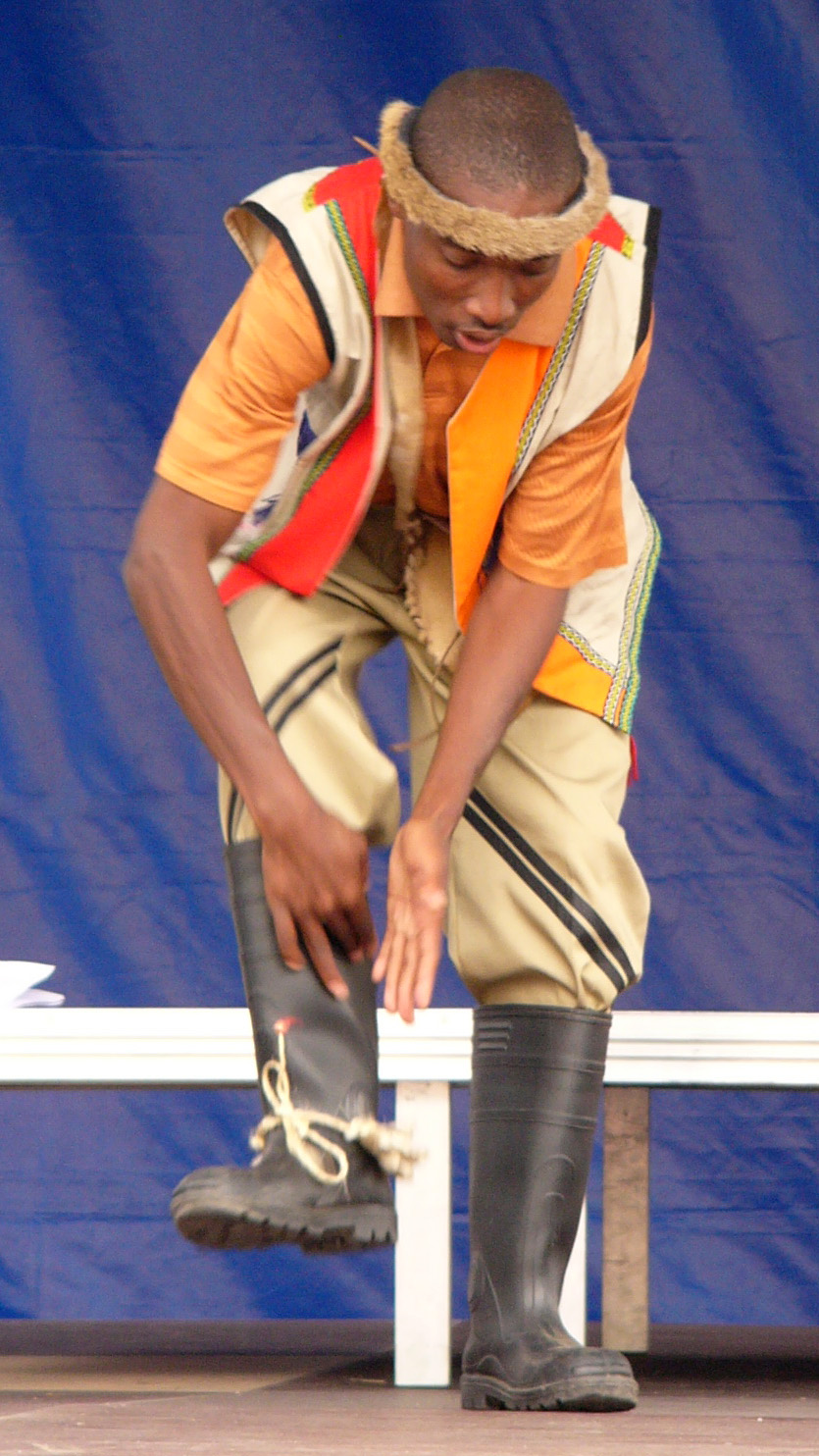 Gumboot danceA percussive South African dance born in the mines, performed in Wellington boots to communicate and celebrate.
 IndlamuA Zulu war dance of two warriors in pelts, matched move for move and stamped on the beat
 BhajanDevotional songs of South Asia, sung alone or together with drums and cymbals
 KgotlaA village meeting and customary court in Botswana, led by the chief
Good reading and sources
The facts on this page come from the Wikipedia article "Poetry Africa", written by its contributors and used under the CC BY-SA 4.0 licence, and from its Wikidata record (CC0). EveryParampara rewrote the text in its own words, with AI assistance, and compares every page with the article to make sure no passage is copied. It may be reused under the same CC BY-SA 4.0 licence with a link back.
It may contain mistakes. Traditions differ from one family, village and community to the next, and the people who keep them know them best. If something is wrong, tell us. Last refreshed 2026-10-11.
More from South Africa
All the traditions of South Africa
🇿🇦 South Africa and 1 moreIndlamu
A Zulu war dance of two warriors in pelts, matched move for move and stamped on the beatPerformance
🇿🇦 Cape Town, South AfricaGumboot danceIsicathulo
A percussive South African dance born in the mines, performed in Wellington boots to communicate and celebrate.Performance
🇮🇳 India and 3 moreBhajanभजनम् (bhajanam)
Devotional songs of South Asia, sung alone or together with drums and cymbalsPerformance
🇧🇼 Botswana and 2 moreKgotla
A village meeting and customary court in Botswana, led by the chiefCeremony
The same idea elsewhere
All of this kind 🇳🇿 Auckland, New ZealandPoi
A Māori performing art of swinging tethered weights in rhythmical patterns.Performance
🇳🇿 Auckland, New ZealandPoi
A Māori performing art of swinging tethered weights in rhythmical patterns.Performance
 🇵🇭 Philippines and 1 morePangalay
A traditional fingernail dance of the Tausūg and Bajau peoples in the Sulu Archipelago and Sabah.Performance
🇵🇭 Philippines and 1 morePangalay
A traditional fingernail dance of the Tausūg and Bajau peoples in the Sulu Archipelago and Sabah.Performance
 🇺🇦 Kyiv, UkraineBanduraБандура
A Ukrainian plucked string instrument played to accompany epic songs and folk balladsPerformance
🇺🇦 Kyiv, UkraineBanduraБандура
A Ukrainian plucked string instrument played to accompany epic songs and folk balladsPerformance
 🇵🇱 Kraków, PolandSt. Mary's Trumpet CallHejnał mariacki
A five-note bugle call played hourly from the tower of St. Mary's Church in Kraków, Poland.Performance
🇵🇱 Kraków, PolandSt. Mary's Trumpet CallHejnał mariacki
A five-note bugle call played hourly from the tower of St. Mary's Church in Kraków, Poland.Performance